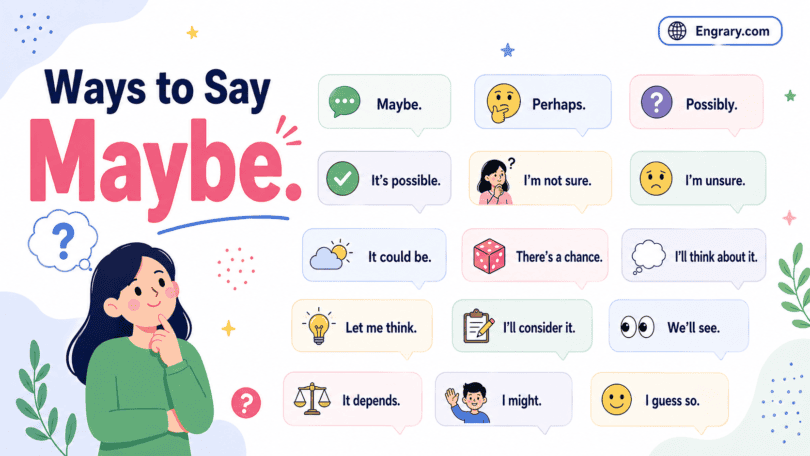
Maybe is a useful English word, but repeating it too often can make your speech or writing sound plain or uncertain. English has many other ways to express possibility, hesitation, or a soft noncommittal answer.
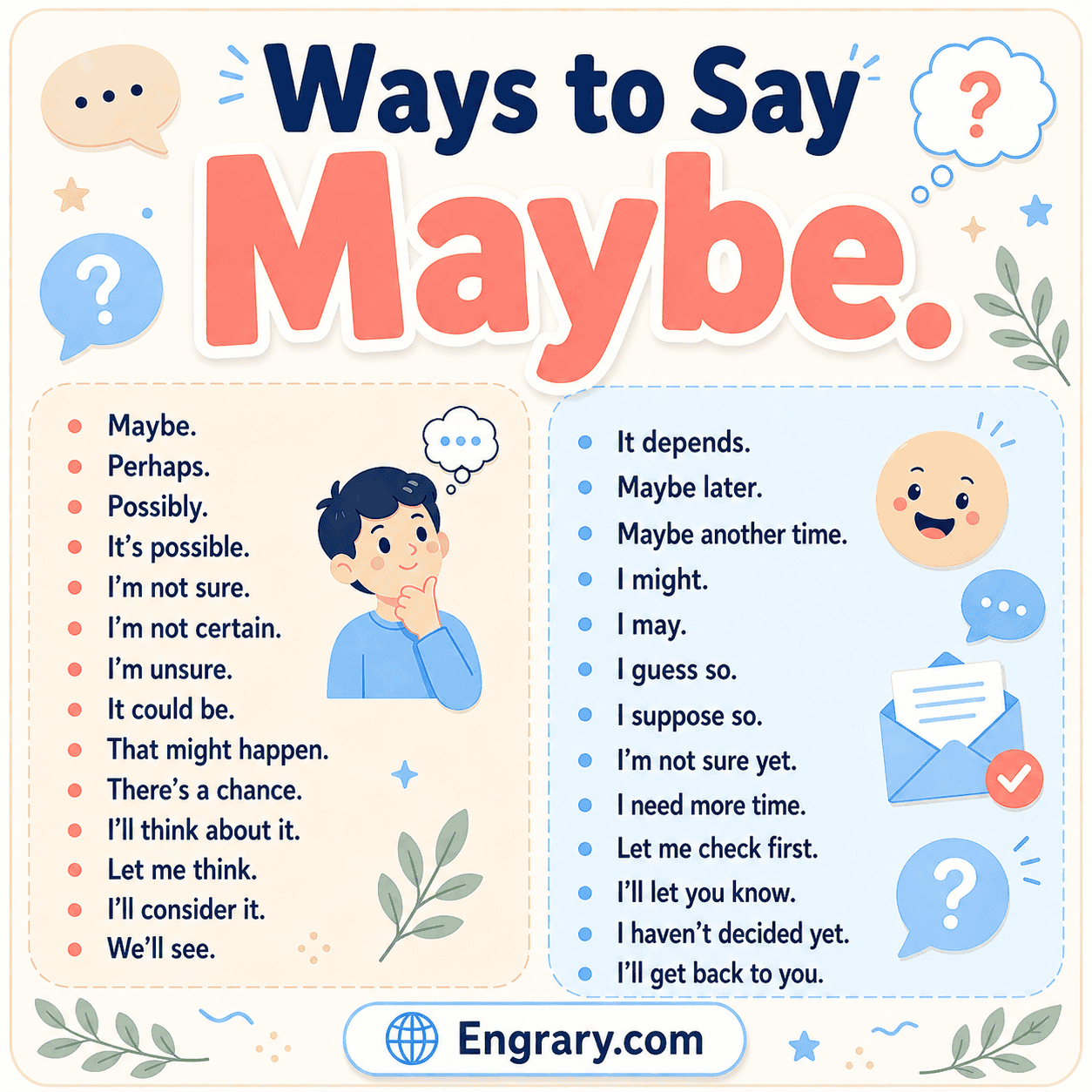
This guide shares different ways to say maybe in English, along with simple meanings and examples. You will also see which phrases work best in casual conversations, friendly situations, workplace communication, and texts or chats.
Common Alternatives to Maybe
These are some of the most common and useful alternatives to maybe. They work well in many everyday situations.
- Maybe: the standard word for uncertainty or possibility.
Example: Maybe I’ll join you later. - Perhaps: a slightly softer and more polished alternative.
Example: Perhaps we should wait a little longer. - Possibly: useful when something is possible but not certain.
Example: We could possibly finish today. - It could be: natural when you want to show uncertainty.
Example: It could be true. - It might be: common for weak possibility.
Example: It might be too late now. - I’m not sure: useful when you do not want to give a firm answer.
Example: I’m not sure if I can come. - Could be: a shorter and more casual version of it could be.
Example: Could be, but I’m not certain. - There’s a chance: useful when something is possible.
Example: There’s a chance it will rain. - I guess so: casual and slightly uncertain.
Example: I guess so, but I need to check first. - Potentially: a more formal or professional option.
Example: This could potentially cause delays.
Polite and Formal Expressions for Maybe
These phrases work best when you want to sound more careful, respectful, or formal.
- Perhaps: one of the best formal alternatives.
Example: Perhaps we should discuss this later. - Possibly: clear and polished.
Example: Possibly, but we need more information. - It is possible that: formal and complete.
Example: It is possible that the report will be delayed. - There is a possibility that: useful in formal speech or writing.
Example: There is a possibility that the schedule will change. - It may be: formal and measured.
Example: It may be the right decision. - It might be: careful and less direct.
Example: It might be better to wait. - That may be the case: formal and thoughtful.
Example: That may be the case, but we should confirm it. - Potentially: professional and polished.
Example: This could potentially improve results. - Conceivably: formal and less common, but useful in careful writing.
Example: Conceivably, this could happen again. - It seems possible: formal and restrained.
Example: It seems possible that they will agree.
Casual and Everyday Ways to Say Maybe
These phrases sound relaxed and natural in daily conversation.
- Maybe: still the most common casual option.
Example: Maybe later. - Could be: short and easygoing.
Example: Could be. - I guess: very common in casual speech.
Example: I guess we can try. - I guess so: soft and uncertain.
Example: I guess so. - Maybe so: conversational and natural.
Example: Maybe so, but I’m not convinced. - Might be: relaxed and common.
Example: Might be worth a try. - Who knows: useful when you really do not know the answer.
Example: Who knows, maybe it’ll work. - It’s possible: casual but still clear.
Example: It’s possible. - Hard to say: common when you cannot decide yet.
Example: Hard to say right now. - Not sure: very common in spoken English and texts.
Example: Not sure yet.
Friendly Ways to Say Maybe
These phrases sound warmer and more personal than plain casual alternatives.
- Maybe: simple and natural with friends.
Example: Maybe we can go tomorrow. - I guess so: soft and friendly.
Example: I guess so, if you want. - Could be: light and conversational.
Example: Could be a good idea. - Possibly: a little softer than a direct no.
Example: Possibly, let me think about it. - Maybe later: useful when you do not want to say yes right away.
Example: Maybe later. - I’m not sure yet: gentle and honest.
Example: I’m not sure yet, but I’ll let you know. - We’ll see: very common for delayed decisions.
Example: We’ll see how things go. - There’s a chance: friendly and hopeful.
Example: There’s a chance I can make it. - I think so: soft and positive, but not fully certain.
Example: I think so. - It might work: useful when something seems possible.
Example: It might work for me.
Professional Alternatives to Maybe at Work
These phrases work especially well with coworkers, managers, clients, or in workplace discussions.
- Perhaps: careful and professional.
Example: Perhaps we should revisit this next week. - It is possible that: clear and formal.
Example: It is possible that the delivery will be delayed. - We may need to: useful when suggesting a possible next step.
Example: We may need to adjust the timeline. - That may be possible: polite and measured.
Example: That may be possible, depending on the budget. - Potentially: common in meetings and business writing.
Example: This could potentially improve efficiency. - There is a possibility: formal and cautious.
Example: There is a possibility of a schedule change. - I’ll need to confirm: strong workplace alternative when you cannot commit yet.
Example: I’ll need to confirm before I can say yes. - It could work: useful when something seems reasonable but not final.
Example: It could work if we move the deadline. - That might be an option: good for suggesting possibilities professionally.
Example: That might be an option for the next phase. - Let me check and get back to you: excellent when you want to avoid a vague maybe.
Example: Let me check and get back to you.
Ways to Say Maybe in Texts and Chats
These phrases are short, natural, and easy to use in messages.
- Maybe: still the most common option in texts.
Example: Maybe. - Maybe lol: casual and playful.
Example: Maybe lol. - Idk maybe: very informal and common in chat.
Example: Idk maybe. - Possibly: short but a little more polished.
Example: Possibly. - Could be: relaxed and simple.
Example: Could be. - We’ll see: very common in casual messages.
Example: We’ll see. - Might: very short and informal.
Example: Might. - Not sure: quick and natural.
Example: Not sure. - I guess: common in texts and chats.
Example: I guess. - Maybe later: useful when delaying an answer.
Example: Maybe later.
Phrases That Show Hesitation or Delay
Sometimes maybe is not really about possibility. It is about hesitation, delay, or not wanting to commit right away.
- We’ll see: one of the most common noncommittal phrases.
Example: We’ll see. - I’m not sure: honest and cautious.
Example: I’m not sure. - Possibly: soft and uncertain.
Example: Possibly, but I can’t promise. - It depends: useful when the answer is conditional.
Example: It depends on the schedule. - Maybe later: good when you want to delay a decision.
Example: Maybe later. - I’ll think about it: common when you do not want to answer right away.
Example: I’ll think about it. - I’m not certain: more formal than I’m not sure.
Example: I’m not certain yet. - That’s possible: careful and noncommittal.
Example: That’s possible. - I’ll let you know: useful when you want to delay commitment politely.
Example: I’ll let you know tomorrow. - There’s a chance: soft and uncertain.
Example: There’s a chance I can do it.
Choosing the Best Maybe Phrase for the Situation
Choose the phrase based on what kind of maybe you mean. If you want to show simple uncertainty, phrases like perhaps, possibly, or it could be work well. For casual daily use, I guess, not sure, or could be sound more natural. In professional situations, phrases like I’ll need to confirm, that may be possible, or let me check and get back to you sound clearer and more polished. If you want to delay commitment or avoid giving a direct yes or no, we’ll see, it depends, or I’ll think about it fit better.
What to Say Instead of Maybe in Different Situations
Sometimes the best phrase depends on what you really mean.
- Perhaps: best for polite or formal uncertainty.
- Possibly: best for clear but cautious possibility.
- There’s a chance: best when something may happen but is not certain.
- I’m not sure: best for honest uncertainty.
- It depends: best when the answer is conditional.
- We’ll see: best for delay or noncommittal answers.
- That may be possible: best for professional caution.
- I’ll think about it: best when you want more time.
- Let me check and get back to you: best for work or scheduling.
- Potentially: best for polished professional writing.
Summary
There are many ways to say maybe in English. Some sound casual, some formal, some professional, and some are better for hesitation or delayed answers.
The best phrase depends on the situation, your relationship with the other person, and whether you want to show uncertainty, possibility, hesitation, or soft refusal. Once you understand the tone behind each option, it becomes much easier to choose the right one naturally.
FAQs
Another way to say maybe is perhaps, possibly, or there’s a chance. The best choice depends on whether you want to sound casual, polite, or more formal.
Formal alternatives include perhaps, it is possible that, and that may be the case. These work best in respectful or professional situations.
Friendly ways to say maybe include I guess so, we’ll see, and I’m not sure yet. These sound softer and more natural in personal conversations.
At work, you can say that may be possible, I’ll need to confirm, or let me check and get back to you. These sound clearer and more professional than a vague maybe.
Hesitant ways to say maybe include we’ll see, it depends, and I’ll think about it. These are useful when you do not want to commit right away.
You May Also Like