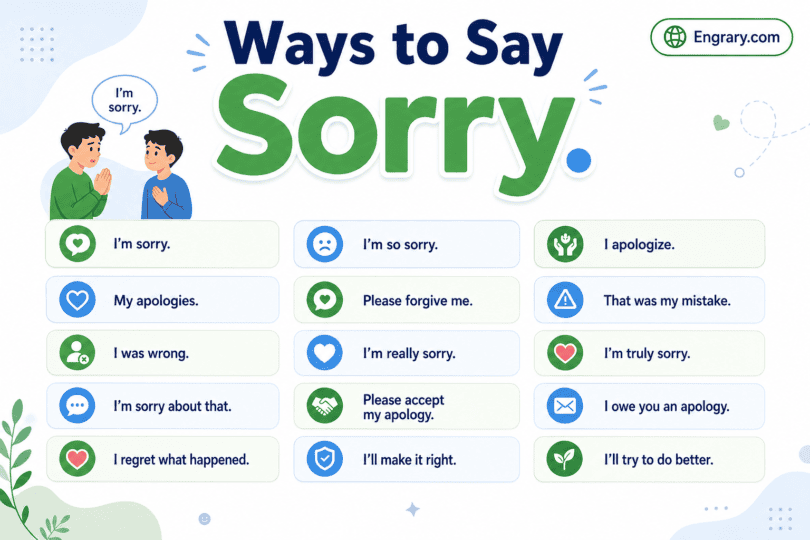
Saying sorry is one of the most common ways to apologize in English. However, the best apology is not always the shortest one. Some situations need a simple casual apology, while others need wording that sounds more respectful, more personal, or more professional.
In this guide, you will learn different ways to say sorry in English, along with simple meanings and examples. You will also see which phrases work best in daily conversation, personal situations, workplace communication, and email or writing.
Common Ways to Say Sorry
These are some of the most common and useful alternatives to sorry. They work well in many everyday situations.
- Sorry: the simplest and most common apology.
Example: Sorry, I’m late. - I’m sorry: a fuller and more natural version.
Example: I’m sorry for the mistake. - So sorry: a softer and slightly warmer apology.
Example: So sorry about that. - I’m really sorry: stronger than a plain sorry.
Example: I’m really sorry I missed your call. - I apologize: more formal and direct.
Example: I apologize for the confusion. - My apologies: polite and slightly formal.
Example: My apologies for the delay. - Please forgive me: more emotional and personal.
Example: Please forgive me. - I didn’t mean to: useful when the mistake was accidental.
Example: I didn’t mean to upset you. - That was my fault: clear and responsible.
Example: That was my fault. - I regret that: a more thoughtful and serious apology.
Example: I regret that this happened.
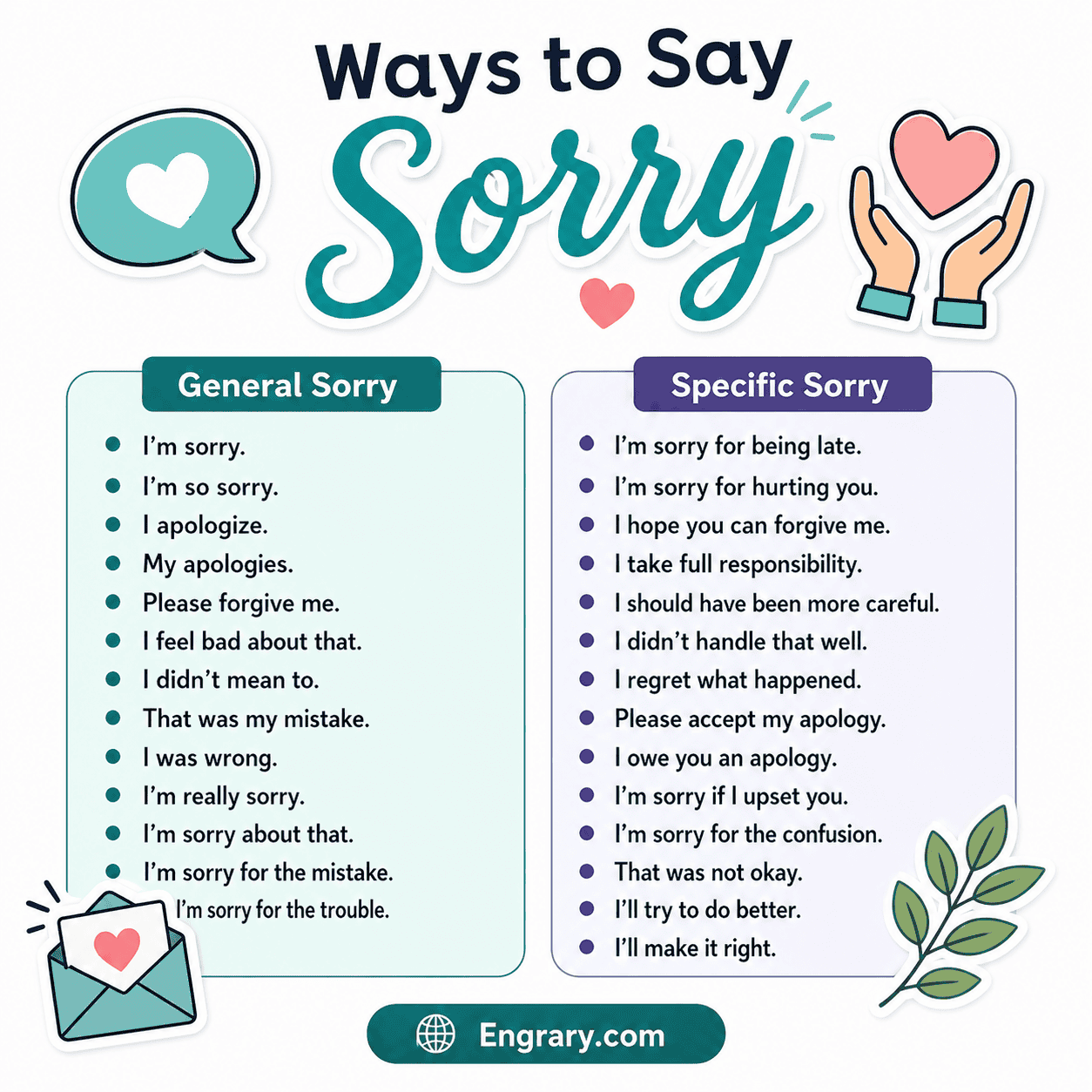
Formal Ways to Say Sorry
These phrases work best when you want to sound respectful, polished, or formal.
- I sincerely apologize: polished and respectful.
Example: I sincerely apologize for the inconvenience. - Please accept my apologies: formal and professional.
Example: Please accept my apologies for the misunderstanding. - I deeply regret the inconvenience: strong and respectful.
Example: I deeply regret the inconvenience this caused. - I apologize for the misunderstanding: clear and formal.
Example: I apologize for the misunderstanding. - I take full responsibility: useful when you want to admit fault directly.
Example: I take full responsibility for the error. - I am truly sorry: formal but still personal.
Example: I am truly sorry for what happened. - I regret my mistake: calm and serious.
Example: I regret my mistake. - Please forgive the oversight: suitable for formal writing.
Example: Please forgive the oversight. - I offer my sincere apologies: highly polished and respectful.
Example: I offer my sincere apologies. - I wish to apologize: formal and clear.
Example: I wish to apologize for the delay.
Casual Ways to Say Sorry
These phrases sound relaxed and natural in daily conversation.
- Sorry about that: simple and common.
Example: Sorry about that. - My bad: very casual and common in speech.
Example: My bad, I forgot. - Oops, sorry: useful for small accidental mistakes.
Example: Oops, sorry. - Sorry, my mistake: direct and natural.
Example: Sorry, my mistake. - I didn’t mean to: casual but sincere.
Example: I didn’t mean to bump into you. - That’s on me: casual way to accept responsibility.
Example: That’s on me. - Sorry, I forgot: useful for small everyday mistakes.
Example: Sorry, I forgot. - My fault: short and clear.
Example: My fault. - Sorry, I messed up: stronger than a small casual apology.
Example: Sorry, I messed up. - Whoops, sorry: very casual and light.
Example: Whoops, sorry.
Friendly or Personal Ways to Say Sorry
These phrases sound warmer and more personal than simple casual apologies.
- I’m really sorry: warm and sincere.
Example: I’m really sorry. - I feel awful about it: shows emotional regret.
Example: I feel awful about it. - I didn’t mean to hurt you: useful in emotional situations.
Example: I didn’t mean to hurt you. - Please forgive me: personal and heartfelt.
Example: Please forgive me. - I truly regret it: stronger and more sincere.
Example: I truly regret it. - I’m sorry for what I said: direct and personal.
Example: I’m sorry for what I said. - I know I was wrong: honest and responsible.
Example: I know I was wrong. - I hate that I hurt you: emotional and personal.
Example: I hate that I hurt you. - I’m sorry, I should have done better: thoughtful and accountable.
Example: I’m sorry, I should have done better. - I hope you can forgive me: sincere and relationship-focused.
Example: I hope you can forgive me.
Professional Ways to Say Sorry at Work
These phrases work especially well with coworkers, managers, clients, customers, or professional contacts.
- I apologize for the delay: one of the safest workplace choices.
Example: I apologize for the delay. - I sincerely apologize for the inconvenience: polished and professional.
Example: I sincerely apologize for the inconvenience. - Thank you for your patience: useful when you want to sound polite without repeating sorry too often.
Example: Thank you for your patience. - I appreciate your understanding: calm and workplace-safe.
Example: I appreciate your understanding. - I regret the oversight: formal and responsible.
Example: I regret the oversight. - I apologize for any confusion: strong for workplace misunderstandings.
Example: I apologize for any confusion. - This was my mistake: clear and accountable.
Example: This was my mistake. - I take responsibility for this: direct and professional.
Example: I take responsibility for this. - I’m sorry for the inconvenience caused: useful in customer-facing communication.
Example: I’m sorry for the inconvenience caused. - Thank you for bearing with me: polite and natural in work situations.
Example: Thank you for bearing with me.
Ways to Say Sorry in Emails or Writing
Spoken apologies and written apologies do not always use the same wording naturally. In writing, especially in formal or professional settings, fuller and clearer phrases usually work better.
- Please accept my apologies: polished and formal.
Example: Please accept my apologies for the delay. - I sincerely regret the inconvenience: respectful and strong.
Example: I sincerely regret the inconvenience. - I appreciate your patience: smooth and professional.
Example: I appreciate your patience. - Thank you for your understanding: useful in professional writing.
Example: Thank you for your understanding. - I apologize for any confusion: clear and practical.
Example: I apologize for any confusion. - I regret the error: formal and direct.
Example: I regret the error. - I’m sorry for the misunderstanding: polished but natural.
Example: I’m sorry for the misunderstanding. - I take full responsibility: strong and accountable.
Example: I take full responsibility for this issue. - I offer my sincere apologies: formal and respectful.
Example: I offer my sincere apologies. - I apologize for the delay in responding: excellent for email use.
Example: I apologize for the delay in responding.
Stronger Ways to Say Sorry
Sometimes plain sorry is not enough. These phrases work better when you want to show deeper regret.
- I’m deeply sorry: strong and sincere.
Example: I’m deeply sorry. - I truly regret what happened: serious and thoughtful.
Example: I truly regret what happened. - I can’t tell you how sorry I am: emotional and heartfelt.
Example: I can’t tell you how sorry I am. - I take full responsibility: strong when the fault is clearly yours.
Example: I take full responsibility. - I feel terrible about this: emotional and natural.
Example: I feel terrible about this. - I sincerely regret my actions: serious and formal.
Example: I sincerely regret my actions. - I know I let you down: strong and personal.
Example: I know I let you down. - I’m truly sorry for the pain I caused: deep and personal.
Example: I’m truly sorry for the pain I caused. - I deeply regret my mistake: serious and clear.
Example: I deeply regret my mistake. - I’m sincerely sorry for what I did: direct and heartfelt.
Example: I’m sincerely sorry for what I did.
How to Choose the Right Sorry Phrase
Choose the phrase based on the situation and how serious the mistake is. For a small everyday mistake, simple options like sorry about that, my bad, or oops, sorry usually work well. In work or formal situations, phrases like I apologize for the delay or I appreciate your patience sound more polished. When the situation is more serious or personal, stronger phrases like I truly regret it or I’m deeply sorry fit better. It also helps to think about whether you are speaking casually, apologizing in writing, or trying to repair a personal relationship.
What to Say Instead of Sorry in Different Situations
Sometimes the best phrase depends on the kind of mistake.
- My bad: best for small casual mistakes.
- I apologize: best for formal and respectful situations.
- Please forgive me: best for emotional or personal apologies.
- I regret that: best for thoughtful regret.
- I’m sorry for the inconvenience: best for delays or disruption.
- I appreciate your patience: best for work or customer-service situations.
- That was my fault: best when you want to admit clear responsibility.
- I sincerely apologize: best for formal apologies.
- I didn’t mean to: best for accidental mistakes.
- I take responsibility: best when accountability matters.
Summary
There are many ways to say sorry in English. Some sound casual, some formal, some professional, and some much more personal or serious.
The best phrase depends on the situation, your relationship with the other person, and how serious the mistake is. Once you understand the tone behind each option, it becomes much easier to choose the right apology naturally.
FAQs
Another way to say sorry is I apologize, my apologies, or please forgive me. The best choice depends on whether you want to sound casual, formal, or more personal.
Formal alternatives include I sincerely apologize, please accept my apologies, and I regret my mistake. These work best in respectful or professional situations.
Personal ways to say sorry include I feel awful about it, I know I was wrong, and I hope you can forgive me. These sound warmer and more emotional than a simple apology.
In an email, you can say I apologize for the delay, thank you for your understanding, or please accept my apologies. These usually sound more polished than casual spoken wording.
Stronger ways to say sorry include I’m deeply sorry, I truly regret what happened, and I feel terrible about this. These are best when you need to express deeper regret.
You May Also Like