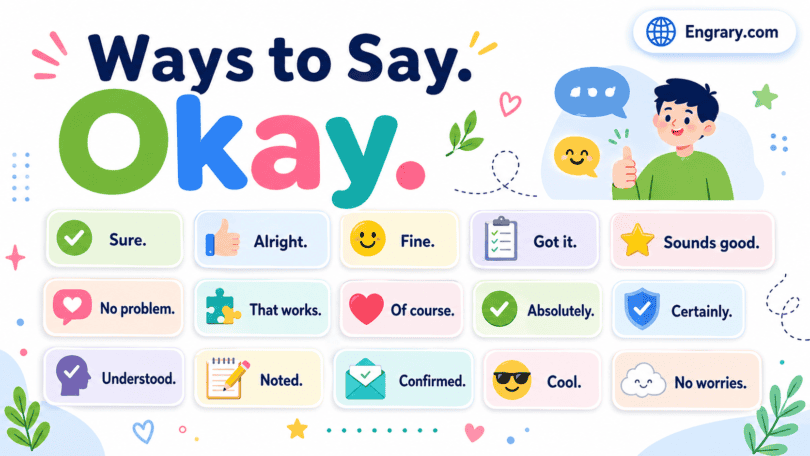
Okay is one of the most common words in English. People use it to agree, accept a plan, show understanding, confirm a task, or reassure someone. Even so, saying okay all the time can sound repetitive, flat, or too casual in some situations.
This guide shares different ways to say okay in English, along with simple meanings and examples. You will also see which phrases work best in casual conversations, friendly situations, workplace communication, and texts or chats.
Common Alternatives to Okay
These are some of the most common and useful alternatives to okay. They work well in many everyday situations.
- Okay: the standard word for agreement, acceptance, or acknowledgment.
Example: Okay, I understand. - All right: a natural alternative that sounds slightly softer than okay.
Example: All right, let’s begin. - Sure: common when agreeing to a suggestion or request.
Example: Sure, I can help. - Of course: useful when something feels easy, natural, or expected.
Example: Of course, that’s fine. - Fine: simple and direct, though sometimes a little shorter in tone.
Example: Fine, we can do that. - Sounds good: very common for accepting plans or ideas.
Example: Sounds good to me. - That’s fine: useful when approving or accepting something.
Example: That’s fine with me. - I understand: best when you want to show understanding rather than simple agreement.
Example: I understand. - No problem: relaxed and helpful, especially when accepting a request.
Example: No problem, I’ll handle it. - Agreed: clear and direct when you want to show agreement.
Example: Agreed, that is the best option.
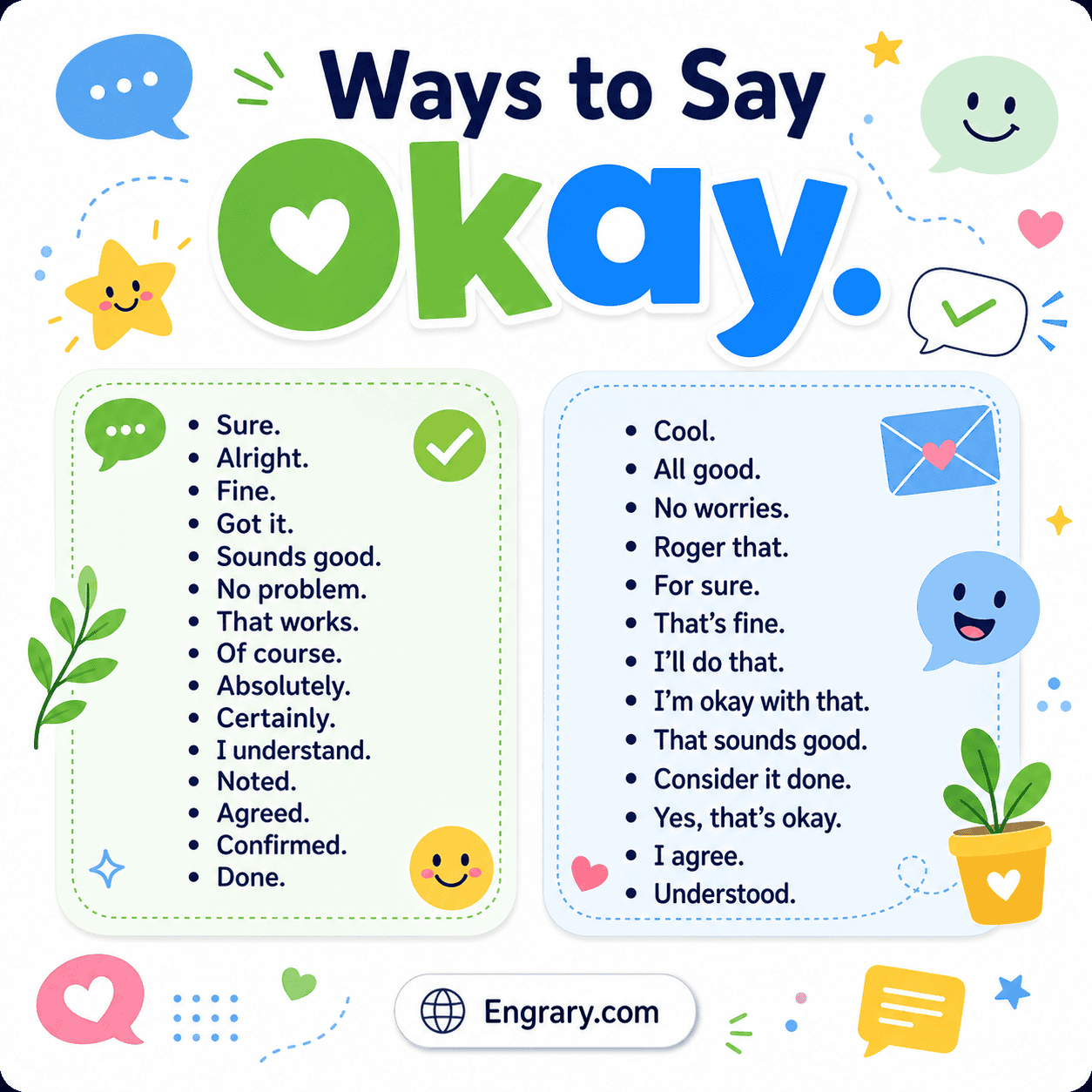
Polite and Formal Expressions for Okay
These phrases work best when you want to sound respectful, polished, or more formal.
- Certainly: one of the safest formal alternatives.
Example: Certainly, I can do that. - That would be fine: calm and professional.
Example: That would be fine with me. - I understand: respectful and clear in formal settings.
Example: I understand your concerns. - Very well: formal and slightly traditional.
Example: Very well, we will proceed. - That is acceptable: useful when approving something formally.
Example: That is acceptable. - I agree: direct and professional.
Example: I agree with that suggestion. - That would be appropriate: formal and measured.
Example: That would be appropriate in this situation. - Understood: concise and professional.
Example: Understood, I’ll take care of it. - That seems reasonable: useful when approving an idea carefully.
Example: That seems reasonable. - I’m happy to proceed: polished and positive.
Example: I’m happy to proceed with that plan.
Casual and Everyday Ways to Say Okay
These phrases sound relaxed and natural in daily conversation.
- Okay: still one of the most common everyday choices.
Example: Okay, let’s go. - All right: natural and easygoing.
Example: All right, I’ll come. - Sure: simple and very common.
Example: Sure, why not? - Yeah: casual and common in speech.
Example: Yeah, that’s okay. - Yep: short and informal.
Example: Yep, I’m ready. - Yup: relaxed and conversational.
Example: Yup, that works. - Sounds good: useful for plans and suggestions.
Example: Sounds good. - Fine: quick and simple, though sometimes slightly blunt.
Example: Fine, let’s do it. - No problem: casual and helpful.
Example: No problem. - Works for me: common when accepting a plan or arrangement.
Example: Works for me.
Friendly Ways to Say Okay
These phrases sound warmer and more personal than basic casual replies.
- Sounds good: friendly and natural.
Example: Sounds good, let’s do that. - Sure thing: warm and easygoing.
Example: Sure thing, I can help. - Of course: kind and supportive.
Example: Of course, I’ll do it. - That works for me: friendly and agreeable.
Example: That works for me. - I’m in: great for plans, invitations, or group activities.
Example: I’m in. - No problem: relaxed and reassuring.
Example: No problem at all. - Absolutely: stronger and more enthusiastic.
Example: Absolutely, I’d love to. - Happy to: warm and helpful.
Example: Happy to help. - You got it: supportive and natural.
Example: You got it. - All good: casual and friendly.
Example: All good.
Professional Alternatives to Okay at Work
These phrases work especially well with coworkers, managers, clients, or professional contacts.
- Certainly: polished and workplace-safe.
Example: Certainly, I can arrange that. - That works for me: useful in meetings and scheduling.
Example: That works for me. - Understood: clear and professional.
Example: Understood, I’ll send it today. - I can do that: direct and task-focused.
Example: I can do that by Friday. - That would be fine: calm and formal.
Example: That would be fine. - I’m happy to proceed: polished and positive.
Example: I’m happy to proceed with that option. - Consider it done: confident for task acceptance.
Example: Consider it done. - I agree: strong for workplace discussions.
Example: I agree with that recommendation. - That sounds good: natural in many work settings.
Example: That sounds good to me. - I can take care of that: useful when accepting responsibility.
Example: I can take care of that.
Ways to Say Okay in Texts and Chats
These phrases are short, natural, and easy to use in messages.
- Ok: one of the most common text forms.
Example: Ok. - Okay: slightly fuller than ok, but still common in chat.
Example: Okay. - K: very short and casual.
Example: K. - Yep: relaxed and informal.
Example: Yep. - Yup: casual and conversational.
Example: Yup. - Sure: simple and natural.
Example: Sure. - Sounds good: useful for confirming plans.
Example: Sounds good. - All good: friendly and casual.
Example: All good. - Bet: very casual and modern.
Example: Bet. - No prob: short for no problem.
Example: No prob.
Reassuring or Supportive Ways to Say Okay
Sometimes okay is not really about agreement. It is about making someone feel better, calmer, or less worried.
- No problem: relaxed and reassuring.
Example: No problem, I can help. - That’s totally fine: warm and supportive.
Example: That’s totally fine. - You’re good: casual reassurance.
Example: You’re good. - All good: common when you want to calm the situation.
Example: All good, don’t worry. - No worries: very common in reassuring replies.
Example: No worries. - It’s okay: gentle and supportive.
Example: It’s okay. - That’s fine: reassuring when something is acceptable.
Example: That’s fine, really. - Don’t worry about it: useful when you want to remove pressure.
Example: Don’t worry about it. - You’re fine: simple and supportive.
Example: You’re fine. - Everything’s okay: best when giving fuller reassurance.
Example: Everything’s okay now.
Choosing the Best Okay Phrase for the Situation
Choose the phrase based on what kind of okay you mean. If you want to agree, phrases like I agree, sounds good, or that works for me are strong choices. If you want to approve something, that’s fine, that would be fine, or that is acceptable work better. If you want to show understanding, I understand or understood may fit best. If you are accepting a task, phrases like I can do that or consider it done sound clearer than plain okay. When you want to reassure someone, no worries, it’s okay, or everything’s okay are more supportive.
What to Say Instead of Okay in Different Situations
Sometimes the best phrase depends on the exact situation.
- Certainly: best for formal and professional agreement.
- That’s fine: best for approval or acceptance.
- Sounds good: best for casual plans and suggestions.
- I understand: best for acknowledgment and clarity.
- I agree: best for direct agreement.
- No problem: best for relaxed reassurance or accepting a request.
- That works for me: best for schedules and practical arrangements.
- Understood: best for professional acknowledgment.
- Consider it done: best for task confirmation.
- Everything’s okay: best for fuller reassurance.
Summary
There are many ways to say okay in English. Some sound formal, some casual, some friendly, and some more supportive or reassuring.
The best phrase depends on whether you want to show agreement, approval, understanding, task acceptance, or reassurance. Once you understand the meaning behind each option, it becomes much easier to choose the right one naturally.
FAQs
Another way to say okay is all right, sure, or sounds good. The best choice depends on whether you want to sound casual, polite, or more supportive.
Formal alternatives include certainly, very well, and that would be fine. These work best in respectful or professional situations.
Friendly ways to say okay include sounds good, sure thing, and you got it. These sound warmer and more personal than plain okay.
At work, you can say understood, that works for me, or I can do that. These sound clearer and more professional than a basic okay.
Reassuring ways to say okay include no worries, it’s okay, and everything’s okay. These are useful when you want to calm someone or show support.
You May Also Like