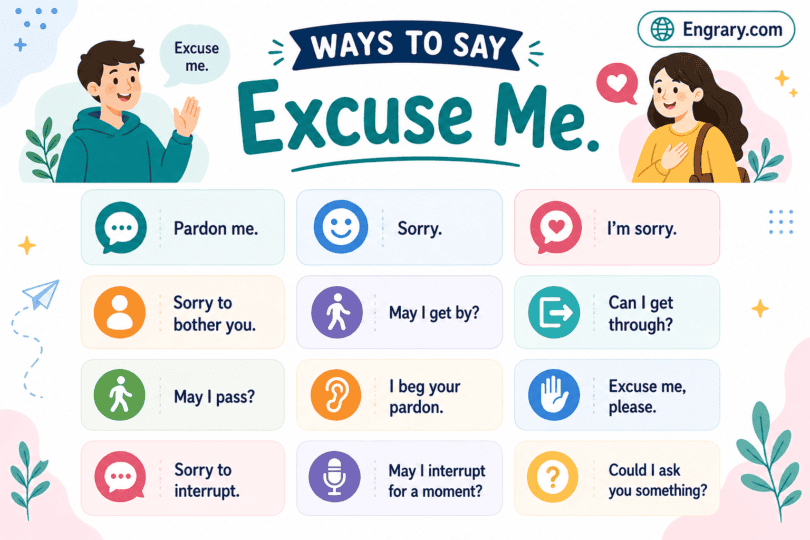
Excuse me is a very common English phrase, but people use it for many different reasons. You might say it to get someone’s attention, interrupt politely, move past someone, or ask a person to repeat what they said. That is why learning different ways to say excuse me can make your English sound more natural and more suitable for each situation.
In this guide, you will learn common, polite, formal, and casual ways to say excuse me in English. You will also see useful phrases for interrupting, passing by, getting attention, and asking someone to repeat something.
Common Ways to Say Excuse Me
These are some of the most common and useful alternatives to excuse me. They work well in many everyday situations.
- Excuse me: the standard phrase for getting attention, interrupting, or passing by.
Example: Excuse me, may I ask you something? - Pardon me: a polite alternative that sounds a little softer.
Example: Pardon me, could I get through? - Sorry: often used in casual speech when you bump into someone or need quick attention.
Example: Sorry, can I get by? - I’m sorry: a fuller version that sounds a little more polite.
Example: I’m sorry, could you repeat that? - Hello: useful when you want to get someone’s attention in a polite way.
Example: Hello, could you help me for a moment? - May I: helpful when you are asking permission.
Example: May I come in? - Just a moment: good when you want to politely pause or step in.
Example: Just a moment, please. - Could I just say something: useful when you want to interrupt politely.
Example: Could I just say something? - Would you mind: polite when asking for space, help, or permission.
Example: Would you mind moving a little? - I beg your pardon: more formal and sometimes more traditional in tone.
Example: I beg your pardon, what did you say?
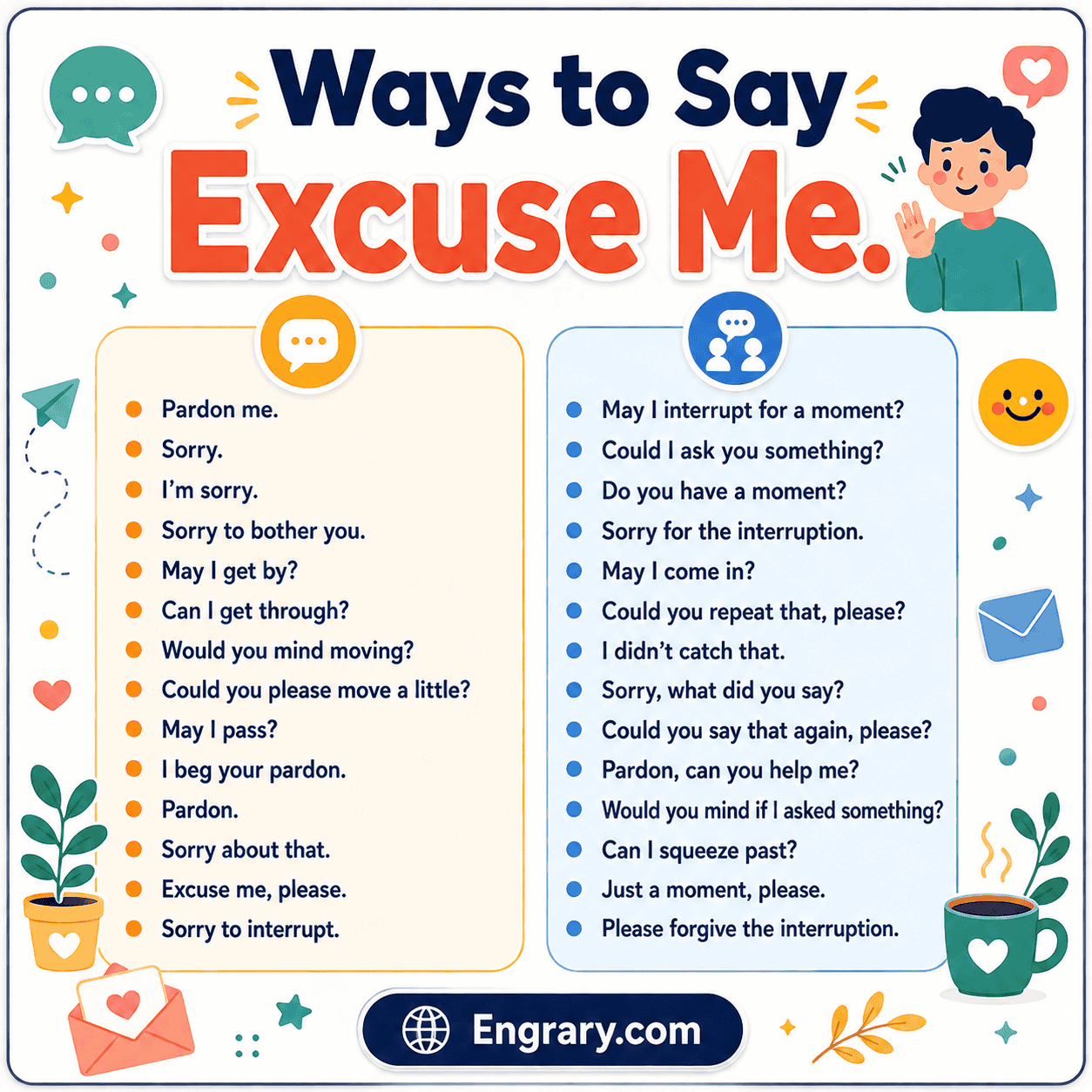
Polite Ways to Say Excuse Me
These phrases sound soft, respectful, and widely suitable in polite situations.
- Pardon me: one of the best polite alternatives.
Example: Pardon me, is this seat taken? - Excuse me, please: a softer version of the standard phrase.
Example: Excuse me, please, may I pass? - Would you mind: useful when asking politely for help or space.
Example: Would you mind moving a little? - May I interrupt for a moment: polite and useful in conversations.
Example: May I interrupt for a moment? - Could I just ask: soft and respectful.
Example: Could I just ask a question? - Would you excuse me: polite when leaving or stepping away.
Example: Would you excuse me for a moment? - If I may: useful when entering a conversation carefully.
Example: If I may, I would like to add something. - Please excuse me: simple and polite.
Example: Please excuse me, I need to leave early. - May I ask you something: polite when starting a question.
Example: May I ask you something? - Could I have a moment: useful when asking for attention.
Example: Could I have a moment of your time?
Formal Ways to Say Excuse Me
These phrases work best when you want to sound more polished, respectful, or formal.
- Pardon me: polite and formal in many situations.
Example: Pardon me, may I speak with you? - I beg your pardon: a more formal and traditional phrase.
Example: I beg your pardon, could you repeat that? - Please excuse me: respectful and clear.
Example: Please excuse me for interrupting. - Would you excuse me: useful when stepping away or leaving.
Example: Would you excuse me for a moment? - May I be excused: often used in classrooms, meetings, or formal settings.
Example: May I be excused? - If you’ll excuse me: common when politely leaving.
Example: If you’ll excuse me, I need to take this call. - Excuse me for interrupting: formal and direct.
Example: Excuse me for interrupting, but I have a question. - May I have a word: useful when you want to speak privately or formally.
Example: May I have a word with you? - Would you mind if I spoke: careful and respectful.
Example: Would you mind if I spoke for a moment? - Please forgive the interruption: formal and polished.
Example: Please forgive the interruption.
Casual Ways to Say Excuse Me
These phrases sound more relaxed and natural in daily life.
- Sorry: one of the most common casual options.
Example: Sorry, can I squeeze through? - Excuse me: still common in casual situations.
Example: Excuse me, is this yours? - Hey: useful for casual attention-getting, though less polite with strangers.
Example: Hey, you dropped your phone. - Just a sec: informal and common.
Example: Just a sec, please. - One second: casual and direct.
Example: One second, I need to check something. - Hang on: relaxed and informal.
Example: Hang on, what did you say? - Oops, sorry: useful for small accidental mistakes.
Example: Oops, sorry. - My bad: very casual and best with friends or peers.
Example: My bad. - Can I get by: common when moving through a crowd.
Example: Can I get by? - Hold on a minute: casual and direct.
Example: Hold on a minute.
Ways to Say Excuse Me When Interrupting
Interrupting politely is one of the most important uses of excuse me. These phrases help you sound more natural when stepping into a conversation.
- Sorry to interrupt: one of the most useful interruption phrases.
Example: Sorry to interrupt, but I have a question. - Excuse me for interrupting: polite and clear.
Example: Excuse me for interrupting. - May I interrupt for a moment: formal and respectful.
Example: May I interrupt for a moment? - Could I just add something: useful in meetings or discussions.
Example: Could I just add something? - If I may interrupt: careful and polite.
Example: If I may interrupt, I would like to clarify something. - Sorry to cut in: casual but common.
Example: Sorry to cut in, but I need to mention something. - May I say something: simple and polite.
Example: May I say something here? - Could I quickly ask: useful when you need a short interruption.
Example: Could I quickly ask a question? - Before you continue: helpful when you want to step in at the right moment.
Example: Before you continue, may I ask something? - May I jump in for a second: more informal and natural in conversation.
Example: May I jump in for a second?
Ways to Say Excuse Me When Passing By
When you need to move past someone, you usually need a phrase that is short, polite, and easy to understand.
- Excuse me: the standard choice.
Example: Excuse me, may I get through? - Pardon me: soft and polite.
Example: Pardon me. - Can I get by: common and natural.
Example: Can I get by, please? - Let me through, please: direct but still polite.
Example: Let me through, please. - Just coming through: common in busy spaces.
Example: Just coming through. - Could I squeeze past: very natural in crowded places.
Example: Could I squeeze past? - Sorry, coming through: casual and common.
Example: Sorry, coming through. - May I get through: more polite and formal.
Example: May I get through? - Excuse me, please: gentle and respectful.
Example: Excuse me, please. - A little room, please: useful when you need space.
Example: A little room, please.
Ways to Say Excuse Me to Get Someone’s Attention
Sometimes excuse me is not really an apology. It is just a polite way to begin speaking to someone.
- Excuse me: the most common way to get attention politely.
Example: Excuse me, do you know where the station is? - Hello: useful when speaking to someone nearby.
Example: Hello, could you help me? - Pardon me: polite and soft.
Example: Pardon me, is this seat free? - May I ask you something: respectful and clear.
Example: May I ask you something? - Could you help me: direct and polite.
Example: Could you help me, please? - Sorry to bother you: good when you want to sound extra careful.
Example: Sorry to bother you, but I need some help. - Do you have a moment: useful when asking for someone’s time.
Example: Do you have a moment? - Can I ask you something: natural and common.
Example: Can I ask you something? - Hi, excuse me: friendly and polite.
Example: Hi, excuse me, do you work here? - Would you mind helping me: more formal and gentle.
Example: Would you mind helping me?
Ways to Say Excuse Me When You Didn’t Hear Something
This is another very common use. In these situations, you are not apologizing. You are asking the other person to repeat what they said.
- Pardon: short and natural.
Example: Pardon? - Sorry: very common in everyday speech.
Example: Sorry? - Sorry, what was that: casual and clear.
Example: Sorry, what was that? - Could you repeat that: polite and direct.
Example: Could you repeat that? - I didn’t catch that: natural and common.
Example: I didn’t catch that. - Would you mind saying that again: polite and careful.
Example: Would you mind saying that again? - Come again: casual and conversational.
Example: Come again? - What was that: direct but common.
Example: What was that? - Could you say that one more time: clear and useful.
Example: Could you say that one more time? - I’m sorry, I didn’t hear you: polite and natural.
Example: I’m sorry, I didn’t hear you.
How to Choose the Right “Excuse Me” Phrase
Choose the phrase based on what you are trying to do. If you are interrupting, use phrases like sorry to interrupt or may I interrupt for a moment. If you are moving past someone, short phrases like excuse me, pardon me, or can I get by work better. If you did not hear something, use pardon, sorry, or could you repeat that. It also helps to think about the level of formality. Some phrases sound more respectful, while others are better for friends or casual daily speech.
What to Say Instead of Excuse Me in Different Situations
Sometimes the best phrase depends on the exact situation.
- Pardon me: best for polite everyday use.
- Sorry to interrupt: best when stepping into a conversation.
- Can I get by: best when passing through a crowd.
- Could you repeat that: best when you did not hear something clearly.
- May I ask you something: best when getting attention politely.
- Would you excuse me: best when stepping away or leaving.
- Sorry to bother you: best when you want to sound careful and polite.
- Just coming through: best in busy public spaces.
- I didn’t catch that: best when you need repetition in casual conversation.
- If you’ll excuse me: best in formal situations when leaving politely.
Summary
There are many ways to say excuse me in English. Some sound polite, some formal, some casual, and some work only in very specific situations.
The best phrase depends on whether you are trying to interrupt, get attention, pass by, or ask someone to repeat something. Once you understand the function behind each phrase, it becomes much easier to choose the right one naturally.
FAQs
Another way to say excuse me is pardon me, sorry, or may I ask you something. The best choice depends on the situation and how polite you want to sound.
Polite alternatives include pardon me, excuse me, please, and would you mind. These work well in respectful everyday situations.
You can say sorry to interrupt, may I interrupt for a moment, or could I just add something. These sound more natural than repeating only excuse me.
You can say pardon, could you repeat that, or I didn’t catch that. These are better when you need someone to say something again.
Excuse me is often used to get attention, interrupt, pass by, or ask for repetition. Sorry is more often used for apology, regret, or sympathy, although it can also be used casually when asking someone to repeat something.
You May Also Like