“What’s up” is a common informal English greeting. People often use it to say hello, start a conversation, or casually ask how someone is doing, so the best alternative depends on the situation and the tone you want.
This guide shares different ways to say what’s up in English, along with simple meanings and examples. You will also see which phrases fit casual conversations, friendly chats, polite situations, and text messages.
Common Ways to Say What’s Up
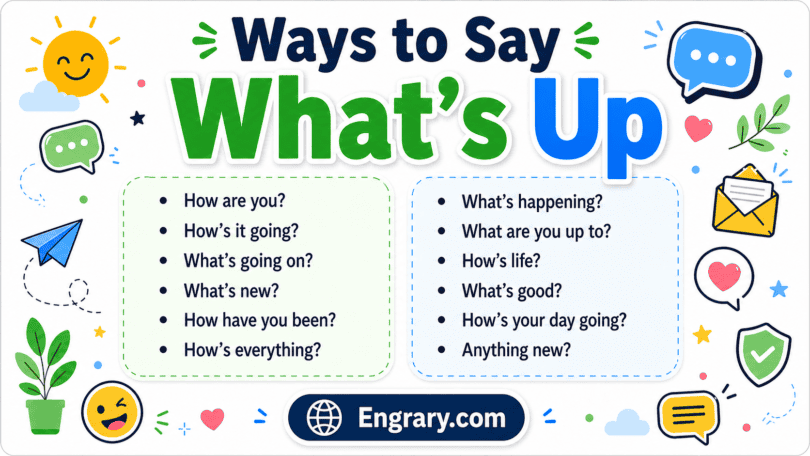
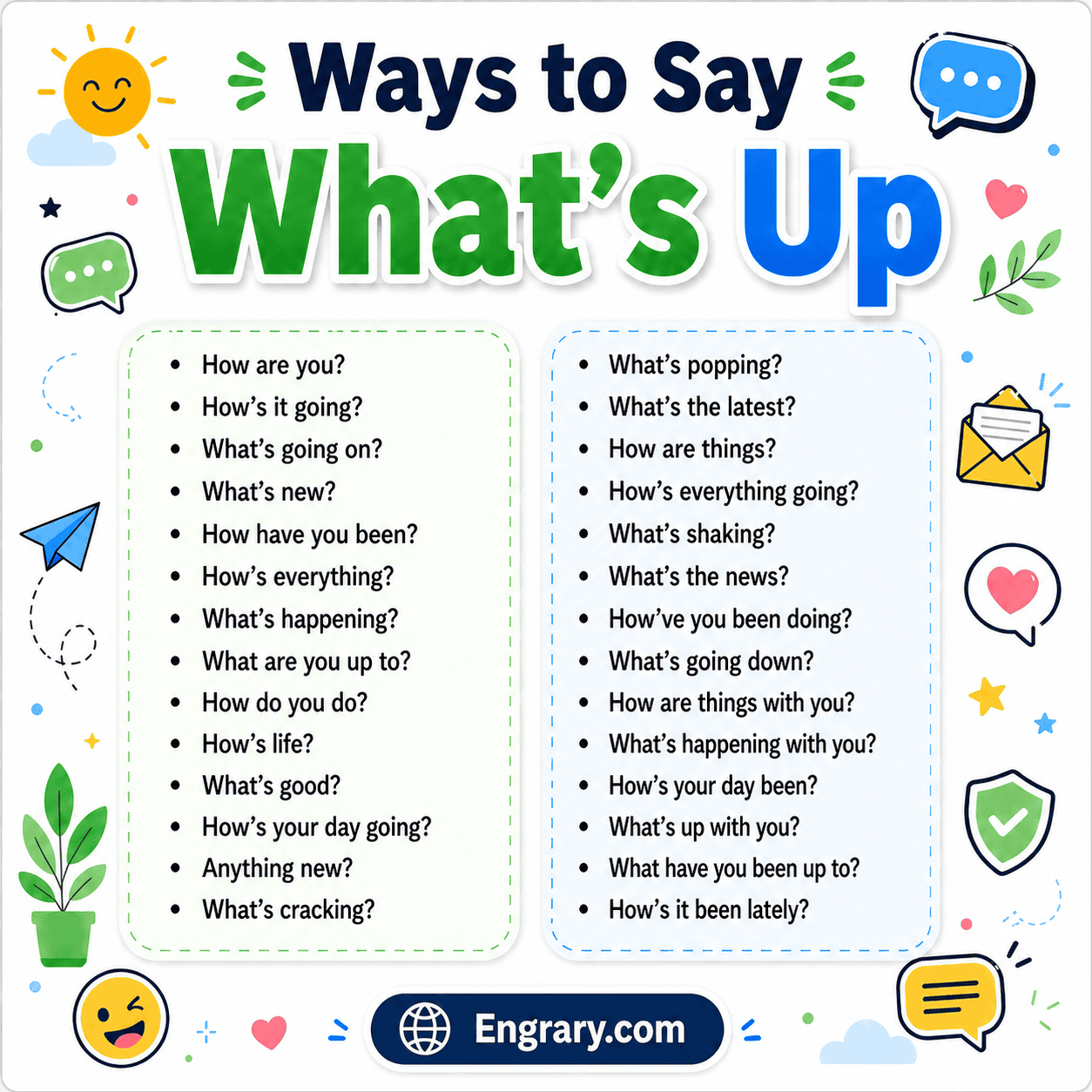
These are some of the most common and natural alternatives to what’s up.
- What’s up: the standard casual greeting.
Example: Hey, what’s up? - What’s going on: a natural alternative that can mean hello or ask what is happening.
Example: What’s going on? - How’s it going: a friendly and very common greeting.
Example: Hey, how’s it going? - What are you up to: used when asking what someone is doing.
Example: What are you up to today? - How are things: a softer way to ask how life is going.
Example: How are things? - How’s everything: a casual and friendly greeting.
Example: How’s everything? - What’s new: used when you want to ask if anything has changed recently.
Example: What’s new with you? - What’s happening: a relaxed greeting that sounds social and easygoing.
Example: What’s happening? - How have you been: a good choice when you have not seen someone for some time.
Example: How have you been? - What’s good: a casual, modern-sounding greeting.
Example: What’s good?
Casual Ways to Say What’s Up
These phrases sound relaxed and natural in everyday conversation.
- What’s up: simple, common, and very informal.
Example: What’s up? - What’s going on: casual and easy to use.
Example: What’s going on? - What’s good: friendly and a little more modern in tone.
Example: What’s good? - Yo, what’s up: very casual and best with friends.
Example: Yo, what’s up? - How’s it going: easygoing and natural.
Example: How’s it going? - What are you up to: common when asking what someone is doing.
Example: What are you up to? - What’s happening: relaxed and social.
Example: What’s happening? - How’s life: casual and a little more personal.
Example: How’s life? - How you doing: very informal spoken English.
Example: Hey, how you doing? - Sup: a very short slang version of what’s up.
Example: Sup?
Friendly Ways to Say What’s Up
These phrases sound warmer and more personal than basic casual greetings.
- How have you been: friendly and useful after some time apart.
Example: How have you been? - What’s new: good for catching up.
Example: What’s new? - How are things: soft and friendly.
Example: How are things? - What’s been going on: natural when you want a real update.
Example: What’s been going on lately? - How’s everything: warm and easy to use.
Example: How’s everything? - What are you up to lately: a more personal follow-up style greeting.
Example: What are you up to lately? - Hey, how’s it going: warm but still casual.
Example: Hey, how’s it going? - What’s good with you: friendly and informal.
Example: What’s good with you? - How’s life treating you: more personal and conversational.
Example: How’s life treating you? - What have you been up to: strong for reconnecting with someone.
Example: What have you been up to?
Professional or Polite Alternatives to What’s Up
These phrases are better when you want to sound more polite, respectful, or workplace-safe.
- How are you: the safest and most widely accepted polite alternative.
Example: Hello, how are you? - How are things going: polite but still natural.
Example: How are things going? - How have you been: useful when reconnecting in a polite way.
Example: How have you been? - How is everything going: smooth and professional-friendly.
Example: How is everything going? - How are things with you: respectful and conversational.
Example: How are things with you? - What have you been working on: useful for coworkers or classmates.
Example: What have you been working on lately? - How has your day been: polite and friendly.
Example: How has your day been? - How are you doing today: common in polite conversation.
Example: How are you doing today? - How is your week going: useful at work or in school.
Example: How is your week going? - How have things been lately: warm, polite, and natural.
Example: How have things been lately?
This is one of the clearest gaps in competitor coverage. Many pages explain that what’s up is informal, but fewer build a clean set of safer alternatives for coworkers, new acquaintances, or light professional conversation.
Funny and Creative Ways to Say What’s Up
These phrases work best in playful situations and with people who understand the tone.
- What’s the word: playful and casual.
Example: What’s the word? - What’s cracking: slangy and energetic.
Example: What’s cracking? - What’s popping: playful and modern.
Example: What’s popping? - What’s cooking: old-fashioned but fun.
Example: What’s cooking? - What’s shaking: playful and informal.
Example: What’s shaking? - What’s the deal: casual and slightly joking.
Example: What’s the deal? - What’s the story: playful and conversational.
Example: What’s the story? - What’s the latest: a light, friendly way to ask for updates.
Example: What’s the latest?
These kinds of phrases appear often on competitor pages, but they are not always filtered well for realism. The strongest choices are the ones people still actually use in casual English.
Ways to Say What’s Up in Text Messages
These phrases are short, natural, and easy to type in chats or messages.
- Sup: one of the shortest texting versions.
Example: Sup? - What’s up: still common in texts.
Example: What’s up? - What’s good: casual and friendly.
Example: What’s good? - What you up to: common in fast, casual texting.
Example: What you up to? - How’s it going: simple and natural.
Example: How’s it going? - What’s new: good for checking in.
Example: What’s new? - Yo: very short and casual.
Example: Yo. - What’s going on: works well in chat.
Example: What’s going on? - How you been: casual and common in messages.
Example: How you been? - What’s happening: a relaxed text greeting.
Example: What’s happening?
How to Choose the Right “What’s Up” Alternative
Choose the phrase based on the situation, the person, and the tone you want. With close friends, casual phrases like what’s up, sup, or what’s good sound natural. With classmates or friendly acquaintances, how’s it going or what’s new work well. In workplace or more polite situations, safer options like how are you, how has your day been, or how are things going are better. It also helps to know whether you want a simple greeting or a real question. Some phrases, like what’s up, are often just greetings, while others, like what have you been up to, usually invite a fuller answer. Competitor pages mention this difference, but usually not clearly enough.
What to Say Instead of What’s Up in Different Situations
Sometimes the best phrase depends on what you really mean.
- How are you: best when you want a polite greeting.
- How’s it going: best for an easygoing everyday greeting.
- What’s new: best when you want to catch up.
- What are you up to: best when you want to ask what someone is doing.
- How have you been: best when you have not seen someone in a while.
- How is everything: best for a warm, general check-in.
- What’s happening: best for casual social talk.
- What have you been working on: best for coworkers or classmates.
- How’s your day going: best for polite, natural conversation.
- What’s been going on: best when you want a fuller update.
This matters because what’s up can act as a greeting, a check-in, or a real question. Organizing the phrases this way makes the article more practical than broad list-only competitors.
Summary
There are many ways to say what’s up in English. Some sound casual, some friendly, some slangy, and some more polite.
The best phrase depends on the situation, your relationship with the other person, and whether you want to sound playful, relaxed, or slightly more professional. Once you understand the tone behind each option, it becomes much easier to choose the right one naturally.
FAQs
Another way to say what’s up is what’s going on, how’s it going, or what’s new. The best choice depends on whether you want to sound casual, friendly, or slightly more polite.
Polite alternatives include how are you, how are things going, and how has your day been. These work better in respectful or workplace-friendly situations.
Friendly ways to say what’s up include what’s new, how have you been, and what have you been up to. These sound warmer and more personal than a simple slang greeting.
In a text, you can say sup, what’s good, what you up to, or how’s it going. Short and natural phrases usually work best in messages.
Funny ways to say what’s up include what’s popping, what’s cracking, and what’s cooking. These are best for playful, casual situations.
You May Also Like