“Take care” is a warm English phrase used to say goodbye, show concern, or wish someone well. It often sounds kinder and more personal than a plain goodbye.
In this guide, you will learn different ways to say take care in English and when to use them. You will also see which phrases work best in formal situations, casual conversations, friendly chats, work settings, and text messages.
Common Ways to Say Take Care
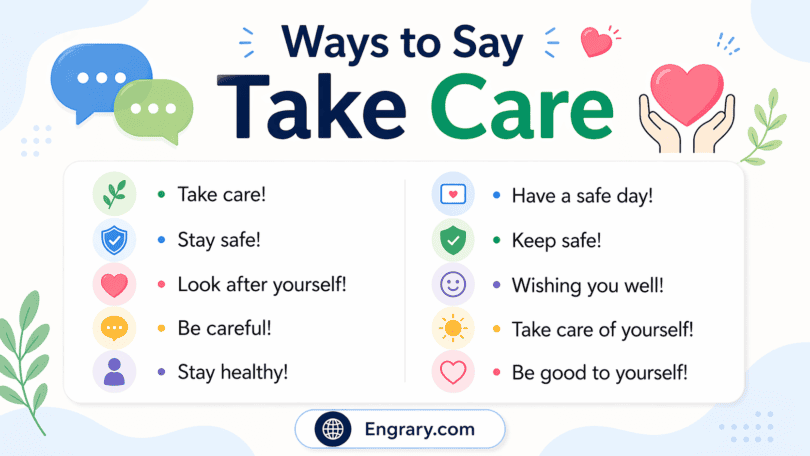
These are some of the most common alternatives to take care. They are easy to use and work well in many everyday situations.
- Take care: the standard phrase for showing concern and saying goodbye.
Example: Take care on your way home. - Stay safe: a caring phrase used when you want someone to be careful.
Example: Stay safe out there. - Be careful: a direct way to show concern for safety.
Example: Be careful on the road. - Look after yourself: a warm phrase that sounds thoughtful and supportive.
Example: Look after yourself. - Take it easy: a relaxed phrase that can mean goodbye or “don’t stress.”
Example: Take it easy. - All the best: a kind phrase used to wish someone well.
Example: All the best with your new job. - Have a good day: a simple farewell with a positive wish.
Example: Have a good day. - Stay well: a caring phrase focused on health and well-being.
Example: Stay well. - Keep well: another warm well-wishing phrase.
Example: Keep well. - Take good care of yourself: a fuller and more caring version of take care.
Example: Take good care of yourself.

Formal Ways to Say Take Care
These phrases work best when you want to sound polite, respectful, or professional.
- Take care: simple, polite, and widely acceptable.
Example: Take care, and thank you for your time. - Take good care of yourself: more formal and more caring.
Example: Take good care of yourself. - Wishing you all the best: polished and respectful.
Example: Wishing you all the best. - Please take care: gentle and courteous.
Example: Please take care. - I wish you well: formal and supportive.
Example: I wish you well. - Be safe: direct but still appropriate in many formal contexts.
Example: Be safe during your trip. - Take care of yourself: polite and sincere.
Example: Take care of yourself. - Wishing you good health: more formal and thoughtful.
Example: Wishing you good health. - Have a pleasant day: a polished farewell often used in service or business settings.
Example: Have a pleasant day. - Please stay well: a respectful and caring formal closing.
Example: Please stay well.
Casual Ways to Say Take Care
These phrases sound relaxed and natural in everyday conversation.
- Take it easy: easygoing and common.
Example: Take it easy. - Look after yourself: warm but still casual.
Example: Look after yourself. - Be good: playful and casual.
Example: Be good. - Take care now: soft and natural in conversation.
Example: Take care now. - See you later, take care: a farewell plus a kind wish.
Example: See you later, take care. - Have a good one: very common and relaxed.
Example: Have a good one. - Don’t work too hard: casual and friendly.
Example: Don’t work too hard. - Keep safe: caring and everyday-friendly.
Example: Keep safe. - Take care out there: natural when you want to sound warm and a little protective.
Example: Take care out there. - Take it easy out there: relaxed and supportive.
Example: Take it easy out there.
Friendly Ways to Say Take Care
These alternatives sound warmer and more personal than general casual farewells.
- Take care, my friend: warm and personal.
Example: Take care, my friend. - Stay safe: caring and supportive.
Example: Stay safe. - Look after yourself: thoughtful and kind.
Example: Look after yourself. - Have a lovely day: warm and cheerful.
Example: Have a lovely day. - Take care of yourself: friendly and sincere.
Example: Take care of yourself. - Keep well: soft and caring.
Example: Keep well. - Take care, dear: affectionate and warm.
Example: Take care, dear. - Be safe out there: protective and friendly.
Example: Be safe out there. - Wishing you all the best: kind and encouraging.
Example: Wishing you all the best. - Have a wonderful day: positive and warm.
Example: Have a wonderful day.
Professional Ways to Say Take Care at Work
These phrases work well in office conversations, client messages, email closings, and polite professional sign-offs.
- Take care: polite and professional without sounding cold.
Example: Take care, and thank you again. - Take care of yourself: warm but still appropriate.
Example: Take care of yourself. - Please take care: courteous and respectful.
Example: Please take care. - Wishing you all the best: polished and professional.
Example: Wishing you all the best. - Have a great rest of your day: common in modern work communication.
Example: Have a great rest of your day. - Take care and let me know if you need anything: supportive and useful in client-facing contexts.
Example: Take care and let me know if you need anything. - Wishing you a productive day: positive and work-friendly.
Example: Wishing you a productive day. - Be safe: good when safety or travel is relevant.
Example: Be safe. - Have a pleasant evening: a polished closing later in the day.
Example: Have a pleasant evening. - Wishing you a smooth day ahead: professional and encouraging.
Example: Wishing you a smooth day ahead.
Funny and Creative Ways to Say Take Care
These alternatives work best with people who will understand the playful tone.
- Don’t do anything I wouldn’t do: playful and joking.
Example: Don’t do anything I wouldn’t do. - Stay out of trouble: light and friendly.
Example: Stay out of trouble. - Keep your nose clean: slightly old-fashioned and playful.
Example: Keep your nose clean. - Don’t get into mischief: playful and warm.
Example: Don’t get into mischief. - Go easy on yourself: supportive and slightly creative.
Example: Go easy on yourself. - Mind yourself: a caring phrase with a slightly traditional tone.
Example: Mind yourself. - Take it easy, legend: playful and casual.
Example: Take it easy, legend. - Don’t disappear on me: joking and relationship-based.
Example: Don’t disappear on me.
Ways to Say Take Care in Text Messages
These phrases are short, natural, and easy to send in chats, DMs, and messages.
- TC: a common texting short form of take care.
Example: TC. - Take care: still natural in messages.
Example: Take care. - Stay safe: very common in texts.
Example: Stay safe. - Take it easy: relaxed and friendly.
Example: Take it easy. - Look after yourself: warm and caring.
Example: Look after yourself. - Be safe: short and clear.
Example: Be safe. - Talk later, take care: natural when ending a chat.
Example: Talk later, take care. - Have a good one: short and casual.
Example: Have a good one. - Keep safe: supportive and text-friendly.
Example: Keep safe. - Take care 😊: soft and friendly.
Example: Take care 😊
How to Choose the Right “Take Care” Alternative
Choose the phrase based on the situation, your relationship with the person, and the tone you want. In formal or professional situations, phrases like Wishing you all the best, Please take care, or Have a pleasant day work better. In casual conversations, Take it easy, Have a good one, or Keep safe sound more natural. With friends or family, warmer choices like Look after yourself or Take care, dear feel more personal. In text messages, shorter forms like TC, Stay safe, or Take care 😊 often work best.
What to Say Instead of Take Care in Different Situations
Sometimes the best alternative depends on what you actually mean.
- Stay safe: best when safety matters.
- Look after yourself: best when you want to sound caring.
- Wishing you all the best: best in polite or formal farewells.
- Have a good day: best as a simple everyday closing.
- Take it easy: best for relaxed, casual situations.
- Be careful: best when someone is traveling or facing risk.
- Keep well: best for gentle well-wishing.
- Rest well: best when someone is tired or unwell.
- Feel better soon: best when someone is sick.
- Have a safe trip: best when someone is traveling.
Summary
There are many ways to say take care in English. Some sound formal, some casual, some warm, and some playful.
The best phrase depends on the situation, the relationship, and whether you want to sound polite, caring, relaxed, or professional. Once you understand the tone behind each option, it becomes much easier to choose the right one naturally.
FAQs
Another way to say take care is stay safe, look after yourself, or take it easy. The best choice depends on whether you want to sound caring, casual, or formal.
Formal ways to say take care include Wishing you all the best, Please take care, and Have a pleasant day. These work well in respectful or professional situations.
Friendly ways to say take care include look after yourself, stay safe, and take care, my friend. These sound warmer and more personal than a simple goodbye.
In a text, you can say TC, stay safe, take care, or have a good one. Short and natural phrases usually work best in messages.
Creative ways to say take care include stay out of trouble, don’t disappear on me, and take it easy, legend. These are best for playful, casual situations.
You May Also Like