Saying goodbye is a normal part of daily conversation. The words you choose can sound formal, casual, friendly, warm, professional, or funny.
In this guide, you will learn many ways to say goodbye in English and when to use them. You will also see which goodbye phrases work best with friends, at work, in text messages, and in formal situations.
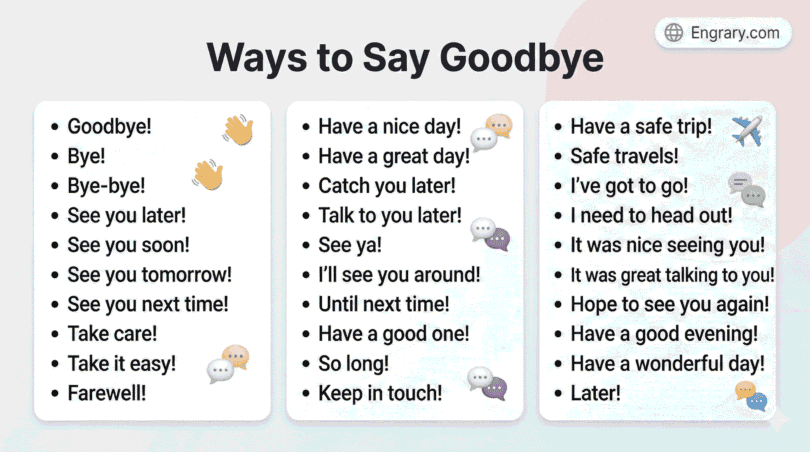
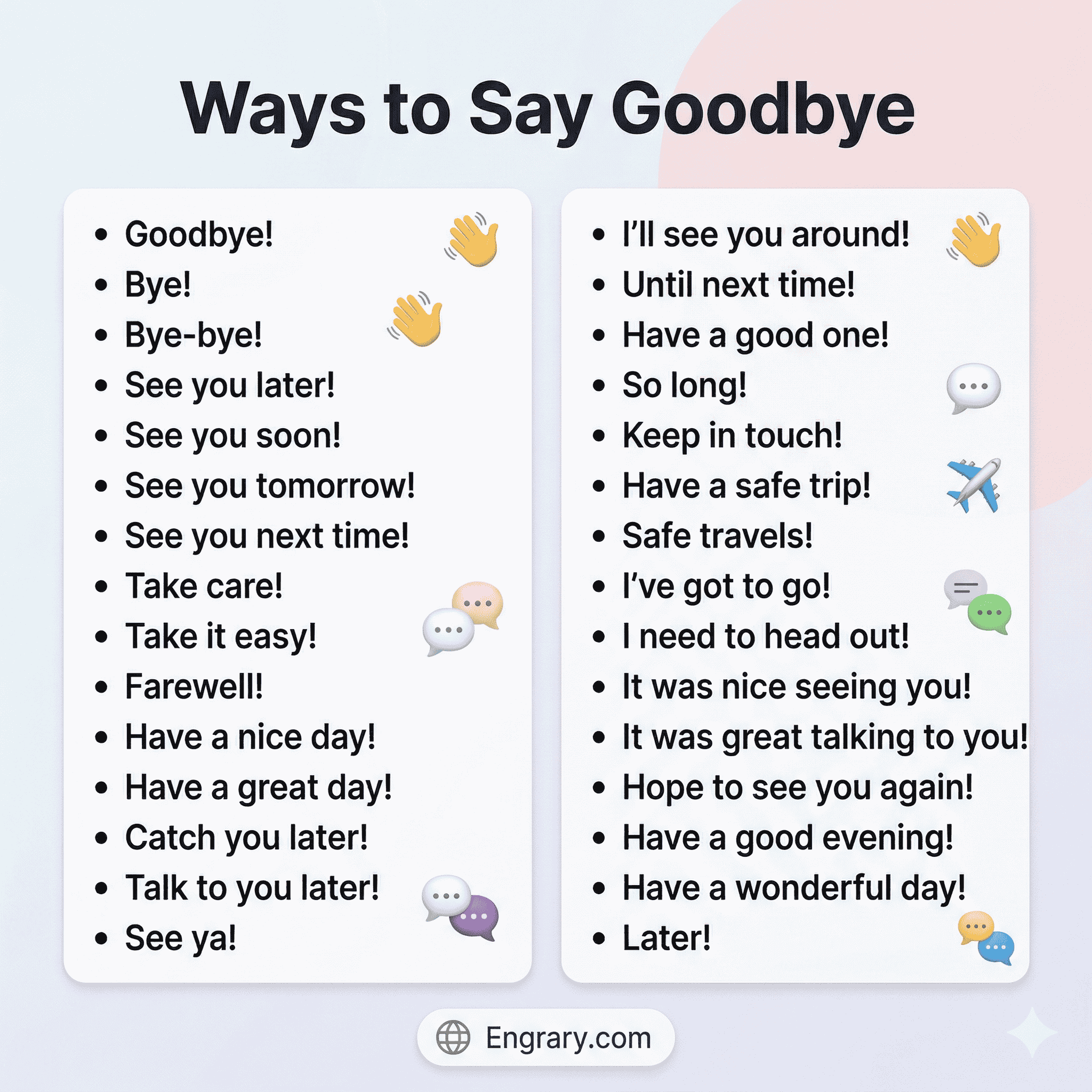
Common Ways to Say Goodbye
These are some of the most common ways to say goodbye in English. They are simple, natural, and useful in many everyday situations.
- Goodbye: the standard farewell.
Example: Goodbye, everyone. - Bye: the most common short goodbye.
Example: Bye, see you tomorrow. - Bye-bye: a softer and more playful version of bye.
Example: Bye-bye, take care. - See you: a casual goodbye when you expect to meet again.
Example: See you tomorrow. - See you later: a very common everyday farewell.
Example: See you later. - Take care: a warm goodbye that also shows concern.
Example: Take care on your way home. - Talk to you later: a common farewell when you expect to speak again.
Example: Talk to you later. - See you soon: a friendly goodbye for someone you expect to meet again soon.
Example: See you soon. - Have a good day: a goodbye that also includes a kind wish.
Example: Have a good day. - Catch you later: a casual farewell used with friends or people you know well.
Example: Catch you later.
Formal Ways to Say Goodbye
Use these goodbye phrases when you want to sound polite, respectful, or professional.
- Goodbye: classic and formal.
Example: Goodbye, and thank you for your time. - Farewell: more formal and sometimes more serious than goodbye.
Example: Farewell, and best wishes. - It was nice seeing you: polite and friendly after meeting someone.
Example: It was nice seeing you today. - Have a pleasant day: a formal goodbye with a polite wish.
Example: Have a pleasant day. - Take care: warm and respectful in both formal and semi-formal settings.
Example: Take care, and travel safely. - I look forward to seeing you again: a formal farewell that sounds positive and professional.
Example: I look forward to seeing you again. - Wishing you all the best: a polite and respectful closing.
Example: Wishing you all the best. - Until next time: a polished goodbye when you expect another meeting.
Example: Until next time. - Have a good evening: a polite farewell later in the day.
Example: Have a good evening. - It was a pleasure speaking with you: a formal goodbye often used in work or business situations.
Example: It was a pleasure speaking with you.
Casual Ways to Say Goodbye
These phrases sound relaxed and natural. They work best in everyday conversation.
- Bye: short, simple, and very common.
Example: Bye, I’ll call you later. - See ya: a casual spoken version of see you.
Example: See ya tomorrow. - Later: a very relaxed goodbye.
Example: Later. - Catch you later: friendly and casual.
Example: Catch you later. - Talk to you later: common when you plan to speak again.
Example: Talk to you later. - See you around: used when you may see the person again, but not at a fixed time.
Example: See you around. - I’m off: used when you are leaving now.
Example: I’m off. See you tomorrow. - Take it easy: a casual goodbye that sounds relaxed and friendly.
Example: Take it easy. - Have a good one: a very common casual farewell.
Example: Have a good one. - See you soon: casual and friendly when you expect to meet again soon.
Example: See you soon.
Friendly Ways to Say Goodbye
These goodbyes sound warmer and more personal than basic casual farewells.
- Take care: warm and caring.
Example: Take care and stay safe. - See you soon: friendly and hopeful.
Example: See you soon. - Talk soon: a warm goodbye for someone you expect to contact again.
Example: Talk soon. - Have a lovely day: kind and thoughtful.
Example: Have a lovely day. - Have a great day: positive and cheerful.
Example: Have a great day. - See you later: simple but warm in friendly use.
Example: See you later. - Catch you later: relaxed and friendly.
Example: Catch you later. - Stay safe: caring and supportive.
Example: Stay safe. - Bye for now: friendly and soft, especially when the goodbye is not final.
Example: Bye for now. - Have a good one: warm and easygoing.
Example: Have a good one.
Professional Ways to Say Goodbye at Work
These goodbye phrases work well in meetings, office conversations, customer service, and professional messages.
- Goodbye: simple and professional.
Example: Goodbye, and thank you again. - Take care: polite and warm without sounding too personal.
Example: Take care. - Have a great rest of your day: a professional farewell with a positive tone.
Example: Have a great rest of your day. - It was nice speaking with you: useful after a meeting or call.
Example: It was nice speaking with you today. - I look forward to our next meeting: professional and forward-looking.
Example: I look forward to our next meeting. - Please let me know if you need anything else: common in customer service and business communication.
Example: Please let me know if you need anything else. - Wishing you a productive day: polished and work-friendly.
Example: Wishing you a productive day. - Thank you, goodbye: direct and polite.
Example: Thank you, goodbye. - Have a good evening: useful when ending work conversations later in the day.
Example: Have a good evening. - Talk to you soon: good for coworkers or clients when another discussion is expected.
Example: Talk to you soon.
Funny and Creative Ways to Say Goodbye
These goodbye phrases work best in playful situations with friends or people who understand the tone.
- Catch you on the flip side: playful and old-school.
Example: Catch you on the flip side. - Don’t miss me too much: funny and light.
Example: Don’t miss me too much. - I’m out: short and confident.
Example: I’m out. See you later. - See you on the other side: dramatic and joking.
Example: See you on the other side. - Toodles: playful and slightly old-fashioned.
Example: Toodles. - Peace out: slangy and relaxed.
Example: Peace out. - Later, alligator: a silly rhyming goodbye.
Example: Later, alligator. - Smell you later: joking and very informal.
Example: Smell you later. - I’m off like a prom dress: very playful and informal.
Example: I’m off like a prom dress. - Until we meet again: dramatic and funny in the right tone.
Example: Until we meet again.
Ways to Say Goodbye in Text Messages
These goodbyes are short, natural, and easy to use in chats and messages.
- Bye: simple and common.
Example: Bye. - See ya: casual and friendly.
Example: See ya later. - Talk later: short and natural for texts.
Example: Talk later. - TTYL: short for talk to you later.
Example: TTYL. - Catch you later: casual and text-friendly.
Example: Catch you later. - Take care: warm and thoughtful.
Example: Take care. - Goodnight 😊: soft and friendly for evening chats.
Example: Goodnight 😊 - Have a good one: easy and natural in messages.
Example: Have a good one. - Text me later: useful when you want to continue the conversation later.
Example: Text me later. - Bye for now: soft and friendly.
Example: Bye for now.
How to Choose the Right Goodbye
Choose your goodbye based on the situation, your relationship with the person, and the tone you want. In formal settings, polite phrases like goodbye, farewell, or it was nice speaking with you work best. In casual situations, phrases like bye, see ya, or later sound more natural. For friends or people you know well, warmer options like take care, talk soon, or have a great day work better. In texts, shorter goodbyes such as bye, TTYL, or talk later usually feel more natural. It also helps to think about whether you expect to see the person again soon, because phrases like see you soon or talk to you later sound less final than goodbye or farewell.
What to Say Instead of Goodbye in Different Situations
Sometimes the best farewell is not the word goodbye at all. These phrases work naturally in different situations.
- See you tomorrow: good when you already know the next meeting time.
- Talk to you soon: useful when you expect another call or message.
- Have a good day: polite and common in daily conversation.
- Take care: warm and useful in many situations.
- Stay safe: caring and supportive.
- Have a great weekend: best at the end of the workweek.
- See you at work: useful for coworkers.
- Text me later: natural for close friends or regular contacts.
- Until next time: polished and slightly formal.
- Have a safe trip: best when someone is traveling.
Summary
There are many ways to say goodbye in English. Some sound formal, some casual, some friendly, and some funny. The best goodbye depends on the situation, the relationship, and the tone you want. Once you know how each phrase sounds, it becomes much easier to choose the right farewell naturally.
FAQs
Another way to say goodbye is bye. You can also use phrases like see you, take care, talk to you later, or have a good day, depending on the situation.
Formal ways to say goodbye include goodbye, farewell, it was nice speaking with you, and I look forward to seeing you again. These work well in respectful, professional, or formal situations.
Friendly ways to say goodbye include take care, see you soon, talk soon, and have a great day. These sound warmer and more personal than a simple bye.
In a text, you can say bye, talk later, TTYL, catch you later, or text me later. Short and natural phrases usually work best in messages.
Funny ways to say goodbye include peace out, later, alligator, toodles, and don’t miss me too much. These are best for casual situations and people who will understand the playful tone.
You May Also Like