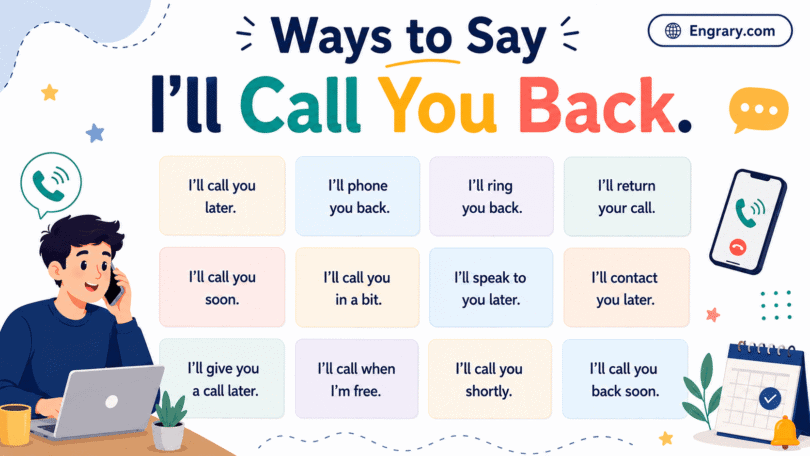
“I’ll call you back” is a common English phrase used when you cannot continue a conversation right now but plan to speak with someone again later. It is often used during phone calls, business conversations, customer service interactions, and everyday discussions.
Although the phrase is clear and natural, there are many alternatives that may sound more polite, professional, formal, or casual depending on the situation. Learning these alternatives can help you communicate more effectively in both personal and professional settings.
“I’ll Call You Back” Meaning
“I’ll call you back” means that you intend to contact someone again by phone at a later time. People often use this phrase when they are busy, need more information, or cannot continue the conversation at the moment.
The phrase specifically refers to a future phone call. If you plan to respond through email, text, or another method, alternatives like “I’ll get back to you” or “I’ll follow up with you” may be more appropriate.
Best Alternatives to “I’ll Call You Back” by Situation
| Situation | Better Phrase |
|---|---|
| General use | I’ll get back to you. |
| Professional setting | I’ll return your call shortly. |
| Workplace | I’ll follow up with you later. |
| Customer service | I’ll call you back with an update. |
| Casual conversation | I’ll call you later. |
| Text message | I’ll ring you when I’m free. |
| Formal communication | I’ll contact you shortly. |
| Follow-up discussion | I’ll reach out later. |
| Urgent matter | I’ll call you back as soon as possible. |
| Waiting for information | I’ll get back to you once I know more. |
| Scheduling | I’ll give you a call later today. |
| Business call | I’ll contact you after the meeting. |
| Friend or family | Talk to you later. |
| Client communication | I’ll follow up shortly. |
| Missed call | I’ll return your call soon. |
For most situations, “I’ll get back to you” is one of the safest alternatives. Unlike “I’ll call you back,” it does not limit the response to a phone call and works well in professional communication.
“I’ll Call You Back” vs Similar Phrases
Several phrases sound similar to “I’ll call you back,” but they do not always mean the same thing. Understanding the differences can help you choose the most accurate expression.
| Phrase | Meaning |
|---|---|
| I’ll call you back. | Future phone call |
| I’ll get back to you. | Any future response |
| I’ll return your call. | Professional phone response |
| I’ll follow up with you. | Professional follow-up |
| I’ll contact you later. | Formal future communication |
| I’ll reach out later. | Business communication |
| I’ll ring you back. | Informal or British English |
| I’ll give you a call later. | Friendly phone call |
| Talk to you later. | Casual conversation |
| I’ll update you later. | Future information update |
The biggest difference is that “I’ll call you back” specifically refers to a phone conversation. Meanwhile, “I’ll get back to you” can mean a phone call, email, message, or any other type of response.
Direct vs Professional Ways to Say “I’ll Call You Back”
In business settings, some alternatives sound more polished and professional than others. Choosing the right phrase can create a stronger impression.
| Direct | Professional |
|---|---|
| I’ll call you later. | I’ll return your call shortly. |
| Call you later. | I’ll contact you shortly. |
| I’ll ring you back. | I’ll follow up with you later. |
| Talk later. | I’ll reach out once I have more information. |
| I’ll call you soon. | I’ll get back to you shortly. |
| Let me call you later. | I’ll contact you after reviewing this. |
| I’ll call again. | I’ll follow up with an update. |
| I’ll get back soon. | I’ll return your call as soon as possible. |
Professional alternatives often sound more respectful because they provide clarity and show consideration for the other person’s time. They are especially useful when speaking with clients, managers, or customers.
When “I’ll Call You Back” Sounds Natural
“I’ll call you back” sounds natural when you intend to continue a conversation by phone but cannot talk right away. It is commonly used during business calls, customer service conversations, and personal phone calls.
The phrase is especially useful when you need time to gather information, finish another task, attend a meeting, or move to a quieter location. In many situations, adding a timeframe can make the message clearer and more helpful.
Examples:
- I’ll call you back in a few minutes.
- I’ll call you back after the meeting.
- I’ll call you back later today.
- I’ll call you back once I have the details.
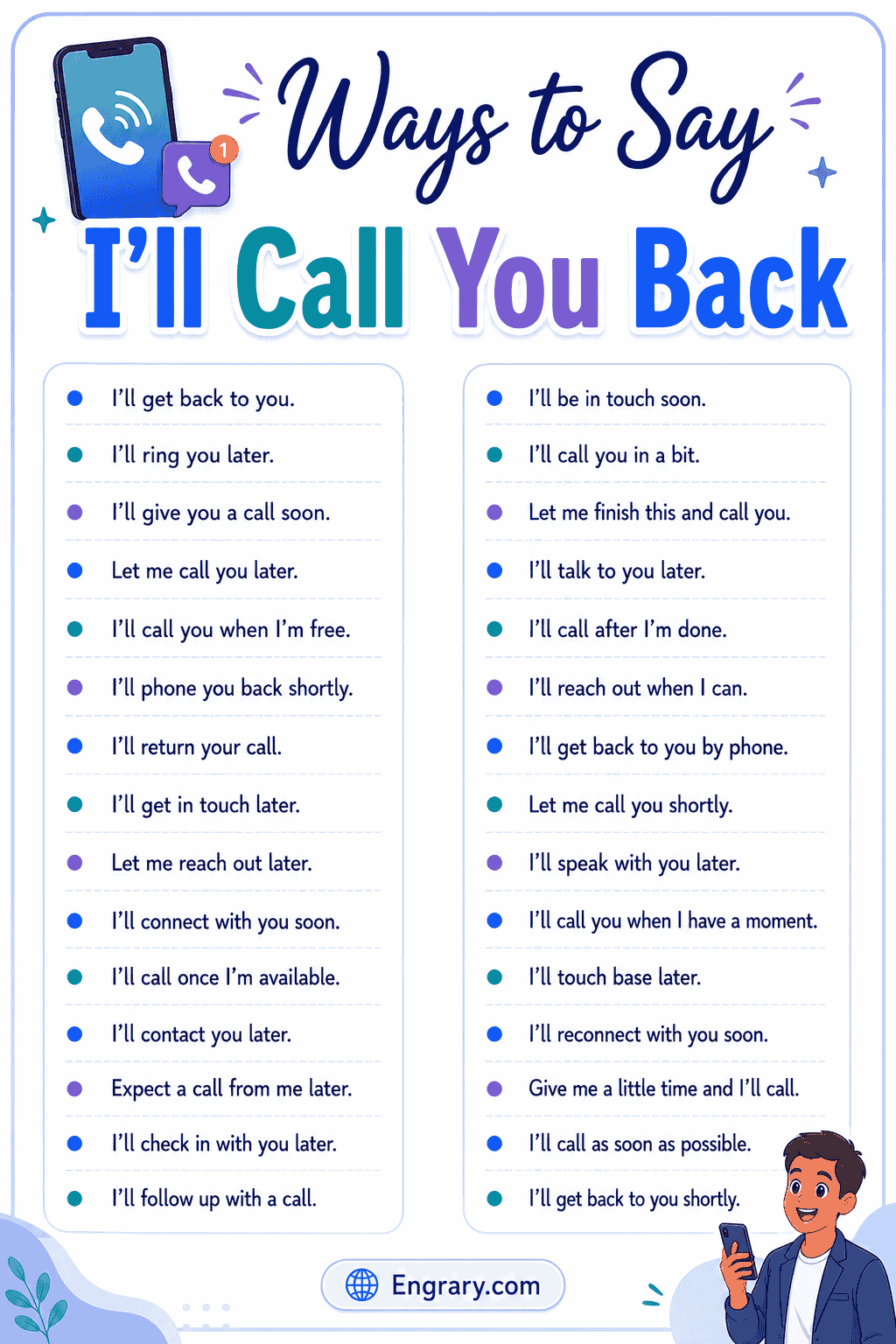
Polite Ways to Say “I’ll Call You Back”
These alternatives help you sound courteous and considerate.
I’ll get back to you soon.
A polite phrase that works in both personal and professional conversations.
Example: I’ll get back to you soon.
Let me call you back.
A friendly and respectful alternative.
Example: Let me call you back.
I’ll return your call shortly.
Common in professional communication.
Example: I’ll return your call shortly.
Would it be okay if I called you back later?
A polite way to ask for flexibility.
Example: Would it be okay if I called you back later?
I’ll contact you once I’m available.
Useful when you need time before responding.
Example: I’ll contact you once I’m available.
I’ll reach out later today.
Professional and customer-friendly.
Example: I’ll reach out later today.
I’ll call you as soon as I can.
Shows urgency while remaining polite.
Example: I’ll call you as soon as I can.
Let me finish this and call you back.
Helpful when you are busy with another task.
Example: Let me finish this and call you back.
I’ll be in touch shortly.
A polite and flexible alternative.
Example: I’ll be in touch shortly.
I’ll follow up with you soon.
Suitable for business and customer service conversations.
Example: I’ll follow up with you soon.
Professional Ways to Say “I’ll Call You Back”
These phrases work well with clients, coworkers, managers, and customers.
I’ll return your call as soon as possible.
A professional way to promise a response.
Example: I’ll return your call as soon as possible.
I’ll get back to you shortly.
One of the most common workplace phrases.
Example: I’ll get back to you shortly.
I’ll contact you once I have more information.
Useful when waiting for details.
Example: I’ll contact you once I have more information.
I’ll follow up with you later today.
A strong business communication phrase.
Example: I’ll follow up with you later today.
I’ll reach out once I’ve reviewed this.
Helpful when you need time to evaluate information.
Example: I’ll reach out once I’ve reviewed this.
I’ll call you back with an update.
Suitable for ongoing discussions.
Example: I’ll call you back with an update.
I’ll contact you after the meeting.
Clear and professional.
Example: I’ll contact you after the meeting.
I’ll get back to you after checking that.
Useful when verification is needed.
Example: I’ll get back to you after checking that.
I’ll follow up once I have confirmation.
Professional and specific.
Example: I’ll follow up once I have confirmation.
I’ll return your call later today.
Provides a clear timeframe.
Example: I’ll return your call later today.
Workplace Phrases for Returning a Call
Workplace communication often requires phrases that are clear, professional, and reliable. These alternatives help you communicate your intention to call back without sounding abrupt.
I’ll follow up with you later.
A common workplace expression.
Example: I’ll follow up with you later.
I’ll get back to you after reviewing this.
Useful when additional review is needed.
Example: I’ll get back to you after reviewing this.
I’ll contact you once I have an answer.
Works well when waiting for information.
Example: I’ll contact you once I have an answer.
I’ll return your call after the meeting.
Provides a clear expectation.
Example: I’ll return your call after the meeting.
I’ll reach out later today.
Professional and widely used.
Example: I’ll reach out later today.
I’ll follow up with an update.
Helpful during ongoing projects.
Example: I’ll follow up with an update.
I’ll get back to you once I’ve checked that.
Useful for confirming details.
Example: I’ll get back to you once I’ve checked that.
I’ll call you once everything is confirmed.
Provides reassurance and clarity.
Example: I’ll call you once everything is confirmed.
I’ll contact you after speaking with the team.
Suitable for collaborative environments.
Example: I’ll contact you after speaking with the team.
I’ll return your call shortly.
A professional and dependable option.
Example: I’ll return your call shortly.
Customer Service Phrases for Returning a Call
Customer service conversations often require clear expectations and reassurance. These phrases help maintain professionalism while keeping customers informed.
I’ll call you back with more information.
Shows that you are actively working on the issue.
Example: I’ll call you back with more information.
I’ll return your call shortly.
Professional and reassuring.
Example: I’ll return your call shortly.
I’ll contact you as soon as possible.
Useful when the timing is uncertain.
Example: I’ll contact you as soon as possible.
I’ll follow up once I’ve investigated this.
Appropriate when researching a problem.
Example: I’ll follow up once I’ve investigated this.
I’ll get back to you after checking the details.
Provides transparency and clarity.
Example: I’ll get back to you after checking the details.
I’ll reach out once I have an update.
Common in customer support.
Example: I’ll reach out once I have an update.
I’ll call you back after reviewing your account.
Specific and professional.
Example: I’ll call you back after reviewing your account.
I’ll contact you once the issue is resolved.
Useful for support cases.
Example: I’ll contact you once the issue is resolved.
I’ll follow up with you later today.
Provides a clear timeframe.
Example: I’ll follow up with you later today.
I’ll return your call with an update.
Helpful when additional information is expected.
Example: I’ll return your call with an update.
Text Message Alternatives to “I’ll Call You Back”
Text messages are usually shorter and more conversational. These alternatives sound natural when you want to continue the conversation later.
I’ll call you later.
A simple and common alternative.
Example: I’ll call you later.
I’ll call you in a bit.
Useful when the delay will be short.
Example: I’ll call you in a bit.
I’ll ring you when I’m free.
A casual phrase commonly used in everyday conversations.
Example: I’ll ring you when I’m free.
Let me finish this and call you.
Helpful when you’re busy with another task.
Example: Let me finish this and call you.
I’ll get back to you soon.
Works well for calls, texts, or emails.
Example: I’ll get back to you soon.
Talk to you later.
Friendly and informal.
Example: Talk to you later.
Catch up with you soon.
A warm alternative for friends and colleagues.
Example: Catch up with you soon.
I’ll give you a call later.
A natural phrase in both personal and professional conversations.
Example: I’ll give you a call later.
I’ll reach out later.
Works well in professional text conversations.
Example: I’ll reach out later.
I’ll be in touch.
A flexible alternative that does not specify the communication method.
Example: I’ll be in touch.
Casual Ways to Say “I’ll Call You Back”
These phrases work best with friends, family, and people you know well.
I’ll call you later.
A simple everyday phrase.
Example: I’ll call you later.
I’ll ring you back.
Common in casual conversations and British English.
Example: I’ll ring you back.
I’ll give you a buzz later.
An informal expression meaning you’ll call later.
Example: I’ll give you a buzz later.
Talk soon.
Short and friendly.
Example: Talk soon.
Catch you later.
A relaxed way to end a conversation.
Example: Catch you later.
I’ll call you in a few.
Useful when you plan to call soon.
Example: I’ll call you in a few.
Let me call you when I’m free.
Natural and conversational.
Example: Let me call you when I’m free.
I’ll get back to you later.
Casual but still polite.
Example: I’ll get back to you later.
Give me a little while and I’ll call.
A friendly way to ask for time.
Example: Give me a little while and I’ll call.
I’ll hit you up later.
Very informal and best used with close friends.
Example: I’ll hit you up later.

Formal Ways to Say “I’ll Call You Back”
Formal alternatives are useful when speaking with clients, customers, managers, or professional contacts.
I’ll return your call shortly.
Professional and respectful.
Example: I’ll return your call shortly.
I’ll contact you as soon as possible.
Suitable when timing is uncertain.
Example: I’ll contact you as soon as possible.
I’ll follow up with you later.
Common in business communication.
Example: I’ll follow up with you later.
I’ll reach out once I have more information.
Useful when waiting for updates.
Example: I’ll reach out once I have more information.
I’ll contact you after reviewing the matter.
Professional and specific.
Example: I’ll contact you after reviewing the matter.
I’ll get back to you shortly.
A widely used business phrase.
Example: I’ll get back to you shortly.
I’ll follow up once I have confirmation.
Helpful when approval or verification is required.
Example: I’ll follow up once I have confirmation.
I’ll return your call later today.
Provides a clear expectation.
Example: I’ll return your call later today.
I’ll contact you once the information becomes available.
Useful in customer service and corporate settings.
Example: I’ll contact you once the information becomes available.
I’ll be in touch shortly.
A formal but friendly alternative.
Example: I’ll be in touch shortly.
Professional Phrases for Following Up by Phone
Following up by phone often requires a little more professionalism than simply saying “I’ll call you back.”
I’ll follow up with you by phone.
Clearly states how you’ll respond.
Example: I’ll follow up with you by phone.
I’ll call you once I’ve reviewed this.
Useful when additional review is required.
Example: I’ll call you once I’ve reviewed this.
I’ll contact you with an update.
Common in workplace and customer service communication.
Example: I’ll contact you with an update.
I’ll reach out after gathering more information.
Professional and informative.
Example: I’ll reach out after gathering more information.
I’ll return your call after speaking with the team.
Useful for collaborative environments.
Example: I’ll return your call after speaking with the team.
I’ll get back to you with the details.
Helpful when information is pending.
Example: I’ll get back to you with the details.
I’ll follow up once everything is finalized.
Professional and reassuring.
Example: I’ll follow up once everything is finalized.
I’ll call you with the results.
Useful for updates and investigations.
Example: I’ll call you with the results.
I’ll contact you once a decision has been made.
Common in business settings.
Example: I’ll contact you once a decision has been made.
I’ll reach out as soon as I have an update.
Professional and customer-friendly.
Example: I’ll reach out as soon as I have an update.
Time-Based Ways to Say “I’ll Call You Back”
Adding a timeframe makes your promise clearer and more reliable.
I’ll call you back shortly.
Useful for a short delay.
Example: I’ll call you back shortly.
I’ll call you later today.
Provides a clear timeframe.
Example: I’ll call you later today.
I’ll call you this afternoon.
Specific and helpful.
Example: I’ll call you this afternoon.
I’ll call you tomorrow.
Best when the response will take longer.
Example: I’ll call you tomorrow.
I’ll give you a call within the hour.
Shows urgency and commitment.
Example: I’ll give you a call within the hour.
I’ll reach out this evening.
Useful for after-work communication.
Example: I’ll reach out this evening.
I’ll contact you first thing tomorrow.
A professional business phrase.
Example: I’ll contact you first thing tomorrow.
I’ll get back to you before the end of the day.
Common in workplace communication.
Example: I’ll get back to you before the end of the day.
I’ll call once I’ve finished this task.
Useful when you’re currently busy.
Example: I’ll call once I’ve finished this task.
I’ll return your call as soon as possible.
Helpful when an exact time is unavailable.
Example: I’ll return your call as soon as possible.
Phrases That Can Sound Too Vague
Some phrases can leave people unsure about when they will hear from you. More specific alternatives usually work better.
| Avoid | Better |
|---|---|
| Maybe later. | I’ll call you later today. |
| I’ll see. | I’ll get back to you shortly. |
| Sometime later. | I’ll contact you tomorrow morning. |
| I’ll let you know. | I’ll call you with an update. |
| Not sure yet. | I’ll get back to you after checking. |
| Eventually. | I’ll return your call this afternoon. |
Providing a timeframe helps build trust and reduces confusion.
Common Mistakes with “I’ll Call You Back”
One common mistake is confusing “I’ll call you back” with “I’ll get back to you.” The first specifically refers to a phone call, while the second can refer to any type of response.
Another mistake is giving vague promises. Phrases such as “Maybe later” or “I’ll see” can leave the other person uncertain. Adding a timeframe often makes your communication clearer and more professional.
Some people also use casual expressions with clients or customers. While “Talk later” works well with friends, professional situations usually require phrases such as “I’ll return your call shortly” or “I’ll follow up with you later.”
Real-Life Examples for Work and Daily Conversations
Workplace Conversation
A: Do you have an update on the project?
B: I’ll get back to you after reviewing it.
Customer Service Call
A: Can you check my account?
B: I’ll call you back with more information.
Business Meeting
A: When can we discuss this again?
B: I’ll follow up later today.
Text Message
A: Are you free to talk?
B: I’ll call you in a bit.
Missed Call
A: Sorry I missed your call.
B: No problem. I’ll return your call shortly.
Casual Conversation
A: Give me a call when you’re free.
B: Sure, I’ll ring you back later.
Tips for Promising a Return Call Politely
Choose a phrase that matches the situation. Casual alternatives work well with friends, while professional phrases are better for clients, customers, and coworkers.
Whenever possible, provide a timeframe. Saying “I’ll call you later today” or “I’ll get back to you before the end of the day” sounds more reliable than making a vague promise.
Summary
“I’ll call you back” is a common phrase for telling someone you’ll contact them again by phone. Depending on the situation, alternatives like “I’ll get back to you,” “I’ll return your call,” and “I’ll follow up with you” may sound more natural.
The best phrase depends on your relationship with the listener and the level of formality you need. Choosing the right alternative can help you sound more professional, polite, and confident.
FAQs
You can say “I’ll get back to you,” “I’ll return your call,” “I’ll follow up with you,” or “I’ll give you a call later.”
Professional alternatives include “I’ll return your call shortly,” “I’ll get back to you shortly,” and “I’ll follow up with you later.”
“I’ll call you back” specifically means a future phone call, while “I’ll get back to you” can refer to any type of response.
It can be professional in some situations, but phrases like “I’ll return your call later today” often sound more polished.
You can say “I’ll call you back shortly,” “I’ll return your call as soon as possible,” or “I’ll contact you once I have more information.”
You May Also Like