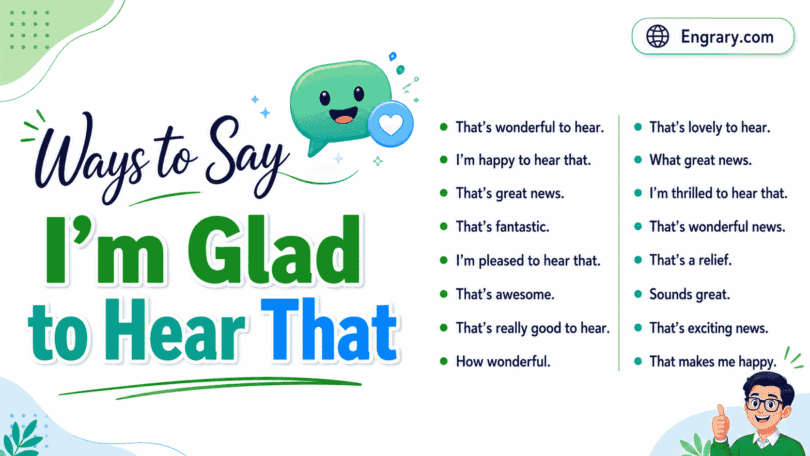
“I’m glad to hear that” is a polite and positive phrase, but it is not the only way to respond to good news. Sometimes, you may want to sound professional, warm, excited, relieved, or encouraging.
For example, “That’s good to hear” works well in everyday conversations, while “I’m pleased to hear that” sounds more formal. Meanwhile, “I’m relieved to hear that” is better when you were worried and the news makes you feel better. Therefore, this guide gives you 100 natural ways to say “I’m glad to hear that” with examples for good news, work updates, health recovery, progress, celebrations, texts, and client-friendly replies.
Best “I’m Glad to Hear That” Phrases by Situation
| Situation | Best Phrase |
|---|---|
| General good news | That’s good to hear |
| Personal happiness | I’m really happy for you |
| Professional update | Thank you for the update |
| Formal response | I’m pleased to hear that |
| Strong excitement | That’s wonderful news |
| Relief after worry | I’m relieved to hear that |
| Health recovery | I’m glad you’re feeling better |
| Progress or improvement | That’s encouraging to hear |
| Client satisfaction | I’m happy to hear you’re satisfied |
| Celebration | That’s amazing news |
| Short text | Great news |
| Supportive response | I’m glad things are improving |
“I’m Glad to Hear That” vs “I’m Happy for You” vs “That’s Good News”
These phrases are similar, but they do not always fit the same situation. Some responses sound neutral, some sound personal, and others show relief or professional appreciation.
| Phrase | Meaning | Best Use |
|---|---|---|
| I’m glad to hear that | General positive response to good news | Updates, reassurance, good news |
| I’m happy for you | Personal response to someone’s success or joy | Achievements, milestones, personal wins |
| That’s good news | Neutral and simple | Everyday updates |
| I’m pleased to hear that | Formal or professional | Emails, meetings, client messages |
| That’s wonderful news | Warmer and more excited | Big positive updates |
| I’m relieved to hear that | Shows worry has ended | Safety, recovery, stressful situations |
| Thank you for the update | Professional and appreciative | Work or client communication |
| That’s encouraging to hear | Best for progress or improvement | Recovery, progress, ongoing situations |
Is “I’m Glad to Hear That” Polite and Professional?
Yes, “I’m glad to hear that” is polite, natural, and professional in many situations. You can use it in conversations, emails, work messages, and friendly replies.
However, the phrase can sound repetitive if you use it too often. In formal emails, “I’m pleased to hear that” or “Thank you for the update” may sound more polished. With friends or family, warmer phrases like “I’m so happy for you” or “That’s wonderful news” often feel more personal.
Simple Good-News Responses for Everyday Conversations
These phrases work well when someone shares general good news, a positive update, or a simple improvement.
That’s good to hear
A simple phrase for responding to good news.
Example: That’s good to hear. I’m glad it worked out.
I’m glad to hear that
A polite phrase for a positive update.
Example: I’m glad to hear that everything is okay.
I’m happy to hear that
A warm everyday phrase for good news.
Example: I’m happy to hear that you got the result.
That’s great news
A positive phrase for stronger good news.
Example: That’s great news. Congratulations.
Good to know
A casual phrase for useful or reassuring information.
Example: Good to know. Thanks for telling me.
Nice to hear
A short and friendly phrase.
Example: Nice to hear that things are going well.
That sounds great
A natural phrase for positive updates or plans.
Example: That sounds great. I’m happy for you.
I’m glad things are going well
A supportive phrase for ongoing positive progress.
Example: I’m glad things are going well at work.
That’s really nice to hear
A warm everyday phrase.
Example: That’s really nice to hear.
I’m happy things worked out
A phrase for good news after a problem.
Example: I’m happy things worked out in the end.
Warm Phrases That Sound More Personal
Use these phrases when someone shares personal good news, a happy moment, or something meaningful.
I’m really happy for you
A personal phrase for someone’s success or joy.
Example: I’m really happy for you.
I’m so glad to hear that
A warmer version of “I’m glad to hear that.”
Example: I’m so glad to hear that you’re doing better.
That makes me happy
A heartfelt phrase for personal good news.
Example: That makes me happy to hear.
I’m thrilled for you
A more excited phrase for big good news.
Example: I’m thrilled for you.
You deserve this good news
A supportive phrase for someone’s positive outcome.
Example: You deserve this good news.
I’m smiling hearing that
A warm phrase for happy personal news.
Example: I’m smiling hearing that.
That’s wonderful to hear
A gentle and warm phrase.
Example: That’s wonderful to hear.
I’m genuinely happy for you
A sincere phrase for personal success.
Example: I’m genuinely happy for you.
I’m so pleased for you
A warm but slightly polished phrase.
Example: I’m so pleased for you.
That made my day
A very warm phrase for news that makes you happy.
Example: That made my day.
Professional Responses to Positive Updates
These phrases work well in workplace chats, business emails, team updates, and client communication.
Thank you for the update
A professional phrase for acknowledging good news.
Example: Thank you for the update.
I’m glad to hear that
A polite professional response.
Example: I’m glad to hear that the issue is resolved.
I’m pleased to hear that
A polished phrase for formal or professional settings.
Example: I’m pleased to hear that progress is being made.
That’s excellent news
A professional phrase for a strong positive update.
Example: That’s excellent news.
I’m happy to hear the progress
A work-friendly phrase for improvement.
Example: I’m happy to hear the progress on the project.
I appreciate the update
A professional phrase for acknowledging information.
Example: I appreciate the update.
That’s a positive development
A polished phrase for progress or improvement.
Example: That’s a positive development for the team.
I’m glad this is moving forward
A professional phrase for progress.
Example: I’m glad this is moving forward.
It’s good to hear that progress is being made
A formal phrase for ongoing improvement.
Example: It’s good to hear that progress is being made.
Thank you for letting me know
A polite phrase for professional updates.
Example: Thank you for letting me know.
Formal Email Phrases for Good News
These phrases sound polished in formal emails, reports, business replies, and official communication.
I’m pleased to hear this
A formal phrase for positive news.
Example: I’m pleased to hear this.
I’m delighted to hear the news
A formal and warm phrase.
Example: I’m delighted to hear the news.
It is encouraging to hear this update
A polished phrase for positive progress.
Example: It is encouraging to hear this update.
I’m glad to learn of this development
A formal phrase for a positive change.
Example: I’m glad to learn of this development.
This is excellent news
A formal phrase for strong positive news.
Example: This is excellent news.
I appreciate you sharing this update
A polite formal phrase.
Example: I appreciate you sharing this update.
I’m pleased to know that things are progressing well
A formal phrase for ongoing progress.
Example: I’m pleased to know that things are progressing well.
It is good to hear that this has been resolved
A formal phrase for a solved issue.
Example: It is good to hear that this has been resolved.
I’m grateful for the positive update
A polished phrase for appreciation.
Example: I’m grateful for the positive update.
This is reassuring to hear
A formal phrase for news that reduces concern.
Example: This is reassuring to hear.
Short Text Replies for “I’m Glad to Hear That”
These short replies work well in texts, chats, comments, and casual messages.
Glad to hear that
A short and natural reply.
Example: Glad to hear that.
Good to hear
A quick phrase for positive news.
Example: Good to hear.
Great news
A short phrase for good news.
Example: Great news.
So happy for you
A warm text for personal success.
Example: So happy for you.
Love that
A casual and positive reply.
Example: Love that.
That’s awesome
A casual excited response.
Example: That’s awesome.
Nice!
A quick positive reply.
Example: Nice!
Amazing
A short enthusiastic response.
Example: Amazing.
That’s a relief
A short phrase after worry.
Example: That’s a relief.
Happy for you
A short personal reply.
Example: Happy for you.
Relief-Based Phrases After Worry or Stress
Use these phrases when the good news makes you feel less worried, stressed, or concerned.
I’m relieved to hear that
A phrase that shows worry has ended.
Example: I’m relieved to hear that you’re safe.
That’s a relief
A simple phrase for good news after concern.
Example: That’s a relief.
I’m glad you’re okay
A warm phrase after worry about someone.
Example: I’m glad you’re okay.
I’m glad everything worked out
A phrase for a problem that ended well.
Example: I’m glad everything worked out.
I’m happy things are improving
A supportive phrase for a difficult situation getting better.
Example: I’m happy things are improving.
It’s good to know you’re safe
A caring phrase after worry.
Example: It’s good to know you’re safe.
I’m glad the situation is better
A phrase for improved circumstances.
Example: I’m glad the situation is better now.
That makes me feel better
A personal phrase for relief.
Example: That makes me feel better.
I’m relieved things are getting better
A phrase for gradual improvement.
Example: I’m relieved things are getting better.
I’m glad there’s some good news
A supportive phrase when the situation is still not perfect.
Example: I’m glad there’s some good news.
Health and Recovery Phrases
These phrases work well when someone shares a health update, recovery news, or improvement after illness.
I’m glad you’re feeling better
A natural phrase for recovery.
Example: I’m glad you’re feeling better.
I’m happy to hear you’re recovering
A warm phrase for recovery news.
Example: I’m happy to hear you’re recovering.
That’s great news about your health
A positive phrase for a health update.
Example: That’s great news about your health.
I’m relieved you’re doing better
A caring phrase after health-related worry.
Example: I’m relieved you’re doing better.
I’m glad the treatment is helping
A specific phrase for medical progress.
Example: I’m glad the treatment is helping.
It’s good to hear you’re improving
A gentle phrase for health improvement.
Example: It’s good to hear you’re improving.
I hope you continue to feel better
A supportive phrase for ongoing recovery.
Example: I hope you continue to feel better.
That’s encouraging to hear
A positive phrase for progress.
Example: That’s encouraging to hear.
I’m happy your recovery is going well
A specific phrase for recovery progress.
Example: I’m happy your recovery is going well.
I’m glad you’re getting stronger
A warm phrase for improving health.
Example: I’m glad you’re getting stronger.
Encouraging Phrases for Progress or Improvement
These phrases work well when the news is positive but the situation is still ongoing.
That’s encouraging to hear
A phrase for hopeful progress.
Example: That’s encouraging to hear.
I’m glad things are improving
A supportive phrase for positive change.
Example: I’m glad things are improving.
It’s good to hear there’s progress
A phrase for ongoing improvement.
Example: It’s good to hear there’s progress.
I’m happy to hear things are moving in a better direction
A thoughtful phrase for gradual progress.
Example: I’m happy to hear things are moving in a better direction.
That sounds like a positive step
A phrase for small but meaningful progress.
Example: That sounds like a positive step.
I’m glad there’s some good news
A supportive phrase for partial progress.
Example: I’m glad there’s some good news.
That’s a promising sign
A phrase for hopeful improvement.
Example: That’s a promising sign.
I’m pleased to hear progress is being made
A professional phrase for improvement.
Example: I’m pleased to hear progress is being made.
It sounds like things are getting better
A natural phrase for improving situations.
Example: It sounds like things are getting better.
That’s good progress
A simple phrase for improvement.
Example: That’s good progress.
Phrases for Success, Achievements, and Celebrations
Use these phrases when someone shares a win, achievement, milestone, or exciting news.
I’m so happy for you
A personal phrase for someone’s success.
Example: I’m so happy for you.
That’s amazing news
An excited phrase for big good news.
Example: That’s amazing news.
Congratulations, that’s wonderful
A celebratory phrase for achievements.
Example: Congratulations, that’s wonderful.
You deserve this
A supportive phrase for someone’s success.
Example: You deserve this.
I’m thrilled to hear that
An excited phrase for happy news.
Example: I’m thrilled to hear that.
That’s a big achievement
A phrase for recognizing success.
Example: That’s a big achievement.
I’m proud of you
A personal phrase for someone close.
Example: I’m proud of you.
This is worth celebrating
A phrase for meaningful good news.
Example: This is worth celebrating.
That’s fantastic news
A strong positive phrase.
Example: That’s fantastic news.
I knew you could do it
A supportive phrase for someone’s achievement.
Example: I knew you could do it.
Customer Service and Client-Friendly Responses
These phrases are useful for customer support, client communication, reviews, service updates, and business replies.
I’m glad to hear the issue has been resolved
A professional phrase for solved problems.
Example: I’m glad to hear the issue has been resolved.
I’m happy to hear you’re satisfied
A client-friendly phrase for positive feedback.
Example: I’m happy to hear you’re satisfied.
Thank you for confirming
A professional phrase for confirmation.
Example: Thank you for confirming.
I’m pleased we could help
A service-friendly phrase.
Example: I’m pleased we could help.
That’s great to hear
A natural customer-service response.
Example: That’s great to hear.
I’m glad everything is working now
A phrase for resolved technical or service issues.
Example: I’m glad everything is working now.
We’re happy to hear that
A business-friendly phrase from a team or company.
Example: We’re happy to hear that.
I appreciate your positive feedback
A polite phrase for reviews or comments.
Example: I appreciate your positive feedback.
I’m glad this solution worked for you
A phrase for customer support success.
Example: I’m glad this solution worked for you.
Thank you for sharing the good news
A polite phrase for positive updates.
Example: Thank you for sharing the good news.
“I’m Glad to Hear That” Phrases You Should Use Carefully
Some positive responses can sound too casual, too intense, sarcastic, or inappropriate for the context.
| Phrase | Why to Use Carefully | Better Situation |
|---|---|---|
| Awesome! | Too casual for formal emails | Casual texts |
| I’m overjoyed | Too intense for small updates | Major personal news |
| Finally! | Can sound impatient or critical | Avoid |
| About time | Rude or dismissive | Avoid |
| Good for you | Can sound sarcastic depending on tone | Use warmly with close people |
| Thank God | Religious or too personal in some settings | Close or shared-belief contexts |
| That’s sick | Slang and context-dependent | Very casual speech |
| I’m pleased to hear that | Formal and may sound stiff with close friends | Professional messages |
| Cool | Too casual or emotionally flat | Casual small updates |
| I knew it | Can shift focus to yourself | Use carefully |
Common Mistakes with Positive Responses
Many English learners use “I’m glad to hear that” for every positive update. Although the phrase is correct, it may not always express the right tone.
For personal achievements, “I’m happy for you” or “Congratulations” usually sounds warmer. For recovery or safety, “I’m relieved to hear that” may be more accurate. In professional messages, “Thank you for the update” or “I’m pleased to hear that” often sounds more polished.
Real Conversation Examples
Everyday good news
A: The meeting went well.
B: That’s good to hear.
Health recovery
A: I’m feeling much better today.
B: I’m glad you’re feeling better.
Professional update
A: The issue has been resolved.
B: Thank you for the update. I’m glad to hear that.
Personal achievement
A: I got the job!
B: That’s amazing news. I’m so happy for you.
Relief after worry
A: Everyone got home safely.
B: I’m relieved to hear that.
Best Alternatives by Situation
| Situation | Better Phrase |
|---|---|
| General good news | That’s good to hear |
| Personal happiness | I’m really happy for you |
| Professional update | Thank you for the update |
| Formal response | I’m pleased to hear that |
| Strong excitement | That’s wonderful news |
| Relief after worry | I’m relieved to hear that |
| Health recovery | I’m glad you’re feeling better |
| Progress or improvement | That’s encouraging to hear |
| Client satisfaction | I’m happy to hear you’re satisfied |
| Celebration | That’s amazing news |
| Short text | Great news |
| Supportive response | I’m glad things are improving |
How to Choose the Right Positive Response
Choose your phrase based on the type of good news and your relationship with the person. For everyday updates, “That’s good to hear,” “Good to know,” or “Nice to hear” usually works well.
When someone shares personal success, use warmer phrases like “I’m so happy for you,” “You deserve this,” or “Congratulations.” For professional messages, choose “Thank you for the update,” “I’m pleased to hear that,” or “This is excellent news.” If the good news comes after worry, “I’m relieved to hear that” sounds more accurate than a simple “glad to hear that.”
Summary
“I’m glad to hear that” is polite and natural, but the best alternative depends on the situation. Good news, recovery, progress, professional updates, and personal achievements all need slightly different wording.
For everyday use, say “That’s good to hear,” “That’s great news,” or “I’m happy to hear that.” In professional emails, use “I’m pleased to hear that” or “Thank you for the update.” For recovery or safety, choose “I’m relieved to hear that” or “I’m glad you’re feeling better.”
FAQs
Another way to say “I’m glad to hear that” is “That’s good to hear.” You can also say “I’m happy to hear that,” “That’s great news,” “I’m pleased to hear that,” or “That’s wonderful news.”
A professional way to say “I’m glad to hear that” is “I’m pleased to hear that.” You can also say “Thank you for the update,” “That’s excellent news,” or “It’s good to hear that progress is being made.”
A polite way to say “I’m glad to hear that” is “I’m happy to hear that.” In formal situations, you can say “I’m pleased to hear that” or “I appreciate you sharing this update.”
For good news, you can say “That’s great news,” “That’s wonderful to hear,” “I’m really happy for you,” or “That’s amazing news.”
“Glad to hear that” responds to positive information or an update. “Happy for you” is more personal and is usually used when someone shares a success, achievement, or joyful news.
You May Also Like