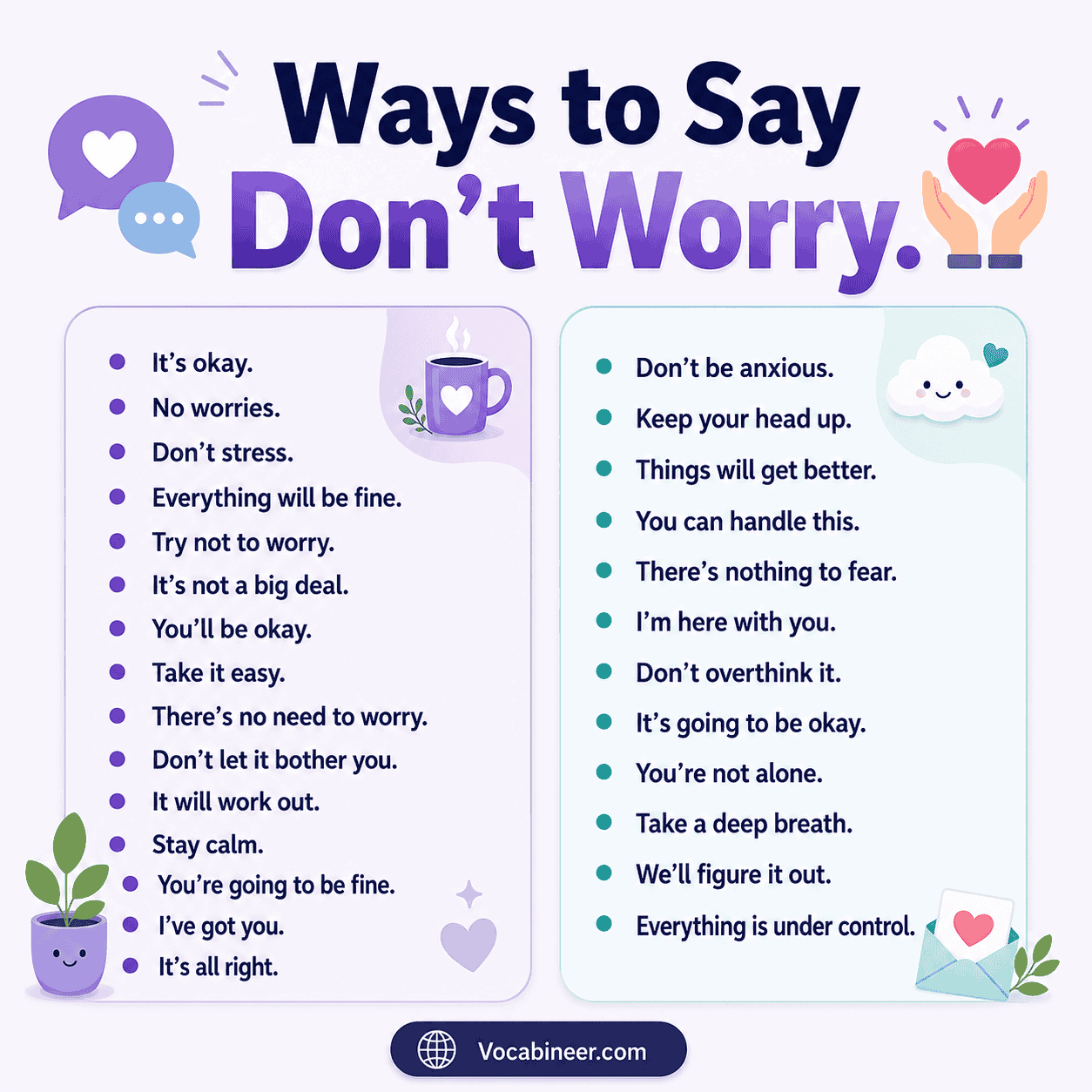
Don’t worry is used to reassure someone, reduce stress, or show that something is not a problem. It can be kind and helpful, but in sensitive moments, it may sound dismissive if the person feels truly upset, anxious, or afraid.
Below, you’ll find 80 natural alternatives to don’t worry for comfort, work, apology replies, customer service, casual chats, short texts, stress, anxiety, and everyday messages. Each phrase includes a short meaning and a simple example.
Best Don’t Worry Phrase by Situation
| Situation | Better Phrase |
|---|---|
| Simple reassurance | It’s okay. |
| Casual reply | No worries. |
| Apology response | No problem at all. |
| Small mistake | No harm done. |
| Emotional support | I’m here with you. |
| Stress or anxiety | Let’s take it one step at a time. |
| Professional email | Please don’t be concerned. |
| Customer service | I’ll take care of this for you. |
| Close friend | We’ll handle this together. |
| Short text | All good. |
Don’t Worry vs No Worries
| Phrase | Meaning | Best Use |
|---|---|---|
| Don’t worry | Tells someone not to feel worried or stressed. | Reassuring someone about a concern. |
| No worries | Says something is okay or not a problem. | Responding to an apology or small mistake. |
| It’s okay | Gives simple comfort or acceptance. | Casual reassurance, apologies, and small problems. |
| I understand why you’re worried | Validates the person’s concern first. | Stress, anxiety, fear, or serious situations. |
Why “Don’t Worry” Can Sometimes Sound Dismissive
Don’t worry is usually meant kindly, but it can feel dismissive if someone is anxious, scared, upset, or facing a real problem. In those moments, the person may need to feel heard before they can feel reassured.
Phrases like I understand why you’re worried, I’m here with you, or We’ll handle this together can sound more supportive because they do not make the person’s concern feel small.
Simple Alternatives to Don’t Worry
Use these phrases for general reassurance in everyday situations.
No worries
A casual way to say something is okay.
Example: No worries, it happens.
It’s okay
A simple phrase for comfort or acceptance.
Example: It’s okay, we can fix it.
You’re fine
A friendly phrase for small mistakes.
Example: You’re fine, don’t worry about it.
No problem at all
A polite phrase for saying something is not an issue.
Example: No problem at all, I understand.
There’s nothing to worry about
A clear phrase for simple reassurance.
Example: There’s nothing to worry about.
Everything is under control
A reassuring phrase when the situation is being handled.
Example: Everything is under control.
I’ve got it covered
A confident phrase that reduces worry.
Example: I’ve got it covered, so you can relax.
We’ll figure it out
A supportive phrase for uncertain situations.
Example: We’ll figure it out together.
Things will be okay
A gentle phrase for general comfort.
Example: Things will be okay; we’ll take it slowly.
There’s still a way forward
A reassuring phrase when someone feels stuck.
Example: There’s still a way forward.
Supportive Phrases for Stress or Anxiety
Use these when someone feels worried, nervous, afraid, or overwhelmed.
I understand why you’re worried
A validating phrase that shows empathy.
Example: I understand why you’re worried.
I’m here with you
A supportive phrase that offers presence.
Example: I’m here with you, and you’re not alone.
We’ll handle this together
A caring phrase for shared support.
Example: We’ll handle this together.
Let’s take it one step at a time
A calming phrase for stress or overwhelm.
Example: Let’s take it one step at a time.
You don’t have to deal with this alone
A supportive phrase for emotional pressure.
Example: You don’t have to deal with this alone.
This feels hard, but we can work through it
A phrase that validates difficulty while offering hope.
Example: This feels hard, but we can work through it.
Take a breath; we have options
A gentle phrase for helping someone slow down.
Example: Take a breath; we have options.
I’m listening
A simple phrase that makes someone feel heard.
Example: I’m listening, tell me what happened.
Your feelings make sense
A validating phrase for emotional support.
Example: Your feelings make sense after what happened.
We can slow this down
A calm phrase for pressure or panic.
Example: We can slow this down and look at it together.
Professional Ways to Say Don’t Worry
Use these phrases for emails, coworkers, managers, clients, and formal messages.
Please don’t be concerned
A polished professional phrase.
Example: Please don’t be concerned; we are reviewing it now.
That’s perfectly fine
A polite phrase for accepting a small issue.
Example: That’s perfectly fine, thank you for letting me know.
Everything is in order
A professional phrase for reassurance.
Example: Everything is in order on our end.
I’ll handle this from here
A confident workplace phrase.
Example: I’ll handle this from here.
There is no issue on our end
A formal phrase for reducing concern.
Example: There is no issue on our end.
No further action is needed right now
A clear professional reassurance.
Example: No further action is needed right now.
This has been taken care of
A professional phrase when the issue is already handled.
Example: This has been taken care of.
We have this under control
A confident workplace phrase.
Example: We have this under control.
There is no need for concern at this stage
A formal phrase for professional reassurance.
Example: There is no need for concern at this stage.
We are already addressing this
A useful phrase when action is in progress.
Example: We are already addressing this.
Casual Ways to Say Don’t Worry
Use these phrases for friends, family, chats, and everyday conversations.
All good
A short casual phrase for saying everything is okay.
Example: All good, don’t worry.
It happens
A friendly phrase for small mistakes.
Example: It happens, no big deal.
No big deal
A casual phrase for minor issues.
Example: No big deal, we can try again.
You’re good
A relaxed phrase for reassurance.
Example: You’re good, I’m not upset.
Don’t sweat it
A casual phrase that means don’t worry about it.
Example: Don’t sweat it, we still have time.
It’s all right
A simple friendly phrase.
Example: It’s all right, I understand.
Forget about it
A casual phrase for telling someone not to keep worrying.
Example: Forget about it, we’re fine.
It’s not a problem
A clear phrase for casual reassurance.
Example: It’s not a problem at all.
All sorted
A casual phrase when something has been fixed.
Example: All sorted, no worries.
We’re good
A relaxed phrase for saying things are okay between people.
Example: We’re good, don’t worry about it.
Kind Ways to Respond to an Apology
Use these when someone says sorry and you want to reassure them.
No problem at all
A kind response to an apology.
Example: No problem at all, I understand.
No harm done
A gentle phrase for small mistakes.
Example: No harm done, everything is okay.
You don’t need to apologize
A warm phrase when the apology is unnecessary.
Example: You don’t need to apologize.
It’s completely fine
A reassuring phrase after a mistake.
Example: It’s completely fine.
Don’t give it another thought
A polite phrase that removes guilt.
Example: Don’t give it another thought.
I understand
A simple and kind apology response.
Example: I understand, these things happen.
We’re okay
A warm phrase for personal reassurance.
Example: We’re okay, I promise.
It was an honest mistake
A kind phrase that reduces guilt.
Example: It was an honest mistake.
These things happen
A gentle phrase for normal mistakes.
Example: These things happen, so please don’t worry.
I appreciate your apology
A polite phrase that accepts an apology.
Example: I appreciate your apology, and we’re okay.
Customer-Service Friendly Reassurance Phrases
Use these phrases for support chats, client emails, service replies, and customer questions.
I’ll take care of this for you
A helpful phrase for customer support.
Example: I’ll take care of this for you.
We’ll get this sorted out
A reassuring service phrase.
Example: We’ll get this sorted out as quickly as possible.
I’m happy to help with this
A polite customer-service phrase.
Example: I’m happy to help with this.
You’re in the right place
A reassuring phrase for customers seeking help.
Example: You’re in the right place, and I can help.
Let me handle that for you
A helpful phrase for taking responsibility.
Example: Let me handle that for you.
We can resolve this together
A supportive customer-service phrase.
Example: We can resolve this together.
I’ll guide you through it
A clear phrase for step-by-step help.
Example: I’ll guide you through it.
There’s no need to worry; I can help
A direct service-friendly reassurance.
Example: There’s no need to worry; I can help.
I’ll make sure this is handled
A confident customer-service phrase.
Example: I’ll make sure this is handled.
We’ll look into this right away
A helpful phrase when action is needed.
Example: We’ll look into this right away.
Short Don’t Worry Texts and Replies
Use these short phrases for quick messages, comments, chats, and replies.
No worries.
Use this for a casual reply.
All good.
Use this to say everything is fine.
It’s okay.
Use this for simple reassurance.
You’re fine.
Use this for small mistakes.
No problem.
Use this for accepting an apology.
No harm done.
Use this when nothing serious happened.
I’ve got it.
Use this when you can handle the issue.
We’re okay.
Use this for personal reassurance.
It happens.
Use this for a small mistake.
We’ll manage.
Use this when the situation is still workable.
Extra Caring Reassurance Phrases
Use these when you want your message to sound warmer and more thoughtful.
You are not alone in this
A caring phrase for emotional support.
Example: You are not alone in this.
We’ll get through this
A supportive phrase for difficult moments.
Example: We’ll get through this together.
I’m right here
A simple phrase for close emotional support.
Example: I’m right here.
You can lean on me
A warm phrase for someone close.
Example: You can lean on me.
Let’s focus on what we can do next
A practical reassurance phrase.
Example: Let’s focus on what we can do next.
I’ll stay with you through this
A strong supportive phrase.
Example: I’ll stay with you through this.
This does not have to be solved all at once
A calming phrase for overwhelm.
Example: This does not have to be solved all at once.
We still have options
A hopeful phrase for uncertain situations.
Example: We still have options.
You can take this slowly
A gentle phrase for pressure or fear.
Example: You can take this slowly.
I believe we can handle this
A confident and supportive phrase.
Example: I believe we can handle this.
Phrases to Use Carefully
Some phrases can sound dismissive, rude, or invalidating if the person is truly upset.
| Phrase | Why to Use Carefully | Better Option |
|---|---|---|
| Relax. | It can sound dismissive when someone is stressed. | Take a breath; we have options. |
| Calm down. | It may sound like you are blaming their emotions. | I’m here with you. |
| Don’t stress. | It can feel too casual for serious worry. | Let’s take it one step at a time. |
| It’s not a big deal. | It may minimize the person’s feelings. | I understand why you’re worried. |
| You’re overthinking it. | It can sound judgmental. | I’m listening. |
What to Say Instead of Don’t Worry in Different Situations
| Situation | Better Phrase |
|---|---|
| Simple reassurance | It’s okay. |
| Casual reply | No worries. |
| Apology response | No problem at all. |
| Small mistake | No harm done. |
| Emotional support | I’m here with you. |
| Stress or anxiety | Let’s take it one step at a time. |
| Professional email | Please don’t be concerned. |
| Customer service | I’ll take care of this for you. |
| Close friend | We’ll handle this together. |
| Short text | All good. |
How to Choose the Right Reassuring Phrase
Choose your phrase based on the situation and the person’s feelings. For small mistakes, casual replies like No worries, All good, or No harm done work well. In professional messages, polished phrases like Please don’t be concerned, That’s perfectly fine, or Everything is in order sound more suitable.
For stress, fear, or anxiety, start with validation before reassurance. Phrases like I understand why you’re worried, I’m here with you, and Let’s take it one step at a time feel more supportive than simply saying Don’t worry. In customer service, confident and helpful phrases like I’ll take care of this for you or We’ll get this sorted out work better.
Summary
There are many ways to say don’t worry, and the best phrase depends on the situation. No worries, It’s okay, and All good work well for casual reassurance and small mistakes.
Professional phrases like Please don’t be concerned fit emails and work messages. Supportive phrases like I’m here with you, We’ll handle this together, and Let’s take it one step at a time are better for stress, anxiety, or emotional support.
FAQs
Another way to say don’t worry is no worries. You can also say it’s okay, no problem at all, all good, there’s nothing to worry about, or we’ll figure it out, depending on the situation.
Professionally, you can say please don’t be concerned, that’s perfectly fine, everything is in order, I’ll handle this from here, or no further action is needed right now. These phrases work well in emails, meetings, and client messages.
No worries and don’t worry are similar, but they are not always used the same way. Don’t worry reassures someone who feels concerned, while no worries often means something is okay or not a problem, especially after an apology.
To comfort someone, you can say I’m here with you, We’ll handle this together, Let’s take it one step at a time, You don’t have to deal with this alone, or I understand why you’re worried. These phrases feel more supportive in emotional situations.
Don’t worry is not usually rude, but it can sound dismissive if someone is truly upset or scared. In serious situations, it is better to validate their feelings first with phrases like I understand why you’re worried or I’m here with you.
You May Also Like