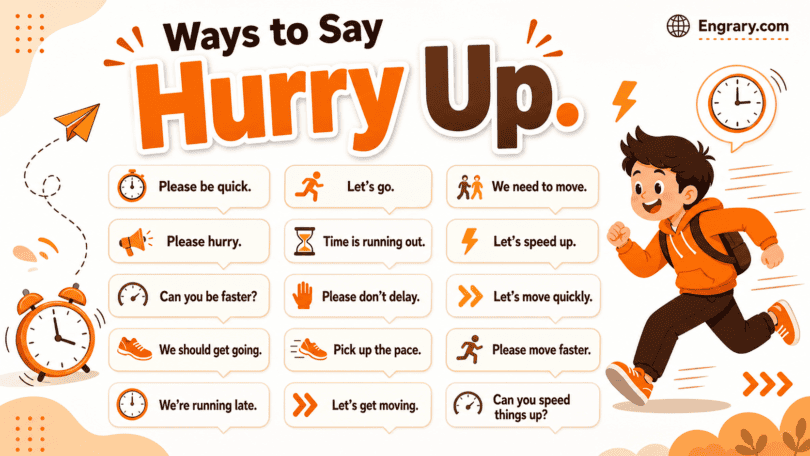
Hurry up is a direct phrase used when you want someone to move faster, finish sooner, or act quickly. It is common in everyday English, but it can sound rude, impatient, or stressful if the tone is too sharp.
A better phrase depends on the situation. You may need polite wording for daily reminders, professional wording for deadlines, playful phrases for friends, calm phrases for children, or direct phrases for urgent moments. Below are 100 natural alternatives to hurry up with meanings and examples.
Best Hurry Up Phrase by Situation
| Situation | Better Phrase |
|---|---|
| Polite request | Please be quick. |
| Friendly reminder | Could you hurry, please? |
| Work deadline | This is time-sensitive. |
| Project follow-up | Could you prioritize this? |
| Casual friend | Let’s get moving. |
| Leaving soon | We need to leave soon. |
| Kids | Let’s get ready quickly. |
| Classroom | Time to finish up. |
| Playful moment | Time’s ticking. |
| Urgent situation | We need to move now. |
Why “Hurry Up” Can Sound Rude
Hurry up is clear, but it can sound impatient if the other person already feels rushed. It may also feel like blame, especially in work, school, family routines, or stressful moments.
Softer phrases like Please be quick, We’re short on time, or Could you hurry, please? sound more respectful because they explain the urgency without sounding harsh. Direct phrases are still useful in emergencies, but polite wording works better for most everyday situations.
Hurry Up vs Please Be Quick
| Phrase | Tone | Best Use |
|---|---|---|
| Hurry up | Direct, can sound impatient. | Casual speech or urgent moments. |
| Please be quick | Polite and simple. | Everyday respectful requests. |
| Could you hurry, please? | Softer and more polite. | Friendly reminders. |
| We’re short on time | Explains the reason. | Work, travel, or deadline situations. |
| We need to move now | Direct and urgent. | Serious or time-critical moments. |
Polite Ways to Say Hurry Up
Use these phrases when you want to ask someone to move faster without sounding rude or impatient.
Please be quick
A polite way to ask someone to hurry.
Example: Please be quick; we need to leave soon.
Could you hurry, please?
A softer and more respectful request.
Example: Could you hurry, please? The meeting starts soon.
We’re short on time
A polite phrase that explains urgency.
Example: We’re short on time, so let’s move quickly.
Can we move a little faster?
A gentle phrase for asking for more speed.
Example: Can we move a little faster so we arrive on time?
Please try to finish soon
A polite phrase for tasks or deadlines.
Example: Please try to finish soon so we can send it today.
Could you be quick about it?
A natural phrase for a respectful reminder.
Example: Could you be quick about it? We’re almost out of time.
Let’s try to speed things up
A polite group-based phrase.
Example: Let’s try to speed things up a little.
We need to keep moving
A calm phrase for staying on schedule.
Example: We need to keep moving if we want to arrive on time.
Could we move this along?
A polite phrase for speeding up a conversation or task.
Example: Could we move this along? We have another topic to cover.
Please don’t take too long
A gentle phrase for asking someone not to delay.
Example: Please don’t take too long; dinner is almost ready.
Let’s not delay too much
A calm phrase for avoiding wasted time.
Example: Let’s not delay too much before we start.
A little faster, please
A short polite phrase for asking for more speed.
Example: A little faster, please; we’re nearly late.
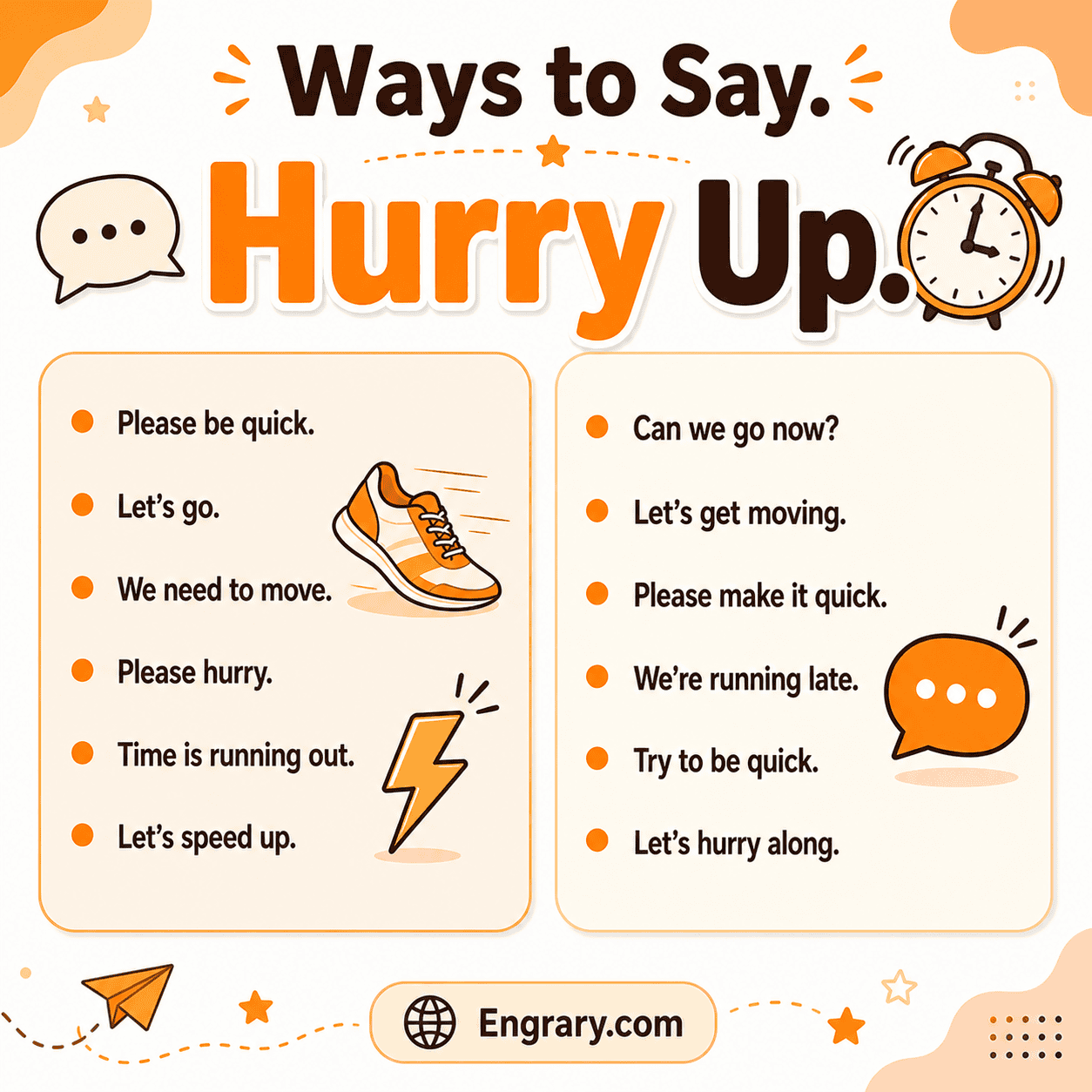
Professional Alternatives for Work and Deadlines
Use these phrases in emails, meetings, projects, follow-ups, client messages, and workplace tasks.
Could you prioritize this?
A professional way to ask someone to handle something sooner.
Example: Could you prioritize this before the end of the day?
This is time-sensitive
A polished phrase for urgent work.
Example: This is time-sensitive, so please review it as soon as possible.
Can we speed this up?
A professional phrase for faster progress.
Example: Can we speed this up to meet the deadline?
Please complete this as soon as possible
A formal phrase for urgent tasks.
Example: Please complete this as soon as possible.
Let’s keep this moving
A professional phrase for maintaining progress.
Example: Let’s keep this moving so we stay on schedule.
Could you send this over soon?
A polite work follow-up.
Example: Could you send this over soon?
We need this by the deadline
A clear phrase for work expectations.
Example: We need this by the deadline to avoid delays.
Please treat this as urgent
A direct professional phrase.
Example: Please treat this as urgent.
Could you expedite this?
A formal phrase for speeding up a process.
Example: Could you expedite this request?
Please move this forward today
A professional phrase for asking for progress.
Example: Please move this forward today if possible.
This needs a quick turnaround
A work-friendly phrase for a fast deadline.
Example: This needs a quick turnaround.
Can we make this a priority?
A polite phrase for urgent work.
Example: Can we make this a priority for this afternoon?
Casual Ways to Say Hurry Up
Use these phrases with friends, family, and people you know well.
Let’s get moving
A natural casual phrase for starting quickly.
Example: Let’s get moving before traffic gets worse.
Come on, let’s go
A casual phrase for encouraging movement.
Example: Come on, let’s go.
Pick up the pace
A casual phrase for moving faster.
Example: Pick up the pace so we don’t miss the bus.
We need to leave soon
A clear phrase for travel or plans.
Example: We need to leave soon.
Let’s not be late
A casual reminder about time.
Example: Let’s not be late for dinner.
Can you move faster?
A direct casual phrase.
Example: Can you move faster? We’re almost late.
We’re running late
A natural phrase that explains urgency.
Example: We’re running late, so let’s hurry.
Come on, we don’t have much time
A casual phrase for time pressure.
Example: Come on, we don’t have much time.
Let’s move it along
A casual phrase for speeding up an activity.
Example: Let’s move it along before it gets dark.
Hurry a little
A softer casual version of hurry up.
Example: Hurry a little; they’re waiting for us.
Let’s get going
A natural phrase for starting or leaving.
Example: Let’s get going now.
We should head out now
A casual phrase for leaving soon.
Example: We should head out now if we want good seats.
Friendly and Playful Hurry Up Phrases
Use these only with close people or light situations where the tone is friendly.
Time’s ticking
A playful way to remind someone time is passing.
Example: Time’s ticking, let’s go.
Shake a leg
A playful phrase that means hurry up.
Example: Shake a leg; we’re going to be late.
Chop chop
A playful but sometimes bossy phrase.
Example: Chop chop, the movie starts soon.
Step on it
A playful phrase for moving faster, often used while traveling.
Example: Step on it; we’re late.
No time to waste
A lively phrase for moving quickly.
Example: No time to waste; let’s go.
Move those feet
A playful phrase for friends or kids.
Example: Move those feet; we’re leaving.
Let’s roll
A casual and energetic phrase.
Example: Let’s roll before it gets crowded.
Speedy mode, please
A playful modern phrase.
Example: Speedy mode, please.
Clock’s watching us
A funny way to remind someone about time.
Example: Clock’s watching us, so let’s go.
Race you to the door
A playful phrase for encouraging movement.
Example: Race you to the door.
Fast feet, please
A light phrase for kids or friends.
Example: Fast feet, please.
Let’s go, superstar
A friendly and playful hurry-up phrase.
Example: Let’s go, superstar; we’re late.
Parent and Teacher-Friendly Hurry Up Phrases
Use these phrases for children, students, classrooms, school routines, and family moments.
Let’s get ready quickly
A calm phrase for helping children move faster.
Example: Let’s get ready quickly for school.
We need to move a little faster
A gentle reminder for kids or students.
Example: We need to move a little faster.
Let’s put our shoes on now
A specific phrase for young children.
Example: Let’s put our shoes on now.
Time to finish up
A classroom-friendly phrase.
Example: Time to finish up your work.
Let’s stay on track
A calm phrase for keeping focus.
Example: Let’s stay on track and finish this.
We have five more minutes
A clear time-based reminder.
Example: We have five more minutes before we leave.
Let’s get ready to go
A gentle phrase for transitions.
Example: Let’s get ready to go.
Quick steps, please
A simple child-friendly phrase.
Example: Quick steps, please.
Let’s finish this part now
A clear classroom or home phrase.
Example: Let’s finish this part now.
Time to wrap up
A gentle phrase for ending an activity.
Example: Time to wrap up and put your books away.
Let’s use our fast walking feet
A playful child-friendly phrase.
Example: Let’s use our fast walking feet.
We’re almost out of time
A calm phrase that explains the urgency.
Example: We’re almost out of time, so let’s finish.
Urgent Ways to Tell Someone to Move Faster
Use these phrases when time, safety, travel, or serious delay matters.
We need to move now
A direct phrase for urgent situations.
Example: We need to move now.
Quickly, please
A short urgent phrase.
Example: Quickly, please; the gate is closing.
There’s no time to wait
A serious phrase for immediate action.
Example: There’s no time to wait.
We have to go now
A clear urgent phrase.
Example: We have to go now.
Move faster, please
A direct but still polite phrase.
Example: Move faster, please.
We’re almost out of time
A phrase that explains urgency.
Example: We’re almost out of time.
This can’t wait
A direct phrase for urgent action.
Example: This can’t wait.
Now, please
A very short urgent phrase.
Example: Now, please.
We need to act quickly
A serious phrase for time-sensitive situations.
Example: We need to act quickly.
There’s no time to lose
A strong phrase for urgent action.
Example: There’s no time to lose.
We have to hurry
A direct phrase for immediate movement.
Example: We have to hurry.
Move now
A firm phrase for urgent situations.
Example: Move now.
Travel and Leaving-Soon Phrases
Use these phrases when you are trying to catch a bus, train, flight, ride, appointment, or event.
The bus is almost here
A clear travel-related hurry-up phrase.
Example: The bus is almost here.
The train won’t wait
A direct phrase for travel urgency.
Example: The train won’t wait, so let’s go.
The gate is closing soon
A useful phrase for airport situations.
Example: The gate is closing soon.
We need to catch our ride
A casual phrase for leaving quickly.
Example: We need to catch our ride.
We should leave right now
A clear phrase for immediate departure.
Example: We should leave right now.
Traffic is getting worse
A reason-based phrase for leaving soon.
Example: Traffic is getting worse, so we should go.
We’ll miss it if we wait
A clear phrase for avoiding delay.
Example: We’ll miss it if we wait.
Let’s get out the door
A casual phrase for leaving quickly.
Example: Let’s get out the door.
Short Hurry Up Texts and Replies
Use these short phrases for messages, chats, reminders, or replies.
Quickly, please.
Use this for a short polite reminder.
Please hurry.
Use this when time is limited.
We need to go.
Use this before leaving.
Time is short.
Use this for urgency.
Almost ready?
Use this for a gentle check-in.
Running late.
Use this to explain why speed is needed.
Need this soon.
Use this for work or tasks.
Let’s go.
Use this for casual urgency.
Any update?
Use this for a polite follow-up.
Need it ASAP.
Use this for urgent work or text reminders.
Extra Natural Hurry Up Phrases
Use these when you need more natural ways to ask for speed without sounding too harsh.
Let’s keep up the pace
A phrase for maintaining speed.
Example: Let’s keep up the pace.
Please don’t delay
A clear phrase for avoiding delay.
Example: Please don’t delay the process.
We need faster progress
A direct phrase for tasks or projects.
Example: We need faster progress this week.
Can you finish this quickly?
A simple task-based request.
Example: Can you finish this quickly?
Let’s stay on schedule
A polite phrase for keeping time.
Example: Let’s stay on schedule.
Please move quickly
A direct but polite phrase.
Example: Please move quickly to the next room.
We need to make up time
A useful phrase when you are behind schedule.
Example: We need to make up time.
Let’s finish this soon
A simple phrase for ending a task quickly.
Example: Let’s finish this soon.
The sooner, the better
A natural phrase for wanting something quickly.
Example: The sooner, the better.
Let’s not waste time
A direct phrase for staying focused.
Example: Let’s not waste time.
Phrases to Use Carefully
Some hurry-up phrases can sound rude, bossy, old-fashioned, or stressful depending on the situation.
| Phrase | Why to Use Carefully | Better Use |
|---|---|---|
| Move it. | It can sound rude or aggressive. | Use only in very casual or urgent moments. |
| Chop chop. | It can sound bossy or childish. | Use playfully with close people. |
| Step on it. | It may sound too forceful or unsafe in driving contexts. | Use casually, not as a serious instruction. |
| Make haste. | It sounds old-fashioned or dramatic. | Use only for humor or formal style. |
| What’s taking so long? | It can sound impatient or blaming. | Use Are you almost ready? instead. |
What to Say Instead of Hurry Up in Different Situations
Use this table when you want to choose the right phrase quickly.
| Situation | Better Phrase |
|---|---|
| Polite request | Please be quick. |
| Friendly reminder | Could you hurry, please? |
| Work deadline | This is time-sensitive. |
| Project follow-up | Could you prioritize this? |
| Casual friend | Let’s get moving. |
| Leaving soon | We need to leave soon. |
| Kids | Let’s get ready quickly. |
| Classroom | Time to finish up. |
| Playful moment | Time’s ticking. |
| Urgent situation | We need to move now. |
How to Choose the Right Hurry Up Phrase
Choose your phrase based on the setting, relationship, and urgency. For polite requests, Please be quick, Could you hurry, please?, or We’re short on time work well. These phrases sound respectful because they ask for speed without blaming the person.
In work situations, use professional wording like This is time-sensitive, Could you prioritize this?, or Please complete this as soon as possible. With friends and family, casual phrases like Let’s get moving, We need to leave soon, or We’re running late sound natural. For children or students, calm and specific phrases like Let’s get ready quickly or Time to finish up work better than impatient commands.
In urgent situations, use direct phrases like We need to move now, Quickly, please, or There’s no time to wait. When time is critical, clarity matters more than sounding extra polite.
Summary
There are many ways to say hurry up, and the best phrase depends on tone, relationship, and urgency. Polite phrases like Please be quick and Could you hurry, please? work well for respectful requests, while professional phrases like This is time-sensitive and Could you prioritize this? fit work and deadlines.
Casual, playful, child-friendly, travel-related, short text, and urgent phrases all fit different situations. The key is to choose wording that creates speed without sounding unnecessarily rude, impatient, or stressful.
FAQs
Another way to say hurry up is please be quick. You can also say let’s get moving, we’re short on time, pick up the pace, quickly, please, or we need to move now, depending on the situation.
Politely, you can say please be quick, could you hurry, please?, we’re short on time, can we move a little faster?, or please try to finish soon. These phrases sound more respectful than simply saying hurry up.
Professionally, you can say this is time-sensitive, could you prioritize this?, please complete this as soon as possible, can we speed this up?, or this needs a quick turnaround. These phrases work well for deadlines, emails, and project follow-ups.
A casual way to say hurry up is let’s get moving. You can also say come on, let’s go, pick up the pace, we’re running late, or let’s get going with friends and family.
Chop chop can sound playful, bossy, or childish depending on tone. It may be fine with close friends or family in a light situation, but it can sound rude in professional or serious settings.
You May Also Like