Calm down is a common phrase, but it can sound dismissive, rude, or controlling when someone feels anxious, angry, hurt, or overwhelmed. In many situations, softer phrases work better because they show support instead of blaming the person for their emotions.
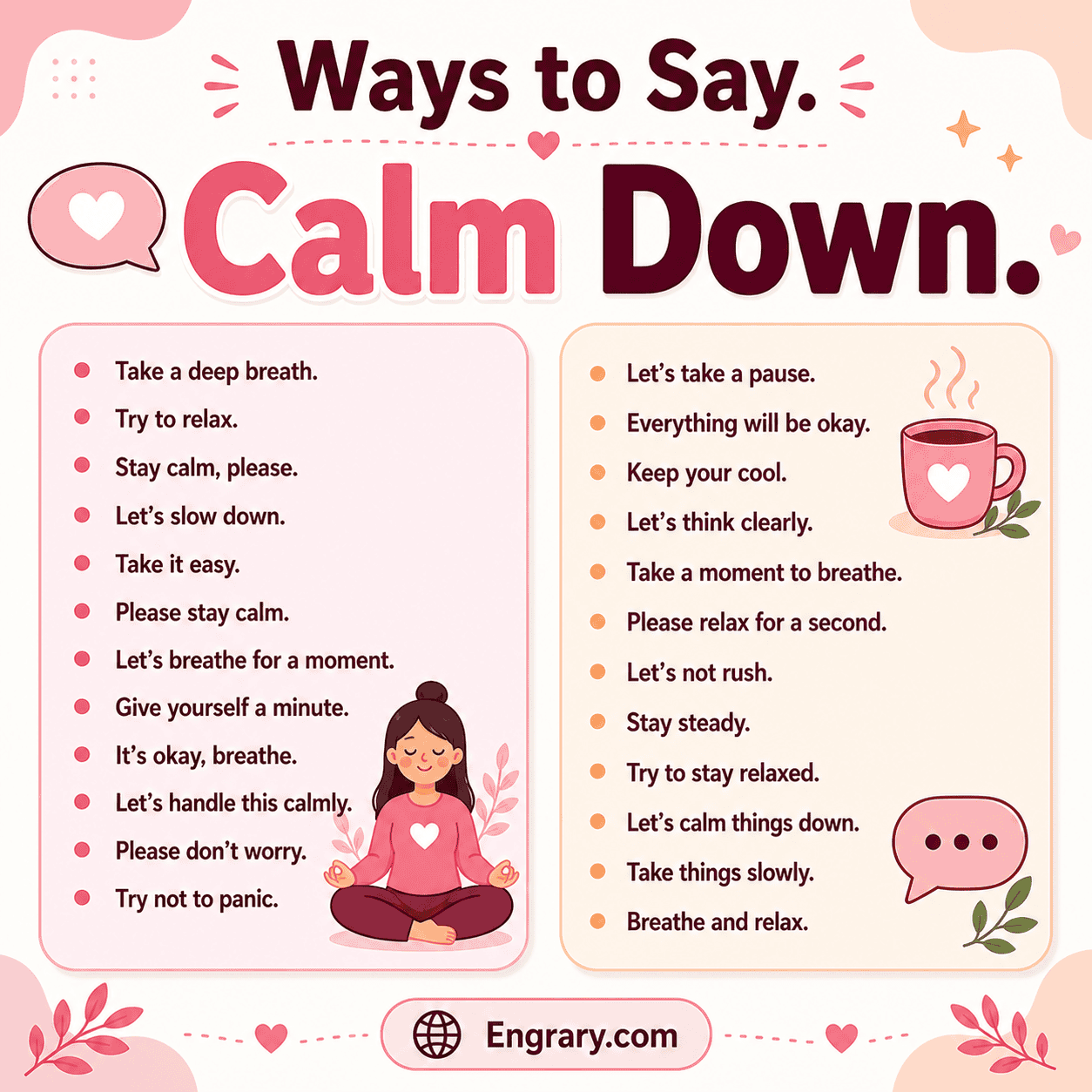
Below, you’ll find 75 better ways to say calm down for stress, anxiety, arguments, work, customer service, kids, classrooms, texts, casual chats, firm boundaries, and serious situations. Each phrase includes a short use and a simple example.
Best Calm Down Phrase by Situation
Use this quick table when you want the right phrase fast.
| Situation | Better Phrase |
|---|---|
| General stress | Take a deep breath. |
| Anxiety | I’m here with you. |
| Overwhelm | Let’s take this one step at a time. |
| Anger | Let’s pause for a moment. |
| Work conflict | Let’s focus on the next step. |
| Customer service | I understand your concern. |
| Child upset | Let’s take a breath together. |
| Text message | Take your time. |
| Firm boundary | I need us to pause now. |
| Safety issue | This is not safe; please stop. |
Why “Calm Down” Can Sound Rude
Calm down can sound like a command. Even if you mean well, the other person may hear it as you are overreacting or your feelings are wrong. That can make the situation worse, especially when someone feels anxious, angry, embarrassed, or upset.
A better calming phrase usually does one of three things: it gives a gentle action, validates the person’s feelings, or creates a pause. For example, Take a deep breath, I hear you, and Let’s pause for a moment often sound kinder than Calm down.
Calm Down vs Take a Breath
| Phrase | Tone | Best Use |
|---|---|---|
| Calm down | Direct, often sounds dismissive or controlling. | Use carefully, mostly with close people or low-stress moments. |
| Take a breath | Gentle and action-based. | Good for stress, anxiety, or tense moments. |
| I’m here with you | Supportive and validating. | Good when someone feels overwhelmed or scared. |
| Let’s pause for a moment | Polite and neutral. | Good for conflict, work, or difficult conversations. |
Gentle Ways to Say Calm Down
Use these phrases when you want to sound soft, kind, and supportive.
Take a deep breath
A gentle phrase that gives the person a simple calming action.
Example: Take a deep breath; we can handle this slowly.
Give yourself a moment
A soft phrase for emotional pause.
Example: Give yourself a moment before you respond.
It’s okay to slow down
A reassuring phrase for stress or pressure.
Example: It’s okay to slow down and think first.
Let’s pause for a moment
A calm phrase for stopping tension without blame.
Example: Let’s pause for a moment and breathe.
Take your time
A supportive phrase that removes pressure.
Example: Take your time; there is no rush.
Breathe slowly
A simple phrase for helping someone settle.
Example: Breathe slowly and focus on this moment.
Give it a minute
A casual but gentle phrase for waiting before reacting.
Example: Give it a minute before making a decision.
Let yourself settle first
A soft phrase for calming emotions before action.
Example: Let yourself settle first, then we can talk.
Supportive Phrases for Anxiety or Stress
Use these when someone feels worried, overwhelmed, panicked, or emotionally overloaded.
I’m here with you
A supportive phrase that offers presence.
Example: I’m here with you; you are not alone.
You’re safe right now
A reassuring phrase for fear or panic.
Example: You’re safe right now; stay with me.
We can figure this out together
A comforting phrase that reduces pressure.
Example: We can figure this out together, one step at a time.
Let’s take this one step at a time
A helpful phrase for overwhelm.
Example: Let’s take this one step at a time.
You don’t have to handle this alone
A caring phrase for emotional support.
Example: You don’t have to handle this alone.
I know this feels like a lot
A validating phrase for stress.
Example: I know this feels like a lot right now.
This moment will pass
A gentle phrase for temporary stress or anxiety.
Example: This moment will pass; just breathe with me.
Focus on what you can control
A grounding phrase for stressful situations.
Example: Focus on what you can control right now.
Polite Ways to De-Escalate a Conversation
Use these phrases when a conversation feels tense, emotional, or close to becoming an argument.
Let’s step back for a second
A polite phrase for slowing down a tense talk.
Example: Let’s step back for a second and look at this calmly.
Can we pause this conversation?
A respectful phrase for taking a break.
Example: Can we pause this conversation and continue later?
I hear you
A validating phrase that shows you are listening.
Example: I hear you, and I understand this matters.
I understand this is upsetting
A respectful phrase that acknowledges emotion.
Example: I understand this is upsetting.
Let’s talk through this carefully
A calm phrase for solving a problem together.
Example: Let’s talk through this carefully before we decide.
Let’s not rush this conversation
A polite phrase for slowing down a tense exchange.
Example: Let’s not rush this conversation.
Can we take a moment before continuing?
A calm phrase for creating space.
Example: Can we take a moment before continuing?
I want to understand you clearly
A supportive phrase that lowers defensiveness.
Example: I want to understand you clearly, so let’s slow down.
Professional Calm Down Alternatives for Work
Use these phrases in meetings, emails, workplace conflict, customer support, or client conversations.
Let’s pause and review the facts
A professional phrase for reducing tension.
Example: Let’s pause and review the facts before moving forward.
I understand your concern
A respectful phrase for clients, coworkers, or customers.
Example: I understand your concern, and I’m looking into it.
Let’s focus on the next step
A practical phrase for moving forward.
Example: Let’s focus on the next step.
Please take a moment before responding
A polite phrase for slowing a tense reply.
Example: Please take a moment before responding.
Let’s revisit this when we are calmer
A professional phrase for pausing conflict.
Example: Let’s revisit this when we are calmer.
I appreciate your patience
A polite phrase for customer-service situations.
Example: I appreciate your patience while we resolve this.
Let’s keep the conversation constructive
A professional phrase for managing tone.
Example: Let’s keep the conversation constructive.
We can work through this step by step
A calm phrase for workplace problem-solving.
Example: We can work through this step by step.
Calm Phrases for Kids and Classrooms
Use these phrases for children, students, classrooms, or parenting moments.
Let’s take a breath together
A gentle phrase that models calm behavior.
Example: Let’s take a breath together.
Use your calm voice
A child-friendly phrase for lowering volume.
Example: Use your calm voice so I can understand you.
Pause and listen
A simple classroom-friendly phrase.
Example: Pause and listen, please.
Let’s try again slowly
A gentle phrase for correcting behavior.
Example: Let’s try again slowly.
Your feelings are big, and I’m here
A validating phrase for children.
Example: Your feelings are big, and I’m here with you.
Take a quiet moment
A soft phrase for helping a child reset.
Example: Take a quiet moment, then we’ll talk.
Show me slow breathing
A practical calming phrase for kids.
Example: Show me slow breathing.
Let’s use gentle words
A calm redirection phrase.
Example: Let’s use gentle words with each other.
Firm but Respectful Ways to Reduce Tension
Use these when emotions are rising and you need a clear pause or boundary.
I need us to pause now
A firm but respectful phrase.
Example: I need us to pause now before this gets worse.
Let’s lower the temperature here
A calm phrase for reducing tension.
Example: Let’s lower the temperature here and speak respectfully.
This conversation needs a break
A clear phrase for stopping escalation.
Example: This conversation needs a break.
Let’s not continue this while we’re upset
A respectful boundary phrase.
Example: Let’s not continue this while we’re upset.
We can come back to this later
A calm phrase for pausing a difficult topic.
Example: We can come back to this later.
I want to continue when we can speak calmly
A firm phrase that protects the conversation.
Example: I want to continue when we can speak calmly.
Let’s stop before this becomes hurtful
A respectful phrase for preventing conflict.
Example: Let’s stop before this becomes hurtful.
I need a moment before we keep talking
A personal boundary phrase.
Example: I need a moment before we keep talking.
Casual Ways to Say Calm Down
Use these with close friends or in light, informal situations. Avoid them when someone is seriously upset.
Take it easy
A casual phrase for slowing down.
Example: Take it easy; we still have time.
Cool off for a minute
A casual phrase for taking a short break.
Example: Cool off for a minute before you reply.
Easy now
A short phrase for slowing someone down.
Example: Easy now, let’s not rush.
Slow down a bit
A casual phrase for reducing intensity.
Example: Slow down a bit and explain it again.
Breathe a little
A light phrase for calming down.
Example: Breathe a little; it’s going to be okay.
Don’t let it get to you
A casual phrase for small frustrations.
Example: Don’t let it get to you.
Take a second
A short phrase for pausing.
Example: Take a second before you answer.
Let it settle
A casual phrase for waiting before reacting.
Example: Let it settle, then decide.
Short Calming Texts and Replies
Use these short phrases in texts, chats, comments, or quick replies.
Take your time.
Use this to remove pressure.
I’m here.
Use this to show support.
Breathe slowly.
Use this for stress or anxiety.
One step at a time.
Use this for overwhelm.
You’re safe.
Use this for fear or panic.
Let’s pause.
Use this for tension.
I hear you.
Use this to validate feelings.
We’ll figure it out.
Use this for reassurance.
Urgent or Serious Phrases for Safety
Use these when safety, harm, danger, or serious escalation is involved. In urgent situations, clear wording matters more than sounding soft.
Stop for a moment
A direct phrase for interrupting unsafe action.
Example: Stop for a moment and look around.
This is not safe
A clear phrase for danger.
Example: This is not safe; please stop.
Step back now
A direct safety instruction.
Example: Step back now.
Put that down
A clear phrase for stopping unsafe handling.
Example: Put that down carefully.
I need you to stop and breathe
A direct phrase for serious emotional escalation.
Example: I need you to stop and breathe.
Move away from there
A clear phrase for physical safety.
Example: Move away from there now.
Stop before someone gets hurt
A serious warning phrase.
Example: Stop before someone gets hurt.
Let’s get help now
A direct phrase for situations that need support.
Example: Let’s get help now.
Extra Supportive Calming Phrases
Use these when you want more caring options without sounding controlling.
Your feelings make sense
A validating phrase for emotional support.
Example: Your feelings make sense after what happened.
You’re allowed to feel this way
A supportive phrase that avoids judgment.
Example: You’re allowed to feel this way.
Let’s find a quieter place
A helpful phrase for overstimulation or conflict.
Example: Let’s find a quieter place to talk.
I’m listening
A simple phrase that shows presence.
Example: I’m listening; tell me what happened.
You don’t have to answer right now
A gentle phrase that reduces pressure.
Example: You don’t have to answer right now.
We can slow this down
A supportive phrase for overwhelm.
Example: We can slow this down together.
Nothing has to be solved this second
A reassuring phrase for panic or pressure.
Example: Nothing has to be solved this second.
Let’s focus on the present moment
A grounding phrase for anxiety or stress.
Example: Let’s focus on the present moment.
You can take a break from this
A caring phrase for emotional overload.
Example: You can take a break from this.
I’m not leaving you alone with this
A strong supportive phrase for someone close.
Example: I’m not leaving you alone with this.
Let’s breathe before we decide
A calm phrase for avoiding rushed choices.
Example: Let’s breathe before we decide.
Phrases to Use Carefully
Some phrases can sound rude, dismissive, or invalidating, even if you mean well.
| Phrase | Why to Use Carefully | Better Option |
|---|---|---|
| Calm down. | It can sound like a command or criticism. | Take a deep breath. |
| Relax. | It may sound dismissive when someone is upset. | Give yourself a moment. |
| Chill out. | It can sound casual, rude, or mocking. | Let’s pause for a moment. |
| Stop overreacting. | It invalidates the person’s feelings. | I understand this is upsetting. |
| Get over it. | It sounds harsh and uncaring. | I’m here with you. |
What to Say Instead of Calm Down in Different Situations
Use this table when you want to choose the best phrase quickly.
| Situation | Better Phrase |
|---|---|
| General stress | Take a deep breath. |
| Anxiety | I’m here with you. |
| Overwhelm | Let’s take this one step at a time. |
| Anger | Let’s pause for a moment. |
| Work conflict | Let’s focus on the next step. |
| Customer service | I understand your concern. |
| Child upset | Let’s take a breath together. |
| Text message | Take your time. |
| Firm boundary | I need us to pause now. |
| Safety issue | This is not safe; please stop. |
How to Choose the Right Calming Phrase
Choose your calming phrase based on the person’s emotion, your relationship, and the seriousness of the situation. If someone feels anxious or overwhelmed, use supportive phrases like I’m here with you, You’re safe right now, or Let’s take this one step at a time. These phrases feel more caring than a direct command.
For tense conversations, phrases like Let’s pause for a moment or I hear you can reduce defensiveness. At work, use professional wording such as I understand your concern or Let’s focus on the next step. With children, choose calm and clear phrases like Let’s take a breath together or Use your calm voice. In urgent situations, direct phrases like This is not safe or Step back now are better because safety comes first.
Summary
There are many ways to say calm down, but the best phrase depends on the situation. Gentle options like Take a deep breath, Give yourself a moment, and It’s okay to slow down work well for everyday stress.
Supportive phrases like I’m here with you, You’re safe right now, and We can figure this out together are better for anxiety or overwhelm. Professional, child-friendly, casual, firm, and urgent phrases all fit different contexts. The most helpful wording usually validates the person’s feelings, creates a pause, or gives a simple next step.
FAQs
Another way to say calm down is take a deep breath. You can also say give yourself a moment, let’s pause for a moment, take your time, or it’s okay to slow down.
To say calm down without sounding rude, use supportive phrases like I’m here with you, I understand this is upsetting, Let’s take this one step at a time, or We can figure this out together. These phrases sound kinder because they validate the person’s feelings.
Professionally, you can say Let’s pause and review the facts, I understand your concern, Let’s focus on the next step, or Let’s revisit this when we are calmer. These phrases work well in meetings, emails, customer service, and workplace conflict.
To someone who is anxious, say I’m here with you, You’re safe right now, Let’s take this one step at a time, or You don’t have to handle this alone. Avoid phrases like calm down, relax, or stop overreacting because they can feel dismissive.
Chill out can sound rude, casual, or dismissive depending on tone. It may be fine with close friends in light situations, but it is usually not a good choice when someone is truly upset, anxious, or angry.
You May Also Like