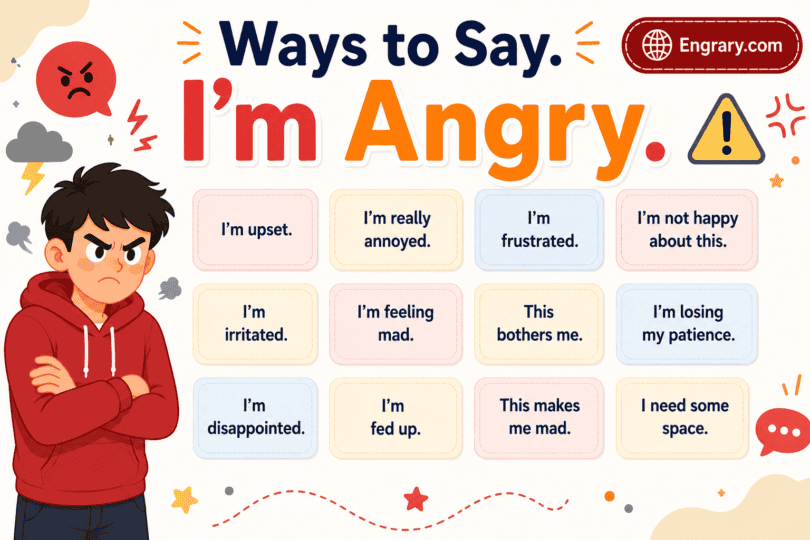
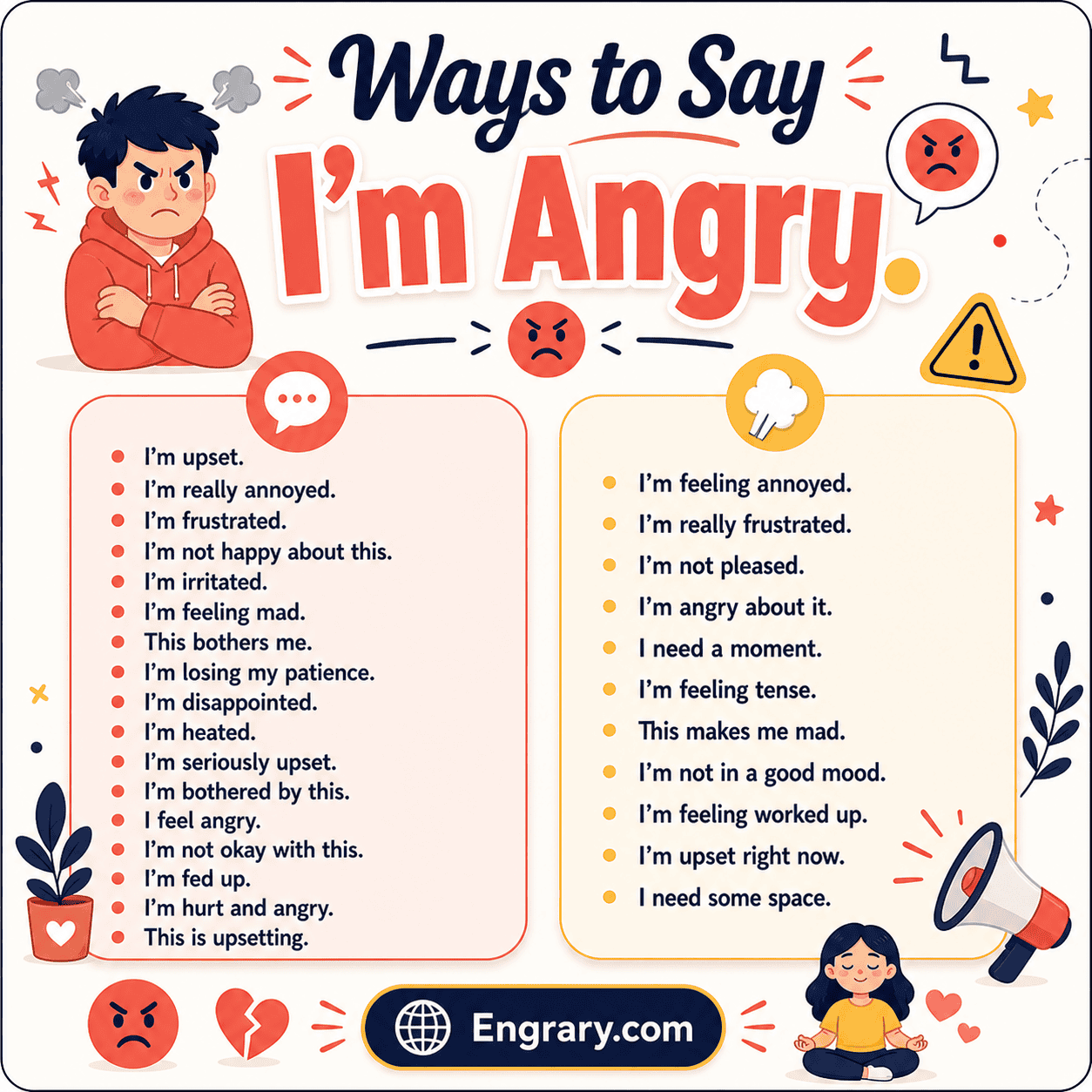
“I’m angry” is clear and direct, but it can sound too blunt in many situations. Sometimes, you may need a calmer phrase, a professional sentence, a text reply, or a way to set a boundary without starting a bigger argument.
For example, “I’m annoyed” works for mild anger, while “I’m furious” is much stronger. Meanwhile, “I’m not okay with this” sounds controlled and firm. Therefore, this guide gives you 100 ways to say “I’m angry” without sounding rude, with examples for everyday conversations, work, relationships, texts, boundaries, unfairness, and serious situations.
Best “I’m Angry” Phrases by Situation
| Situation | Best Phrase |
|---|---|
| Mild anger | I’m annoyed |
| Irritation | I’m irritated |
| Frustration | I’m frustrated |
| Hurt anger | I’m upset |
| Direct anger | I’m angry |
| Controlled anger | I’m not okay with this |
| Professional concern | I’m concerned about this |
| Strong anger | I’m furious |
| Moral anger | I’m outraged |
| Boundary-setting anger | I need some space right now |
| Relationship conflict | I felt hurt by what you said |
| Short text | I’m upset |
“I’m Angry” vs “I’m Upset” vs “I’m Frustrated”
These phrases are close, but they do not mean exactly the same thing. Some sound mild, some sound emotional, and others show anger because of blocked progress or unfair treatment.
| Phrase | Meaning | Best Use |
|---|---|---|
| I’m angry | Direct phrase for anger | General anger |
| I’m upset | Softer; can include hurt, sadness, or disappointment | Emotional hurt, disappointment |
| I’m frustrated | Anger mixed with blocked progress or repeated problems | Delays, repeated issues, work problems |
| I’m annoyed | Mild anger or irritation | Small problems |
| I’m irritated | Slightly stronger than annoyed | Repeated small issues |
| I’m furious | Very strong anger | Serious situations |
| I’m outraged | Anger about unfairness or wrongdoing | Injustice, disrespect, serious issues |
| I’m not okay with this | Controlled and boundary-focused | Conflict, boundaries, respectful anger |
Is “I’m Angry” Polite or Too Direct?
“I’m angry” is grammatically correct and natural, but it can sound very direct. It works best when you are honest about your feelings and still want to speak clearly.
In polite or professional situations, softer phrases are usually better. Instead of saying only “I’m angry,” you can say “I’m upset about this,” “I’m concerned about this situation,” or “I’d like to address what happened.” These phrases express anger while keeping the conversation more respectful.
Everyday Anger Phrases That Sound Natural
These phrases work well in normal conversations when you want to say you are angry, upset, annoyed, or bothered.
I’m angry
A direct phrase for anger.
Example: I’m angry about what happened.
I’m mad
A casual phrase for anger.
Example: I’m mad that no one told me.
I’m upset
A softer phrase that can include anger and hurt.
Example: I’m upset about the way this was handled.
I’m annoyed
A mild phrase for small anger.
Example: I’m annoyed by the delay.
I’m irritated
A phrase for repeated or stronger annoyance.
Example: I’m irritated that this keeps happening.
I’m frustrated
A phrase for anger caused by problems, delays, or blocked progress.
Example: I’m frustrated with the lack of communication.
I’m not happy about this
A controlled phrase for clear dissatisfaction.
Example: I’m not happy about this decision.
This really bothers me
A natural phrase for something that upsets you.
Example: This really bothers me.
I’m not okay with this
A firm phrase for controlled anger.
Example: I’m not okay with this behavior.
I’m trying to stay calm
A phrase that shows you are angry but controlling your reaction.
Example: I’m trying to stay calm, but this upset me.
Mild Anger Phrases for Small Problems
Use these phrases when the problem is annoying, but not serious enough for strong words like “furious” or “outraged.”
I’m a little annoyed
A mild phrase for small irritation.
Example: I’m a little annoyed that the meeting started late.
That bothered me
A gentle phrase for something upsetting.
Example: That bothered me more than I expected.
I’m slightly irritated
A polite phrase for mild anger.
Example: I’m slightly irritated by the repeated changes.
This is frustrating
A natural phrase for a difficult or annoying situation.
Example: This is frustrating because we already discussed it.
I’m not thrilled about this
A softer phrase for dissatisfaction.
Example: I’m not thrilled about this plan.
That was annoying
A casual phrase for a small problem.
Example: That was annoying, but it’s fine now.
I’m bothered by it
A calm phrase for mild anger.
Example: I’m bothered by it, and I wanted to be honest.
I’m not too happy about it
A mild phrase for being upset.
Example: I’m not too happy about it.
This is getting on my nerves
A casual phrase for growing irritation.
Example: This is getting on my nerves.
I’m a bit upset
A soft phrase for mild emotional anger.
Example: I’m a bit upset about what happened.
Strong Anger Phrases for Serious Moments
Use these phrases when the situation is serious and you need stronger wording.
I’m furious
A very strong phrase for anger.
Example: I’m furious about how this was handled.
I’m really angry
A clear phrase for strong anger.
Example: I’m really angry right now.
I’m extremely upset
A strong but slightly softer phrase than “furious.”
Example: I’m extremely upset by this decision.
I’m deeply frustrated
A strong phrase for repeated or serious frustration.
Example: I’m deeply frustrated with the lack of progress.
I’m outraged
A strong phrase for anger about unfairness or wrongdoing.
Example: I’m outraged by the way they were treated.
I’m livid
A very strong informal phrase for anger.
Example: I’m livid about what happened.
I’m fuming
A casual phrase for strong anger.
Example: I’m fuming after that conversation.
I’m beyond frustrated
A strong phrase for extreme frustration.
Example: I’m beyond frustrated with the repeated delays.
I’m angry about what happened
A clear phrase that names the cause.
Example: I’m angry about what happened yesterday.
I’m seriously upset
A strong phrase for emotional anger.
Example: I’m seriously upset about this.
Polite Ways to Say You’re Angry
These phrases help you express anger without sounding rude, aggressive, or uncontrolled.
I’m upset about this
A polite phrase for anger or hurt.
Example: I’m upset about this and would like to talk.
This really bothered me
A calm phrase for saying something affected you.
Example: This really bothered me.
I’m not okay with this
A firm but controlled phrase.
Example: I’m not okay with this decision.
I need to be honest: this upset me
A respectful phrase for starting a difficult conversation.
Example: I need to be honest: this upset me.
I’m disappointed by how this was handled
A polite phrase for anger mixed with disappointment.
Example: I’m disappointed by how this was handled.
I feel disrespected
A clear phrase for anger about treatment.
Example: I feel disrespected by the way that was said.
I’d like to talk about what happened
A calm phrase for starting a discussion.
Example: I’d like to talk about what happened.
I’m trying to stay calm, but I’m upset
A controlled phrase for strong feelings.
Example: I’m trying to stay calm, but I’m upset.
I need a moment to cool down
A polite phrase for taking space.
Example: I need a moment to cool down before we continue.
I want to address this calmly
A respectful phrase for conflict.
Example: I want to address this calmly.
Professional Ways to Express Anger at Work Calmly
These phrases sound firm and controlled in professional settings, emails, meetings, and workplace conversations.
I’m concerned about this situation
A professional phrase for controlled anger or worry.
Example: I’m concerned about this situation.
I’m frustrated by the lack of progress
A workplace phrase for repeated delays or blocked work.
Example: I’m frustrated by the lack of progress.
I’m disappointed with how this was handled
A professional phrase for dissatisfaction.
Example: I’m disappointed with how this was handled.
This is not the outcome I expected
A polished phrase for disappointment or frustration.
Example: This is not the outcome I expected.
I’d like to address this issue
A professional phrase for starting a serious conversation.
Example: I’d like to address this issue in our next meeting.
This situation needs attention
A firm phrase for something that must be handled.
Example: This situation needs attention.
I find this unacceptable
A strong professional phrase for serious problems.
Example: I find this unacceptable.
I’d appreciate a clearer explanation
A polite phrase for frustration about confusion or decisions.
Example: I’d appreciate a clearer explanation.
I need to raise a concern
A controlled phrase for professional dissatisfaction.
Example: I need to raise a concern about this process.
I’d like to discuss what went wrong
A professional phrase for reviewing a problem.
Example: I’d like to discuss what went wrong.
Relationship Phrases for Anger Without Blaming
These phrases help you express anger in friendships, family conversations, romantic relationships, or personal conflicts without attacking the other person.
I felt hurt by what you said
A phrase for anger mixed with hurt.
Example: I felt hurt by what you said.
I’m upset about how that happened
A calm phrase for discussing a problem.
Example: I’m upset about how that happened.
I don’t want to argue, but I need to be honest
A phrase for starting a serious conversation calmly.
Example: I don’t want to argue, but I need to be honest.
That really bothered me
A natural phrase for personal anger.
Example: That really bothered me.
I felt ignored
A phrase for anger about not being heard.
Example: I felt ignored during that conversation.
I didn’t feel respected
A phrase for anger about respect.
Example: I didn’t feel respected when that happened.
I need you to understand why I’m upset
A phrase for explaining your anger.
Example: I need you to understand why I’m upset.
I want to talk about this calmly
A phrase for conflict without escalation.
Example: I want to talk about this calmly.
I’m not ready to discuss it yet
A phrase for needing space before talking.
Example: I’m not ready to discuss it yet.
I need some time before we continue
A respectful phrase for pausing a conflict.
Example: I need some time before we continue.
Boundary Phrases to Use When You’re Angry
Use these phrases when you need space, respect, a pause, or a clear limit.
I need some space right now
A clear boundary phrase.
Example: I need some space right now.
I need a moment to cool down
A calm phrase for pausing.
Example: I need a moment to cool down.
I’m not ready to talk about this yet
A phrase for delaying a difficult conversation.
Example: I’m not ready to talk about this yet.
I don’t want to continue this conversation while I’m angry
A mature phrase for avoiding escalation.
Example: I don’t want to continue this conversation while I’m angry.
I need us to pause this discussion
A respectful phrase for stopping a conversation temporarily.
Example: I need us to pause this discussion.
Please don’t speak to me that way
A firm phrase for setting a boundary.
Example: Please don’t speak to me that way.
I’m not okay with being treated like that
A clear phrase for disrespect.
Example: I’m not okay with being treated like that.
I need time to process this
A phrase for taking emotional space.
Example: I need time to process this.
Let’s talk when we’re both calmer
A respectful phrase for postponing conflict.
Example: Let’s talk when we’re both calmer.
I need to step away for a moment
A calm phrase for leaving a tense situation.
Example: I need to step away for a moment.
Short Text Replies for “I’m Angry”
These short replies work well in texts, chats, and quick messages.
I’m upset
A short phrase for anger or hurt.
Example: I’m upset.
I’m mad
A casual phrase for anger.
Example: I’m mad right now.
Not okay
A short phrase for strong disapproval.
Example: Not okay.
I’m annoyed
A short phrase for mild anger.
Example: I’m annoyed.
I’m frustrated
A short phrase for blocked progress or repeated problems.
Example: I’m frustrated.
That hurt
A short phrase for emotional anger.
Example: That hurt.
I need space
A short boundary phrase.
Example: I need space.
I’m not ready to talk
A short phrase for delaying a conversation.
Example: I’m not ready to talk.
This bothered me
A short phrase for calm anger.
Example: This bothered me.
We need to talk later
A short phrase for postponing discussion.
Example: We need to talk later.
Funny Ways to Say “I’m Angry”
These phrases are casual and playful. Use them with friends, texts, captions, or informal conversations.
I’m seeing red
A common phrase for anger.
Example: I’m seeing red right now.
My patience has left the building
A funny phrase for losing patience.
Example: My patience has left the building.
I’m one notification away from exploding
A playful phrase for irritation.
Example: I’m one notification away from exploding.
My inner volcano is active
A funny phrase for anger building up.
Example: My inner volcano is active.
I’m boiling
A casual phrase for strong anger.
Example: I’m boiling after that call.
I’m about to lose my cool
A phrase for nearly losing control.
Example: I’m about to lose my cool.
I’m spicy right now
A playful phrase for being angry or irritated.
Example: I’m spicy right now.
My calm has expired
A funny phrase for losing patience.
Example: My calm has expired.
I’m running on pure irritation
A playful phrase for being annoyed.
Example: I’m running on pure irritation.
I need a timeout before I become a villain
A funny phrase for needing space before reacting.
Example: I need a timeout before I become a villain.
Phrases for Unfairness, Disrespect, or Crossing a Line
These phrases work when your anger comes from unfair treatment, disrespect, being ignored, or someone crossing a boundary.
I feel disrespected
A clear phrase for anger about treatment.
Example: I feel disrespected by what happened.
I feel like this was unfair
A phrase for anger about fairness.
Example: I feel like this was unfair.
I’m upset by how I was treated
A calm phrase for disrespect or unfairness.
Example: I’m upset by how I was treated.
That crossed a line for me
A strong phrase for boundaries.
Example: That crossed a line for me.
I’m angry because this feels unfair
A direct phrase that explains the reason.
Example: I’m angry because this feels unfair.
I don’t feel heard
A phrase for anger about being ignored.
Example: I don’t feel heard in this conversation.
I feel dismissed
A phrase for feeling ignored or minimized.
Example: I feel dismissed when my concerns are brushed aside.
I feel taken for granted
A phrase for anger about being unappreciated.
Example: I feel taken for granted.
I’m not okay with how this was handled
A controlled phrase for disapproval.
Example: I’m not okay with how this was handled.
I need this to be taken seriously
A firm phrase for asking for respect.
Example: I need this to be taken seriously.
“I’m Angry” Phrases You Should Use Carefully
Some anger phrases can sound aggressive, rude, insulting, or unsafe for professional situations.
| Phrase | Why to Use Carefully | Better Situation |
|---|---|---|
| I hate this | Very strong and negative | Use carefully |
| I’m pissed off | Informal and rude in many settings | Casual situations only |
| This is stupid | Insulting | Avoid |
| You made me angry | Blaming and confrontational | Use “I felt upset when…” |
| I’m furious | Very strong | Serious situations only |
| I’m going to lose it | Sounds uncontrolled | Avoid in professional settings |
| Shut up | Rude and aggressive | Avoid |
| I don’t care anymore | Dismissive | Avoid during conflict |
| You always do this | Escalates conflict | Be specific instead |
| Whatever | Passive-aggressive | Avoid |
Common Mistakes with Anger Phrases
Many English learners use strong anger words too quickly. For example, “furious,” “outraged,” and “livid” are much stronger than “annoyed” or “frustrated.” Use them only when the situation is serious.
Avoid blaming phrases like “You made me angry” if you want a calmer conversation. Try “I felt upset when that happened” or “This really bothered me” instead. In professional situations, use controlled language such as “I’m concerned about this situation,” “I’d like to address this issue,” or “I need to raise a concern.”
Real Conversation Examples
Mild anger
A: Are you mad about the delay?
B: I’m a little annoyed, but it’s okay.
Professional anger
A: Is there a problem with the process?
B: I’m concerned about this situation and would like to discuss it.
Relationship conflict
A: Why are you quiet?
B: I felt hurt by what you said.
Boundary-setting
A: Can we keep talking about this?
B: I need a moment to cool down first.
Unfairness
A: Why are you upset?
B: I feel like this was unfair.
Best Alternatives by Situation
| Situation | Better Phrase |
|---|---|
| Mild anger | I’m annoyed |
| Irritation | I’m irritated |
| Frustration | I’m frustrated |
| Hurt anger | I’m upset |
| Direct anger | I’m angry |
| Controlled anger | I’m not okay with this |
| Professional concern | I’m concerned about this |
| Strong anger | I’m furious |
| Moral anger | I’m outraged |
| Boundary-setting anger | I need some space right now |
| Relationship conflict | I felt hurt by what you said |
| Short text | I’m upset |
How to Choose the Right Anger Phrase
Choose your phrase based on how angry you are and where the conversation is happening. For mild anger, use “I’m annoyed,” “I’m irritated,” or “That bothered me.” For stronger anger, use “I’m furious,” “I’m outraged,” or “I’m seriously upset.”
In professional settings, avoid emotional or insulting language. Instead, say “I’m concerned about this situation,” “I’d like to address this issue,” or “I need to raise a concern.” In relationships, use phrases that explain your feelings without blaming, such as “I felt hurt by what you said” or “I need some time before we continue.”
Summary
“I’m angry” is clear, but it can sound too direct if you use it without context. Better alternatives depend on intensity, relationship, setting, and whether you want to sound calm, firm, professional, or casual.
For mild anger, say “I’m annoyed” or “I’m irritated.” For polite anger, use “I’m upset about this” or “This really bothered me.” In professional situations, say “I’m concerned about this situation.” For boundaries, try “I need some space right now” or “Let’s talk when we’re both calmer.”
FAQs
Another way to say “I’m angry” is “I’m upset.” You can also say “I’m annoyed,” “I’m irritated,” “I’m frustrated,” “I’m furious,” or “I’m not okay with this.”
A polite way to say “I’m angry” is “I’m upset about this.” You can also say “This really bothered me,” “I’m not okay with this,” or “I’d like to talk about what happened.”
A professional way to say “I’m angry” is “I’m concerned about this situation.” You can also say “I’m frustrated by the lack of progress,” “I’d like to address this issue,” or “I need to raise a concern.”
In a relationship, you can say “I felt hurt by what you said,” “That really bothered me,” “I didn’t feel respected,” or “I need some time before we continue.”
“Angry” is direct and general. “Upset” is softer and may include hurt or sadness. “Frustrated” means anger caused by a problem, delay, or repeated difficulty.
You May Also Like