A faucet is a plumbing fixture that controls the flow of water into a sink, basin, or tub. It contains several connected parts that help regulate water pressure, temperature, and direction.
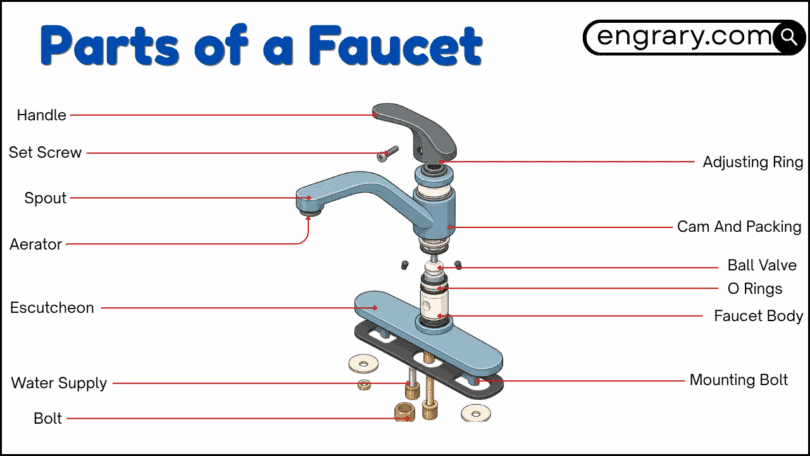
Learning the parts of a faucet makes it easier to understand how faucets work and identify common components. A labeled diagram helps readers recognize each part and understand its function within the system.
Parts of a Faucet With Labeled Diagram
The parts of a faucet with a labeled diagram show the visible and hidden components that work together to deliver water. These labels help readers identify each part and understand its purpose.
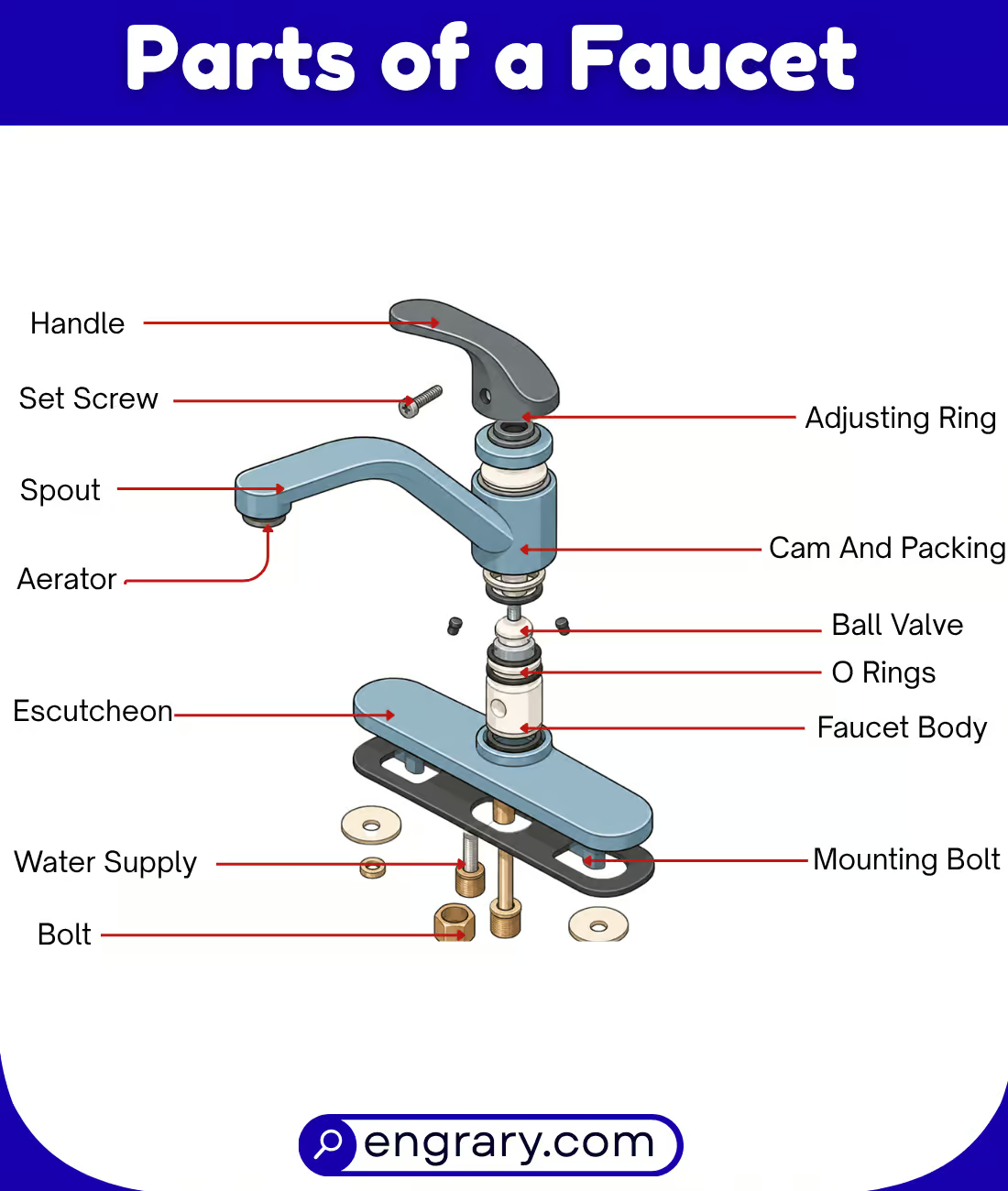
What Are the Parts of a Faucet?
The parts of a faucet are the components that control, direct, and support water flow. Some parts are visible on the outside, while others are located inside the faucet body or beneath the sink.
Together, these components allow water to flow smoothly, help control temperature, and reduce leaks during everyday use.
Main Faucet Parts at a Glance
Handle
Controls water flow and helps adjust temperature.
Spout
Directs water from the faucet into the sink or basin.
Aerator
Mixes air with water to create a smoother stream.
Faucet Body
Houses the internal faucet components and supports water movement.
Cartridge
Regulates water flow and temperature inside the faucet.
Valve
Controls the movement of water through the fixture.
Stem
Transfers handle movement to internal control parts.
O-Ring
Helps seal connections and prevent leaks.
Washer
Creates a watertight seal between faucet parts.
Valve Seat
Works with the valve to control water flow.
Sprayer
Provides a spray stream for cleaning and rinsing.
Escutcheon Plate
Covers installation holes around the faucet base.
Supply Lines
Carry hot and cold water to the faucet.
Shutoff Valves
Allow the water supply to be turned off when needed.
Base
Supports and stabilizes the faucet on the sink or countertop.
External Parts of a Faucet
External parts are the visible components found on the outside of a faucet. These parts help users control water flow and direct water where it is needed.
Handle
The handle is used to turn the faucet on and off. It also helps control water flow and temperature.
Spout
The spout is the part where water exits the faucet. It directs water into the sink, basin, or tub.
Aerator
The aerator is attached to the end of the spout. It mixes air with water to reduce splashing and improve flow.
Sprayer
A sprayer is a faucet attachment that produces a spray stream. It is commonly used for rinsing dishes and cleaning sinks.
Faucet Body
The faucet body is the main outer structure of the fixture. It supports internal parts and directs water through the faucet.
Escutcheon Plate
The escutcheon plate is a flat plate located at the faucet base. It covers extra sink holes and improves appearance.
Base
The base is the lower portion of the faucet that rests on the sink or countertop. It helps keep the faucet stable during use.
Internal Parts of a Faucet
Internal parts are hidden inside the faucet body. These components regulate water flow, control temperature, and help prevent leaks.
Cartridge
The cartridge is a control component found inside many modern faucets. It regulates both water flow and temperature.
Valve
The valve opens and closes the water passage inside the faucet. It controls whether water can flow through the fixture.
Stem
The stem connects the handle to the internal control mechanism. It transfers movement from the handle to the valve or cartridge.
O-Ring
An O-ring is a small rubber ring used as a seal. It helps prevent leaks around moving or connected parts.
Washer
A washer is a flat sealing component inside the faucet. It helps create a watertight connection and reduce dripping.
Seal
A seal is a flexible component that blocks water from escaping through joints and openings. It helps maintain proper faucet performance.
Valve Seat
The valve seat is the surface where the valve rests when closed. It helps control water flow and reduce leakage.
Faucet Parts Under the Sink
Several important faucet components are located beneath the sink. These parts connect the faucet to the plumbing system and help support installation.
Supply Lines
Supply lines are tubes that carry hot and cold water to the faucet. They connect the plumbing system to the fixture.
Shutoff Valves
Shutoff valves control the water supply beneath the sink. They allow water to be turned off during maintenance or repairs.
Mounting Nuts
Mounting nuts secure the faucet to the sink or countertop. They help keep the fixture firmly in place.
Water Connections
Water connections join supply lines to the faucet. They help move water safely from the plumbing system into the fixture.
Faucet Parts and Their Functions
Each faucet part has a specific job within the plumbing system. Some parts control water flow, while others direct water, prevent leaks, or connect the faucet to the water supply.
Working together, these components allow the faucet to deliver water safely, efficiently, and at the desired temperature.
Handle
Controls water flow and temperature.
Spout
Directs water into the sink or basin.
Aerator
Reduces splashing and improves water flow.
Cartridge
Regulates water volume and temperature.
Valve
Opens and closes the water pathway.
Stem
Transfers handle movement to internal components.
O-Ring
Seals joints and helps prevent leaks.
Washer
Creates a watertight seal inside the faucet.
Supply Lines
Carry hot and cold water to the fixture.
Shutoff Valves
Allow the water supply to be turned off when needed.
Kitchen Faucet Parts vs Bathroom Faucet Parts
Kitchen and bathroom faucets share many basic components. However, kitchen faucets often include additional features designed for cleaning and food preparation.
Bathroom faucets are usually simpler and more compact. Their design focuses on handwashing, grooming, and everyday personal use.
Kitchen Faucet Parts
Kitchen faucets often include sprayers, pull-down heads, pull-out heads, docking systems, and longer spouts. These features make cleaning and rinsing easier.
Bathroom Faucet Parts
Bathroom faucets typically include handles, spouts, aerators, cartridges, and valves. Their design is usually smaller than kitchen faucets.
Single-Handle Faucet Parts vs Double-Handle Faucet Parts
Faucets are commonly available in single-handle and double-handle designs. Both types use similar internal components but control water differently.
Single-handle faucets use one lever to control both water flow and temperature. Double-handle faucets use separate handles for hot and cold water.
Single-Handle Faucet
Uses one handle, one cartridge, and one control mechanism. It allows quick adjustment of water temperature and flow.
Double-Handle Faucet
Uses separate hot and cold handles with independent control components. It offers more precise temperature adjustment.
Types of Faucets
Different faucet types use different internal mechanisms to control water flow. Understanding these types helps explain why faucet parts may vary between models.
Although designs differ, most faucets still contain handles, valves, seals, and water-control components.
Compression Faucet
Uses washers and valve stems to control water flow. It is one of the oldest faucet designs.
Ball Faucet
Uses a rotating ball mechanism inside the faucet body. It is commonly found in single-handle faucets.
Cartridge Faucet
Uses a cartridge to regulate water flow and temperature. It is common in modern kitchens and bathrooms.
Ceramic Disc Faucet
Uses ceramic discs to control water movement. It is known for durability and reduced dripping.
How Water Flows Through a Faucet
Water travels through several faucet parts before reaching the spout. Each component helps control the direction, pressure, and temperature of the water.
Understanding this process makes it easier to identify how faucet parts work together.
Supply Lines
Bring hot and cold water from the plumbing system.
Shutoff Valves
Control the water supply beneath the sink.
Valve or Cartridge
Regulates water flow when the handle is moved.
Faucet Body
Directs water through the fixture.
Spout
Delivers water into the sink or basin.
Aerator
Smooths the water stream before it leaves the faucet.
Common Faucet Problems and Related Parts
Many faucet problems are linked to worn or damaged components. Identifying the affected part can help determine the cause of the issue.
Regular maintenance and timely replacement of worn parts can improve faucet performance.
Leaking Faucet
Often caused by worn washers, O-rings, seals, or cartridges.
Low Water Pressure
Frequently caused by a clogged aerator or mineral buildup.
Loose Faucet Handle
Usually linked to a loose handle screw or worn internal connection.
Water Around the Base
Often caused by damaged seals or O-rings.
Dripping Faucet
Commonly caused by a worn cartridge, valve, or washer.
Tips for Identifying Faucet Parts
Learning to identify faucet parts becomes easier when using a labeled diagram. Most visible parts can be recognized by their location and appearance.
Internal parts are usually identified after removing the handle or opening the faucet body. Product manuals and manufacturer diagrams can also help identify specific components.
Why Understanding Faucet Parts Matters
Understanding faucet parts helps homeowners, students, and DIY enthusiasts learn how faucets work. It also makes it easier to recognize common components and understand their functions.
Knowledge of faucet structure can improve maintenance, troubleshooting, and communication when purchasing replacement parts or discussing repairs.
Parts of a Faucet Key Takeaways
The parts of a faucet work together to control water flow, regulate temperature, and prevent leaks. External parts such as the handle, spout, and aerator are visible during everyday use, while internal parts like the cartridge, valve, and seals help the faucet function properly.
Most faucets contain similar core components, although designs may vary between kitchen and bathroom models. Understanding these parts makes it easier to identify components, read diagrams, and understand how faucets operate.
FAQs
The main parts of a faucet include the handle, spout, aerator, faucet body, cartridge, valve, seals, and supply lines. Together, these components control and direct water flow.
A faucet cartridge regulates water flow and temperature inside the fixture. It is one of the most important control components in many modern faucets.
A faucet aerator mixes air with water to create a smoother stream. It helps reduce splashing and can improve water efficiency.
Leaks are commonly caused by worn washers, O-rings, seals, or cartridges. Replacing these components often resolves the problem.
Yes. Many faucet components such as cartridges, washers, aerators, O-rings, and handles can be replaced individually without replacing the entire faucet.
You May Also Like