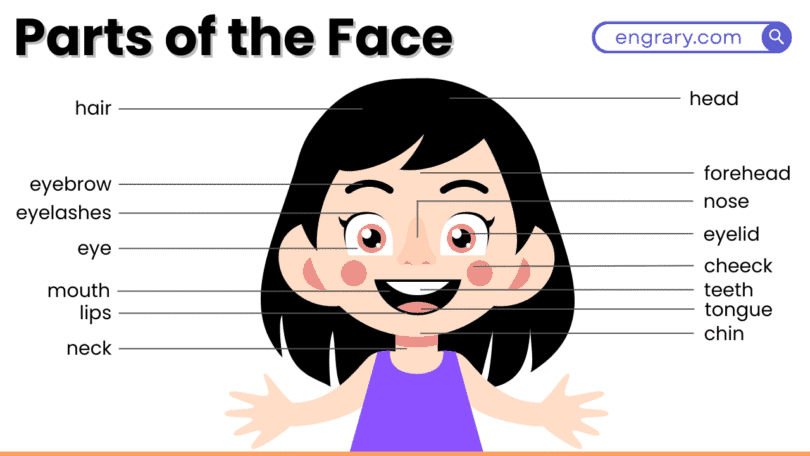
When you look at a labeled diagram of the face, the arrangement of features becomes more defined. From the forehead and eyebrows down to the nose, lips, chin, and jaw, each feature carries a specific name and function. Words like cheeks, nostrils, eyelashes, and gums are common in daily speech, yet placing them correctly sharpens how you describe expression and movement.
In this article, we break down the parts of the face into upper, middle, and lower regions so the full structure connects clearly. We focus on the common human form while noting that proportions may vary slightly. Just below, the labeled diagram gathers these features into one organized view, helping you match each name to its exact feature.
Main Parts Of The Face
The face includes several visible features that support vision, breathing, speech, and expression. These parts work together in a compact and coordinated structure.
Forehead
Forming the upper front area of the face, the forehead supports facial expression and protects the underlying bone. Muscles beneath the skin allow raising and lowering during emotion and focus. Its broad surface also helps shape the overall contour of the face.
Eyebrows
Positioned above the eyes, eyebrows help direct sweat and moisture away from them. They also enhance expression through subtle movement. Small changes in eyebrow position can signal surprise, concern, or concentration.
Eyes
The eyes detect light and convert it into signals for vision. Through coordinated movement, they track objects and adjust focus. Their function supports reading, navigation, and awareness.
Eyelids
Covering the surface of the eyes, eyelids protect against dust and bright light. Blinking spreads tears across the surface, which keeps it moist and clear. This automatic action maintains comfort and protection.
Nose
Located at the center of the face, the nose allows airflow during breathing and detects scent. Sensory cells within it respond to airborne particles. Its structure also influences voice tone during speech.
Cheeks
Forming the sides of the face, cheeks support facial shape and assist in chewing and speech. Muscles beneath them move during smiling and speaking. Their fullness contributes to overall facial balance.
Mouth
The mouth enables speech and food intake. It includes lips, teeth, and tongue working together for chewing and sound formation. Through controlled movement, it supports communication and nutrition.
Lips
Framing the opening of the mouth, lips shape speech sounds and control airflow. They also assist in eating and expression. Their flexibility allows quick changes during conversation.
Teeth
Arranged within the mouth, teeth break down food into smaller pieces. Their alignment supports clear pronunciation. Strong enamel protects them during chewing.
Tongue
Resting inside the mouth, the tongue detects taste and assists in swallowing and speech. Muscles within it allow precise movement. It plays a central role in forming many spoken sounds.
Chin
Forming the lower front portion of the face, the chin supports jaw movement and facial contour. Its shape influences overall balance. It also stabilizes lower facial motion.
Jaw
The jaw supports chewing and speech through controlled movement. It opens and closes during eating and talking. Strong muscles allow both power and precision in motion.
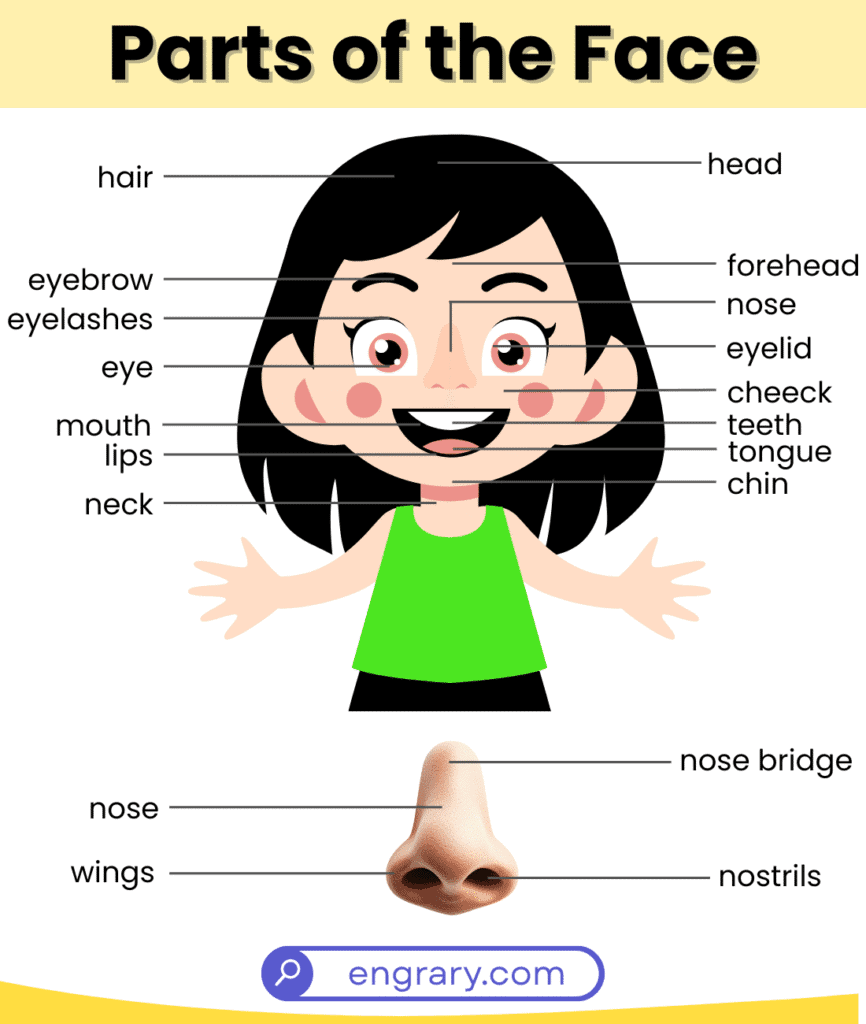
Upper Face Parts
The upper portion of the face includes features that support vision, protection, and expression. These parts move together during blinking, focusing, and emotional response.
Forehead
Forming the upper front area of the face, the forehead supports facial expression and protects the underlying bone. Muscles beneath the skin allow raising and lowering during focus or emotion. Its broad surface shapes the upper contour of the face.
Eyebrows
Positioned above the eyes, eyebrows help direct sweat and moisture away from them. They also enhance expression through subtle movement. Small changes in position can signal surprise, concern, or attention.
Eyes
The eyes detect light and convert it into signals for vision. Through coordinated movement, they track objects and adjust focus. Their function supports reading, recognition, and awareness.
Eyelids
Covering the surface of the eyes, eyelids protect against dust and bright light. Blinking spreads tears across the cornea, keeping it moist and clear. This repeated action maintains comfort and reduces irritation.
Eyelashes
Lining the edge of the eyelids, eyelashes act as a protective barrier. When touched by dust or small particles, they trigger a blink reflex. This quick response helps shield the eye from irritation.
Middle Face Parts
The middle portion of the face supports breathing, smell, hearing, and facial balance. These parts shape the central structure and influence how expressions appear.
Nose
Positioned at the center, the nose allows airflow during breathing and detects scent. Air enters through the nostrils, which form the two external openings for passage. Inside, sensory cells respond to airborne particles and send signals for smell. Its structure also affects voice tone during speech.
Cheeks
Forming the sides of the middle face, cheeks support facial contour and assist in chewing and speaking. Muscles beneath them move during smiling and expression. Their fullness contributes to balance and symmetry.
Ears
Located on both sides of the face, the ears detect sound and support balance. Sound waves enter the outer opening and travel inward, where vibrations are converted into signals. Internal structures also help maintain stability during movement.
Lower Face Parts
The lower portion of the face supports speech, chewing, and structural stability. These parts work together during talking and eating.
Mouth
The mouth allows speech and food intake. It includes lips, teeth, tongue, and gums working together to form sounds and begin digestion. Through controlled movement, it supports communication and chewing.
Lips
Framing the mouth, the lips shape airflow during speech and assist in eating. Their flexible structure allows quick changes in expression. Small movements can signal emotion or emphasis.
Teeth
Arranged within the mouth, teeth break down food into smaller pieces. Their alignment supports clear pronunciation. Strong enamel protects them during chewing.
Gums
Surrounding the base of the teeth, the gums provide support and protection. They hold teeth firmly in place and shield the roots from exposure. Healthy gum tissue contributes to stable chewing.
Tongue
Resting inside the mouth, the tongue detects taste and assists in swallowing. Muscles within it allow precise movement for speech. It plays a central role in forming spoken sounds.
Chin
Forming the lower front contour of the face, the chin supports jaw movement and facial balance. Its structure influences overall appearance and stability during motion.
Jaw
The jaw enables chewing and speech through controlled movement. It opens and closes during eating and talking. Strong muscles allow both power and precision in action.
Facial Muscles And Expression
Facial movement depends on a network of muscles that attach to the skin and underlying bone. These muscles allow subtle shifts in shape that form expressions such as smiling, frowning, or raising the eyebrows. Because they respond quickly, changes in emotion become visible almost at once.
The facial muscles work in coordination rather than isolation. When one group contracts, another relaxes, which creates balanced motion across the forehead, cheeks, lips, and jaw. As a result, expressions appear smooth and controlled instead of rigid.
Some muscles lift the corners of the mouth, others narrow the eyes, and some tighten the jaw during speech. Through this combined activity, the face communicates mood, intention, and reaction without the need for words.
FAQs About Parts Of The Face
The main parts of the face include the forehead, eyes, eyebrows, nose, cheeks, mouth, lips, chin, and jaw. In the parts of the face structure, these features work together for expression, speech, and breathing.
Facial muscles, eyebrows, eyes, and lips help create expression. In the parts of the face system, small muscle movements change the shape of these features to show emotion.
The nose is the part used for breathing and smell. In the parts of the face grouping, it allows airflow into the body and contains sensory cells for detecting scent.
The mouth, lips, tongue, teeth, and jaw support speech. In the parts of the face structure, these elements move together to form sounds and clear words.
The upper face includes the forehead, eyes, and eyebrows, while the lower face includes the mouth, chin, and jaw. In the parts of the face layout, each region supports different movements and functions.
Parts Of The Face Key Takeaways
The parts of the face form a coordinated structure that supports vision, breathing, speech, and expression. The upper region manages sight and protection, the middle region guides airflow and hearing, and the lower region enables chewing and spoken words. Muscles beneath the skin control movement, while bones provide shape and stability. As air flows through the nose and sound forms in the mouth, muscles adjust the lips and jaw to shape speech. Although facial features vary in size and proportion, the core structure remains consistent across individuals.
You May Also Like