A bird has several connected parts that help it fly, perch, feed, balance, stay warm, and interact with its surroundings. The main groups usually include the head, upperparts and underparts, wings, tail, legs and feet, feathers, beak, and eyes. Each part has its own role, so together they form a body built for movement, protection, and survival.
At the same time, these parts work as one system rather than as separate features. The beak helps with feeding, the eyes guide awareness, the wings and tail control flight, the legs and feet support landing and perching, and the feathers protect the body while also helping with balance and insulation. Meanwhile, the outer body regions make bird identification easier because many visible markings appear on specific named parts.
Parts of a Bird With Labeled Diagram
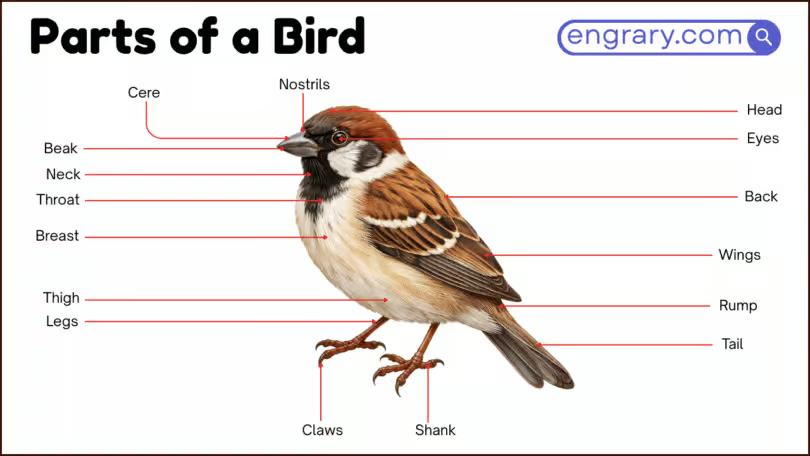
A labeled diagram of a bird usually points to the most visible body regions and identification parts first. These names help readers recognize the head, wings, tail, legs, feet, and major body areas before moving into smaller feather and facial details.
Head
The head contains many of the most recognizable bird features, including the beak, eyes, crown, throat, and facial markings. It plays a major role in feeding, sensing, and identification.
Upperparts and Underparts
These terms describe the main outer body regions above and below the bird. They help organize visible markings on the back, breast, belly, and other body areas.
Wings
The wings are the main flight structures of the bird. They contain important feather groups and outer parts that help with lift, steering, and balance.
Tail
The tail helps with balance, steering, and braking during movement. It also includes feather groups that are useful in bird identification.
Legs and Feet
The legs and feet support standing, walking, grasping, and perching. Their shape and toe arrangement often relate to how a bird lives and moves.
Feathers
Feathers cover most of the bird’s body and serve several purposes. They help with flight, insulation, protection, and the visible patterns used in identification.
Beak or Bill
The beak, also called the bill, is the hard mouth structure at the front of the head. It is used for feeding and is one of the most important visible parts of a bird.
Eyes
The eyes help the bird detect movement, food, danger, and direction. Eye shape and nearby markings are also useful in bird topography and field identification.
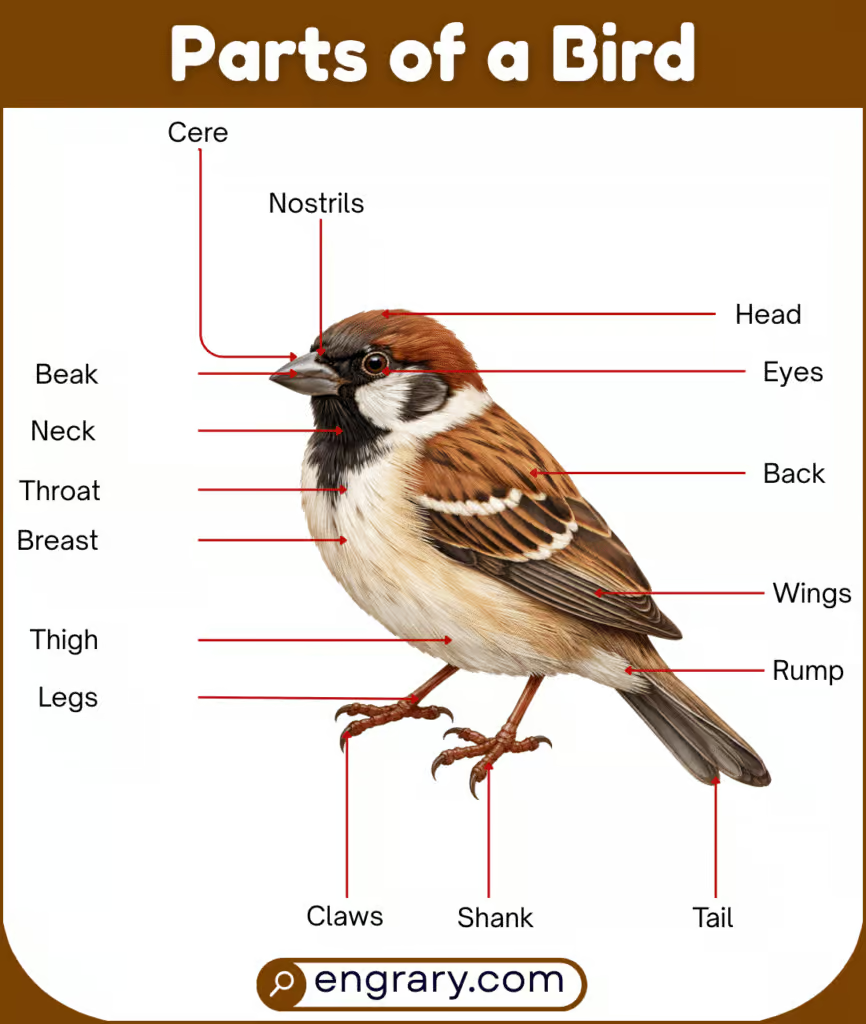
Main Parts of a Bird and Their Functions
The main parts of a bird can be grouped by what they do. Some support feeding, some support movement, and others help with balance, warmth, protection, and recognition.
Head
The head holds the beak, eyes, and many visible field marks. It helps the bird feed, sense its surroundings, and interact with the environment.
Upperparts and Underparts
These body regions describe the outer surfaces above and below the bird. They are important because many plumage colors and markings appear in these named areas.
Wings
The wings support flight and contain several feather groups used for lift and movement control. They also show important markings used in bird identification.
Tail
The tail helps the bird steer, balance, and adjust movement. It also supports control during landing and turning.
Legs and Feet
The legs and feet support standing, walking, grasping, and perching. In many birds, their form reflects how the bird moves or where it spends time.
Feathers
Feathers protect the body and help the bird stay warm. They also support flight and create the visible outer appearance of the bird.
Beak or Bill
The beak helps the bird handle food and interact with objects. Its shape often relates to how the bird feeds.
Eyes
The eyes support vision and awareness. They help the bird locate food, avoid danger, and respond to movement around it.
Outer Body Parts of a Bird
The outer body parts of a bird are the visible regions used to describe its shape, plumage, and field marks. These named areas help birdwatchers and learners identify where colors, patterns, and feathers appear on the body.
Head
The head is the front upper part of the bird and includes the face, crown, eyes, and beak. It is one of the most important regions for feeding and identification.
Neck
The neck connects the head to the rest of the body. It supports head movement and helps the bird reach, turn, and position itself.
Mantle
The mantle is the upper back area between the neck and the wings. It is a common topography term used to describe markings on the upper body.
Back
The back is the upper body region behind the neck and ahead of the rump. It forms a large visible surface where plumage color and pattern may appear.
Breast
The breast is the front upper chest area below the throat. It is one of the most visible regions used in bird description and identification.
Belly
The belly is the lower front body area below the breast. It forms part of the underparts and often shows important plumage color.
Flank
The flank is the side area of the body between the belly and the back. It is useful in bird topography because markings often extend into this side region.
Rump
The rump is the upper rear body area just before the tail. It is a key identification region because some birds show strong color contrast here.
Vent
The vent is the opening area beneath the rear of the body, near the base of the tail. It marks the lower rear part of the bird’s outer body.
Upperparts
Upperparts is a broad term for the bird’s upper outer surfaces, such as the back, mantle, rump, and upper wing areas. It helps group the visible top side of the bird.
Head Parts of a Bird
The head contains many of the most detailed and useful bird-identification parts. Small regions around the eye, bill, forehead, and throat often carry important field marks, so bird topography gives them specific names.
Crown
The crown is the top part of the bird’s head. It often carries visible color or pattern that helps with identification.
Forehead
The forehead is the front part of the head above the beak and below the crown. It is a small but noticeable region in many birds.
Lores
The lores are the area between the eye and the beak base. This is a key field-mark region in many bird guides.
Eye
The eye is the main visual organ of the head. It supports sight and is surrounded by several named regions used in bird topography.
Iris and Pupil
The iris is the colored part around the pupil, and the pupil is the dark central opening of the eye. These can be important visible details in some bird species.
Eye Ring
The eye ring is the ring-like area around the eye. In some birds, it stands out clearly and becomes an important identification mark.
Supercilium or Eyebrow
The supercilium is the line or stripe above the eye. It is often called the eyebrow in simpler bird descriptions.
Auriculars or Ear Coverts
Auriculars are the feathered area covering the ear region. They form the side face patch behind and below the eye.
Cheek
The cheek is the side facial area below the eye and near the bill. It is another visible region often used in plumage description.
Chin
The chin is the small area directly below the lower bill. It forms the front lower part of the head.
Throat
The throat lies below the chin and above the breast. It is a common plumage region in field descriptions.
Malar Area
The malar area is the side region below the cheek and along the lower part of the face. In some birds, a stripe or color patch here is very noticeable.
Nape
The nape is the back part of the neck directly behind the head. It connects the head to the upper back area.
Beak or Bill
The beak, also called the bill, is the hard projecting mouth structure. It is central to feeding and one of the most recognizable parts of a bird.
Culmen
The culmen is the upper ridge along the top of the upper bill. It is a standard bird-topography term used in bill description.
Upper Mandible
The upper mandible is the top half of the bill. It forms the upper section used in gripping and handling food.
Lower Mandible
The lower mandible is the bottom half of the bill. It works with the upper mandible during feeding and object handling.
Gape or Commissure
The gape is the corner or line where the upper and lower mandibles meet. It marks the mouth opening line at the base of the bill.
Nostril or Nares
The nostrils, also called nares, are the openings on the bill used for breathing. They are usually located near the base of the upper bill.
Cere
The cere is the soft fleshy area at the base of the bill in some birds. It is especially noticeable in certain bird groups.
Gonys
The gonys is the ridge or angle along the lower mandible. It is another bill term used in more detailed bird-topography descriptions.
Wing Parts of a Bird
The wing parts of a bird are important for flight, balance, steering, and visible field marks. Bird topography gives many wing regions their own names because feather groups and wing sections often help identify species in the field.
Shoulder
The shoulder is the upper wing area where the wing joins the body. It marks the point where the wing connects to the bird’s main body region.
Scapulars
Scapulars are the feathers near the shoulder and upper back area. They lie where the wing and back regions meet and are often important in plumage description.
Lesser, Median, and Greater Coverts
These are layers of small feathers that cover the base of the larger wing feathers. They help smooth the wing surface and often create visible patterns or bars.
Primary Coverts
Primary coverts are the coverts that lie over the base of the primary feathers. They help cover and support the front part of the main flight feathers.
Secondary Coverts
Secondary coverts cover the base of the secondary feathers. They form part of the inner wing surface and can show useful field markings.
Underwing Coverts or Wing Lining
These feathers cover the underside of the wing. They help form the lower wing surface and can show distinct color or pattern in flight.
Carpal Covert or Bend of Wing
This is the area around the bend in the wing. It is a useful named point in bird topography because it marks a visible joint region on the folded or open wing.
Wing Bar
A wing bar is a visible stripe or band across the wing, usually formed by feather edges or coverts. It is one of the most common field marks in bird identification.
Primaries
Primaries are the outer main flight feathers of the wing. They play a major role in forward flight and movement control.
Secondaries
Secondaries are the inner flight feathers attached closer to the body than the primaries. They help provide lift and support the broad inner wing area.
Tertials
Tertials are the innermost wing feathers lying nearest the body. They help complete the inner wing surface and may remain visible when the wing is folded.
Alula
The alula is the small feathered structure near the front edge of the wing. It helps with control during slower flight and landing.
Axillaries
Axillaries are the feathers in the wing’s armpit area where the wing joins the body underneath. They are part of the underwing region and may show distinctive markings.
Tail and Rear Parts of a Bird
The tail and rear parts help a bird balance, steer, brake, and complete the shape of the rear body. These regions also include feather groups and coverts that are useful in bird identification.
Tail
The tail is the rear projecting part of the bird. It helps with balance, steering, and control during movement and flight.
Tail Feathers or Rectrices
These are the main feathers that form the tail. They help guide direction, adjust position, and support braking during flight.
Undertail Coverts or Crissum
These are the feathers that cover the underside at the base of the tail. They are part of the rear underbody and often show useful field marks.
Uppertail Coverts
Uppertail coverts are the feathers covering the upper base of the tail. They lie between the rump and the tail feathers and help smooth the transition into the tail.
Leg and Foot Parts of a Bird
The leg and foot parts support standing, walking, perching, gripping, and landing. Although these parts are smaller than the wings or tail, they are important because their shape often reflects how a bird moves and where it spends time.
Thigh
The thigh is the upper leg area closest to the body. In many birds, it is partly hidden by body feathers, but it still forms the top section of the leg.
Tibia or Tibial Feathering
This is the upper lower-leg area below the thigh, often partly covered by feathers. It forms the section above the more visible lower leg.
Tibiotarsus or Lower Leg
The tibiotarsus is the main visible lower leg section above the tarsus. It helps support the body and connects the upper leg to the lower foot area.
Intertarsal Joint
The intertarsal joint is the joint between the lower leg and the tarsus. It creates the visible bend in the bird’s leg.
Tarsus
The tarsus is the long lower leg section above the toes. It is one of the most visible parts of the bird’s leg and is often used in identification descriptions.
Feet
The feet are the lower support structures at the end of the legs. They help the bird stand, grip surfaces, and move in different environments.
Toes
Toes spread from the foot and help with gripping, balancing, and perching. Their arrangement varies among bird types depending on lifestyle and movement.
Hallux
The hallux is the rear-facing toe found in many birds. It helps improve grip and is especially important for perching species.
Claws or Talons
Claws are the pointed nail-like tips at the ends of the toes. In some birds, especially birds of prey, these are called talons and are used for gripping more strongly.
Feather Parts and Types of a Bird
Feathers cover most of a bird’s body and support flight, warmth, protection, and outer appearance. Bird anatomy also gives names to the smaller parts of a feather because each section helps the feather hold its shape and function properly.
Contour Feathers
Contour feathers form the smooth outer covering of the bird’s body. They shape the visible outline and help protect the bird while giving it a streamlined surface.
Down Feathers
Down feathers are the soft feathers beneath the outer layer. They help trap warmth and support insulation.
Flight Feathers or Remiges
These are the large feathers of the wing used in flight. They include the main wing feathers that help the bird move through the air.
Tail Feathers
Tail feathers form the main feather group of the tail. They help with balance, steering, and control during movement.
Feather Shaft or Rachis
The rachis is the main central shaft of the feather. It supports the feather structure and holds the side branches in place.
Barbs
Barbs are the branches that extend from the shaft on both sides. They help form the wide surface of the feather.
Barbules
Barbules are the smaller branches extending from the barbs. They help the feather hold together as a connected surface.
Calamus or Quill
The calamus, also called the quill, is the hollow base of the feather. It is the part that attaches the feather into the skin.
Common Bird Parts by Function
Bird parts can also be grouped by what they help the bird do. Although the same structure may support more than one task, this functional view makes it easier to understand how the bird’s body works in daily life.
Parts That Help With Flying
The wings, primaries, secondaries, alula, tail, and flight feathers all help with flying. Together, they support lift, steering, balance, and movement through the air.
Parts That Help With Perching
The legs, tarsus, toes, hallux, and claws help with perching. These parts allow the bird to grip branches or other surfaces more securely.
Parts That Help With Feeding
The beak or bill, upper and lower mandibles, gape, eyes, and head all help with feeding. These parts support finding, handling, and taking in food.
Parts That Help With Balance
The tail, tail feathers, wings, and feet help with balance. They support control during standing, turning, landing, and movement.
Parts That Help With Insulation
Contour feathers, down feathers, and the outer body covering help with insulation. These parts help protect the bird and support warmth.
Bird Parts Key Takeaways
A bird works as one connected body system in which the head and bill help with feeding and sensing, the wings and tail support flight and balance, the legs and feet help with standing and perching, and the feathers protect the body while also supporting flight and insulation. As these parts work together, the bird can move, feed, balance, stay warm, and respond to its surroundings more effectively.
FAQs
The main parts of a bird include the head, upperparts and underparts, wings, tail, legs and feet, feathers, beak or bill, and eyes.
The main flying parts are the wings, primaries, secondaries, alula, tail, and flight feathers. Together, they help with lift, steering, and balance.
There is no real difference in meaning. Beak and bill are two common names for the same bird mouth structure.
The main perching parts are the legs, tarsus, toes, hallux, and claws. These help the bird grip branches and other surfaces securely.
Primaries are the outer main flight feathers, while secondaries are the inner flight feathers closer to the body. Both are important for flight.
You May Also Like