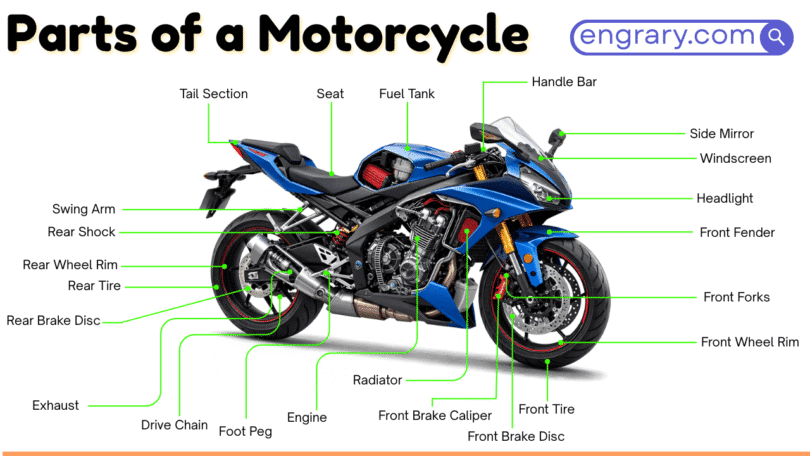
Motorcycle parts are the physical sections that allow a motorcycle to move, steer, stop, and remain balanced on the road. Together, these parts connect in a clear mechanical order that supports power transfer, control, stability, braking, and rider use. The frame forms the main structure, while the engine creates power. At the same time, the steering and wheel systems guide movement, and the seat and control parts support riding position and operation.
In addition, a labeled diagram shows how these named parts align across the front section, central frame, engine area, wheel system, and rear support section of the motorcycle. As power moves through the engine and drivetrain, the wheels create forward motion. Meanwhile, the handlebar, brakes, suspension, and foot controls guide direction, regulate stopping, and support controlled riding across standard motorcycle designs.
Main Body And Frame Parts
The main body and frame parts form the core structure of the motorcycle. Together, these parts support the overall shape, carry the main load, and connect the major riding systems.
Frame
The frame is the main structural body of the motorcycle. It supports the engine, seat, wheels, and connected systems.
Fuel Tank
The fuel tank is the storage part that holds fuel for the engine. It supports continued operation by supplying fuel.
Seat
The seat is the riding support where the rider or passenger sits. It supports body weight during travel.
Side Panel
The side panel is the outer covering section fixed along the side of the motorcycle body. It helps cover internal sections and forms part of the visible body.
Fender
The fender is the curved covering above the wheel. It helps block mud, water, and road spray from the rotating tire.
Swingarm
The swingarm is the rear support arm that connects the frame to the rear wheel. It helps support wheel movement and rear suspension action.
Subframe
The subframe is the secondary rear support structure connected to the main frame. It helps support the seat and rear body parts.

Steering And Control Parts
These parts manage direction, rider input, and key operating control. Together, they help guide the motorcycle and support controlled handling.
Handlebar
The handlebar is the main steering control held by the rider. It turns the front wheel system and supports hand-operated control.
Handlebar Grip
The handlebar grip is the outer covering fitted over the handlebar ends. It supports hand comfort, grip control, and steadier handling during riding.
Throttle
The throttle is the control used to increase engine power. It raises speed by increasing fuel and air input to the engine.
Clutch Lever
The clutch lever is the hand control used on many motorcycles to engage or disengage engine power from the transmission. It supports gear changes and controlled starts.
Brake Lever
The brake lever is the hand control that activates the front brake system. It helps reduce speed and supports stopping.
Brake Pedal
The brake pedal is the foot control that activates the rear brake system. It helps slow or stop the motorcycle.
Gear Shifter
The gear shifter is the foot control used to change gears. It helps manage speed and engine response.
Mirror
The mirror is the reflective part mounted near the handlebar. It helps the rider see behind or along the side.
Instrument Cluster
The instrument cluster is the display area in front of the rider. It shows riding information such as speed, fuel level, and warning indicators.
Ignition Switch
The ignition switch is the control used to start the motorcycle’s electrical and engine system. It allows the rider to turn the motorcycle on or off. Motorcycle parts lists commonly include an ignition switch in the steering/control group.
Engine And Drive Parts
The engine and drive parts create and transfer the force that moves the motorcycle. Together, these parts generate power, support motion, and maintain controlled mechanical movement.
Engine
The engine is the main power-producing part of the motorcycle. It generates the force needed to move the motorcycle.
Cylinder
The cylinder is the chamber where engine movement takes place. It forms a key working part of the engine.
Piston
The piston is the moving engine part inside the cylinder. It helps create force during the engine cycle.
Spark Plug
The spark plug creates the spark that ignites the fuel-air mixture inside the engine. It supports combustion in petrol engines.
Battery
The battery is the electrical power source that supports starting and key electrical functions. It supplies stored power to the motorcycle when needed. Battery is commonly listed in motorcycle electrical and engine-related parts groups.
Exhaust Pipe
The exhaust pipe carries used gases away from the engine. It directs exhaust outward during operation.
Muffler
The muffler is the exhaust part that reduces engine noise as gases leave the system. It works with the exhaust path and supports quieter operation. Broad motorcycle parts lists commonly include muffler or silencer with the exhaust group.
Chain
The chain transfers engine power toward the rear wheel on chain-driven motorcycles. It supports rear wheel movement.
Sprocket
The sprocket is the toothed wheel that works with the chain. It helps transfer rotational force through the drive system.
Transmission
The transmission is the gear-changing system that transfers engine power in controlled speed ranges. It supports speed and power management.
Wheel And Suspension Parts
These parts support road contact, balance, shock control, and rolling movement. Together, they help the motorcycle remain stable and controlled during riding.
Front Wheel
The front wheel is the front rotating wheel of the motorcycle. It supports steering and front road contact.
Rear Wheel
The rear wheel is the back rotating wheel of the motorcycle. It receives drive force and supports rear movement.
Tire
The tire is the outer rubber covering fitted around the wheel. It provides grip, traction, and cushioning on the road.
Rim
The rim is the hard circular outer frame that holds the tire in place. It forms the main outer wheel structure.
Fork
The fork is the front support structure that holds the front wheel. It supports steering and front suspension movement.
Shock Absorber
The shock absorber reduces bounce and controls movement caused by uneven road surfaces. It helps improve ride stability.
Spring
The spring is the suspension part that compresses and expands during motion. It helps absorb road impact.
Brake Disc
The brake disc is the round braking surface attached near the wheel. It works with the brake system to reduce wheel speed.
Front Brake Caliper
The front brake caliper is the braking part that applies pressure to the front brake disc. It helps slow the front wheel during braking.
Rear Brake Caliper
The rear brake caliper is the braking part that applies pressure to the rear braking surface. It helps reduce rear wheel speed during braking.
Brake Pad
The brake pad is the friction part inside the braking system that presses against the brake disc. It helps reduce wheel speed through controlled friction. Front and rear brake calipers plus brake pads are standard items in motorcycle braking-system lists.
Lighting And Safety Parts
These parts support visibility, signaling, warning, and safer road use. Together, they help the motorcycle remain visible and respond more safely in traffic.
Headlight
The headlight is the front light used to illuminate the road ahead. It improves forward visibility in low light or dark conditions.
Taillight
The taillight is the rear light that makes the back of the motorcycle visible to vehicles behind it.
Indicator Light
The indicator light is the signal light used to show turning direction. It alerts other road users when the motorcycle turns or changes position.
Brake Light
The brake light is the rear warning light that activates during braking. It signals that the motorcycle is slowing down or stopping.
Horn
The horn is the sound signal device used to alert nearby road users or pedestrians.
Reflector
The reflector is the reflective safety surface fixed on the motorcycle body. It improves visibility by reflecting light from other vehicles.
Foot Peg
The foot peg is the small foot support where the rider places a foot during riding. It supports balance, body position, and control.
Side Stand
The side stand is the support leg that holds the motorcycle upright when parked. It supports stable standing when the motorcycle is not in use.
Center Stand
The center stand is the lower support stand that lifts and holds the motorcycle upright from the center when parked. It supports more upright stationary positioning.
Chain Guard
The chain guard is the protective cover near the chain area. It helps reduce direct contact with the moving chain and covers part of the drive section. Footpegs, chain guard, and center stand are commonly grouped with body/ergonomic or safety-related motorcycle parts.
Parts Of A Motorcycle Key Takeaways
Parts of a motorcycle are grouped into body, control, engine, wheel, and safety sections. Together, these groups form the main working structure of a standard motorcycle. The frame supports the main body, while the control parts guide direction and rider input. At the same time, the engine and drive parts create movement, and the wheel and suspension parts support balance and road contact. In addition, the safety parts improve visibility, signaling, and stable parking. As these sections work together, the motorcycle moves, turns, stops, and remains controlled on the road.
FAQs
The main parts of a motorcycle include the frame, engine, fuel tank, handlebar, wheels, brakes, chain, seat, and lights. Together, these parts support movement, control, and riding.
The engine makes the motorcycle move by producing power. That power then passes through the transmission and drive system to the rear wheel.
The handlebar is the main part used for steering. It controls the front wheel direction and helps guide the motorcycle on the road.
The throttle, clutch lever, brakes, transmission, and gear shifter all help control speed. Together, they manage power, gear range, and stopping force.
The side stand holds the motorcycle up when parked. It supports the motorcycle in a stable leaning position when not in use.
You May Also Like