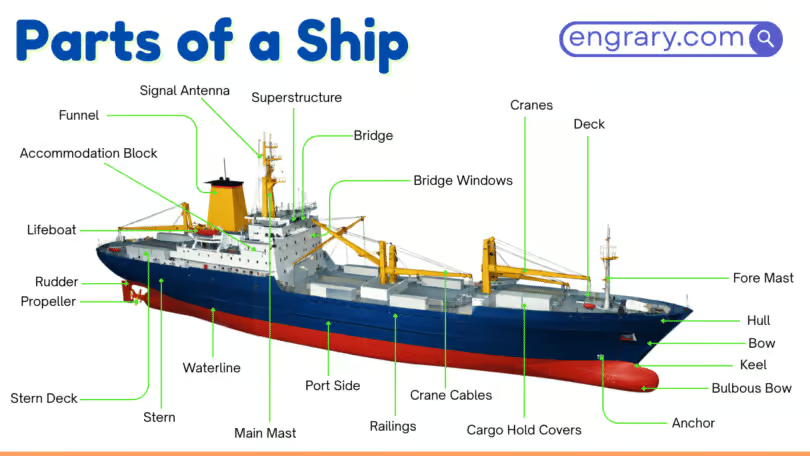
Ship parts are the physical sections that allow a ship to float, carry load, move, steer, and operate safely at sea. Together, these parts connect in a clear structural order that supports flotation, navigation, propulsion, cargo handling, and onboard access. The hull forms the main body, while the deck and upper structures support operation above it. At the same time, the propulsion and steering parts create movement and directional control, and the safety and access parts support crew use and protection.
In addition, a labeled diagram shows how these named parts align across the bow, stern, deck, upper structure, internal compartments, and lower underwater sections of the ship. As the hull supports flotation and load, the propeller and shaft system create movement through the water. Meanwhile, the rudder, bridge, anchoring parts, and deck equipment help guide direction, manage operation, and support controlled ship handling.
Hull And Main Outer Body Parts
The hull and main outer body parts form the core external structure of the ship. Together, these parts shape the vessel, support flotation, and define its main outer lines.
Hull
The hull is the main watertight body of the ship. It supports flotation and carries the ship through the water.
Bow
The bow is the front end of the ship. It is the leading section that meets the water first.
Bulbous Bow
The bulbous bow is the rounded projection below the bow near the waterline. It helps improve water flow and reduce resistance on many large ships.
Stem
The stem is the front structural edge of the ship. It forms the forward line where the bow begins.
Stern
The stern is the rear end of the ship. It supports propulsion and steering parts at the back of the vessel.
Transom
The transom is the flat or nearly flat rear surface at the stern. It forms the back outer face on many ship designs.
Port Side
The port side is the left side of the ship when facing the bow. It is a fixed direction term used onboard.
Starboard Side
The starboard side is the right side of the ship when facing the bow. It pairs with port side for clear orientation.
Midship
Midship is the middle section of the ship between bow and stern. It marks the central area of the vessel length.
Fore
Fore means toward the bow, or front, of the ship. It is a standard onboard direction term.
Aft
Aft means toward the stern, or rear, of the ship. It is a standard onboard direction term.
Keel
The keel is the main bottom centerline structure of the ship. It supports the hull and adds longitudinal strength.
Bilge
The bilge is the lower curved area where the side of the hull meets the bottom. It forms the lower inner and outer turn of the hull shape.
Bilge Keel
The bilge keel is the long external fin fixed along the bilge area on some ships. It helps reduce rolling.
Freeboard
The freeboard is the height of the ship’s side above the waterline. It shows how much of the hull remains above water.
Bulwark
The bulwark is the raised protective wall along the deck edge. It helps protect the deck side from waves and adds safety.
Beam
The beam is the widest width of the ship. It is the main width measurement across the vessel.
Draft
The draft is the vertical depth of the ship below the waterline. It shows how deep the ship sits in the water.
Load Line
The load line is the marked limit that shows the safe loading depth of the ship. It helps indicate how deeply the ship can be loaded.
Scupper
The scupper is the drainage opening that allows water to flow off the deck. It helps clear deck water overboard.
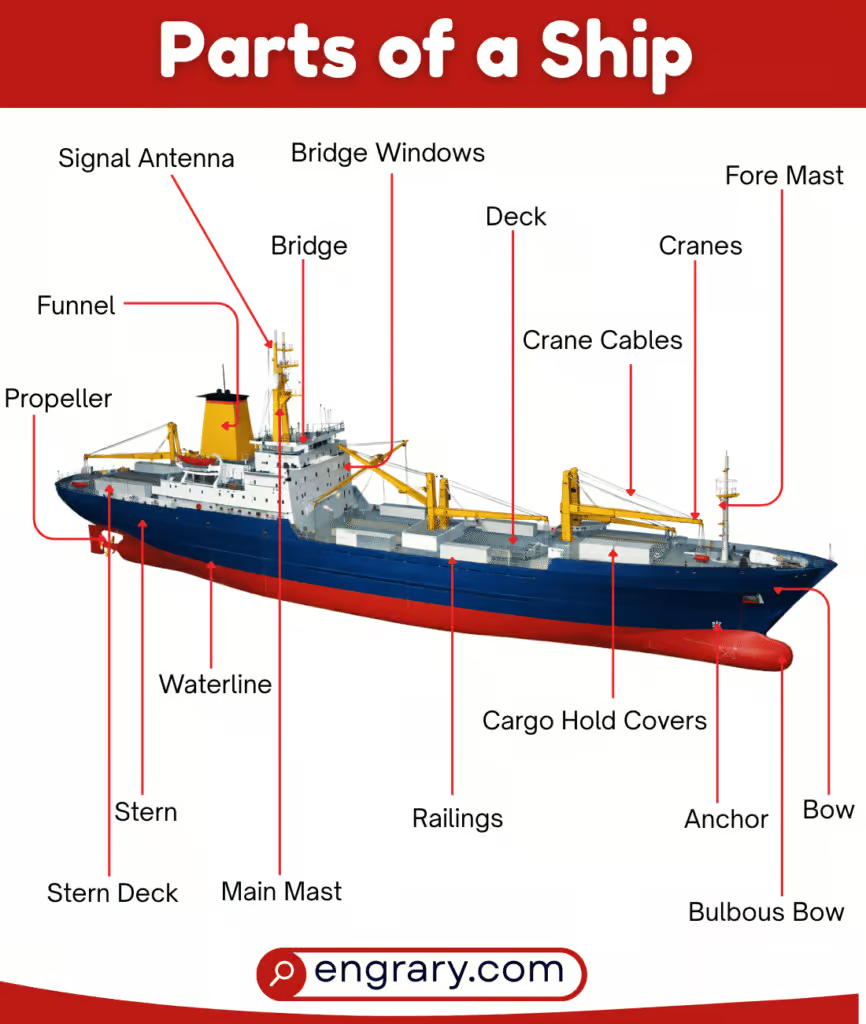
Internal Structural Ship Parts
The internal structural ship parts support strength, compartment division, balance, and cargo arrangement inside the vessel. Together, these parts reinforce the hull and organize the ship’s inner working spaces.
Bulkhead
The bulkhead is the internal vertical dividing wall inside the ship. It separates compartments and adds structural strength.
Frame
The frame is the rib-like internal support part fixed inside the hull. It helps form and strengthen the ship’s body shape.
Side Shell
The side shell is the outer side plating of the hull. It forms the side wall of the ship’s main body.
Double Bottom
The double bottom is the inner bottom space built above the outer hull bottom. It adds strength and provides protected tank space.
Ballast Tank
The ballast tank is the internal tank space used to hold ballast water. It helps improve stability and trim.
Forepeak Tank
The forepeak tank is the tank space near the bow in the lower front section of the ship. It is used for ballast or storage in many vessels.
Cofferdam
The cofferdam is the empty separating space between two compartments or tanks. It helps isolate spaces for safety and separation.
Hopper Tank
The hopper tank is the sloped side tank space used in many cargo ships. It helps shape the lower hold area and supports cargo flow.
Cargo Hold
The cargo hold is the main enclosed internal space used to carry cargo. It forms the primary load-carrying compartment below deck.
Stern Tube
The stern tube is the housing around the propeller shaft where it passes through the stern. It supports and seals the shaft at the hull exit.
Deck And Upper Structure Parts
The deck and upper structure parts form the working surfaces and operating areas above the hull. Together, these parts support navigation, accommodation, cargo access, and deck operations.
Deck
The deck is the main horizontal surface on the ship. It provides a working and walking platform above the hull.
Main Deck
The main deck is the primary full-length deck level on many ships. It forms the main operating surface across the vessel.
Forecastle
The forecastle is the raised forward deck section near the bow. It often supports anchoring equipment and front deck work areas.
Superstructure
The superstructure is the built-up structure above the main deck. It contains operating and living spaces on many ships.
Accommodation
The accommodation is the living area for crew or passengers. It includes cabins and onboard service spaces within the upper structure.
Bridge
The bridge is the main command and navigation area. It supports steering, navigation, and operational control.
Wheelhouse
The wheelhouse is the enclosed control room on the bridge. It holds the main navigation and steering position for ship handling.
Bridge Wing
The bridge wing is the side extension of the bridge area. It provides better side visibility for docking and maneuvering.
Mast
The mast is the tall vertical support structure above the deck. It holds lights, antennas, and signal equipment.
Funnel
The funnel is the exhaust stack structure above the ship. It releases engine exhaust gases upward and away from the deck.
Hatch
The hatch is the opening that leads down into a cargo hold or internal space. It provides access for loading and unloading.
Hatch Coaming
The hatch coaming is the raised border around a hatch opening. It helps keep water from entering the hold through the hatch edge.
Hatch Cover
The hatch cover is the heavy cover that seals the hatch opening. It protects cargo spaces from water entry and weather exposure.
Hatch Cover Seal
The hatch cover seal is the sealing strip around the hatch cover edge. It helps keep the hatch closure watertight at the contact line.
Deck Crane
The deck crane is the lifting equipment mounted on the deck. It supports cargo handling and onboard lifting tasks.
Winch
The winch is the powered pulling device used for lines, cables, or cargo work. It helps manage controlled hauling on deck.
Bollard
The bollard is the strong deck post used to secure mooring lines. It holds ropes under tension during docking.
Fairlead
The fairlead is the guide fitting that directs ropes or cables smoothly. It helps align lines toward a bollard, winch, or other securing point.
Railing
The railing is the protective barrier along deck edges and walkways. It helps support safe movement on deck.
Propulsion And Steering Parts
The propulsion and steering parts create movement and guide direction in the water. Together, these parts transfer power to the propeller and control turning through the steering system.
Engine Room
The engine room is the main internal space that houses the ship’s engines and drive equipment. It supports power generation and propulsion operation.
Propeller
The propeller is the rotating blade assembly at the stern. It pushes water backward to move the ship forward.
Propeller Shaft
The propeller shaft is the rotating shaft that transfers power from the engine system to the propeller. It drives the propeller rotation.
Stern Tube
The stern tube is the housing that supports and seals the propeller shaft where it passes through the hull at the stern. It helps protect the shaft opening.
Rudder
The rudder is the movable steering surface near the stern. It changes water flow direction to turn the ship.
Rudder Stock
The rudder stock is the main shaft that connects the rudder to the steering gear. It transfers steering movement into rudder motion.
Steering Gear
The steering gear is the system that moves the rudder. It supports controlled turning response from the helm.
Helm
The helm is the steering control position used to guide the ship’s heading. It supports directional control through the steering system.
Bow Thruster
The bow thruster is the side-thrust unit near the bow. It helps maneuver the ship sideways during docking and slow-speed movement.
Stern Thruster
The stern thruster is the side-thrust unit near the stern on some ships. It supports additional low-speed maneuvering control.
Anchor
The anchor is the heavy holding device used to secure the ship in place. It grips the seabed to prevent drifting.
Anchor Chain
The anchor chain is the heavy chain that connects the anchor to the ship. It supports holding strength and controlled lowering.
Hawse Pipe
The hawse pipe is the opening at the bow that guides the anchor chain. It allows the chain to move in and out safely.
Windlass
The windlass is the powered device used to raise or lower the anchor chain. It supports controlled anchoring operation.
Safety And Access Parts
The safety and access parts support evacuation, visibility, warning signals, and safe movement on and off the ship. Together, these parts help the ship remain visible, controlled, and accessible during operation.
Lifeboat
The lifeboat is the emergency boat carried on a ship. It supports evacuation and survival during emergencies.
Liferaft
The liferaft is the inflatable emergency raft used for evacuation. It provides floating support when deployed.
Davit
The davit is the lifting arm system used to lower and raise lifeboats or equipment. It supports controlled handling over the ship’s side.
Gangway
The gangway is the access bridge used to move between ship and dock. It supports boarding and exit in a controlled way.
Navigation Light
The navigation light is the position light used to show the ship’s location and direction at sea. It supports visibility in low light.
Whistle
The whistle is the sound signal device used for warning and communication. It supports signaling during navigation or low visibility.
Radar
The radar is the detection system used to locate objects and vessels. It supports navigation and awareness, especially in low visibility.
Ship Parts Names Key Takeaways
Ship parts names are grouped into hull, internal structure, deck, propulsion, steering, anchoring, and safety sections. Together, these groups form the main working build of a standard ship. The hull supports flotation and outer shape, while internal parts divide space and strengthen the body. At the same time, deck and upper parts support navigation and cargo handling, and propulsion and steering parts create movement and directional control. In addition, anchoring and safety parts support holding, access, and emergency response. As these sections work together, the ship carries load, moves through water, and remains controlled at sea.
FAQs
The main parts of a ship include the hull, bow, stern, deck, bridge, engine room, propeller, rudder, anchor, and safety equipment. Together, these parts support flotation, movement, control, and operation.
The propeller helps the ship move by pushing water backward. It receives power through the shaft system from the engine room.
The rudder is the main part used for steering. It changes water flow at the stern and helps turn the ship.
The cargo hold is the main enclosed space that holds cargo. It is built inside the ship below the deck.
The anchor, anchor chain, hawse pipe, and windlass help with anchoring. Together, they lower, hold, and recover the anchor in a controlled way.
You May Also Like