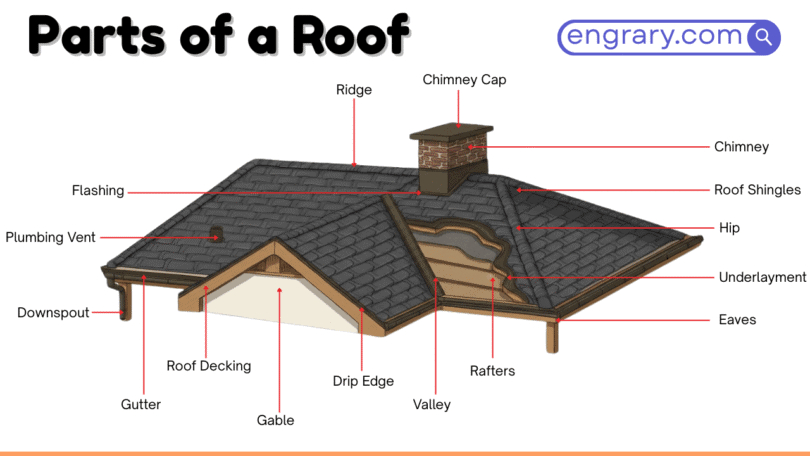
Roof parts are the physical sections that form the upper covering of a building and protect the structure below. Together, these parts connect in a clear structural order that supports load transfer, weather protection, drainage, ventilation, and edge stability. The framing creates the main support, while the outer covering blocks rain and sun. At the same time, the edge and drainage parts direct water away, and the protective layers strengthen the roof system.
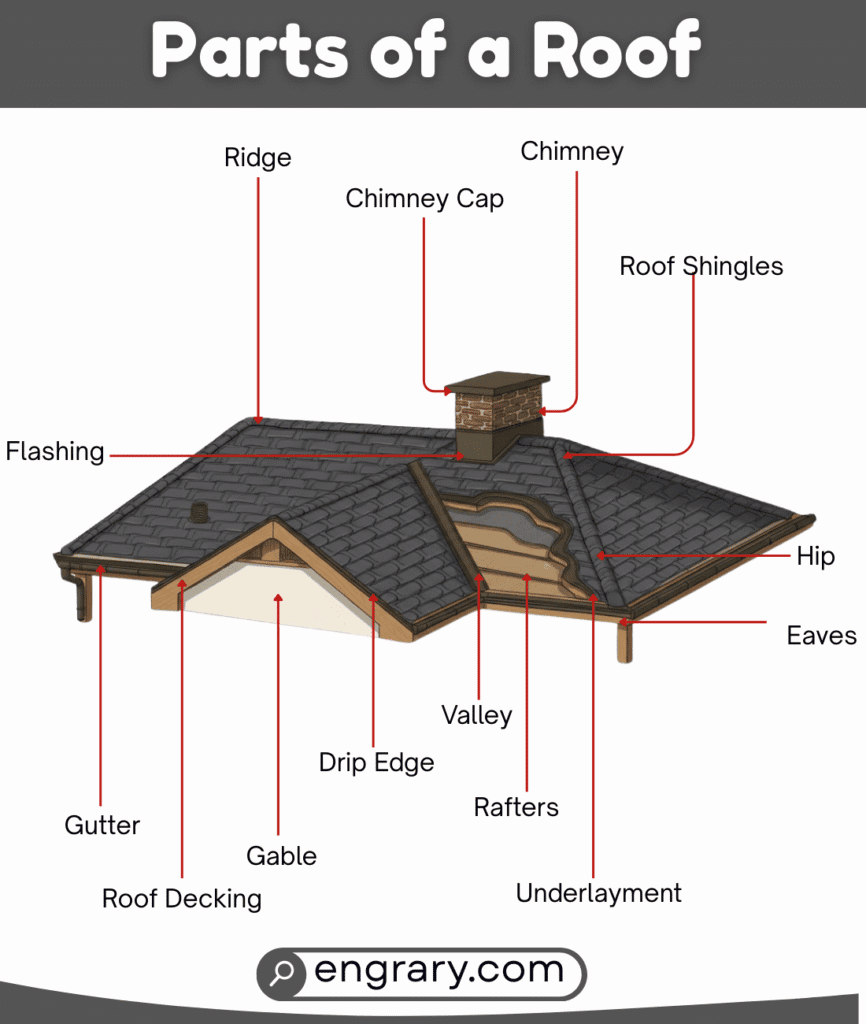
In addition, a labeled diagram shows how these named parts align across the roof peak, sloping sides, lower edges, surface layers, and roof openings. As the framing carries the roof load, the deck and underlayment support the covering above. Meanwhile, the ridge, valleys, eaves, flashing, vents, and drainage parts work together to protect the roof and keep water moving away from the building.
Roof Structure And Framing Parts
The roof structure and framing parts form the load-bearing base of the roof. Together, these parts create shape, while also carrying weight and supporting the layers above.
Ridge
The ridge is the highest horizontal line where two roof slopes meet. It forms the top line of the roof.
Ridge Board
The ridge board is the structural board placed along the roof peak. It supports the upper ends of opposing rafters.
Rafter
The rafter is the sloped framing part that runs from the roof edge toward the ridge. It supports the roof deck and carries roof loads downward.
Truss
The truss is the triangular support framework used in many roofs instead of individual rafters. It spreads roof load across the structure.
Collar Beam
The collar beam is the horizontal framing part fixed between opposing rafters near the upper roof area. It ties the roof frame together.
Joist
The joist is the horizontal support part below the roof structure. It supports the ceiling or upper floor layout across the span.
Purlin
The purlin is the horizontal support part fixed beneath or across rafters in some roofs. It adds support and helps carry load.
Roof Deck
The roof deck is the flat structural surface fixed over the framing. It forms the base layer that supports roofing materials.
Roof Sheathing
The roof sheathing is the panel layer fixed over roof framing. It forms the surface under underlayment and roof covering.
Roof Plane
The roof plane is one sloping surface of the roof. It forms the main angled section between major roof lines.
Hip
The hip is the outward sloping line where two roof planes meet. It runs downward from the ridge on hip roofs.
Hip Rafter
The hip rafter is the main sloping framing part that forms the hip line. It supports shorter rafters along the hip.
Valley
The valley is the inward sloping line where two roof planes meet. It channels water downward between roof sections.
Valley Rafter
The valley rafter is the main framing part that forms the valley line. It supports the joining roof sections along the valley path.
Jack Rafter
The jack rafter is the shorter framing part that runs into a hip rafter or valley rafter. It completes framing in angled roof areas.
Eave
The eave is the lower roof edge that extends beyond the wall. It helps direct rainwater away from the exterior wall.
Rake
The rake is the sloped outer edge of a gable roof. It runs from the eave up toward the ridge.
Roof Surface And Protective Layer Parts
The roof surface and protective layer parts cover the structure, resist weather, and strengthen exposed roof areas. Together, these parts form the main protective outer system, while also covering the framing from above.
Underlayment
The underlayment is the protective layer installed over the roof deck and below the outer roofing material. It helps resist moisture penetration.
Roofing Felt
Roofing felt is a common underlayment material placed over the roof sheathing and below the outer roof covering. It adds a protective moisture-resisting layer beneath the surface roofing.
Ice and Water Shield
The ice and water shield is the waterproof membrane used in vulnerable roof areas. It adds extra protection against water intrusion near edges and joints.
Roof Covering
The roof covering is the outer finished layer that faces the weather. It may consist of shingles, tiles, metal panels, or other roofing materials.
Shingle
The shingle is one individual overlapping roofing piece used on many sloped roofs. It forms part of the outer weather-facing surface.
Starter Shingle
The starter shingle is the first row installed along the roof edge below the main shingles. It helps protect the edge and supports wind resistance.
Ridge Cap
The ridge cap is the covering piece installed over the ridge line. It protects the roof peak where the upper roof planes meet.
Roof Tile
The roof tile is a shaped roofing unit used on tile roofs. It covers the roof surface in overlapping rows.
Metal Panel
The metal panel is the long roofing sheet used on metal roof systems. It forms a durable outer covering across the roof surface.
Roof Edge And Drainage Parts
The roof edge and drainage parts manage water flow off the roof. Together, these parts guide rainwater from the roof surface to controlled exit points, while also protecting the roof edge and nearby wall areas.
Drip Edge
The drip edge is the metal strip fixed along roof edges. It helps direct water away from the fascia and roof deck.
Rake Drip Edge
The rake drip edge is the drip-edge metal installed along the sloped rake edge of the roof. It protects the roof edge and helps guide water away from the outer trim. This is an inference from standard drip-edge placement at roof edges, including rakes.
Gutter Apron
The gutter apron is the metal edge flashing that helps direct water from the roof surface into the gutter. It supports cleaner water flow at the roof edge.
Fascia
The fascia is the vertical board fixed along the roof edge. It forms the outer finishing edge and commonly supports the gutter.
Soffit
The soffit is the underside section below the roof overhang. It covers the eave underside and helps close the edge area.
Gutter
The gutter is the channel fixed along the roof edge. It collects rainwater and directs it toward the downspout.
Downspout
The downspout is the vertical pipe connected to the gutter. It carries rainwater downward and away from the building.
Splash Block
The splash block is the small ground-level guide placed below a downspout outlet. It helps direct discharged water away from the base area.
Roof Ventilation Parts
The roof ventilation parts support airflow through the roof space. Together, these parts release heat and moisture, while also helping air move in and out through planned intake and exhaust paths.
Roof Vent
The roof vent is the opening or vent unit that allows heat and moisture to escape from the roof space. It supports airflow and ventilation.
Ridge Vent
The ridge vent is the ventilation opening installed along the ridge line. It allows warm air to exit from the upper roof area.
Soffit Vent
The soffit vent is the intake vent placed in the soffit area. It allows outside air to enter the roof ventilation path.
Baffle
The baffle is the thin channel part installed between rafters near the soffit area. It keeps an open airflow path from the soffit vents into the attic or roof space.
Rafter Vent
The rafter vent is another name for the baffle installed between rafters. It helps maintain a ventilation channel between insulation and the roof deck.
Gable Vent
The gable vent is the vent opening placed on the gable end wall near the roof peak. It supports airflow through the upper roof space.
Attic Vent
The attic vent is a general vent opening that supports air movement in the attic area. It helps reduce trapped heat and moisture.
Roof Flashing And Joint Protection Parts
The roof flashing and joint protection parts seal vulnerable roof joints and transitions. Together, these parts guide water away from openings, roof edges, wall lines, and joining surfaces, while also reducing seepage at roof connections.
Flashing
The flashing is the thin waterproof metal placed at vulnerable joints and intersections. It helps direct water away from openings and roof transitions.
Step Flashing
The step flashing is the layered flashing placed where the roof meets a vertical wall. It directs water away from the side joint in steps.
Kickout Flashing
The kickout flashing is the small angled flashing placed where roof-to-wall flashing ends near the gutter. It directs water away from the wall and into the gutter instead of behind the siding.
Valley Flashing
The valley flashing is the protective metal lining placed along the roof valley. It helps direct water down the valley and reduce leakage risk.
Counterflashing
The counterflashing is the protective flashing placed over base flashing at a wall or chimney joint. It covers the upper edge of the flashing and blocks water entry.
Headwall Flashing
The headwall flashing is placed where the top of a sloped roof meets a vertical wall. It directs water down the roof surface and away from the upper wall joint.
Chimney Flashing
The chimney flashing is the flashing system placed around the base and sides of a chimney where it passes through the roof. It helps seal the joint and guide water away from the opening.
Chimney Cricket
The chimney cricket is the small peaked section built on the upslope side of a wider chimney. It helps split and divert water around the chimney base.
Pipe Boot
The pipe boot is the sealing cover fitted around a vent pipe where it passes through the roof. It blocks water from entering around the pipe opening.
Roof Openings And Feature Parts
The roof openings and feature parts pass through the roof surface or project above it. Together, these parts create sealed openings for light, exhaust, access, or added roof structure, while also protecting those areas from water entry.
Chimney
The chimney is the vertical structure that passes through the roof and carries smoke or exhaust upward.
Chimney Cap
The chimney cap is the cover fitted on top of the chimney opening. It helps block rain and debris from entering.
Skylight
The skylight is the window opening installed in the roof. It brings natural light into the space below through a sealed roof opening.
Roof Hatch
The roof hatch is the covered access opening that allows entry to the roof from inside the building.
Plumbing Vent Pipe
The plumbing vent pipe is the vertical pipe that exits through the roof. It supports airflow in the plumbing system.
Dormer
The dormer is the roof feature that projects outward and usually contains a window. It adds headroom, light, and a raised section to the roof line.
Parts Of Roof Names Key Takeaways
Roof parts names are grouped into structure, surface, drainage, ventilation, flashing, and opening sections. Together, these groups form the main working build of a standard roof. The framing parts carry roof load, while the deck and protective layers support the outer covering. At the same time, the edge and drainage parts guide water away, and the vent parts support airflow through the roof space. In addition, the flashing and opening parts seal roof joints and protect roof penetrations. As these sections work together, the roof stays covered, drains water, and remains stable through weather.
FAQs
The main parts of a roof include the ridge, rafters or trusses, roof deck, underlayment, roof covering, flashing, gutters, and vents. Together, these parts support structure, drainage, and protection.
Rafters or trusses carry the roof weight. They transfer load to the walls and down into the supporting structure.
Flashing helps stop water leaks at joints and transitions. It directs water away from openings and roof intersections.
The gutter collects rainwater along the roof edge, and the downspout carries it downward. Together, they direct water away from the building.
Roof vents, ridge vents, and soffit vents provide ventilation. Together, they allow airflow through the roof space to release heat and moisture.
You May Also Like