A frog has several outer and inner body parts that help it move, breathe, eat, and sense the world around it. The main groups include the head, limbs, skin, mouth structures, and internal organs, and each one helps with movement, feeding, breathing, protection, or internal support.
Together, these parts work in a connected sequence. First, the outer parts help the frog sense, jump, swim, and respond to its surroundings. Then, mouth structures and internal organs support feeding, breathing, digestion, circulation, and waste removal. At the same time, parts such as the limbs, lungs, heart, kidneys, and bladder help the frog move, breathe, and maintain its body systems.
Parts of a Frog Labeled Diagram
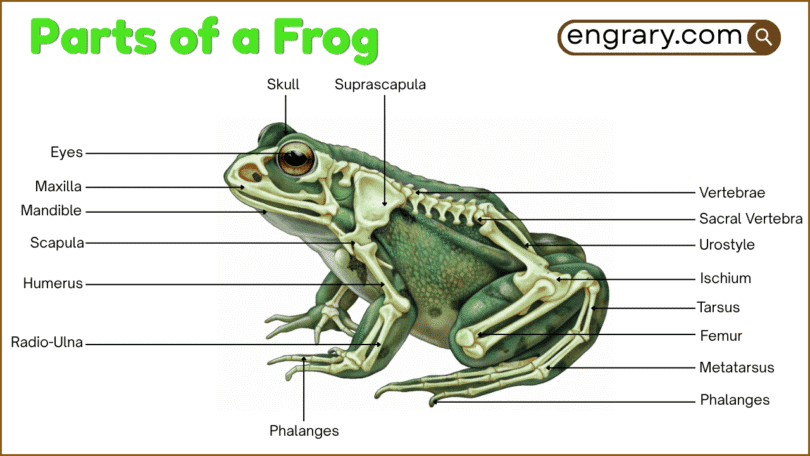
The diagram below shows the main external and internal parts of a frog and how they are arranged across the head, limbs, skin, mouth area, and body cavity. It highlights key parts such as the eyes, nostrils, tympanum, tongue, lungs, heart, stomach, kidneys, and webbed feet so readers can identify each labeled part more easily.
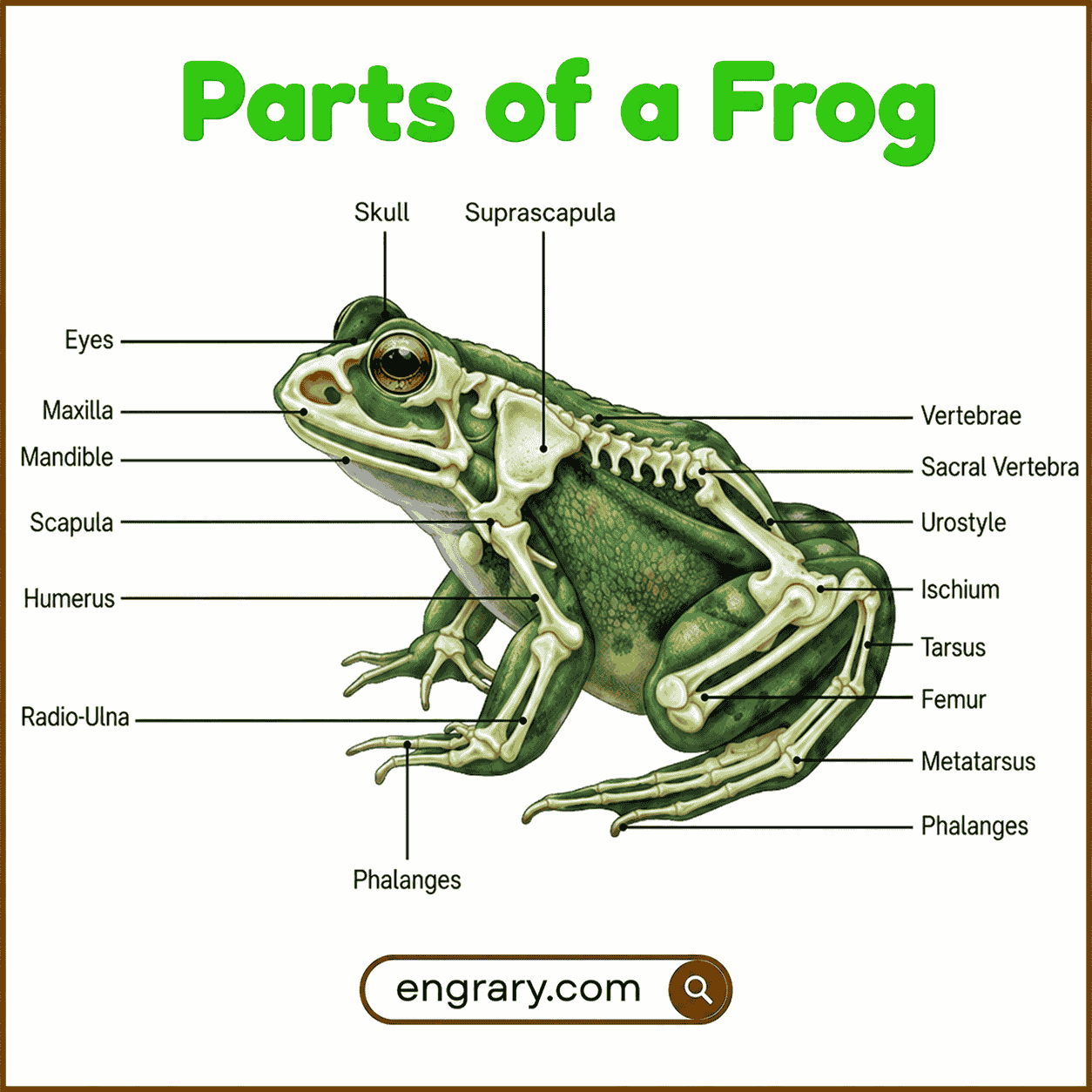
External Parts of a Frog
Head
The head is the front part of the frog and holds important structures such as the eyes, nostrils, mouth, and tympanum. It plays a major role in sensing, feeding, and breathing.
Eye
The eyes help the frog detect movement, light, and nearby objects. Their raised position also gives the frog a wide view of its surroundings.
Nictitating Membrane
The nictitating membrane is a thin protective covering over the eye. It helps protect the eye while still allowing the frog to see, especially in water.
Nostril (External Nare)
The nostrils, also called external nares, are small openings near the nose area. They allow air to enter and also help the frog detect smells.
Tympanum
The tympanum is the round external hearing structure behind the eye. It works like an eardrum and helps the frog detect sound vibrations.
Mouth
The mouth takes in food and opens into the inner mouth structures used in feeding. It is also linked to the breathing pathway.
Forelimb
The forelimbs are the front legs of the frog. They help support the body, absorb landing force, and assist with movement.
Hind Limb
The hind limbs are the long back legs that provide the main power for jumping and swimming. Their strong muscles make frog movement possible.
Webbed Foot
The webbed foot helps the frog push against water during swimming. It also supports balance and movement on wet ground.
Skin
The skin covers the frog’s body and helps with protection, moisture control, and gas exchange. Because frog skin is thin and moist, it also supports breathing.
Back
The back is the upper surface of the frog’s body. It protects the upper body area and supports the muscles and skin covering the frog.
Belly
The belly is the lower surface of the frog’s body. It covers the underside and protects the lower body area.
Internal Parts of a Frog
Tongue
The tongue is attached near the front of the mouth and helps the frog catch food quickly. It can flip outward to grab prey and pull it back into the mouth.
Maxillary Teeth
Maxillary teeth are small teeth along the edge of the upper jaw. They help the frog grip prey and keep it from slipping away.
Vomerine Teeth
Vomerine teeth are small teeth on the roof of the mouth. They help hold prey in place while the frog swallows it.
Eustachian Tube Opening
The eustachian tube openings connect the mouth area to the ear region. They help balance pressure around the internal ear.
Glottis
The glottis is the opening that leads into the respiratory system. It allows air to pass toward the lungs.
Esophagus
The esophagus is the tube that carries food from the mouth to the stomach. It forms an early part of the digestive pathway.
Heart
The heart pumps blood through the frog’s body. This circulation helps move oxygen and nutrients where they are needed.
Lungs
The lungs help the frog breathe air. They work with the skin to support gas exchange.
Liver
The liver is a large internal organ that helps process nutrients and supports digestion. It also plays an important role in body chemistry.
Gallbladder
The gallbladder stores bile linked to digestion. This fluid helps the body process food more effectively.
Stomach
The stomach helps break down food after the frog swallows it. It is an important early part of digestion.
Small Intestine
The small intestine continues digestion and absorbs nutrients from food. It is a major part of the digestive system.
Large Intestine
The large intestine helps move remaining waste material through the body. It prepares waste before it leaves the frog.
Pancreas
The pancreas helps the frog break down food by producing digestive substances. It also supports other internal body functions.
Spleen
The spleen supports blood-related functions in the body. It helps maintain internal balance.
Kidneys
The kidneys filter waste from the blood and help control fluid balance. This supports the frog’s internal stability.
Urinary Bladder
The urinary bladder stores urine before it leaves the body. It is part of the waste removal system.
Cloaca
The cloaca is the common chamber near the end of the body where waste and reproductive materials pass. It serves as the final exit area for several body systems.
Fat Bodies
Fat bodies store energy inside the frog’s body. They help provide reserve energy when food is limited or when the frog needs extra support.
Key Takeaways
The parts of a frog can be grouped into external parts and internal parts. The head, eyes, nostrils, tympanum, skin, and limbs help with sensing, protection, movement, and breathing. Inside the mouth, the tongue, teeth, glottis, and eustachian tube openings support feeding and air flow. Deeper in the body, the heart, lungs, liver, stomach, intestines, kidneys, bladder, cloaca, and fat bodies keep the frog alive by supporting circulation, digestion, breathing, waste control, and stored energy.
FAQs
The main parts of a frog include the head, eyes, nostrils, mouth, tympanum, limbs, skin, and internal organs. These parts help the frog move, breathe, feed, hear, and survive.
The tympanum helps a frog hear. It works like an outer eardrum and detects sound vibrations.
The hind limbs provide strong power for jumping and swimming. They are one of the most important movement parts of a frog.
A frog mainly uses its tongue to catch food. The tongue flips outward quickly and pulls prey back into the mouth.
Yes, a frog can exchange gases through its skin. Its lungs also help with breathing, so both parts are important.
You May Also Like