A dog’s body includes the visible outer parts that support movement, sensing, feeding, and balance. The main groups include the head, neck, torso, legs, paws, tail, and coat, while smaller features such as the muzzle, ears, whiskers, and joints help each area perform a specific role.
Together, these parts allow a dog to move with control and respond to its surroundings. Meanwhile, the head handles smell, sight, hearing, and eating, the body supports posture and internal space, and the legs, paws, and tail work together to create motion, traction, balance, and body signaling.
Dog Body Parts Labeled Diagram
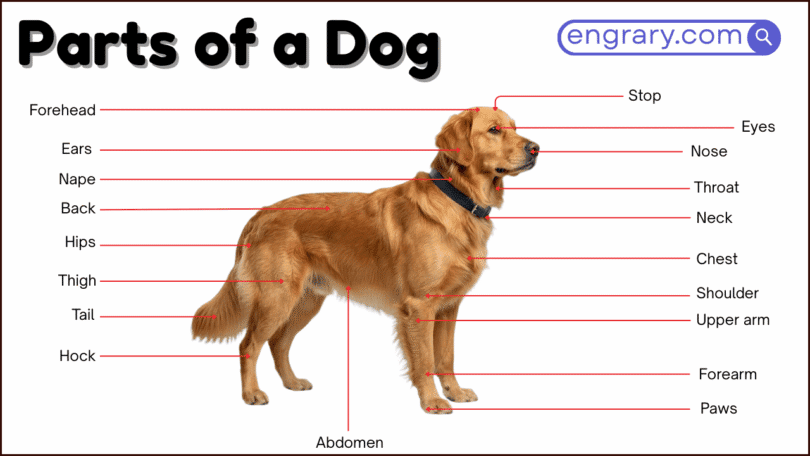
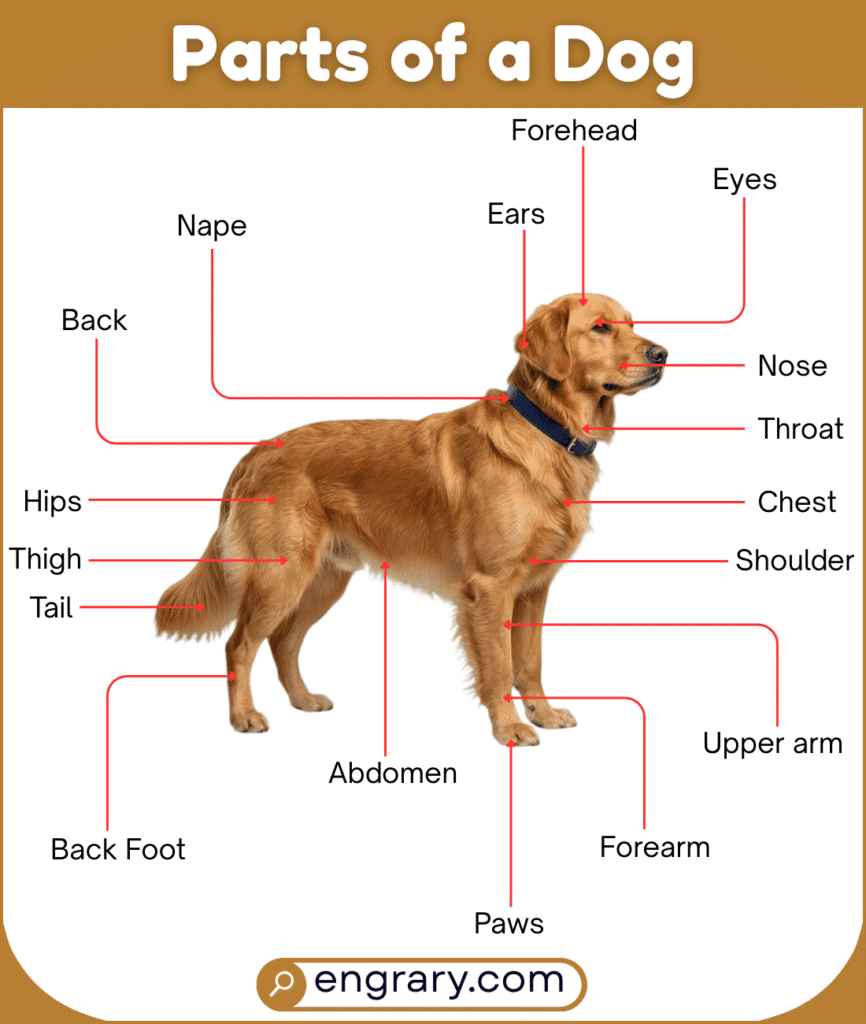
The diagram below shows the main external parts of a dog and how they are arranged across the body. It highlights key areas such as the head, neck, chest, back, legs, paws, and tail so readers can easily recognize each labeled body part.
Head And Face Parts
Head
The head holds the main sensory organs along with the mouth and jaw. It serves as the center for seeing, hearing, smelling, eating, and facial expression.
Skull
This bony structure protects the brain and gives the head its shape. It also supports the face, jaw, and eye area.
Forehead
Located above the eyes, the forehead forms the upper front area of the head. Its shape affects the overall facial profile.
Stop
Set between the forehead and the muzzle, the stop marks the point where the face changes angle. It helps define the outline of the head in side view.
Eyes
A dog’s eyes detect light, motion, and nearby objects. They also help show alertness, focus, and mood.
Ears
The ears collect sound and help a dog respond to its surroundings. Their size and shape vary widely across breeds.
Muzzle
This front part of the face includes the nose, mouth, and jaws. It plays a major role in smelling, breathing, carrying, and eating.
Snout
The snout is the projecting front portion of the face. It includes the nose and front jaws and gives the face much of its forward shape.
Nose
The nose is the main organ for smell. It helps dogs track scents and gather detailed information from the environment.
Nostrils
These openings let air move in and out of the nose. They also help direct scent particles into the nasal passages.
Whiskers
Whiskers are stiff sensory hairs around the muzzle and face. They help detect nearby objects and support spatial awareness.
Cheeks
The cheeks form the sides of the face below the eyes. They cover muscles that help move the jaws during biting and chewing.
Jaw
The jaw opens and closes the mouth for chewing, gripping, and carrying. Strong jaw structure supports feeding and object control.
Mouth
The mouth takes in food, water, and objects. It also helps with panting, which supports body cooling.
Teeth
Teeth cut, tear, and grind food into smaller pieces. Different tooth types work together during biting and chewing.
Tongue
The tongue helps with eating, drinking, licking, and panting. It also moves food inside the mouth during chewing.
Chin
Found below the mouth, the chin forms the lower front edge of the jaw area. It helps shape the lower face.
Neck And Body Parts
Neck
The neck connects the head to the rest of the body and supports head movement. It also contains strong muscles, the airway, and the upper spine.
Nape
The nape is the back part of the neck behind the head. It helps support head position and neck movement.
Throat
Positioned under the neck, the throat forms the front lower neck area. It covers the passage used for breathing and swallowing.
Shoulder
The shoulder connects the front leg to the body through muscle and joint structure. It helps control reach, support, and front-leg motion.
Chest
The chest houses the heart and lungs. Its depth and width shape the front body and affect internal space.
Brisket
The brisket is the lower front part of the chest between the front legs. It forms the deep front underside of the body.
Rib Cage
This curved bony structure protects the heart and lungs. It also supports the shape and strength of the upper torso.
Back
Running from the shoulder area toward the hips, the back supports posture and movement. It helps the body stay balanced during motion.
Withers
The withers are the raised area between the shoulder blades. This point often marks a dog’s height.
Spine
The spine supports the body and protects the spinal cord. It also allows bending, turning, and coordinated movement.
Loin
Located between the rib cage and the hips, the loin forms the lower back section. It helps transfer force from the rear legs through the body.
Abdomen
The abdomen is the body area behind the rib cage. It contains major digestive organs and forms much of the middle underside.
Belly
The belly is the soft underside behind the chest. It forms the lower abdominal area of the torso.
Underline
This term refers to the lower body outline from the chest to the belly. It helps describe the shape of the underside in side view.
Flank
The flank sits along the side of the body between the ribs and the hind leg. It marks the transition from the middle body to the rear.
Hip
The hip joins the hind leg to the body and supports powerful rear movement. It is central to running, jumping, and pushing forward.
Croup
This area lies at the top of the rear body near the base of the tail. It shapes the slope and form of the hind end.
Hindquarters
The hindquarters include the rear body section from the hips through the upper hind legs. This area provides much of the power used in movement.
Front Leg And Paw Parts
Front Leg
The front leg supports much of the dog’s body weight during standing and movement. It also helps with balance, turning, and shock control.
Upper Arm
This section connects the shoulder area to the lower front leg. It helps control reach and motion in the forelimb.
Elbow
The elbow forms the main joint in the front leg. It allows the leg to bend and extend during movement.
Forearm
Positioned below the elbow, the forearm gives length and support to the front leg. It helps carry weight and steady each step.
Wrist
Often called the carpus, this joint sits above the front paw. It adds flexibility and helps absorb impact.
Pastern
The pastern is the lower part of the front leg between the wrist and the paw. It helps cushion movement and absorb shock.
Paw
The paw supports standing, walking, and running. It also helps with grip, balance, and contact with the ground.
Pads
Pads are the thick cushioned surfaces under the paw. They protect the feet and soften impact during motion.
Toes
A dog’s toes help spread body weight and improve traction. They also support balance on different surfaces.
Claws
Claws give extra grip and help with traction and digging. They protect the ends of the toes as well.
Dewclaw
This small extra toe sits higher on the leg, usually on the front limb. In some dogs, it adds support during certain movements.
Hind Leg And Rear Parts
Hind Leg
The hind leg provides much of the force that drives the body forward. It plays a major role in running, jumping, climbing, and pushing off the ground.
Thigh
The thigh is the upper section of the hind leg. Strong muscles in this area help create power and support rear movement.
Knee
Also called the stifle, the knee bends the hind leg during motion. It connects the upper and lower parts of the rear limb.
Second Thigh
The second thigh is the lower muscular section between the knee and the hock. It helps transfer force from the upper leg to the lower rear limb.
Hock
The hock is the rear joint above the hind paw that bends backward. It helps with spring, push, and rear-leg flexibility.
Rear Pastern
Located below the hock and above the hind paw, the rear pastern forms the lower part of the back leg. It helps support balance and carries force during movement.
Hind Paw
The hind paw is the rear foot that contacts the ground behind the body. It helps with push, traction, and balance during motion.
Tail And Outer Covering Parts
Tail
The tail extends from the rear end of the spine. It helps with balance and also shows emotion through position and movement.
Tail Base
This is the point where the tail joins the body. It supports tail motion and marks the start of the rear extension.
Tail Tip
The tail tip is the outer end of the tail. It marks the final point of the tail’s length and moves with the rest of the tail during communication and balance.
Coat
The coat is the layer of hair that covers the body. It helps protect the skin and supports temperature control.
Fur
Fur refers to the visible hair across the dog’s outer surface. Its length, thickness, and texture vary by breed.
Skin
The skin forms the outer covering under the coat. It protects internal tissues and supports touch sensation.
Parts Of a Dog Key Takeaways
A dog’s body works through connected regions that each handle a clear role. The head and face manage sensing, eating, and expression, while the neck and body support posture, breathing space, and internal organs. Meanwhile, the front legs and paws carry weight and absorb impact, and the hind legs provide much of the power for movement. Finally, the tail, skin, and coat help with balance, protection, and body signaling, so we can understand the full body by following how each part links to the next.
FAQs
The main parts of a dog include the head, neck, body, front legs, hind legs, tail, paws, skin, and coat. Each area supports movement, sensing, balance, protection, or feeding.
The muzzle is the front part of a dog’s face that includes the nose, mouth, and jaws. It helps with smelling, breathing, eating, and carrying objects.
A dog’s leg is the full limb used for support and movement, while the paw is the foot at the end of the leg. The paw contacts the ground and helps with grip and balance.
The hock is the rear joint on the hind leg above the hind paw. It helps the back leg bend, push, and support movement.
Several parts help with balance, including the tail, back, spine, legs, and paws. The tail helps during turning, while the limbs and body maintain support and control.
A dog’s body is covered by skin and coat. The skin protects the body underneath, while the coat adds another layer that helps with protection and temperature control.
You May Also Like