An insect has several body parts that work together to help it sense, move, feed, breathe, and reproduce. These parts are mainly grouped into the head, thorax, and abdomen, while the legs, wings, and outer covering support those main body regions. Each group has its own role, but all of them connect to form one complete body system.
First, the head helps the insect detect its surroundings and handle food. Next, the thorax supports movement because it carries the legs and wings. Then, the abdomen contains structures linked to breathing, flexibility, and reproduction, while the exoskeleton protects the whole body and helps maintain its shape. Together, these parts allow an insect to live, grow, and respond quickly to the world around it.
Parts of an Insect With Labeled Diagram
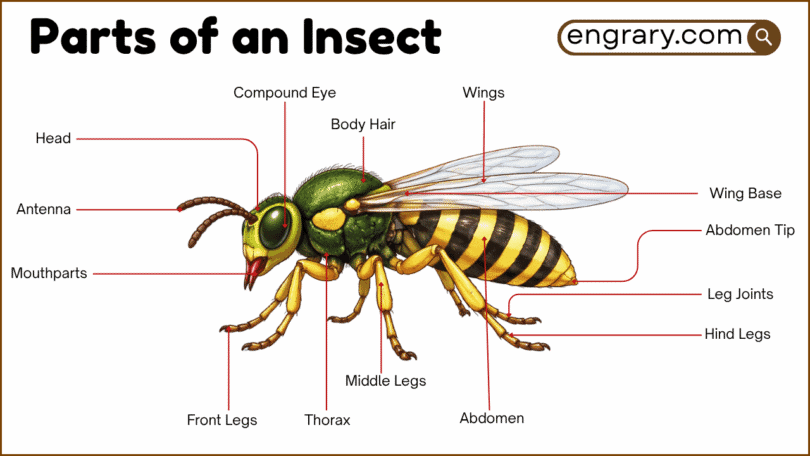
The labeled diagram below shows the main outer parts of an insect from front to back. It identifies major structures such as the head, thorax, abdomen, antennae, compound eyes, mouthparts, legs, wings, and spiracles so each part is easier to recognize. It also shows how the smaller body parts attach to the three main body regions and work together as one organized structure.
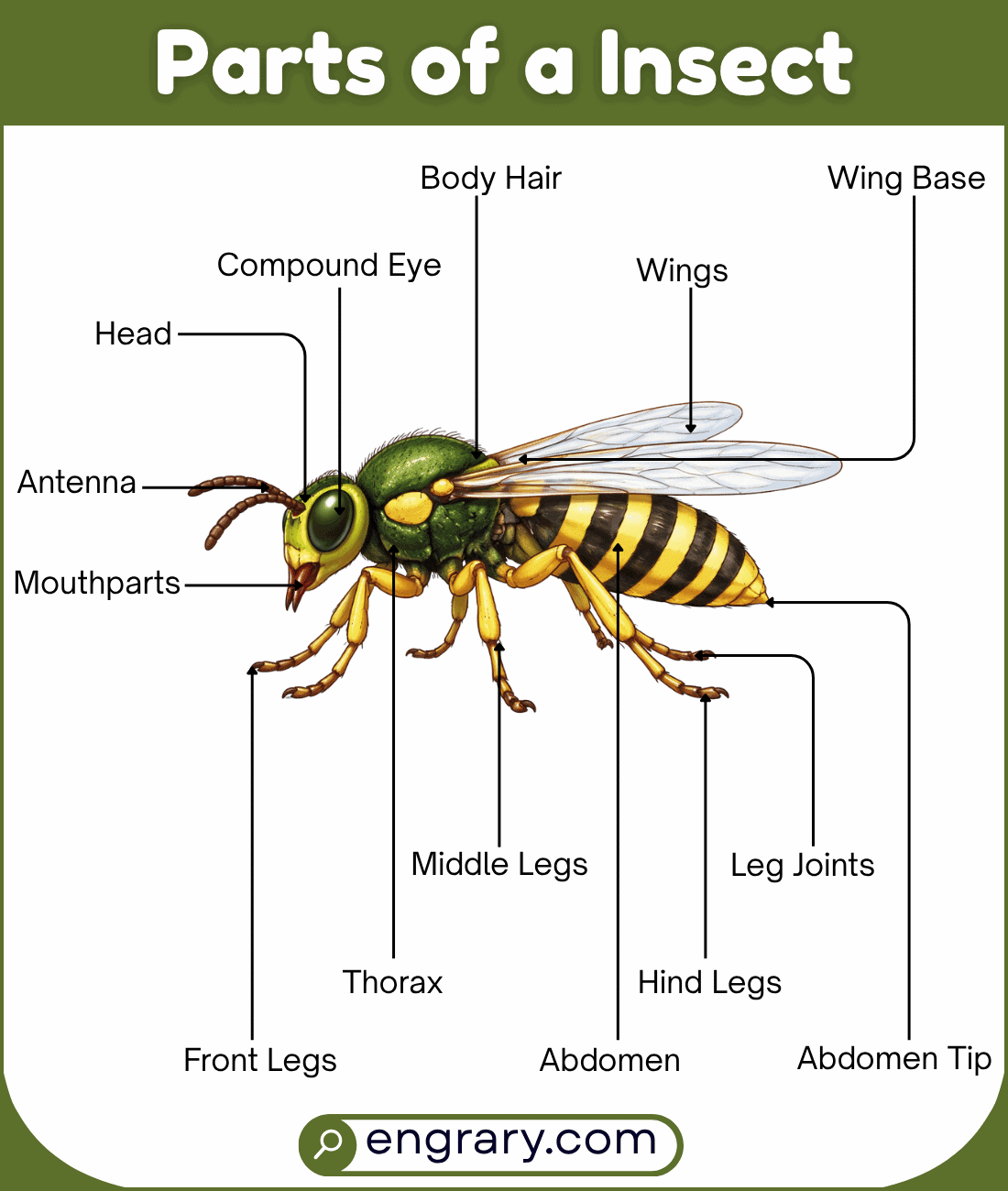
Main Parts of an Insect
The main parts of an insect are the three body regions that form its basic body plan. Each region has a different function, so the insect can sense, move, feed, and carry out other important life processes.
Head
The head is the front body region of an insect. It carries the main sensory organs and feeding parts, including the antennae, eyes, and mouthparts.
Thorax
The thorax is the middle body region. It supports movement because it carries the legs and, in many insects, the wings.
Abdomen
The abdomen is the rear body region. It contains several structures linked to breathing, body openings, flexibility, and reproduction.
Head Parts of an Insect
The head contains many of the parts an insect uses to explore its surroundings and take in food. Although insects vary in shape and feeding style, the same main head structures are found in many groups.
Antennae
Antennae are the paired feelers on the head. They help the insect detect smell, touch, vibration, and changes in the air around it.
Scape
The scape is the first segment of the antenna. It attaches the antenna to the head and forms the base of the whole structure.
Pedicel
The pedicel is the second segment of the antenna. It connects the base to the outer part and helps support the antenna during movement.
Flagellum
The flagellum is the long outer portion of the antenna beyond the pedicel. It usually contains many small sections and plays a major role in sensing the environment.
Compound Eyes
Compound eyes are large eyes made of many tiny visual units. They help the insect detect movement and see in many directions at the same time.
Ocelli
Ocelli are simple eyes found on the head of many insects. They do not form detailed images, but they help detect light and support orientation.
Mouthparts
Mouthparts are the feeding structures on the head. Their form differs among insects, but they help with actions such as biting, chewing, sucking, or handling food.
Labrum
The labrum is a plate-like structure that acts like an upper lip. It helps cover and support the mouth opening during feeding.
Mandibles
Mandibles are strong jaw-like mouthparts. In many insects, they are used for biting, cutting, or crushing food.
Maxillae
Maxillae are paired mouthparts that help handle food. They work with other mouth structures to move and guide food during feeding.
Maxillary Palps
Maxillary palps are small sensory appendages attached to the maxillae. They help the insect examine food by touch and taste.
Labium
The labium forms the lower part of the mouth area. It helps support and guide food as the insect feeds.
Thorax Parts of an Insect
The thorax is the main center of movement in an insect’s body. It supports the legs and wings, so it plays an important role in walking, climbing, jumping, and flying.
Prothorax
The prothorax is the first section of the thorax, closest to the head. It carries the first pair of legs and helps connect the head to the rest of the body.
Mesothorax
The mesothorax is the middle section of the thorax. It carries the second pair of legs and often supports the first pair of wings in winged insects.
Metathorax
The metathorax is the third section of the thorax, closest to the abdomen. It carries the third pair of legs and often supports the second pair of wings.
Leg Parts of an Insect
The leg parts of an insect help it walk, climb, jump, dig, or grip surfaces. Although insect legs vary in size and shape, they usually follow the same basic pattern from the body outward.
Coxa
The coxa is the first segment of the leg. It attaches the leg to the thorax and forms the base of the limb.
Trochanter
The trochanter is the small segment just beyond the coxa. It links the base of the leg to the larger middle segments and helps the leg move smoothly.
Femur
The femur is usually the thickest and strongest part of the leg. It provides support and helps power movement, especially in insects that jump.
Tibia
The tibia is the long segment after the femur. It helps extend the leg and often plays an important role in walking, climbing, or grasping.
Tarsus
The tarsus is the lower part of the leg near the end. It is often divided into smaller sections and helps the insect make contact with the surface below.
Pretarsus
The pretarsus is the terminal part at the very end of the leg. It supports the claws and helps the insect grip or cling to different surfaces.
Claws
Claws are the hook-like structures at the tip of the leg. They help the insect hold onto rough surfaces, plants, prey, or other objects.
Wing Parts of an Insect
The wing parts of an insect help with flight, balance, protection, or display. Not all insects have wings, but those that do may have one or two pairs, and the wings can differ greatly from one group to another.
Forewings
Forewings are the front pair of wings. In many insects, they help with flight, while in others they also protect the hindwings.
Hindwings
Hindwings are the rear pair of wings. They often provide much of the lift and support needed during flight.
Wing Veins
Wing veins are the narrow supporting lines that run through the wings. They strengthen the wing and help support its structure.
Costa
The costa is the leading edge vein of the wing. It supports the front margin and adds strength during movement.
Wing Membrane
The wing membrane is the thin outer surface stretched between the veins. It forms the main body of the wing and helps the wing catch air during flight.
Halteres
Halteres are small balancing structures found in flies. They are modified hindwings that help the insect stay stable while flying.
Tegmina
Tegmina are thickened forewings found in some insects, such as grasshoppers and cockroaches. They protect the delicate hindwings underneath while still allowing movement.
Elytra
Elytra are the hardened forewings of beetles. They act like protective covers over the hindwings and the upper surface of the abdomen.
Hemelytra
Hemelytra are partly hardened forewings found in true bugs. The front part is firm, while the outer part remains more flexible.
Abdomen Parts of an Insect
The abdomen is the rear body region of an insect and contains several important openings and structures. Even though it does not carry walking legs, it still plays a major role in breathing, body flexibility, and reproduction.
Abdomen
The abdomen is the third main body region behind the thorax. It is usually softer and more flexible than the head and thorax, which helps it expand and bend more easily.
Abdominal Segments
Abdominal segments are the repeated sections that make up the abdomen. These segments give the rear body region flexibility and allow it to move during breathing, body motion, and egg-laying.
Spiracles
Spiracles are small openings along the sides of the insect’s body. They allow air to enter and leave the respiratory system, so they are important for breathing.
Cerci
Cerci are paired appendages at the end of the abdomen in some insects. They often help with sensing touch, air movement, or nearby danger.
Ovipositor
The ovipositor is a specialized egg-laying structure found in many female insects. It helps place eggs in a suitable location, such as soil, plant tissue, or another protected surface.
External Covering of an Insect
The external covering of an insect protects the body, supports its shape, and helps hold the different body parts together. Instead of having an internal skeleton like humans, insects rely on a strong outer framework for protection and support.
Exoskeleton
The exoskeleton is the hard outer covering of the insect body. It protects the insect from injury, reduces water loss, and provides support for muscles and movement.
Chitin
Chitin is the tough material that helps form the exoskeleton. It gives the outer covering strength while still allowing some flexibility.
Segments
Segments are the repeated body divisions that make up the insect’s outer form. They help organize the body into the head, thorax, and abdomen.
Segment Plates
Segment plates are the hardened outer sections that cover different parts of the insect body. They add protection and help shape the body surface.
Jointed Appendages
Jointed appendages are movable body extensions such as antennae and legs. Because they bend at joints, they allow the insect to move, sense, feed, and interact with its surroundings.
Functions of Insect Parts
Each part of an insect has a specific function, but all of them work together to help the insect survive. From sensing and feeding to movement, breathing, and reproduction, every body region plays an important role.
| Part | Function |
|---|---|
| Head | Senses the environment and contains the main feeding parts |
| Thorax | Supports movement by carrying the legs and wings |
| Abdomen | Helps with breathing, flexibility, and reproduction |
| Antennae | Detect smell, touch, vibration, and other signals |
| Compound Eyes | Help the insect detect movement and see around it |
| Ocelli | Detect light intensity and help with orientation |
| Mouthparts | Help the insect bite, chew, suck, or handle food |
| Legs | Help the insect walk, climb, jump, dig, or grip surfaces |
| Wings | Help with flight, balance, protection, or display |
| Spiracles | Allow air to enter and leave the body |
| Ovipositor | Helps many female insects place eggs |
| Exoskeleton | Protects the body, supports shape, and reduces water loss |
Parts of an Insect Key Takeaways
The parts of an insect can be grouped into the head, thorax, abdomen, legs, wings, and outer covering, with each group performing a different job while still working together as one system. The head manages sensing and feeding, the thorax supports movement, the abdomen contains structures linked to breathing and reproduction, and the exoskeleton protects the whole body and helps hold its shape. As these groups work in sequence, the insect can respond to its surroundings, take in food, move efficiently, and continue its life cycle.
FAQs
The three main parts of an insect are the head, thorax, and abdomen. Together, these body regions help the insect sense, move, feed, breathe, and reproduce.
The thorax is the middle body region and the main center of movement. It supports the legs and, in many insects, the wings.
An insect breathes through small openings called spiracles. These openings allow air to enter and leave the body.
The mouthparts include structures such as the labrum, mandibles, maxillae, maxillary palps, and labium. They help the insect bite, chew, taste, or handle food.
The exoskeleton is the hard outer covering of the insect body. It protects the insect, supports its shape, and helps reduce water loss.
You May Also Like