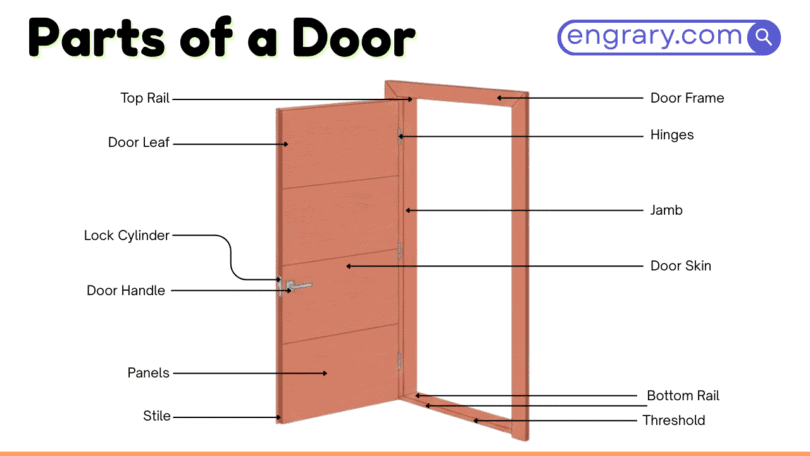
Door parts are the physical sections that allow a door to open, close, secure an entry, and stay fixed within its frame. Together, these parts connect in a clear structural order that supports movement, alignment, access, and locking. The door panel forms the main body, while the frame holds the outer structure. At the same time, the hinge system controls swing movement, and the handle and lock system manage opening and security.
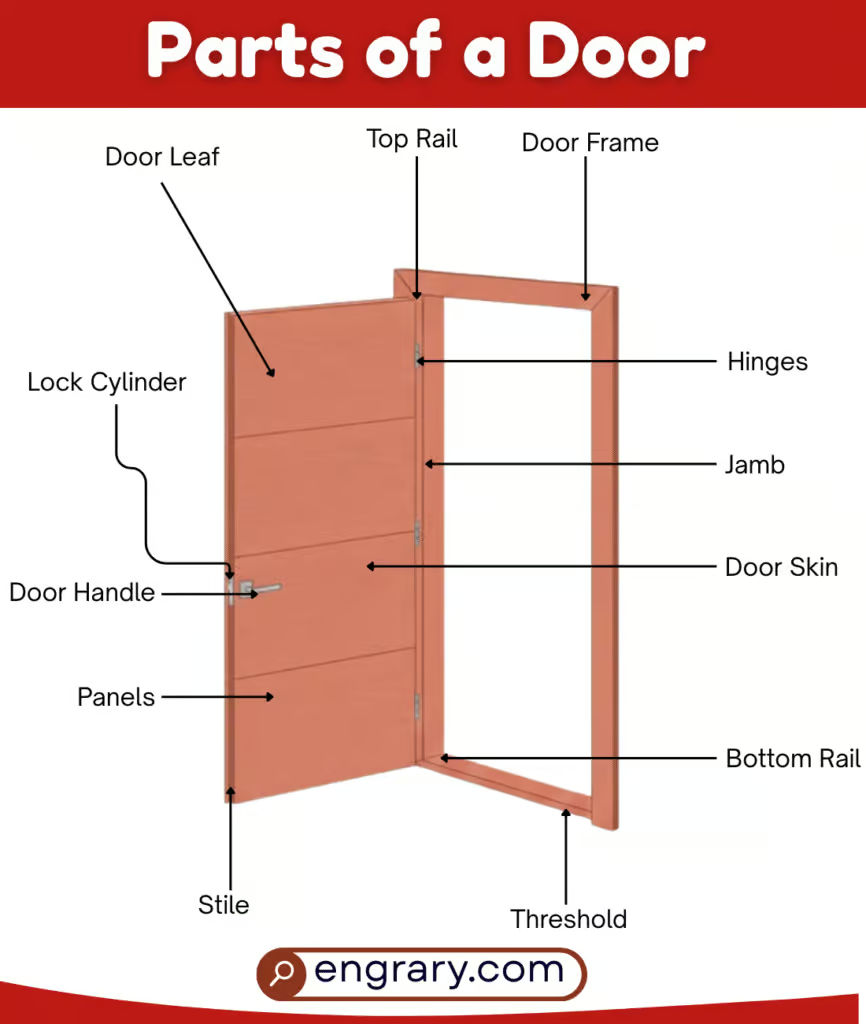
In addition, a labeled diagram shows how these named parts align across the panel, side edge, upper frame, lower edge, and locking area of the door. As the hinges guide movement, the door swings in a controlled path within the frame. Meanwhile, the latch, handle, and lock parts secure closure and support controlled entry and exit across standard door designs.
Main Door Structure Parts
The main door structure forms the visible body of the door. Together, these parts create the basic shape, support the opening area, and hold the door in position within the entry space.
Door Panel
The door panel is the main body of the door. It covers the opening and forms the largest visible surface.
Door Slab
The door slab is the main moving door piece without the surrounding frame. It forms the core door leaf that swings, closes, and fits inside the frame opening. Many door guides use this as a distinct term alongside the frame.
Door Frame
The door frame is the outer supporting structure that surrounds the door. It holds the door in place and supports proper alignment.
Door Head
The door head is the top horizontal section of the door frame. It forms the upper boundary of the frame above the door opening. Pella lists this as the head or door head.
Top Rail
The top rail is the upper horizontal part of the door panel. It supports the top edge of the door structure.
Bottom Rail
The bottom rail is the lower horizontal part of the door panel. It supports the lower edge and strengthens the base of the door.
Stile
The stile is the vertical side section of the door panel. It forms the long side support of the door body.
Lock Stile
The lock stile is the vertical side of the door where the handle, latch, or lock is installed. It supports the closing and locking side.
Hinge Stile
The hinge stile is the vertical side of the door where the hinges attach. It supports the swinging side of the door.
Threshold
The threshold is the lower strip at the base of the doorway. It forms the bottom transition point between spaces.
Sill
The sill is the bottom frame section at the base of the doorway. It forms the lower support surface and sits at floor level beneath the door opening. Pella lists the frame as consisting of the head, jamb, and sill.
Side Jamb
The side jamb is the vertical side section of the door frame. It supports the frame structure along either side of the door opening. Marvin notes that two side jambs form the vertical components of the frame.
Strike Jamb
The strike jamb is the side jamb where the latch or deadbolt meets the frame. It forms the closing side of the frame and supports the strike area during closure. Current door references commonly distinguish the strike side from the hinge side.
Hinge And Movement Parts
These parts control how the door opens, closes, and stays aligned during movement. Together, they guide swing action and support stable motion.
Hinge
The hinge is the jointed metal part that connects the door to the frame. It allows the door to swing open and closed.
Hinge Pin
The hinge pin is the central pin inside the hinge. It holds the hinge parts together and supports pivot movement.
Knuckle
The knuckle is the rounded hinge section that wraps around the hinge pin. It forms the rotating joint area of the hinge.
Pivot
The pivot is the turning point that allows the door to rotate during opening and closing. In some doors, it refers to a special top-and-bottom turning support instead of side hinges.
Stop
The stop is the fixed inner edge of the frame that the door closes against. It helps control the closing limit and resting position.
Door Stop Moulding
The door stop moulding is the fixed frame strip that the door rests against when closed. It limits closing travel and helps the door stop in the correct resting position. Current door anatomy references use this fuller term for better precision.
Door Closer
The door closer is the mechanical device that controls closing speed after the door opens. It helps return the door to a closed position.
Handle And Lock Parts
These parts manage grip, opening, closing, and security. Together, they help the door open by hand and stay secured when closed.
Handle
The handle is the main grip used to pull, push, or turn the door during opening and closing.
Doorknob
The doorknob is the round turning grip fitted on many doors. It allows hand-operated opening through rotation.
Lever Handle
The lever handle is the horizontal grip that opens the latch when pressed down. It provides an easier push-down opening motion than a round knob.
Lock
The lock is the security mechanism that controls access through the door. It keeps the door secured when engaged.
Latch
The latch is the spring-loaded fastener that holds the door closed when it meets the frame.
Deadbolt
The deadbolt is the solid locking bolt that extends into the frame for stronger security. It provides a more secure lock than a standard latch.
Keyhole
The keyhole is the opening where the key enters the lock mechanism. It allows manual key-operated access.
Strike Plate
The strike plate is the metal plate fixed to the frame where the latch or deadbolt enters. It helps protect the frame and supports secure closure.
Sealing And Support Parts
These parts support fit, reduce gaps, and improve closure at the edges of the door. Together, they help the door close more tightly and remain properly supported.
Weatherstripping
The weatherstripping is the sealing material placed around the door edges. It helps reduce air, dust, and moisture from passing through gaps.
Seal
The seal is the barrier material that improves edge closure and blocks outside elements. It supports tighter contact between the door and frame.
Sweep
The sweep is the strip fixed along the bottom edge of the door. It helps reduce the gap between the door and the threshold.
Jamb
The jamb is the vertical side section of the door frame. It supports the frame structure and the contact edge of the door.
Head Jamb
The head jamb is the top horizontal part of the frame. It forms the upper frame boundary above the door.
Mullion
The mullion is the vertical dividing section that separates joined door units or wider door sections. It adds support where multiple frame parts meet.
Transom
The transom is the upper section placed above the main door unit. It forms an additional top section above the door frame in certain door systems. Current door terminology pages list it as a common entryway part.
Casing
The casing is the trim around the outside of the door frame. It covers the gap between the wall and the frame and finishes the outer edge of the doorway. This aligns closely with current door terminology references.
Handle And Lock Parts
These parts manage grip, opening, closing, and security. Together, they help the door open by hand and stay secured when closed.
Handle
The handle is the main grip used to pull, push, or turn the door during opening and closing.
Doorknob
The doorknob is the round turning grip fitted on many doors. It allows hand-operated opening through rotation.
Lever Handle
The lever handle is the horizontal grip that opens the latch when pressed down. It provides an easier push-down opening motion than a round knob.
Lock
The lock is the security mechanism that controls access through the door. It keeps the door secured when engaged.
Latch
The latch is the spring-loaded fastener that holds the door closed when it meets the frame.
Deadbolt
The deadbolt is the solid locking bolt that extends into the frame for stronger security. It provides a more secure lock than a standard latch.
Keyhole
The keyhole is the opening where the key enters the lock mechanism. It allows manual key-operated access.
Strike Plate
The strike plate is the metal plate fixed to the frame where the latch or deadbolt enters. It helps protect the frame and supports secure closure.
Sealing And Support Parts
These parts support fit, reduce gaps, and improve closure at the edges of the door. Together, they help the door close more tightly and remain properly supported.
Weatherstripping
The weatherstripping is the sealing material placed around the door edges. It helps reduce air, dust, and moisture from passing through gaps.
Seal
The seal is the barrier material that improves edge closure and blocks outside elements. It supports tighter contact between the door and frame.
Sweep
The sweep is the strip fixed along the bottom edge of the door. It helps reduce the gap between the door and the threshold.
Jamb
The jamb is the vertical side section of the door frame. It supports the frame structure and the contact edge of the door.
Head Jamb
The head jamb is the top horizontal part of the frame. It forms the upper frame boundary above the door.
Casing
The casing is the decorative or covering trim around the outside of the door frame. It covers the joint between the wall and the frame.
Parts Of Door Names Key Takeaways
Parts of door names are grouped into structure, hinge, handle, lock, and sealing sections. Together, these groups form the main working system of a standard door. The panel and frame create the main body, while the hinge parts guide swing movement. At the same time, the handle and lock parts manage opening, closing, and security. In addition, the sealing and support parts reduce gaps and improve edge fit. As these sections work together, the door opens, closes, aligns within the frame, and stays secured in place.
FAQs
The main parts of a door include the door panel, frame, hinges, handle, latch, lock, and threshold. Together, these parts support movement, closure, and security.
The hinges help the door open and close. They connect the door to the frame and allow controlled swing movement.
The lock and deadbolt keep the door locked. These parts secure the door and control access when engaged.
The bottom part of the doorway is often called the threshold, while the lower horizontal part of the door panel is the bottom rail.
The latch holds the door shut during normal closure. It fits into the strike plate and keeps the door closed until opened.
You May Also Like