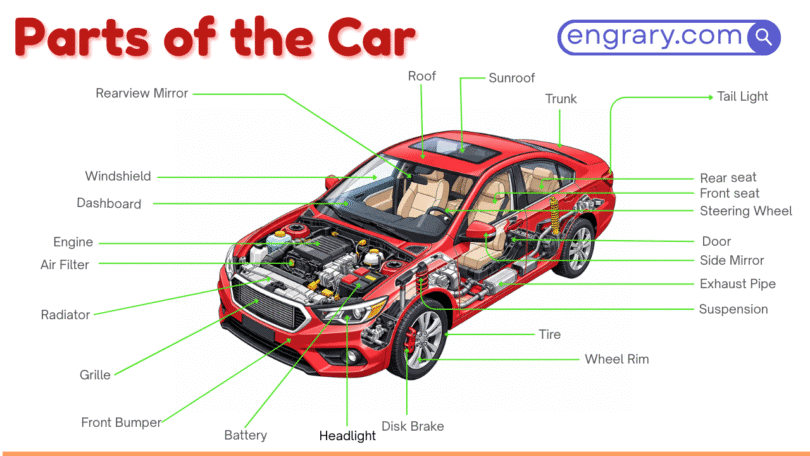
Car parts are the physical sections that allow a car to move, steer, stop, and remain stable on the road. Together, these sections connect in a fixed structural order that supports motion, control, visibility, safety, and passenger use. The body forms the main outer structure, while the chassis supports the lower framework. At the same time, the engine system creates power, and the control section manages direction and speed.
In addition, a labeled diagram shows how these named parts align across the front, sides, lower frame, interior, and rear section of the car. As power moves through the engine and drive system, the car gains forward motion. Meanwhile, the steering, braking, and lighting systems guide direction, regulate stopping, and support controlled road use across standard car designs.
Body And Outer Structure Parts
The body and outer structure form the main visible shape of the car. Together, these parts enclose the interior space, while also protecting internal systems and defining the outer frame.
Body
The body is the main outer shell of the car. It surrounds the passenger and driver areas and forms the visible structure of the vehicle.
Hood
The hood is the front upper cover of the car. It opens to provide access to the engine compartment.
Roof
The roof is the top covering of the car body. It protects the interior space and forms the upper boundary of the vehicle.
Front End
The front end is the leading section of the car. It contains the front-facing outer structure and supports visibility, airflow, and forward movement.
Grille
The grille is the front opening or covered front panel that allows airflow into the vehicle while protecting the radiator area behind it. It forms a key front-body part and supports cooling airflow through the front section.
Rear End
The rear end is the back section of the car. It closes the body structure and supports rear lights, trunk access, and bumper placement.
Door
The door is the side opening panel used to enter or exit the car. It provides controlled access to the interior space.
Window
The window is the clear fitted panel made of glass or similar material. It allows visibility, light entry, and controlled ventilation.
Windshield
The windshield is the large front glass panel of the car. It provides forward visibility and protects the interior from wind, dust, and rain.
Trunk
The trunk is the rear storage compartment of the car. It provides enclosed space for carrying items behind the passenger area.
Bumper
The bumper is the protective outer bar or panel at the front or rear of the car. It helps absorb minor impact and protects outer body sections.
Fender
The fender is the outer body panel that frames the wheel area. It forms part of the car body around the wheel opening and helps contain road spray from the rotating tire.

Driver Control Parts
This group manages steering, speed control, visibility, and driver operation during movement. Together, these parts help control direction, motion, and road response.
Steering Wheel
The steering wheel is the main circular control used to direct the car. It turns the front wheel system to change direction.
Dashboard
The dashboard is the control panel in front of the driver. It holds gauges, indicators, and key operating controls.
Instrument Cluster
The instrument cluster is the grouped display area in front of the driver that shows operating information such as speed, warning lights, fuel level, and engine status. It forms the main visual information section within the dashboard or instrument panel area.
Brake Pedal
The brake pedal is the foot control that activates the braking system. It reduces speed and helps stop the car safely.
Accelerator
The accelerator is the foot control that increases engine power. It raises speed by increasing propulsion force.
Gear Lever
The gear lever is the control used to change gear position or transmission range. It helps manage movement and speed response.
Parking Brake
The parking brake is the control used to keep the car from rolling when parked. It holds the vehicle in a fixed position when applied.
Clutch Pedal
The clutch pedal is used in manual cars to engage or disengage engine power from the transmission. It supports gear changes during driving.
Rearview Mirror
The rearview mirror helps the driver see behind the car from inside the cabin. It supports rear visibility during movement.
Side Mirror
The side mirror provides visibility along the outer sides of the car. It helps the driver monitor adjacent road space and side clearance.
Engine And Movement Parts
The engine and movement parts create and transfer the force that moves the car on the road. Together, these parts generate power, support motion, and maintain a controlled mechanical sequence during operation.
Engine
The engine is the main power-producing unit of the car. It generates the mechanical force needed to move the vehicle.
Transmission
The transmission transfers engine power to the drive system. It manages how power is delivered at different speed levels.
Clutch
The clutch is the part that connects or disconnects engine power from the transmission in manual cars. It supports smooth gear changes and controlled power transfer.
Radiator
The radiator helps control engine temperature during operation. It releases heat from the engine cooling system.
Battery
The battery supplies electrical power needed to start the car and support key electrical systems.
Alternator
The alternator is the part that generates electrical power while the engine is running. It helps charge the battery and supports the car’s electrical systems during operation. Recent car-parts lists commonly include it as a core named component.
Fuel Tank
The fuel tank stores the fuel used by the engine. It supports continued operation by supplying energy for movement.
Fuel Pump
The fuel pump moves fuel from the fuel tank toward the engine system. It supports a steady fuel supply during operation.
Exhaust Pipe
The exhaust pipe carries burned gases away from the engine system. It directs exhaust out of the car after combustion.
Drive Shaft
The drive shaft transfers rotational force from the transmission to the axle on many car designs. It helps move power toward the wheel system.
Axle
The axle is the central supporting shaft that connects and supports the wheels. It carries load and helps the wheels rotate in alignment.
Differential
The differential is the drive component that helps deliver rotational force to the wheels while allowing them to turn at different speeds when the car changes direction. Recent car-parts lists commonly include it as a core movement part.
Wheel And Suspension Parts
This group supports road contact, load balance, shock control, and rolling movement. Together, these parts help the car remain stable, supported, and controlled while moving.
Wheel
The wheel is the rotating circular part that allows the car to roll on the road. It supports movement and carries vehicle load.
Tire
The tire is the outer rubber covering fitted around the wheel. It provides road grip, cushioning, and traction.
Rim
The rim is the hard circular outer frame that holds the tire in place. It forms the wheel’s main outer metal structure.
Hub
The hub is the central part of the wheel assembly. It connects the wheel to the axle and supports wheel rotation.
Suspension
The suspension is the support system that absorbs road shock and helps maintain vehicle stability. It improves ride balance and reduces the effect of uneven surfaces.
Spring
The spring is the load-supporting part of the suspension system. It compresses and expands to absorb movement and road impact.
Shock Absorber
The shock absorber controls the bounce and rebound of the suspension. It helps keep the car stable after road impact.
Brake Disc
The brake disc is the rotating braking surface attached near the wheel hub on many cars. It works with the brake system to slow wheel rotation.
Brake Caliper
The brake caliper is the braking part that applies pressure to the brake disc during stopping. It helps create the friction needed to slow wheel rotation.
Brake Pad
The brake pad is the friction material inside the braking system that presses against the brake disc during braking. It helps reduce wheel speed through controlled friction.
Passenger And Interior Parts
These parts support entry, seating, visibility, storage, and general interior use. Together, they help manage comfort and access, while also supporting practical function inside the car.
Seat
The seat provides a fixed sitting place for the driver or passengers. It supports body weight during travel and while stationary.
Seat Belt
The seat belt is the restraint strap used to secure occupants in place. It helps reduce movement during sudden stops or impact.
Airbag
The airbag is the inflatable safety cushion built into key areas of the car, such as the steering wheel, dashboard, or side sections. It helps reduce impact force on occupants during a collision.
Headrest
The headrest is the upper support attached to the seat back. It supports the head and upper neck area while seated.
Glove Box
The glove box is the small enclosed storage compartment built into the dashboard area. It is used to keep small items or documents.
Armrest
The armrest is the padded support area for the arm, placed between seats or on the door side. It adds support during seating.
Sun Visor
The sun visor is the adjustable interior flap above the windshield. It helps block direct sunlight from the driver’s line of sight.
Interior Light
The interior light is the small cabin light fitted inside the car roof area. It provides visibility inside the car when needed.
Air Vent
The air vent is the dashboard opening that releases airflow from the ventilation system into the cabin.
Safety And Signal Parts
These parts support visibility, warning, signaling, and controlled road use. Together, they help the car remain visible, while also supporting safer operation in traffic.
Headlight
The headlight is the front light used to illuminate the road ahead. It improves forward visibility in low light or dark conditions.
Taillight
The taillight is the rear light that makes the back of the car visible to vehicles behind it.
Indicator Light
The indicator light is the signal light used to show turning direction. It alerts other road users when the car is turning or changing position.
Brake Light
The brake light is the rear warning light that activates when the braking system is used. It signals that the car is slowing down or stopping.
Horn
The horn is the sound signal device used to alert nearby road users or pedestrians.
Wiper
The wiper is the moving blade fitted on the windshield. It clears rain, dust, or moisture to maintain front visibility.
Number Plate
The number plate is the identification plate fixed to the front or rear of the car. It displays the registered vehicle number.
Reflector
The reflector is the reflective safety surface fixed on the outer body. It improves visibility by reflecting light from other vehicles.
Parts Of Car Names Key Takeaways
Parts of car names are grouped into body, driver control, engine, wheel, interior, and safety sections. Together, these groups form the main working structure of a standard car. The body provides the outer frame, while the control parts guide direction and speed. At the same time, the engine and wheel systems create movement, and the interior section supports seating, access, and cabin use. In addition, the safety parts improve visibility, warning, and controlled stopping. As these sections work together, the car moves, responds to driver input, and remains stable on the road.
FAQs
The main parts of a car include the body, engine, transmission, wheels, brakes, steering system, seats, and lights. Together, these parts support movement, control, and passenger use.
The engine helps the car move by producing power. That power then passes through the transmission and drive system to rotate the wheels.
The main control parts of a car include the steering wheel, brake pedal, accelerator, gear lever, and mirrors. These parts help manage direction, speed, and visibility.
Common safety parts of a car include headlights, brake lights, indicator lights, mirrors, wipers, horn, seat belts, and reflectors. These parts improve visibility and warning.
The brake pedal and braking system are used for stopping. They reduce wheel rotation and help bring the car to a controlled stop.
You May Also Like