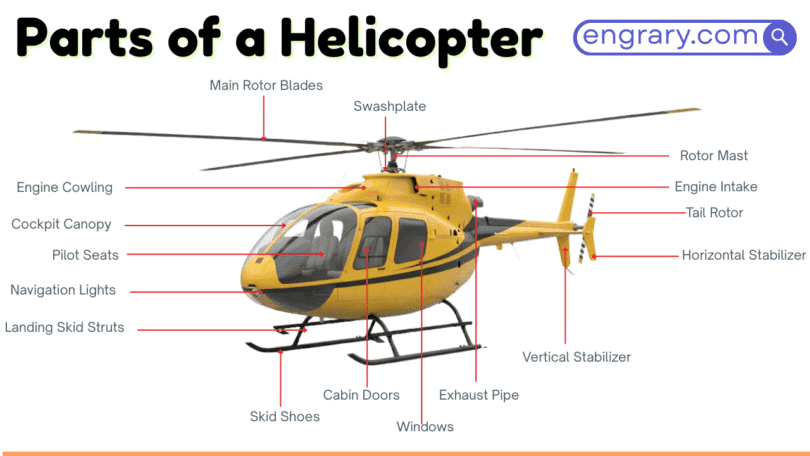
Helicopter parts are the physical sections that allow a helicopter to lift, hover, move, steer, and land. Together, these parts connect in a clear structural order that supports vertical flight, directional control, stability, and power transfer. The fuselage forms the main body, while the rotor system creates lift. At the same time, the tail system helps control torque and direction, and the landing gear supports ground contact.
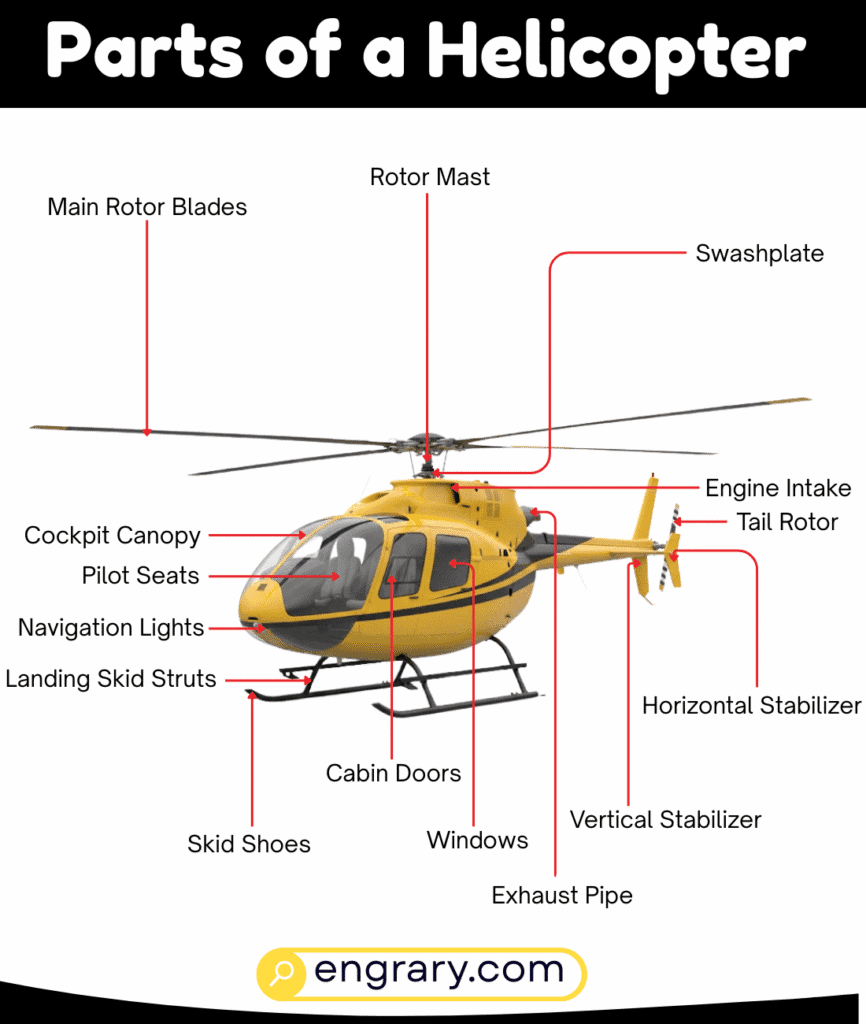
In addition, a labeled diagram shows how these named parts align across the main body, rotor assembly, tail boom, control area, and lower landing section. As the main rotor turns, it generates lift through the rotating blade system mounted on the mast above the fuselage. Meanwhile, the tail rotor helps counter torque, and the landing gear—often skids on many helicopters—supports stable landing and ground positioning.
Main Body And Rotor System Parts
The main body and rotor system form the core flight structure of a helicopter. Together, these parts support lift, carry the main load, and shape how the aircraft operates in the air.
Fuselage
The fuselage is the main body of the helicopter. It holds the cabin, cockpit, and major internal systems.
Cockpit
The cockpit is the front control area where the pilot operates the helicopter. It contains the main flight controls and instrument panels.
Cabin
The cabin is the interior section used for passengers, crew, or cargo. It forms the main enclosed space behind the cockpit.
Main Rotor
The main rotor is the large rotating blade system above the helicopter. It creates lift and supports vertical flight.
Rotor Blade
The rotor blade is each long airfoil-shaped blade attached to the main rotor. It cuts through the air to generate lift.
Rotor Hub
The rotor hub is the central part that connects the rotor blades to the mast. It holds the main rotating blade assembly together.
Mast
The mast is the vertical shaft that connects the transmission to the main rotor system. It transfers turning force upward to rotate the rotor.
Engine
The engine is the power-producing unit of the helicopter. It supplies the force needed to drive the rotor system.
Transmission
The transmission is the power-transfer system that manages rotational force within the helicopter. It supports controlled delivery of engine power to the rotor assemblies.
Main Transmission
The main transmission is the main gearbox that transfers engine power to the rotor system. It delivers controlled rotational force to the main rotor and also supports power transfer toward the tail rotor system.
Swashplate
The swashplate is the control-transfer part that passes cyclic and collective input to the rotating rotor system. It changes rotor blade pitch during flight and helps control lift and direction.
Control Rod Linkage
The control rod linkage connects the flight controls to the rotor-control system. It carries pilot input toward the swashplate so the rotor blades can respond during flight.
Tail And Control Parts
These parts support balance, directional control, and stable flight. Together, they help manage torque, steering, and controlled movement in the air.
Tail Boom
The tail boom is the long rear extension connected to the fuselage. It supports the tail section and carries the tail rotor assembly.
Tail Rotor
The tail rotor is the smaller rotating blade system at the tail. It helps counter main rotor torque and supports directional control.
Drive Shaft
The drive shaft carries rotational power from the main transmission toward the tail rotor system. It runs along the tail boom and helps drive the tail rotor during flight.
Vertical Fin
The vertical fin is the upright tail surface that supports directional stability. It helps the helicopter remain aligned during movement.
Horizontal Stabilizer
The horizontal stabilizer is the side-mounted tail surface that helps maintain balance and pitch stability.
Cyclic Control
The cyclic control changes the angle of the rotor blades during rotation. It helps the pilot control forward, backward, and side movement.
Collective Control
The collective control changes the pitch of all main rotor blades at the same time. It helps control lift and vertical movement.
Anti-Torque Pedals
The anti-torque pedals control the tail rotor thrust. They help the pilot manage yaw and directional turning.
Landing And Support Parts
These parts support ground contact, landing stability, external access, and general lower-structure function. Together, they help the helicopter land, rest, and remain supported on the ground.
Landing Gear
The landing gear is the lower support structure that contacts the ground during landing. It supports the helicopter while landing, standing, and taking off.
Skid
The skid is the long lower support bar used on many helicopters instead of wheels. It provides stable ground support during landing and parking.
Cross Tube
The cross tube is the horizontal support that connects the skids beneath the helicopter. It helps hold the skid structure in place.
Step
The step is the small foothold attached near the lower body or landing gear. It helps crew or passengers enter and exit the helicopter.
Cargo Hook
The cargo hook is the external lower attachment point used for suspended loads on some helicopters. It supports controlled lifting below the aircraft when fitted.
Parts Of A Helicopter Key Takeaways
Parts of a helicopter are grouped into body, rotor, tail, control, and landing sections. Together, these groups form the main flight structure of a standard helicopter. The fuselage holds the main body, while the rotor system creates lift. At the same time, the tail and control parts manage balance, torque, and directional movement. In addition, the landing parts support ground contact and stable landing. As these sections work together, the helicopter lifts, hovers, turns, and lands in a controlled way.
FAQs
The main parts of a helicopter include the fuselage, main rotor, tail rotor, engine, transmission, cockpit, tail boom, and landing gear. Together, these parts support flight, control, and landing.
The main rotor creates lift. Its rotating blades move through the air and generate the upward force needed for flight.
Several parts control direction, including the cyclic control, anti-torque pedals, and tail rotor. Together, they help manage movement and turning.
The long rear section is called the tail boom. It supports the tail rotor and other tail control surfaces.
The landing gear supports landing. On many helicopters, skids form the main ground-contact structure.
You May Also Like