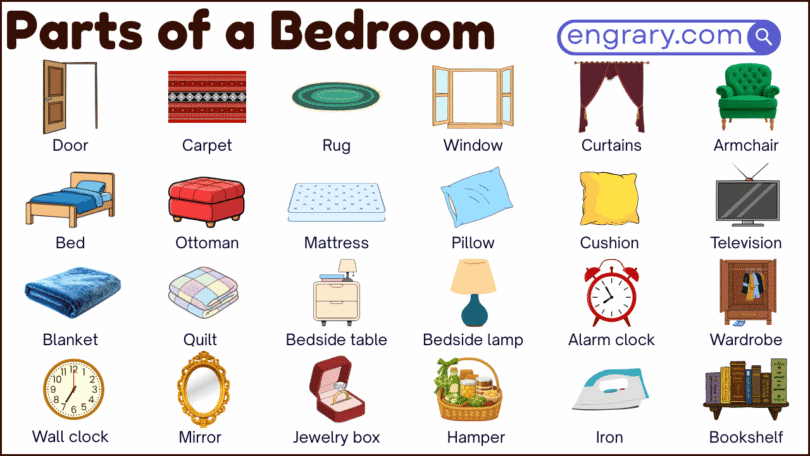
A bedroom includes several connected parts that support rest, storage, comfort, privacy, and daily personal use. The main groups usually include the walls, floor, ceiling, door, window, lighting, sleeping area, and storage or furniture parts. Each one has a clear role, so together they create a room designed for sleeping, relaxing, dressing, studying, and keeping personal items organized.
At the same time, these parts work as one space rather than as separate items. The walls, floor, and ceiling form the room, while the door and window control access, light, and airflow. Meanwhile, the bed, storage furniture, lighting, and decorative parts make the bedroom more comfortable, more practical, and easier to use every day.
Main Parts of a Bedroom
The main parts of a bedroom can be grouped by what they do. Some form the room itself, some support rest and sleeping, and others help with storage, lighting, comfort, and daily use.
Walls
Walls define the bedroom and separate it from nearby spaces. They also provide the main surfaces for decoration, shelving, and mounted features.
Floor
The floor supports movement, furniture, and daily activity. It is one of the most used parts of the bedroom.
Ceiling
The ceiling closes the top of the room and helps complete the structure. It also provides space for lighting, trim, and airflow parts.
Door
The door controls access to the bedroom. It helps connect the room with hallways, bathrooms, or other spaces in the home.
Window
A window adds natural light and may also improve airflow. It can make the bedroom feel more comfortable and visually open.
Lighting
Lighting supports visibility and comfort throughout the day and evening. It helps the room remain useful for reading, dressing, and relaxing.
Sleeping Area
The sleeping area supports rest, sleep, and relaxation. It usually forms the central comfort zone of the bedroom.
Storage and Furniture Parts
These parts help organize belongings and support daily routines. They make the bedroom feel more practical and complete.
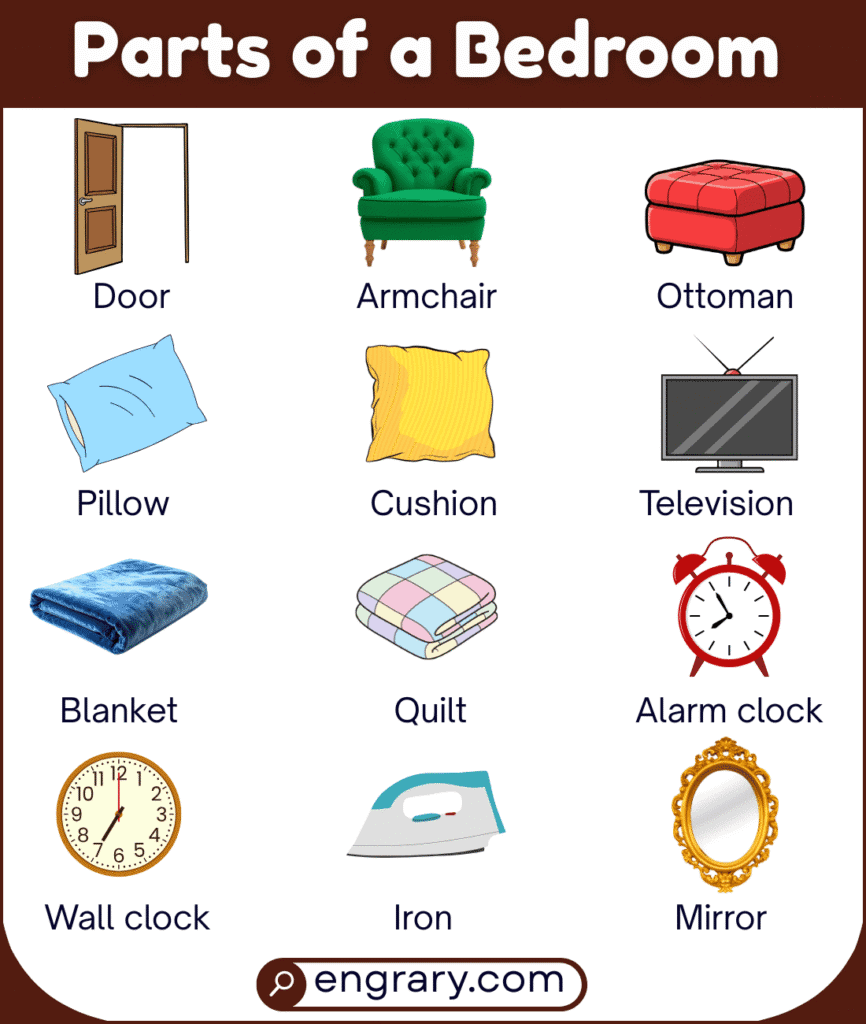
Structural Parts of a Bedroom
The structural parts form the basic shape of the bedroom and create the fixed space around everything inside it. While furniture and decoration may change over time, these parts stay in place and define the room’s size, edges, and layout.
Walls
Walls create the main sides of the bedroom. They enclose the space and provide surfaces for paint, paneling, shelves, lights, mirrors, and other mounted features.
Floor
The floor is the bottom surface of the bedroom. It supports walking, bed placement, storage furniture, and everyday movement across the room.
Ceiling
The ceiling forms the top boundary of the bedroom. It finishes the upper area and often includes light points, vents, or trim details.
Corners
Corners are the points where two walls meet. They help define the shape of the bedroom and mark the edges of the interior space.
Baseboards or Skirting Boards
These strips run along the lower edge where the wall meets the floor. They create a neater transition and help finish the perimeter of the room.
Door Frame
The door frame surrounds and supports the doorway. It helps shape the entrance and allows the door to fit properly within the opening.
Threshold
The threshold is the lower strip at the bottom of the doorway. It creates the transition between the bedroom floor and the floor beyond the opening.
Door and Window Parts of a Bedroom
Door and window parts shape the main openings in a bedroom and control access, light, and airflow. These parts are important because they connect the room to other spaces while also affecting comfort and privacy.
Door
The door is the movable panel that opens and closes the bedroom entrance. It provides access and helps separate the bedroom from nearby spaces.
Door Frame
The door frame surrounds and supports the door opening. It gives structure to the entrance and helps the door fit properly.
Casing
Casing is the trim that finishes the edges around a door or window opening. It covers the joint between the wall and the frame and gives the opening a cleaner look.
Door Handle
The door handle is the part used to open or close the door. It supports grip and makes movement through the doorway easier.
Door Lock
The door lock helps secure the room when needed. It supports privacy and controlled access.
Window
The window is the glazed opening in the wall that brings in light and may also allow ventilation. It helps the bedroom feel brighter and more open.
Window Frame
The window frame surrounds and supports the window unit. It holds the opening in shape and supports the fitted window parts.
Window Casing
Window casing is the trim around the window opening. It helps finish the edge where the wall meets the frame.
Window Sill
The window sill is the lower ledge or bottom part of the window opening. It forms the base of the window area and is often one of the most visible trim parts.
Curtains or Drapes
Curtains or drapes cover the window area. They help control light, support privacy, and add softness to the bedroom.
Blinds
Blinds are fitted window coverings made of slats or panels. They help control light and privacy in a more structured way.
Curtain Rod
The curtain rod is the fitted bar that supports curtains or drapes. It sits above the window and helps the window covering hang properly.
Bed and Sleeping Parts of a Bedroom
The bed and sleeping parts form the main rest area of the bedroom. These parts work together to support sleep, comfort, and daily relaxation, so they shape the most important function of the room.
Bed
The bed is the main sleeping furniture piece in the bedroom. It forms the center of the sleeping area and supports rest and comfort.
Headboard
The headboard is the upright part at the head end of the bed. It helps frame the bed and adds support and style to the sleeping area.
Footboard
The footboard is the panel or end part at the foot of the bed. It completes the bed structure and helps define the sleeping space.
Bed Frame
The bed frame is the main supporting structure that holds the bed together. It supports the mattress and connects the major bed parts.
Side Rails
Side rails run along the sides of the bed frame. They help support the mattress area and connect the headboard and footboard.
Bed Slats
Bed slats are the support strips placed across the bed frame. They help hold the mattress above the frame opening.
Center Support Rail
The center support rail runs through the middle support area of the bed. It adds extra strength and helps the bed carry weight more evenly.
Bed Legs
Bed legs raise the bed structure above the floor. They support the frame and help keep the bed stable.
Box Spring or Foundation
The box spring or foundation sits below the mattress in many bed setups. It adds support and helps create a raised sleeping base.
Mattress
The mattress is the soft main sleeping surface placed on the bed frame or foundation. It supports the body during rest and sleep.
Mattress Cover
The mattress cover is the fitted layer that wraps around or sits over the mattress. It helps protect the mattress surface and keep it cleaner.
Pillow
A pillow supports the head and neck during sleep or rest. It adds softness and comfort to the bed.
Bedsheet
The bedsheet is the fabric layer spread over the mattress. It creates a cleaner and more comfortable sleeping surface.
Blanket or Comforter
This is the upper bedding layer used for warmth and comfort. It helps make the bed feel softer and more complete.
Bedroom Rug
A bedroom rug is the soft floor covering placed near or around the bed. It adds warmth, comfort, and a softer feel underfoot.
Storage and Furniture Parts of a Bedroom
Storage and furniture parts help organize the bedroom and support daily routines such as dressing, studying, sitting, and storing personal items. These parts make the room more practical and easier to use beyond just sleeping.
Wardrobe or Closet
A wardrobe or closet stores clothing, shoes, and other personal belongings. It helps keep the bedroom organized and less crowded.
Closet Door
The closet door covers the storage opening of the closet area. It helps keep stored items out of sight and gives the room a cleaner look.
Dresser
A dresser is a storage unit with drawers used for clothing and personal items. It provides organized storage and often supports the top surface for décor or daily-use items.
Chest of Drawers
A chest of drawers is a tall drawer-based storage unit. It offers vertical storage without taking as much floor space as a wider dresser.
Nightstand or Bedside Table
This small table sits beside the bed. It provides a nearby surface for a lamp, clock, phone, book, or other personal items.
Vanity Table
A vanity table is a furniture piece used for grooming or dressing. It often works together with a mirror and may include small storage sections.
Mirror
A mirror reflects light and helps with dressing and grooming. It can also make the bedroom feel brighter or more open.
Shelves
Shelves provide open storage on the wall or in furniture. They hold books, décor, containers, and other everyday items.
Desk or Study Table
A desk or study table gives the bedroom a working surface. It supports studying, writing, reading, or placing personal items.
Chair
A chair provides seating inside the bedroom. It supports studying, dressing, relaxing, or other daily use.
Storage Bench
A storage bench adds both seating and hidden storage. It often sits near the bed or wall and helps keep the bedroom more organized.
Lighting and Electrical Parts of a Bedroom
Lighting and electrical parts help the bedroom stay visible, powered, and comfortable for daily use. While the bed and furniture support rest and storage, these fixed parts make it easier to read, dress, charge devices, and use the room in the evening.
Ceiling Light
The ceiling light is the main overhead light fixture in the bedroom. It provides general lighting across the room and helps the space stay bright enough for daily use.
Bedside Lamp
A bedside lamp is a smaller light placed near the bed, often on a nightstand. It adds local lighting for reading, relaxing, or nighttime use.
Wall Light
A wall light is mounted directly on the wall. It adds extra illumination and can support both function and decoration.
Light Switch
The light switch controls one or more bedroom lights. It allows the user to turn lighting on or off easily.
Electrical Outlet
An electrical outlet is a fixed wall power point. It allows lamps, chargers, and other devices to connect to the room’s electricity supply.
Power Socket
A power socket is another name for the point where plugs connect to electricity. It supports the use of many everyday bedroom devices.
Wiring Access Point
A wiring access point is an area where electrical connections can be reached or fitted. It supports the installation or connection of room electrical parts.
Ventilation and Airflow Parts of a Bedroom
Ventilation and airflow parts help fresh air move through the bedroom and reduce heat or stuffiness. Even though these parts are often less noticeable than furniture or lighting, they play an important role in comfort and air movement.
Air Vent
An air vent is an opening that allows air to move into or out of the bedroom. It supports airflow and helps the room feel fresher.
Ceiling Vent
A ceiling vent is an airflow opening placed overhead. It helps move air through the upper part of the bedroom.
Return Grille
A return grille is the covered opening where room air moves back into the air system. It helps support circulation through the bedroom.
Air Register
An air register is a vent opening that directs airflow into the room. It helps control where the moving air spreads.
Fresh Air Opening
A fresh air opening allows outside air or replacement air to enter the room system. It helps improve the feeling of openness and ventilation in the space.
Decorative and Finishing Parts of a Bedroom
Decorative and finishing parts give the bedroom its final style and help the space feel complete. While the structural and furniture parts support function, these details improve appearance, texture, color, and overall comfort.
Painted Wall Surface
The painted wall surface is the visible finish layer on the walls. It gives the bedroom color, texture, and a more polished appearance.
Wall Paneling
Wall paneling covers part or all of a wall with fitted surface material. It adds detail and can make the room look more formal, modern, or decorative.
Crown Molding
Crown molding is decorative trim installed where the wall meets the ceiling. It gives the upper edge of the room a more finished and elegant look.
Ceiling Trim
Ceiling trim is the finishing detail placed along the top border of the wall or ceiling edge. It helps soften the transition between major surfaces.
Wall Art
Wall art includes framed pictures, paintings, prints, or decorative hanging pieces. It helps personalize the bedroom and adds character to the walls.
Indoor Plant Area
This is the part of the room used for potted plants or greenery. It adds a natural element and can make the bedroom feel fresher and more inviting.
Common Bedroom Parts by Layout or Style
Bedroom parts can change slightly depending on the size, layout, and style of the space. Although the main structure stays the same, some layouts place more focus on certain furniture pieces, storage sections, or comfort features.
Master Bedroom Parts
A master bedroom usually includes the main room structure, a bed, storage furniture, lighting, a larger sleeping area, and more comfort-related parts. It often has more space for furniture and personal-use items.
Kids Bedroom Parts
A kids bedroom includes the main room structure along with sleeping, storage, study, and play-related furniture. It often gives more importance to open space, shelves, and easy-to-reach storage.
Guest Bedroom Parts
A guest bedroom usually includes the main structural parts, a bed, side table, lighting, storage furniture, and simple decorative features. Its layout is often designed for short-term comfort and use.
Small Bedroom Parts
A small bedroom includes the same main room structure, but space-saving furniture and storage parts become more important. Compact beds, shelves, and multi-use furniture often play a bigger role here.
Modern Bedroom Parts
A modern bedroom often uses cleaner lines, simpler furniture shapes, lighter visual clutter, and more organized storage. Lighting, trim, and decorative parts may appear in a more minimal style.
Bedroom Parts Key Takeaways
A bedroom works as one connected space in which the walls, floor, and ceiling create the structure, the door and window parts control access and light, the bed and sleeping parts support rest, the storage and furniture parts organize daily belongings, and the lighting, ventilation, and decorative parts make the room more comfortable and complete. As these parts work together, the bedroom becomes a functional area for sleeping, dressing, storing items, studying, and relaxing every day.
FAQs
The main parts of a bedroom include the walls, floor, ceiling, door, window, bed, storage furniture, lighting, and decorative features.
The main bed parts include the headboard, footboard, bed frame, side rails, slats, foundation, mattress, pillow, bedsheet, and blanket.
Common bedroom furniture parts include the wardrobe, dresser, chest of drawers, nightstand, vanity table, shelves, desk, chair, and storage bench.
The main comfort parts include the bed, mattress, pillow, blanket, rug, bedside lamp, curtains, and airflow parts such as vents and windows.
Structural parts form the room itself, while furniture parts are movable items used for sleeping, storage, sitting, and daily bedroom use.
You May Also Like