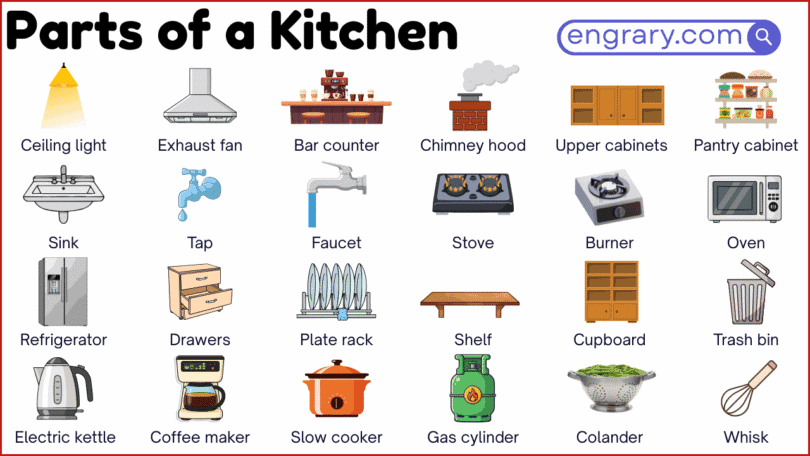
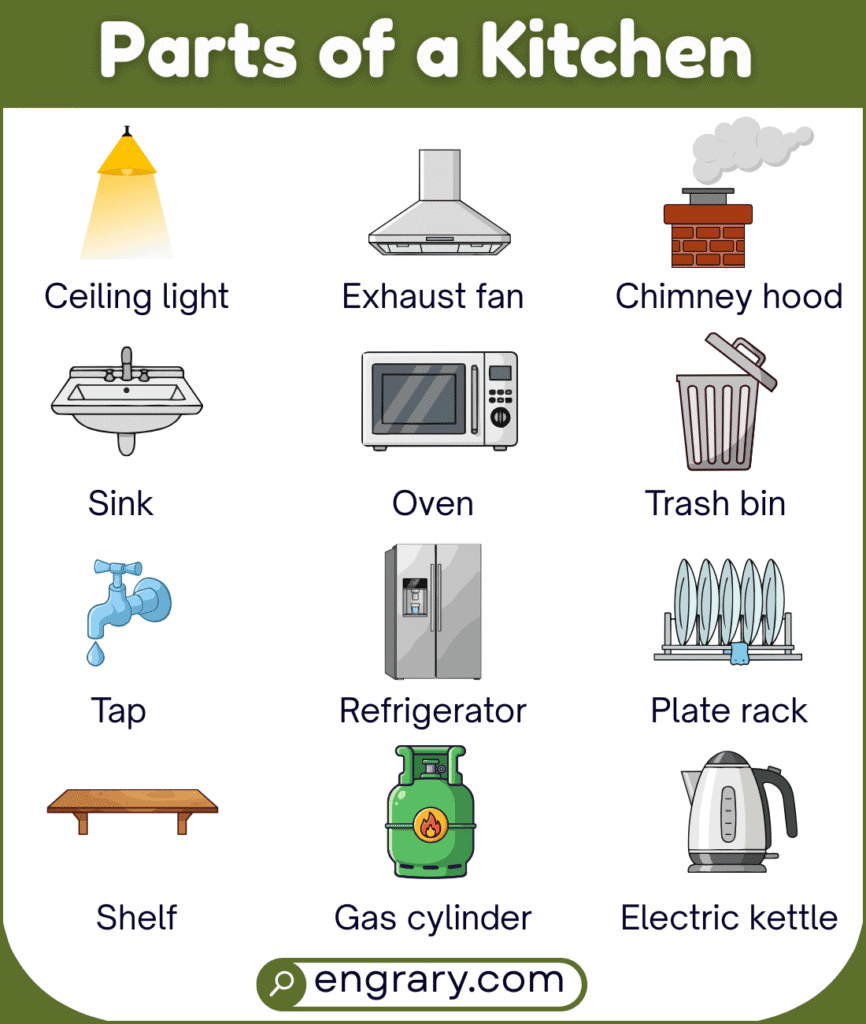
A kitchen includes several connected parts that support cooking, washing, storage, food preparation, and daily family use. The main groups usually include the walls, floor, ceiling, cabinets, countertops, sink area, cooking area, and storage or appliance parts. Each one has a clear role, so together they create a working space designed for preparing meals, cleaning up, and organizing kitchen items.
At the same time, these parts work as one system rather than as separate features. Cabinets and shelves hold supplies, countertops create work space, the sink area handles water use and cleaning, and the cooking area supports heat and food preparation. Meanwhile, lighting, ventilation, and utility parts help the kitchen feel brighter, safer, and easier to use every day.
Main Parts of a Kitchen
The main parts of a kitchen can be grouped by what they do. Some form the room itself, some support storage and food preparation, and others help with washing, cooking, lighting, airflow, and daily kitchen work.
Walls
Walls define the kitchen and separate it from nearby spaces. They also provide the main surfaces for cabinets, switches, outlets, shelves, and wall finishes.
Floor
The floor supports movement, cabinets, appliances, and kitchen activity. It is one of the most used parts of the kitchen every day.
Ceiling
The ceiling closes the top of the room and helps complete the structure. It also provides space for lighting and ventilation parts.
Door
The kitchen door controls entry and exit. It connects the kitchen to nearby spaces and helps shape movement through the room.
Window
A window brings natural light into the kitchen and may also improve airflow. It helps the kitchen feel brighter and more open.
Cabinets
Cabinets provide built-in storage throughout the kitchen. They help keep cookware, utensils, dishes, and food supplies organized.
Drawers
Drawers hold smaller kitchen items such as cutlery, tools, and food-prep accessories. They make storage easier to reach and sort.
Countertops
Countertops create the main work areas used for preparing food and placing kitchen items. They are central to daily kitchen function.
Backsplash
The backsplash protects the wall behind work surfaces and wet areas. It also gives the kitchen a more finished look.
Sink Area
The sink area handles washing, rinsing, and water use. It supports both food preparation and cleanup tasks.
Cooking Area
The cooking area is the part of the kitchen used for heating and preparing meals. It usually includes the cooktop, oven, and ventilation parts nearby.
Storage Area
The storage area includes pantry space, shelves, and cabinets used for food, dishes, and kitchen supplies. It helps keep the kitchen practical and organized.
Appliance Parts
Appliance parts include the refrigerator, dishwasher, microwave, oven, cooktop, and other major kitchen units. These parts support cooling, heating, cleaning, and food handling.
Lighting Parts
Lighting parts help the kitchen stay bright and usable during cooking, washing, and preparation. They include ceiling lights, task lights, and under-cabinet lighting.
Electrical and Utility Parts
These parts include outlets, switches, and other fixed service points. They help the kitchen support appliances, lighting, and other daily needs.
Ventilation and Airflow Parts
Ventilation parts help move heat, smoke, and stale air out of the kitchen. They make the room feel fresher and safer during cooking.
Food Prep Area
The food prep area is the part of the kitchen used for cutting, mixing, sorting, and arranging ingredients. It supports the main work done before cooking.
Dining or Serving Area
Some kitchens include a breakfast bar, island seating, or a small serving space. This area supports quick meals, serving, or casual eating.
Structural Parts of a Kitchen
The structural parts form the basic shape of the kitchen and create the fixed space around everything inside it. While cabinets, appliances, and storage can vary, these parts stay in place and define the kitchen’s size, edges, and overall layout.
Walls
Walls create the main sides of the kitchen. They enclose the space and provide surfaces for cabinets, shelves, outlets, switches, lights, and wall finishes.
Floor
The floor is the bottom surface of the kitchen. It supports walking, appliances, cabinets, and everyday kitchen activity.
Ceiling
The ceiling forms the top boundary of the kitchen. It finishes the upper area and often includes light points, vents, or trim details.
Corners
Corners are the points where two walls meet. They help define the shape of the kitchen and mark the edges of the room.
Baseboards or Skirting Boards
These strips run along the lower edge where the wall meets the floor. They create a cleaner transition and help finish the perimeter of the kitchen.
Door Frame
The door frame surrounds and supports the kitchen doorway. It helps shape the entrance and allows the door to fit properly within the opening.
Kitchen Door
The kitchen door provides entry and exit. It connects the kitchen to nearby rooms or passageways and helps control access to the space.
Window Opening
The window opening is the space in the wall where the kitchen window is fitted. It brings light into the room and may also support airflow.
Door and Window Parts of a Kitchen
Door and window parts shape the main openings in a kitchen and control access, natural light, and ventilation. These parts are important because they connect the kitchen to other spaces while also affecting comfort and visibility.
Kitchen Door
The kitchen door is the movable panel that opens and closes the entrance. It provides access and helps separate the kitchen from nearby areas.
Door Frame
The door frame surrounds and supports the door opening. It gives structure to the entrance and helps the door fit correctly.
Casing
Casing is the trim that finishes the edges around a door or window opening. It covers the joint between the wall and the frame and gives the opening a cleaner look.
Window
The window is the glazed opening in the wall that brings in natural light and may also allow airflow. It helps the kitchen feel brighter and more open.
Window Frame
The window frame surrounds and supports the window unit. It holds the opening in shape and supports the fitted window parts.
Window Sill
The window sill is the lower ledge or bottom part of the window opening. It forms the base of the window area and is often one of the most visible trim parts.
Cabinet Parts of a Kitchen
Cabinet parts form the main built-in storage system of the kitchen. These parts help organize cookware, dishes, food items, and everyday tools, while also shaping much of the kitchen’s layout and appearance.
Base Cabinets
Base cabinets are the lower cabinets installed along the floor. They support the countertop above and provide the main lower storage space.
Wall Cabinets
Wall cabinets are mounted on the wall above the counter area. They keep storage higher and help save lower work space.
Tall Cabinets
Tall cabinets extend higher than standard base or wall cabinets. They provide larger vertical storage for pantry items, cleaning tools, or built-in appliances.
Pantry Cabinet
A pantry cabinet is used to store dry food, containers, and kitchen supplies. It helps keep food items grouped in one organized place.
Corner Cabinet
A corner cabinet fits into the corner area of the kitchen layout. It helps use corner space that might otherwise be harder to reach.
Cabinet Doors
Cabinet doors cover the front opening of cabinets. They help protect stored items and give the kitchen a cleaner finished look.
Cabinet Hinges
Cabinet hinges connect the doors to the cabinet body. They allow the doors to open and close properly.
Drawer Fronts
Drawer fronts are the visible front panels of kitchen drawers. They shape the outside look of the drawer section.
Drawer Box
The drawer box is the inner storage part of a drawer. It holds the items placed inside and slides in and out of the cabinet structure.
Drawer Slides
Drawer slides are the fitted parts that guide the drawer as it opens and closes. They help the drawer move more smoothly.
Handles or Pulls
Handles or pulls are the parts used to open cabinet doors and drawers. They support grip and everyday use.
Shelf
A shelf is the flat storage surface inside a cabinet. It helps divide storage space and hold items at different levels.
Toe Kick or Kick Plate
The toe kick is the recessed lower section below base cabinets. It creates foot space near the cabinet base and helps the lower cabinets feel easier to use.
Open Shelves
Open shelves provide storage without cabinet doors. They allow quicker access to frequently used items and can also add display space.
Pull-Out Storage
Pull-out storage slides outward from inside a cabinet. It makes kitchen items easier to reach, especially in deeper cabinet spaces.
Lazy Susan
A Lazy Susan is a rotating storage feature often placed inside a corner cabinet. It helps make corner storage easier to access.
Tall Pantry Pull-Out
A tall pantry pull-out is a sliding storage unit inside a tall cabinet. It helps organize food or supplies in a more reachable vertical system.
Countertop and Work Surface Parts
Countertop and work surface parts create the main kitchen areas used for food preparation, serving, and everyday tasks. These parts shape how the kitchen works and often become the most active surfaces in daily use.
Countertop
The countertop is the main horizontal work surface in the kitchen. It supports food preparation, appliance use, and many everyday kitchen tasks.
Backsplash
The backsplash covers the wall area behind the countertop. It helps protect the wall from splashes and gives the kitchen a more finished look.
Edge Profile
The edge profile is the shaped outer edge of the countertop. It affects how the counter looks and how the front edge is finished.
Counter Corner
The counter corner is the point where two countertop sections meet or turn. It helps shape the work area within the kitchen layout.
Peninsula
A peninsula is a connected counter extension that projects out from the main kitchen structure. It adds extra work space without standing fully separate like an island.
Kitchen Island
A kitchen island is a freestanding work surface placed away from the surrounding walls or cabinets. It can support prep work, storage, serving, or seating.
Breakfast Bar
A breakfast bar is an extended counter area used for quick meals, seating, or serving. It often creates a casual dining or social space in the kitchen.
Work Triangle Zones
Work triangle zones describe the relationship between the sink, cooking area, and refrigerator. They help shape how movement flows during food preparation and cooking.
Sink and Water Parts of a Kitchen
The sink and water parts handle washing, rinsing, cleaning, and water flow in the kitchen. These parts work together so the kitchen can support food preparation, dish cleaning, and everyday water use more smoothly.
Sink
The sink is the main washing fixture in the kitchen. It is used for rinsing food, washing hands, cleaning utensils, and handling many daily kitchen tasks.
Sink Basin
The sink basin is the bowl-shaped inner part that holds and directs water. It forms the main working area inside the sink.
Faucet or Tap
The faucet, also called a tap, controls the flow of water into the sink. It is one of the most visible and most used parts in the sink area.
Faucet Spout
The spout is the part of the faucet where water comes out. It directs the water stream into the sink basin.
Handles
Handles control hot water, cold water, or both depending on the faucet style. They allow the user to start, stop, or adjust water flow.
Drain
The drain is the opening where used water leaves the sink. It directs water down into the drainage system.
Strainer
The strainer sits over or inside the drain opening. It helps catch food pieces and other small material before they move downward.
Sink Overflow
The sink overflow is the opening that provides an extra path for water if the sink fills too high. It helps manage excess water in some sink designs.
P-Trap
The P-trap is the curved pipe section under the sink. It is one of the main under-sink plumbing parts and supports the drainage path below the basin.
Supply Lines
Supply lines carry water to the faucet from the kitchen plumbing. They connect the water source to the sink fixture.
Garbage Disposal
A garbage disposal is a fitted unit under some kitchen sinks. It helps break down soft food waste before it moves through the drain system.
Cooking Parts of a Kitchen
The cooking parts form the main heat and food-preparation zone of the kitchen. These parts support boiling, frying, baking, heating, and controlling smoke or cooking odors during meal preparation.
Cooktop or Stove
The cooktop or stove is the main surface used for heating pots and pans. It forms one of the most important working parts of the cooking area.
Oven
The oven is the enclosed cooking unit used for baking, roasting, and heating food. It supports many cooking tasks that need controlled internal heat.
Range Hood or Exhaust Hood
The range hood sits above the cooktop or stove. It helps manage heat, steam, smoke, and cooking odors in the kitchen.
Hood Duct
The hood duct is the passage that carries air away from the hood area. It supports the ventilation system connected to the cooking zone.
Backsplash Behind Range
This is the wall-protection surface behind the cooking area. It helps shield the wall from heat, grease, and cooking splashes.
Microwave
The microwave is an appliance used for quick heating, warming, and simple cooking tasks. In many kitchens, it is placed near the main cooking zone for convenience.
Control Panel
The control panel is the part with buttons, knobs, or settings used to operate cooking equipment. It helps control temperature, time, and other cooking functions.
Storage and Food Prep Parts of a Kitchen
Storage and food prep parts help keep the kitchen organized and make cooking work easier to manage. While storage parts hold supplies and tools, prep parts create the space and support needed before food reaches the cooking area.
Pantry
The pantry is the main storage area for dry food, containers, and kitchen supplies. It helps keep ingredients grouped in one organized place.
Drawer Storage
Drawer storage holds smaller kitchen items such as utensils, tools, wraps, and prep accessories. It makes these items easier to sort and reach quickly.
Drawer Organizer or Tray Insert
A drawer organizer or tray insert divides drawer space into sections. It helps keep cutlery, tools, or small kitchen items neatly arranged.
Pull-Out Shelf or Pull-Out Tray
A pull-out shelf slides outward from inside a cabinet. It makes stored items easier to reach, especially in deeper storage spaces.
Cutlery Tray
A cutlery tray is the divided insert used for spoons, forks, knives, and similar items. It helps keep eating tools grouped and ordered.
Spice Rack
A spice rack stores spice jars and small seasoning containers. It keeps flavoring items visible and easier to access during cooking.
Utensil Holder Area
This is the part of the kitchen used for storing or placing frequently used utensils. It helps keep tools close to the prep or cooking zone.
Prep Counter Area
The prep counter area is the surface used for cutting, mixing, sorting, and arranging ingredients. It supports the main food-preparation work done before cooking.
Appliance Parts Commonly Found in a Kitchen
Kitchen appliances support cooling, cooking, washing, and faster daily work. These parts are not just added devices; in many kitchens, they are central to how the room functions throughout the day.
Refrigerator
The refrigerator keeps food and drinks cold. It is one of the main storage appliances in the kitchen.
Dishwasher
The dishwasher is the appliance used for cleaning dishes, glasses, and kitchen utensils. It helps reduce manual washing work after meals.
Microwave
The microwave is used for quick heating, warming, and simple cooking tasks. It is often one of the most frequently used kitchen appliances.
Oven
The oven is the enclosed heating appliance used for baking, roasting, and other controlled cooking tasks. It supports many meal-preparation needs.
Cooktop
The cooktop is the surface appliance or built-in unit used for direct stovetop cooking. It supports boiling, frying, and simmering during meal preparation.
Range Hood
The range hood is the ventilation unit above the cooktop or stove. It helps remove heat, steam, smoke, and odors from the cooking area.
Small Appliance Area
This is the part of the kitchen where smaller appliances such as blenders, toasters, kettles, or mixers are placed. It helps organize everyday appliance use and keep the work area more practical.
Lighting and Electrical Parts of a Kitchen
Lighting and electrical parts help the kitchen stay bright, powered, and easier to use during daily work. While counters and cabinets support storage and preparation, these parts make cooking, washing, and appliance use more practical and safer.
Ceiling Light
The ceiling light is the main overhead light fixture in the kitchen. It provides general lighting across the room and helps the space stay visible during daily tasks.
Task Lighting
Task lighting gives focused light to work areas such as the counter, sink, or cooking zone. It helps make food preparation and kitchen work clearer.
Under-Cabinet Lighting
Under-cabinet lighting is fitted beneath wall cabinets. It adds direct light to the counter area below and improves visibility during prep work.
Light Switch
The light switch controls one or more kitchen lights. It allows the user to turn lighting on or off easily.
Electrical Outlet
An electrical outlet is a fixed power point on the wall or backsplash area. It allows kitchen appliances and devices to connect to electricity.
GFCI Outlet
A GFCI outlet is a protected electrical outlet often used in kitchens. It supplies power while supporting safer use near water-related areas.
Power Socket
A power socket is another name for the point where plugs connect to electricity. It supports the use of many everyday kitchen appliances.
Ventilation and Airflow Parts of a Kitchen
Ventilation and airflow parts help move heat, steam, smoke, and stale air through the kitchen. Even though these parts are often less noticeable than cabinets or appliances, they play an important role in comfort and air movement during cooking.
Air Vent
An air vent is an opening that allows air to move into or out of the kitchen. It supports airflow and helps the room feel fresher.
Exhaust Vent
The exhaust vent carries used air out of the kitchen. It helps remove cooking odors, heat, and moisture from the room.
Ceiling Vent
A ceiling vent is an airflow opening placed overhead. It helps move air through the upper part of the kitchen.
Return Grille
A return grille is the covered opening where room air moves back into the airflow system. It helps support air circulation through the kitchen.
Air Register
An air register is a vent opening that directs airflow into the room. It helps control where the moving air spreads.
Common Kitchen Parts by Layout
Kitchen parts can change slightly depending on the shape and arrangement of the room. Although the main kitchen features stay similar, different layouts give more importance to certain work surfaces, storage sections, and movement paths.
One-Wall Kitchen Parts
A one-wall kitchen places the main parts along a single wall. Cabinets, counters, the sink area, and the cooking area are arranged in one straight line to save space.
Galley Kitchen Parts
A galley kitchen uses two facing sides with a walkway between them. This layout gives clear work zones and keeps storage, prep, and cooking parts close together.
L-Shaped Kitchen Parts
An L-shaped kitchen uses two connected walls to form an L pattern. It creates a more open corner-based layout and often leaves space for dining or movement.
U-Shaped Kitchen Parts
A U-shaped kitchen surrounds the work area on three sides. It gives more counter space and storage while keeping the main kitchen functions close together.
Island Kitchen Parts
An island kitchen includes a freestanding island in the middle of the room. This adds extra prep space, storage, serving space, or seating.
Peninsula Kitchen Parts
A peninsula kitchen includes a connected counter extension that projects outward from the main kitchen structure. It works like a partial island while staying attached to the rest of the layout.
Kitchen Parts Key Takeaways
A kitchen works as one connected space in which the walls, floor, and ceiling create the structure, the cabinets and storage parts organize supplies, the countertops and prep areas support food preparation, the sink and water parts handle washing and cleanup, the cooking and appliance parts manage meal preparation, and the lighting and ventilation parts make the room easier, safer, and more comfortable to use. As these parts work together, the kitchen becomes a practical space for storing, preparing, cooking, serving, and cleaning every day.
FAQs
The main parts of a kitchen include the walls, floor, ceiling, cabinets, countertops, sink area, cooking area, storage parts, and appliance parts.
Base cabinets are installed on the floor and support the countertop, while wall cabinets are mounted higher on the wall for upper storage.
The main food-prep parts include the countertop, prep counter area, sink area, drawers, pantry, cutlery tray, and storage organizers.
The kitchen sink area usually includes the sink, basin, faucet, spout, handles, drain, strainer, P-trap, supply lines, and sometimes a garbage disposal.
The main ventilation and safety parts include the range hood, hood duct, exhaust vent, air vent, ceiling vent, and GFCI outlet.
You May Also Like