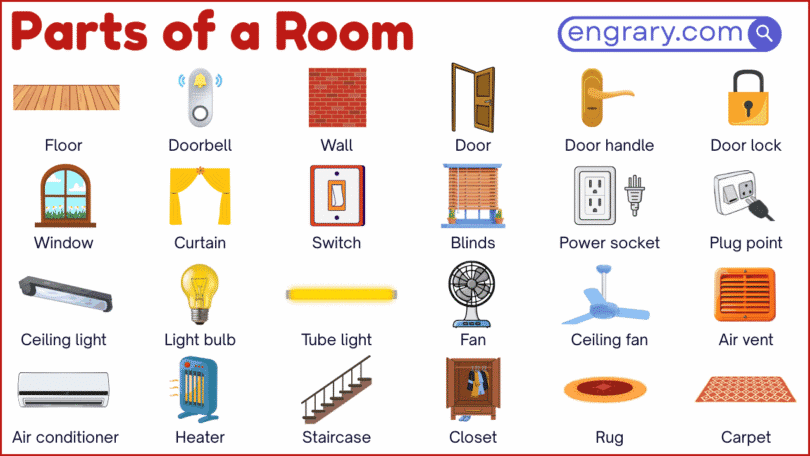
A room includes several connected parts that shape the space, support movement, and make everyday use more comfortable. The main groups usually include the walls, floor, ceiling, door, window, lighting, ventilation, and electrical parts. Each one has a clear role, so together they create a usable interior space for living, working, resting, or storing things.
At the same time, these parts work as one system rather than as separate features. The walls and ceiling enclose the space, the floor supports movement and furniture, the door and window control access and light, and lighting and ventilation improve comfort. Meanwhile, trim, outlets, and other utility parts help the room feel complete and work more smoothly in daily use.
Parts of a Room With Pictures
A labeled diagram of a room usually points to the most visible structural and utility parts first. These names help readers identify the main boundaries, openings, and support features before moving into smaller finish and detail parts.
Walls
Walls form the main vertical sides of the room. They enclose the space and support mounted parts such as shelves, pictures, mirrors, switches, and wall lights.
Floor
The floor is the lower surface of the room. It supports walking, furniture placement, and daily activity across the space.
Ceiling
The ceiling covers the top of the room. It finishes the upper boundary and often contains lights, vents, or trim.
Door
The door provides entry and exit. It also helps control privacy, access, and separation between one room and another.
Window
The window brings light into the room and may also allow airflow. It helps make the room feel brighter and more open.
Lighting
Lighting makes the room visible and usable during darker conditions. It supports comfort, safety, and daily tasks.
Ventilation
Ventilation helps move air in and out of the room. It supports freshness and reduces stuffiness inside the space.
Electrical and Utility Parts
This group includes switches, outlets, and other fixed service points. These parts help the room support lighting, power use, and other everyday needs.
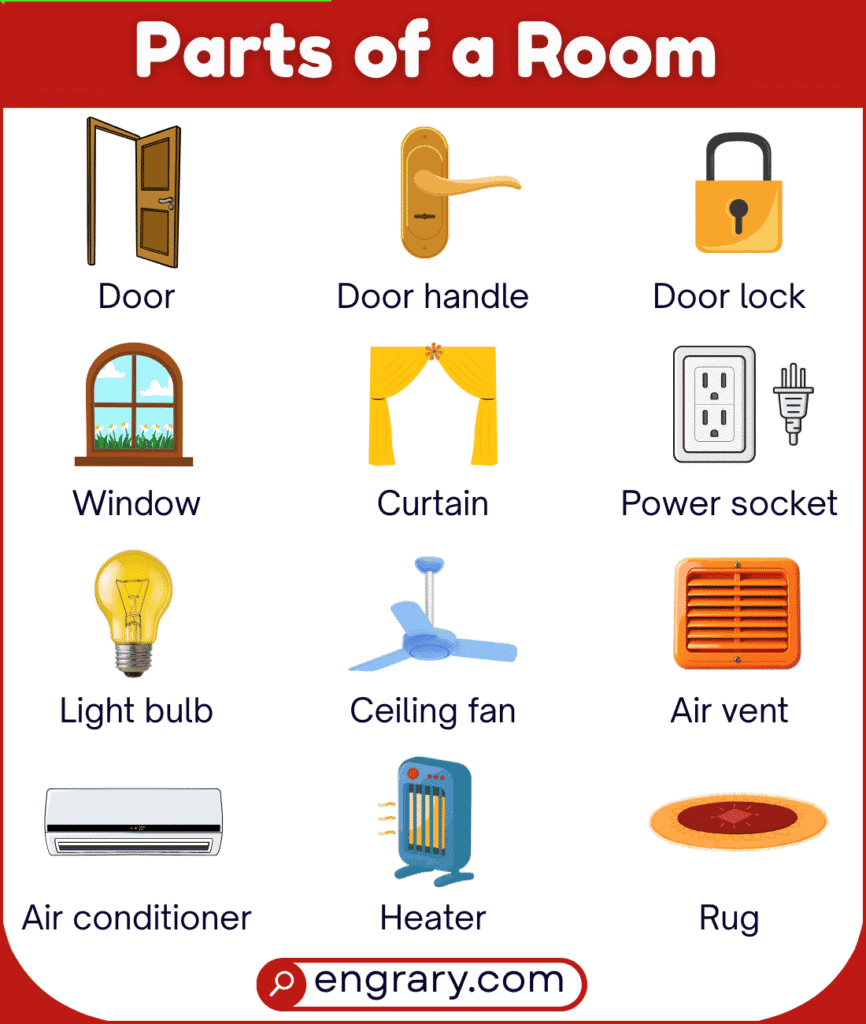
Main Parts of a Room
The main parts of a room can be grouped by what they do. Some form the space itself, some control access and light, and others support comfort, airflow, and daily use.
Walls
Walls define the room and separate it from nearby spaces. They also provide the main surfaces for decoration, storage, and mounted fixtures.
Floor
The floor supports movement and carries the weight of furniture and people. It is one of the most used parts of the room every day.
Ceiling
The ceiling closes the top of the room and helps complete the structure. It also provides space for lights, vents, and upper trim.
Door
The door controls access to the room and adds privacy. It helps connect the room to hallways, other rooms, or outdoor areas.
Window
A window brings in natural light and often supports airflow. It can also improve the overall feel of the room by opening it visually.
Lighting
Lighting helps the room stay useful after daylight fades. It supports reading, movement, work, and general visibility.
Ventilation
Ventilation improves airflow inside the room. As air moves through vents or openings, the room can feel fresher and more comfortable.
Electrical and Utility Parts
These parts help the room function beyond its basic structure. They supply power, support appliances, and make daily use easier.
Structural Parts of a Room
The structural parts form the basic shape of the room and create the fixed space around everything inside it. While furniture and decoration can change, these parts stay in place and define the room’s size, edges, and usable layout.
Walls
Walls create the main sides of the room. They enclose the space and provide surfaces for paint, paneling, shelves, wall lights, and other mounted items.
Floor
The floor is the bottom surface of the room. It supports walking, furniture, and everyday movement across the space.
Ceiling
The ceiling forms the top boundary of the room. It finishes the upper area and often contains light points, vents, or trim details.
Corners
Corners are the points where two walls meet. They help define the room’s shape and mark the edges of the interior space.
Baseboards or Skirting Boards
These strips run along the lower edge where the wall meets the floor. They create a neater transition and help finish the perimeter of the room.
Base Shoe
Base shoe is a narrow trim piece fitted near the bottom edge of the baseboard. It helps cover small gaps where the wall trim meets the floor.
Quarter Round
Quarter round is a small rounded trim piece often placed along the floor edge. It gives the lower border of the room a more finished look.
Door and Window Parts of a Room
Door and window parts shape the main openings in a room and control movement, light, and airflow. These parts are important because they connect the room to other spaces while also helping define how the room feels and functions.
Door
The door is the movable panel that opens and closes the room entrance. It provides access, privacy, and separation from nearby spaces.
Door Frame
The door frame surrounds and supports the door opening. It helps the door fit properly and gives structure to the entry area.
Casing
Casing is the trim that finishes the edges around a door or window opening. It covers the joint between the wall and the frame and gives the opening a cleaner look.
Head Jamb
The head jamb is the top horizontal part of the door frame. It forms the upper boundary of the doorway and supports the frame structure.
Side Jamb
The side jambs are the vertical parts of the door frame. They run along both sides of the doorway and help guide how the door fits when closed.
Door Stop
The door stop is the narrow strip that limits how far the door closes into the frame. It helps position the door correctly when shut.
Door Handle
The door handle is the part used to open or close the door. It supports grip and makes entry and exit easier.
Door Lock
The door lock helps secure the room when needed. It supports privacy and controlled access.
Threshold
The threshold is the lower strip at the bottom of the doorway. It creates the transition between the room floor and the floor beyond the opening.
Window
The window is the glazed opening in the wall that brings in light and may also allow ventilation. It helps the room feel brighter and less enclosed.
Window Frame
The window frame surrounds and supports the window unit. It holds the opening in shape and supports the fitted window parts.
Window Casing
Window casing is the trim around the window opening. It helps finish the edge where the wall meets the frame.
Window Sill
The window sill is the lower ledge or bottom part of the window opening. It forms the base of the window area and is often one of the most visible trim parts.
Wall, Floor, and Ceiling Finish Parts
Finish parts give the room its final surface look and improve how the structural parts connect visually. While the walls, floor, and ceiling form the space itself, these finish details make the room look cleaner, more polished, and more complete.
Painted Wall Surface
The painted wall surface is the visible finish layer on the walls. It gives the room color, texture, and a more finished appearance.
Wall Paneling
Wall paneling covers part or all of a wall with fitted surface material. It adds visual detail and can change the style of the room more clearly than plain painted walls.
Wainscoting
Wainscoting is decorative lower-wall paneling. It covers the bottom part of the wall and creates a more defined wall finish.
Chair Rail
A chair rail is a horizontal trim piece fixed across the wall. It creates a visual break between upper and lower wall sections.
Floor Finish
The floor finish is the visible top surface of the floor, such as tile, wood, laminate, or carpet. It affects both the look and daily feel of the room.
Ceiling Surface
The ceiling surface is the visible finished layer overhead. It gives the top of the room a complete and uniform appearance.
Ceiling Trim
Ceiling trim is the finishing trim placed where the wall meets the ceiling. It helps soften the transition between these two large surfaces.
Crown Molding
Crown molding is a decorative trim installed at the upper edge of the wall. It adds detail and gives the top border of the room a more finished style.
Lighting and Electrical Parts of a Room
Lighting and electrical parts help the room stay visible, powered, and practical for daily use. These fixed parts support everything from basic illumination to plugging in appliances, chargers, and other devices.
Ceiling Light
A ceiling light is a main light fixture placed overhead. It provides general lighting across the room.
Wall Light
A wall light is mounted on the wall rather than the ceiling. It adds extra illumination and can support both function and decoration.
Light Switch
The light switch controls the room lighting. It allows the user to turn lights on or off easily.
Electrical Outlet
An electrical outlet is a fixed power point on the wall. It allows electrical devices to connect to the room’s power supply.
Power Socket
A power socket is another name for the point where plugs connect to electricity in the room. It supports the use of lamps, fans, chargers, and other appliances.
Wiring Access Point
A wiring access point is an area where electrical wiring can be reached or connected. It supports the installation or connection of room electrical parts.
Ventilation and Airflow Parts of a Room
Ventilation and airflow parts help fresh air move through the room and reduce heat, odor, or stuffiness. Although these parts may look small, they support comfort and make the room feel more usable over time.
Air Vent
An air vent is an opening that allows air to move into or out of the room. It supports airflow and helps the room feel less closed.
Exhaust Vent
An exhaust vent carries used air out of the room. It helps remove stale air, moisture, or unwanted odors.
Ceiling Vent
A ceiling vent is an airflow opening placed overhead. It helps air move through the upper part of the room.
Return Grille
A return grille is the covered opening where room air moves back into the ventilation system. It helps support air circulation through the room.
Air Register
An air register is a vent opening that directs airflow into the room. It helps control where the moving air spreads.
Furniture and Storage Parts Commonly Found in a Room
Furniture and storage parts are not structural parts of the room, yet they are commonly included when people identify room parts in everyday use. These items help the room feel complete and support sleeping, sitting, working, organizing, or storing belongings.
Bed or Main Furniture Unit
This is the largest or most important furniture piece in the room. In some rooms it may be a bed, while in others it may be a sofa, table, or another main unit.
Wardrobe or Closet
A wardrobe or closet stores clothing and other personal items. It helps keep the room organized and less crowded.
Shelves
Shelves provide open storage on the wall or inside furniture. They hold books, décor, containers, and other everyday items.
Desk or Table
A desk or table gives the room a working or surface area. It supports writing, studying, eating, or placing objects.
Chair
A chair provides seating inside the room. It supports rest, work, or other daily activities.
Storage Cabinet
A storage cabinet provides enclosed space for keeping items out of sight. It helps reduce clutter and organize room contents.
Decorative Parts of a Room
Decorative parts add style, softness, and visual interest to the room. Even though they are not the main structural parts, they help the space feel more complete, personal, and comfortable in daily use.
Curtains or Blinds
Curtains or blinds cover the window area. They help control light, add privacy, and improve the overall look of the room.
Curtain Rod
The curtain rod is the fitted bar that supports curtains. It sits above the window and helps the window covering hang properly.
Rug or Carpet Area
A rug or carpet area adds a softer surface on the floor. It can define a section of the room and make the space feel warmer or more finished.
Wall Art Area
This is the wall space used for pictures, frames, or decorative pieces. It adds visual character and helps make the room feel less plain.
Mirror
A mirror reflects light and helps the room appear brighter or larger. It also supports daily use in bedrooms, dressing spaces, or entry areas.
Trim and Molding
Trim and molding are the finishing details that outline edges and transitions in the room. They give the room a cleaner and more polished appearance.
Common Room Parts by Room Type
Room parts can change slightly depending on the purpose of the room. Although the basic structure stays the same, some room types give more importance to certain parts, furniture, or utility features.
Bedroom Parts
A bedroom usually includes the main room structure, a door, a window, lighting, outlets, ventilation parts, and furniture such as a bed, wardrobe, shelves, and side tables.
Living Room Parts
A living room commonly includes walls, floor, ceiling, windows, lighting, ventilation parts, outlets, seating furniture, tables, storage pieces, and decorative items.
Study Room Parts
A study room often includes a desk, chair, shelves, lighting, outlets, and storage furniture along with the main structural parts of the room.
Dining Room Parts
A dining room usually includes the same main room structure with lighting, windows, ventilation parts, a dining table, chairs, and sometimes storage cabinets or display shelves.
Kids Room Parts
A kids room includes the main room structure along with sleeping, storage, and play-related furniture. It often gives extra importance to open floor space, shelves, and easy-to-reach storage.
Room Key Takeaways
A room works as one connected space in which the walls, floor, and ceiling create the structure, the door and window parts control access and light, the finish parts improve the surfaces, the lighting and electrical parts support daily use, and the ventilation, furniture, and decorative parts make the room more comfortable and complete. As these parts work together, the room becomes a functional interior area for movement, storage, rest, work, and everyday living.
FAQs
The main parts of a room include the walls, floor, ceiling, door, window, lighting, ventilation, and electrical parts.
Structural parts form the room itself, while decorative parts improve its appearance and comfort without shaping the basic space.
The main parts that help with light and airflow are the window, lighting fixtures, air vents, ceiling vents, exhaust vents, and air registers.
Common door and window parts include the frame, casing, jambs, threshold, handle, lock, window frame, and window sill.
The main finish parts include painted wall surfaces, wall paneling, wainscoting, chair rail, floor finish, ceiling trim, crown molding, and baseboards.
You May Also Like