A bathroom includes several connected parts that support hygiene, washing, storage, comfort, and ventilation. The main groups usually include the room structure, sink and vanity area, toilet, shower or bathtub, lighting, utility parts, and finishing details. Each part has its own role, so together they create a functional space for daily use.
At the same time, these parts work as one system rather than as separate items. Water enters through supply lines, fixtures control its flow, drains carry it away, and ventilation helps remove moisture from the room. Meanwhile, surfaces, storage, and safety parts make the bathroom easier to use, cleaner to maintain, and more comfortable every day.
Parts of a Bathroom With Pictures
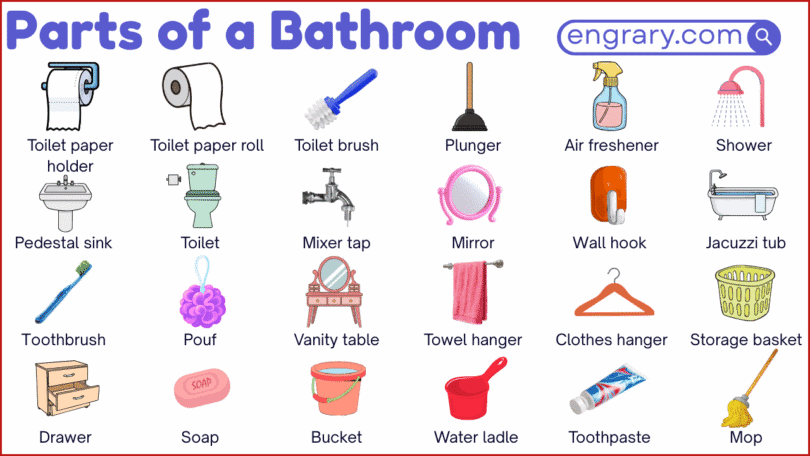
A labeled diagram of a bathroom usually points to the most visible room parts and fixture parts first. These names help readers identify the main structure, washing areas, toilet parts, and utility features before moving into smaller details.
Walls
The walls form the main vertical boundaries of the bathroom. They support mirrors, tiles, cabinets, and other mounted parts while also enclosing the space.
Floor
The floor is the bottom surface of the bathroom. It supports movement, fixtures, and furniture while also handling water exposure better than many other room floors.
Ceiling
The ceiling covers the top of the bathroom. It finishes the upper part of the room and often contains lights or ventilation openings.
Door
The bathroom door provides entry and privacy. It separates the bathroom from nearby spaces and controls access to the room.
Window
A bathroom window allows natural light and can also improve airflow. In some bathrooms, it supports ventilation along with the exhaust system.
Sink or Basin
The sink, also called a basin, is one of the main washing fixtures in the bathroom. It is used for hand washing, face washing, and other daily cleaning tasks.
Toilet
The toilet is the main sanitation fixture in the room. It includes several connected parts that support flushing, seating, and waste removal.
Shower or Bathtub
This area is used for bathing. Some bathrooms include only a shower, some include only a bathtub, and others combine both in one bathing zone.
Mirror
The mirror is usually placed above the sink or vanity. It helps with grooming, washing, and other personal care tasks.
Exhaust Fan or Vent
This part helps remove moisture, odors, and warm air from the bathroom. It is important because bathrooms produce more humidity than many other rooms.
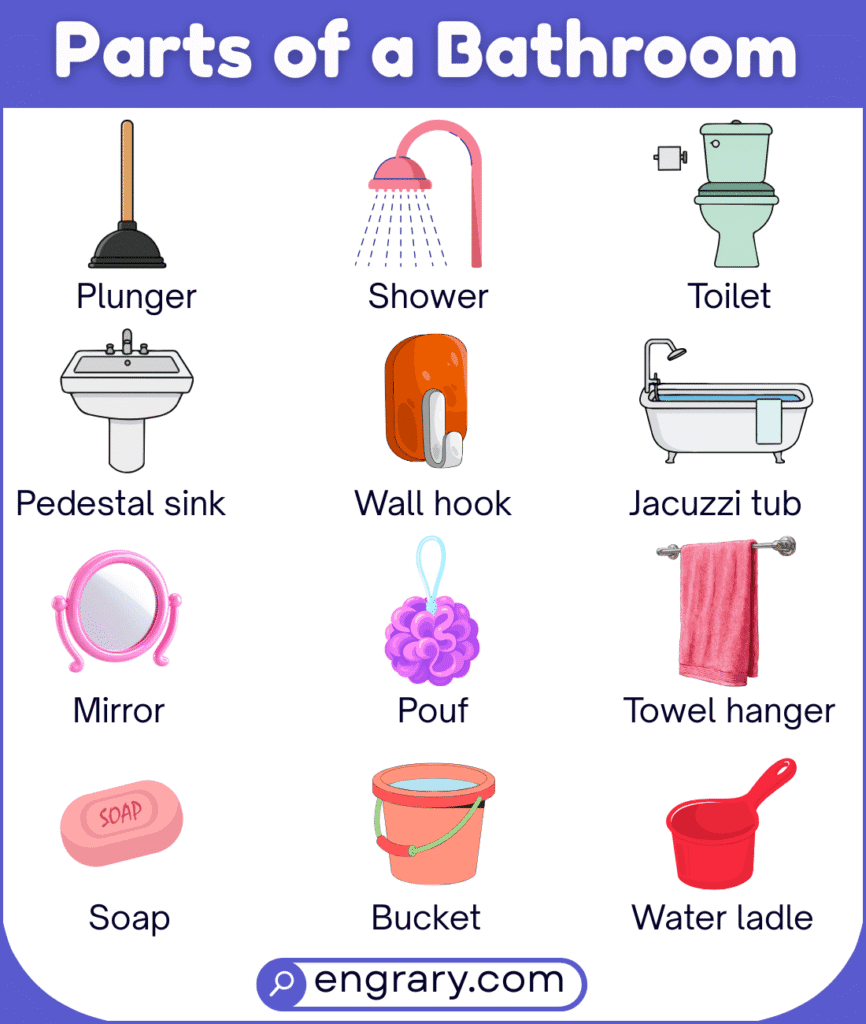
Main Parts of a Bathroom and Their Functions
The main parts of a bathroom can be grouped by what they do. Some form the room itself, some carry water in and out, and others support storage, comfort, lighting, and safety.
Walls
Walls shape the bathroom and separate it from the rest of the home. They also hold mounted parts such as mirrors, shelves, towel bars, and light fixtures.
Floor
The floor supports all bathroom activity and fixtures. Because water is often present, this part must work well with tile, grout, and other moisture-resistant finishes.
Ceiling
The ceiling closes the upper part of the room and helps complete the structure. It also provides space for lights, vents, and sometimes overhead heating or utility features.
Door
The door controls entry into the bathroom and provides privacy. It also affects how easily the room connects with the nearby hallway, bedroom, or dressing area.
Window
A window brings in light and may also improve ventilation. In many bathrooms, it helps balance brightness and airflow at the same time.
Ventilation System
The ventilation system removes moist air from the bathroom. As steam builds up during bathing, this system helps reduce dampness and supports a fresher room environment.
Plumbing Fixtures
This group includes the sink, toilet, shower, bathtub, faucets, and drains. These are the working parts that manage water use, washing, flushing, and drainage.
Lighting, Storage, and Accessories
This group includes lights, cabinets, shelves, mirrors, towel holders, and similar support parts. These items make the bathroom easier to use, more organized, and more comfortable in daily life.
Structural Parts of a Bathroom
The structural parts form the room itself and create the base for all bathroom fixtures and finishes. While the sink, toilet, and shower do most of the daily work, these fixed room parts support the layout, define the boundaries, and help the bathroom stay usable and complete.
Walls
The walls create the main sides of the bathroom. They enclose the space and provide support for mounted parts such as mirrors, shelves, cabinets, towel bars, and tile surfaces.
Floor
The floor is the lower surface that supports movement and carries the weight of fixtures and furniture. In a bathroom, it also needs to work well with water-resistant finishes and drainage-friendly materials.
Ceiling
The ceiling covers the top of the room and finishes the upper boundary of the bathroom. It often includes light fixtures, ventilation openings, or other overhead utility parts.
Baseboards
Baseboards run along the lower edge where the wall meets the floor. They create a cleaner transition between surfaces and help finish the bottom perimeter of the room.
Door Frame
The door frame surrounds and supports the bathroom door. It shapes the entry opening and helps the door fit and close properly.
Bathroom Door
The bathroom door provides access and privacy. It controls movement in and out of the room while separating the bathroom from nearby spaces.
Window
The window brings natural light into the bathroom and may also improve airflow. In many bathrooms, it works together with the ventilation system to reduce dampness.
Threshold
The threshold is the lower strip at the doorway. It creates a transition between the bathroom floor and the floor outside the room.
Vent or Exhaust Opening
This opening allows air to move out of the bathroom through the ventilation system. It helps reduce steam, odors, and excess moisture.
Sink and Vanity Parts of a Bathroom
The sink and vanity area is one of the most used sections in the bathroom because it supports washing, grooming, storage, and daily routines. At the same time, several small parts work together here to control water flow, drainage, and organization.
Sink or Basin
The sink, also called a basin, is the main washing fixture in this area. It holds and directs water during hand washing, face washing, and other everyday cleaning tasks.
Vanity Unit
The vanity unit is the furniture base around or below the sink. It supports the basin and often provides storage for bathroom items.
Countertop
The countertop is the flat surface around the sink. It gives space for soap, brushes, containers, and other small personal-care items.
Backsplash or Splashback
This part sits behind the sink area on the wall. It helps protect the wall surface from water splashes and creates a cleaner finish around the vanity.
Faucet or Tap
The faucet, also called a tap, controls the flow of water into the sink. It is one of the most visible and frequently used parts in the vanity area.
Faucet Spout
The spout is the section of the faucet where water comes out. It directs the water stream into the sink basin.
Handles
Handles control hot water, cold water, or both depending on the faucet style. They allow the user to start, stop, or adjust water flow more easily.
Aerator
The aerator is a small fitted piece at the end of the faucet spout. It helps shape the water stream and can make the flow feel smoother.
Sink Overflow Hole
The sink overflow hole is a small opening near the upper inside wall of the basin. It provides an extra path for water if the sink begins to fill too high.
Drain Stopper or Pop-Up Stopper
This part opens or closes the sink drain. It allows water to stay in the basin when needed and release when washing is finished.
Tailpiece
The tailpiece is the straight pipe section connected below the sink drain. It carries water downward from the basin toward the trap.
P-Trap
The P-trap is the curved pipe section under the sink. Its shape helps manage drainage while also separating the sink from deeper drain passages.
Trap Arm
The trap arm connects the trap to the wall drain line. It carries used water away from the sink area toward the drainage system.
Shutoff Valves
These valves control the water supply to the sink fixture. They allow the water flow to be opened or closed at the sink area.
Supply Hoses or Supply Lines
Supply hoses carry water from the plumbing lines to the faucet. They connect the water source to the sink fixture.
Mirror
The mirror is usually placed above the sink or vanity. It supports grooming, washing, and personal care tasks.
Medicine Cabinet
A medicine cabinet provides enclosed storage near the sink area. It often combines mirror use with extra space for small bathroom items.
Toilet Parts of a Bathroom
The toilet is one of the main working fixtures in a bathroom because it combines water supply, flushing action, seating, and waste removal in one unit. Although it looks simple from the outside, several connected parts work together to support clean and controlled use.
Toilet Bowl
The toilet bowl is the lower main part used during normal toilet use. It forms the visible basin area of the fixture and connects to the base and drain system below.
Toilet Tank or Cistern
The tank, also called a cistern, is the upper section that stores water for flushing. When the toilet is used, this part releases water into the bowl to support cleaning action.
Toilet Seat
The toilet seat is the ring-shaped part placed on top of the bowl. It provides a more comfortable surface for sitting.
Lid
The lid covers the top opening of the toilet seat and bowl. It helps close the fixture when the toilet is not in use.
Flush Handle or Flush Button
This part starts the flushing action. Once pressed or turned, it allows the toilet to release water from the tank into the bowl.
Fill Valve
The fill valve controls water entering the tank after a flush. It helps refill the tank so the toilet can be used again.
Flush Valve
The flush valve releases stored tank water into the bowl during flushing. It plays a central role in the flushing process.
Flapper
The flapper is a flexible part inside the tank that opens during flushing and then closes again. It helps control when water leaves the tank.
Overflow Tube
The overflow tube is a vertical tube inside the tank. It helps guide extra water safely if the tank fills too high.
Toilet Base
The toilet base is the lower supporting section that rests on the floor. It anchors the fixture in place and connects it to the drain below.
Wax Ring or Floor Seal
This sealing part sits between the toilet base and the floor drain opening. It helps create a tight connection where the toilet meets the waste outlet.
Supply Line
The supply line brings water to the toilet tank. It connects the bathroom plumbing to the toilet’s refill system.
Shutoff Valve
The shutoff valve controls the water supply to the toilet. It allows the toilet water flow to be turned on or off near the fixture.
Toilet Paper Holder
This holder keeps toilet paper within easy reach. It is a support accessory placed near the toilet area.
Bidet Shower or Health Faucet
This hand-held spray is used for washing after toilet use in many bathrooms. It is commonly placed beside the toilet and connected to the water supply.
Shower Parts of a Bathroom
The shower area is built for bathing through a controlled flow of water from above or by hand. Several visible and hidden parts work together here, so the system can deliver water, guide it, contain it, and drain it away properly.
Shower Head
The shower head is the main water outlet in the shower area. It spreads water in a wider pattern for bathing.
Shower Arm
The shower arm is the pipe section that connects the shower head to the wall plumbing. It supports the shower head and directs water outward.
Shower Valve
The shower valve controls the flow and, in many setups, the temperature of shower water. It is one of the main working parts behind the shower controls.
Diverter
The diverter changes where the water goes in a combined shower system. It can direct water between the shower head, tub spout, or hand shower.
Shower Handle
The shower handle lets the user turn the water on, off, or adjust the setting. It works with the valve to control use more easily.
Shower Hose
The shower hose is the flexible pipe connected to a hand shower. It allows the hand shower to move more freely during bathing.
Hand Shower
A hand shower is a smaller moveable shower head attached to a hose. It gives more control over the direction of the water spray.
Shower Drain
The shower drain collects used water at the bottom of the shower area. It directs that water into the bathroom drainage system.
Shower Tray or Shower Base
This is the bottom platform of the shower area. It supports the user while bathing and guides water toward the drain.
Shower Door or Shower Screen
This part helps contain water within the shower area. It separates the shower space from the rest of the bathroom more clearly.
Shower Enclosure or Shower Curtain
The enclosure or curtain surrounds the shower space and helps stop water from spreading across the room. It also gives the bathing area more privacy and separation.
Bathtub Parts of a Bathroom
The bathtub area is designed for soaking, bathing, and controlled water use inside a larger basin fixture. Although it may look simple from the outside, several connected parts help fill the tub, hold water, release water, and guide overflow more safely.
Bathtub
The bathtub is the main bathing basin used for soaking and washing. It forms the central body of the tub area and holds water during use.
Tub Spout
The tub spout is the outlet that delivers water into the bathtub. It directs the water stream downward into the tub basin.
Overflow Plate
The overflow plate covers the overflow opening on the inside wall of the tub. It marks the point where extra water can exit before the tub fills too high.
Drain Stopper
The drain stopper opens or closes the tub drain. It allows the bathtub to hold water for bathing or release it after use.
Tub Drain
The tub drain is the opening at the bottom of the bathtub where water leaves the basin. It connects the tub to the bathroom drainage system.
Tub-Shower Diverter
This part controls whether water flows to the tub spout or the shower head in a combined bath and shower setup. It helps one fixture serve two bathing functions.
Bath Panel
The bath panel covers the outer side of some bathtubs, especially built-in models. It hides the tub structure and gives the installation a more finished appearance.
Bathroom Storage and Surface Parts
Storage and surface parts make the bathroom more practical for daily routines because they hold items, organize supplies, and improve how the room is used. At the same time, these parts help keep the bathroom cleaner, less crowded, and easier to manage.
Vanity Storage
Vanity storage is the built-in storage space inside or below the vanity unit. It is used for keeping toiletries, cleaning items, and other bathroom supplies.
Wall Shelves
Wall shelves provide open storage on the bathroom wall. They give easy access to frequently used items and help free up counter space.
Cabinet
A bathroom cabinet offers enclosed storage for personal-care items, towels, or extra supplies. It helps keep the room more organized and less cluttered.
Counter Space
Counter space is the open flat area around the sink or vanity. It supports daily use by giving room for soap, toothbrushes, and other small items.
Niche or Soap Niche
A niche is a recessed storage space built into the wall, often in the shower or near the vanity. It creates a cleaner storage area without projecting out into the room.
Towel Rack or Towel Bar
This part holds towels in an open hanging position. It helps towels stay accessible and dry more easily after use.
Towel Hook
A towel hook is a small mounted holder used to hang towels, robes, or clothing. It takes up little space while still adding useful storage.
Bathroom Ventilation, Lighting, and Utility Parts
These parts support airflow, visibility, and the basic working systems behind daily bathroom use. While fixtures handle washing and bathing, ventilation, lighting, and utility parts help the room stay brighter, drier, and more functional throughout the day.
Exhaust Fan
The exhaust fan removes moist air from the bathroom. It helps reduce steam, odors, and humidity after bathing or washing.
Air Vent
The air vent allows air to move in or out of the bathroom. It supports airflow and works with the room’s ventilation system.
Light Fixture
A light fixture provides general lighting for the bathroom. It helps the room stay visible and usable during low-light conditions.
Vanity Light
The vanity light is placed near or above the mirror area. It gives clearer lighting for grooming, shaving, makeup, and other close-up tasks.
GFCI Outlet
A GFCI outlet is a protected electrical outlet often used in bathrooms. It provides power for small appliances such as hair dryers or electric shavers.
Light Switch
The light switch controls the bathroom lights and sometimes the fan. It allows the user to turn these systems on or off easily.
Water Supply Lines
Water supply lines bring water to the sink, toilet, shower, and bathtub. They connect the bathroom fixtures to the home’s plumbing system.
Drain Pipe
The drain pipe carries used water away from the bathroom fixtures. It supports proper drainage after washing, showering, or flushing.
Bathroom Finishing and Safety Parts
Finishing and safety parts complete the bathroom surfaces and help make the room safer to use. Although some of these parts seem small, they improve surface protection, reduce water problems, and support more secure movement in a wet space.
Wall Tile
Wall tile covers bathroom walls, especially around wet areas such as the sink, shower, or bathtub. It helps protect the surface and creates a cleaner finished look.
Floor Tile
Floor tile covers the bathroom floor with a hard, water-friendly surface. It supports daily movement and works well in a room where splashes are common.
Grout
Grout fills the spaces between tiles. It helps hold the tiled surface together and creates a more complete finish.
Caulking or Sealant Lines
Caulking or sealant lines fill narrow joints around fixtures and edges. They help close small gaps where water might collect or pass through.
Grab Bar
A grab bar is a strong support bar fixed to the wall. It helps users steady themselves near the toilet, shower, or bathtub.
Bath Mat Area
This is the floor area where a bath mat is placed near the shower, bathtub, or sink. It helps create a safer stepping area after washing or bathing.
Common Bathroom Parts by Bathroom Type
Bathroom part names can change slightly depending on the size, layout, and purpose of the room. Even though many bathrooms share the same basic fixtures, some types include extra parts or place more importance on storage, accessibility, or bathing features.
Master Bathroom Parts
A master bathroom often includes a sink vanity, toilet, shower, bathtub, mirror, storage cabinets, towel bars, and more surface space. It usually has more fixtures and comfort-related parts than smaller bathroom types.
Guest Bathroom Parts
A guest bathroom commonly includes the main essentials such as a sink, toilet, mirror, towel holder, and either a shower or a bathtub. Its layout is usually simpler and designed for short-term everyday use.
Half Bathroom Parts
A half bathroom usually contains a toilet, sink, mirror, light, and small storage or accessory parts. Because it does not normally include a shower or bathtub, it has fewer bathing-related components.
Ensuite Bathroom Parts
An ensuite bathroom is connected directly to a bedroom. It often includes the same core parts as a full bathroom, but its layout is arranged for more private and direct access.
Accessible Bathroom Parts
An accessible bathroom includes parts designed for easier and safer use, such as grab bars, wider entry space, easier-to-reach fixtures, and a shower area planned for simpler movement and support.
Bathroom Key Takeaways
A bathroom works as one connected system in which the room structure forms the space, the sink and vanity area supports washing and grooming, the toilet handles sanitation, the shower or bathtub manages bathing, and the lighting, ventilation, utility, and safety parts keep the room usable, organized, and safer. As water enters through supply lines, flows through fixtures, and leaves through drains, the bathroom functions through a clear sequence of use, control, drainage, and moisture removal.
FAQs
The main parts of a bathroom include the walls, floor, ceiling, sink, vanity, toilet, shower or bathtub, mirror, ventilation parts, lighting, and storage accessories.
A sink is the washing basin, while a vanity is the furniture unit that supports the sink and often includes storage and counter space.
A bathroom toilet usually includes the bowl, tank or cistern, seat, lid, flush handle, fill valve, flush valve, flapper, base, and supply line.
A shower area commonly includes the shower head, shower arm, valve, handle, drain, shower base, and a shower door, screen, enclosure, or curtain.
The main ventilation and safety parts include the exhaust fan, air vent, grab bar, wall and floor tile, grout, sealant lines, and bath mat area.
You May Also Like