A bus includes several connected parts that support movement, passenger transport, driver control, and safety. The main groups usually include the body, chassis, engine, transmission, suspension, brakes, steering, electrical parts, doors, windows, and interior equipment. Each group has its own role, so together they create a large vehicle that can carry people smoothly and safely.
At the same time, these parts work in a clear functional sequence. The engine creates power, the transmission and driveline deliver it, the axles and wheels move the bus, and the steering and brakes control direction and stopping. Meanwhile, the body, doors, seats, rails, and safety systems support passengers during entry, travel, and exit.
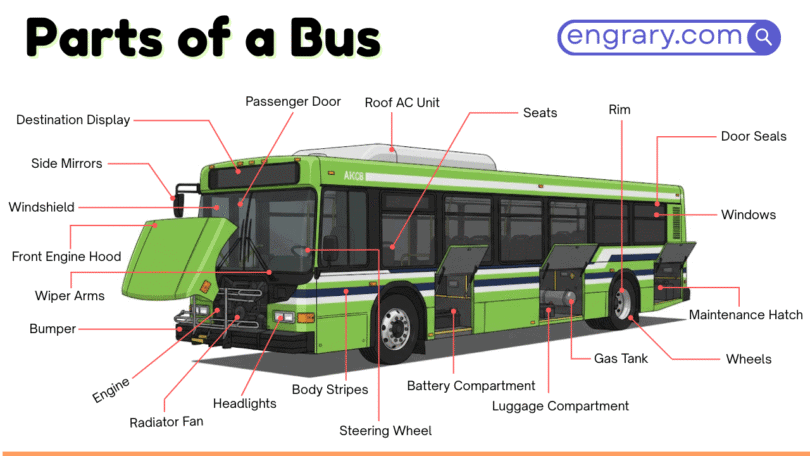
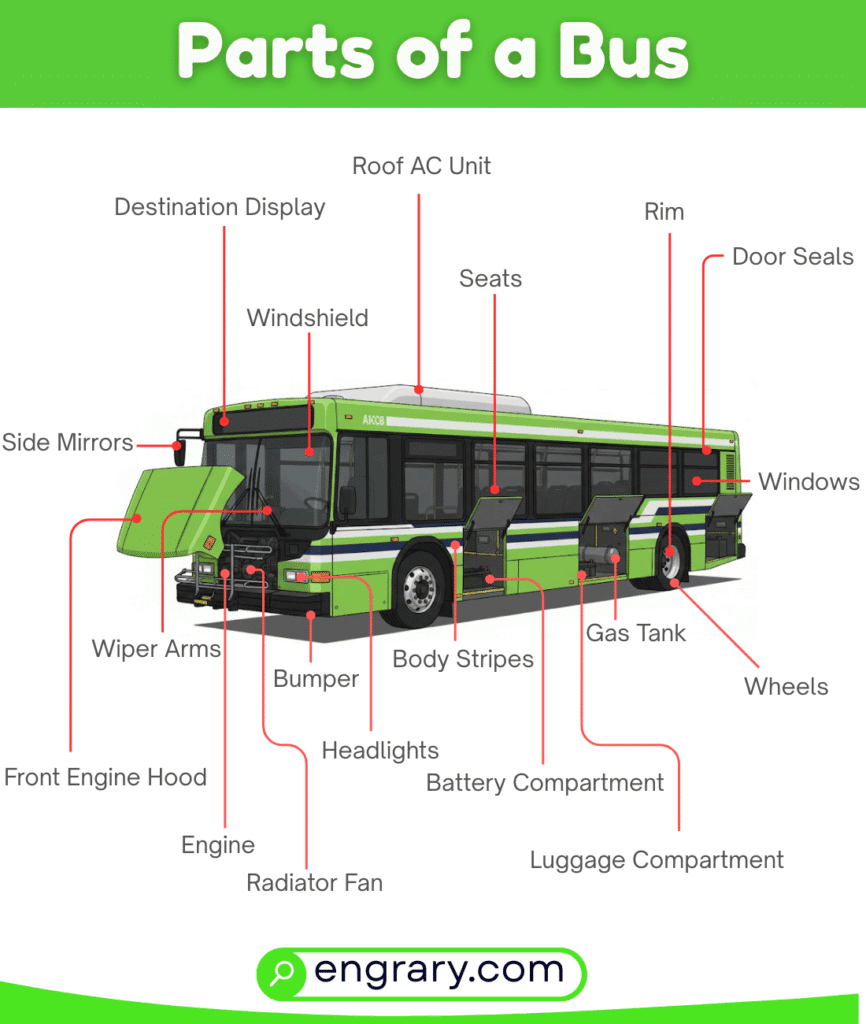
Parts of a Bus With Labeled Diagram
A labeled diagram of a bus usually shows the most visible structural, operating, and passenger-related parts. These names help readers identify the outer body, driver controls, entry systems, and main mechanical sections before moving into more detailed groups.
Body
The body forms the visible outer shell of the bus. It covers the passenger area, supports the roof and side structure, and gives the vehicle its main shape.
Chassis
The chassis is the strong base structure under the bus. It supports the body and carries major systems such as the engine, axles, suspension, and braking parts.
Windshield
The windshield is the large front glass panel in front of the driver. It provides forward visibility while also helping protect the driver area from wind, dust, and rain.
Service Door
The service door is the main entry and exit door for passengers. It controls access to the bus and is often fitted near the front for easier boarding.
Passenger Windows
Passenger windows are the side glass openings along the bus body. They allow light into the cabin and help passengers see outside during travel.
Destination Sign or Route Display
This sign shows the route number, destination, or service name. It helps passengers identify the bus before boarding.
Driver Seat
The driver seat is the main seating position used to control the bus. It is placed in front of the steering and dashboard area for direct operation.
Steering Wheel
The steering wheel controls the direction of the bus. When the driver turns it, the steering system changes the position of the front wheels.
Engine
The engine produces the power needed to move the bus. It works with the transmission and driveline so the vehicle can travel under load.
Wheels and Tires
These parts support the bus on the road and allow movement. They also work with the suspension and brakes to handle weight, traction, and stopping.
Main Parts of a Bus and Their Functions
The main parts of a bus can be grouped by what they do. Some support the structure, some create movement, and others control passenger access, comfort, and safety.
Body
The body forms the main passenger-carrying shell of the bus. It encloses the interior space and supports windows, doors, roof sections, and side panels.
Chassis
The chassis serves as the load-bearing base of the bus. It holds the major mechanical systems together and provides the strength needed to carry both the body and passengers.
Engine or Power Unit
This part generates the force that moves the bus. Without it, the vehicle cannot drive, carry passengers, or power many linked systems.
Transmission and Driveline
These parts transfer engine power toward the driving wheels. As a result, they help the bus move at different speeds and under different road conditions.
Suspension and Axles
This group supports the vehicle’s weight and helps keep the ride more stable. It also connects the wheels to the main structure and helps absorb road shock.
Braking System
The braking system slows and stops the bus. Because buses are large and heavy, this system is essential for control and passenger safety.
Steering System
The steering system controls direction. It allows the driver to guide the bus through turns, lanes, and parking areas with greater control.
Electrical and Lighting System
This system powers lights, signals, displays, and many internal controls. It supports both communication and visibility during daily operation.
Access and Safety Systems
These parts help passengers enter, exit, and travel more safely. They include doors, steps, rails, emergency exits, and other safety-related equipment.
Exterior Parts of a Bus
The exterior parts of a bus form the visible outer section that passengers, drivers, and other road users notice first. These parts help with visibility, protection, identification, and daily operation, so they are important for both function and appearance.
Front Bumper
The front bumper protects the lower front section of the bus from minor impacts. It also helps define the shape of the front end and supports a cleaner finished look.
Windshield
The windshield is the large front glass panel placed in front of the driver. It provides a clear forward view while also shielding the front area from wind, dust, and rain.
Wiper Arms and Blades
These parts clean the windshield during rain or when dust builds up. As they move across the glass, they help maintain visibility for the driver.
Side Mirrors
Side mirrors let the driver see traffic and vehicle edges that are not visible through the windshield alone. They are especially important because buses are longer and wider than many other vehicles.
Headlights
Headlights light the road ahead in low-light conditions. They also make the bus easier for others to see from the front.
Turn Signals and Marker Lights
Turn signals show when the bus is about to change direction, while marker lights improve visibility along the vehicle’s outer edges. Together, they support safer communication on the road.
Destination Sign or Route Display
This display shows the bus number, route, or destination. It helps passengers identify the correct bus before boarding.
Side Panels
Side panels cover the outer sides of the bus body. They protect the internal structure and help form the long exterior surface of the vehicle.
Roof
The roof covers the top of the bus and protects the interior from weather. It also supports mounted parts such as vents, hatches, or air-conditioning equipment on some bus types.
Wheel Arches
Wheel arches are the curved outer sections above the wheels. They create space for wheel movement while helping shield the body from road spray and debris.
Rear Bumper
The rear bumper protects the lower back area of the bus. It also completes the outer rear structure and adds another protective layer against light contact.
Tail Lights
Tail lights mark the rear of the bus and help other drivers see it from behind. They often work together with brake lights and turn signals to communicate movement clearly.
Bus Body and Structural Parts
The body and structural parts give the bus its main shape and strength. While exterior panels create the outer surface, these deeper structural parts support the passenger area, hold the body together, and connect the visible shell to the main base of the vehicle.
Body Shell
The body shell is the main outer enclosure of the bus. It forms the large passenger-carrying structure and surrounds the interior space.
Chassis Frame
The chassis frame is the strong supporting base under the bus. It carries the body and holds major systems such as the engine, axles, suspension, and braking components.
Floor
The floor forms the walking and standing surface inside the bus. It supports passengers, seats, and aisle movement throughout the vehicle.
Side Panels
These panels help shape and cover the sides of the bus body. In addition, they protect internal framing and contribute to the overall outer appearance.
Roof Bows
Roof bows are structural members that support the roof across its width. They help keep the top section strong and properly shaped over the passenger compartment.
Pillars
Pillars are the upright structural supports between windows and body sections. They strengthen the bus body and help support both the side walls and the roof.
Wheel Housing
Wheel housing is the inner body section built around the wheels. It creates clearance for wheel movement while separating the wheel area from the passenger space.
Skirt Panels
Skirt panels cover the lower side area of the bus body. They help protect lower structural zones and give the side profile a more finished appearance.
Access Panels
Access panels are removable or openable body sections that allow maintenance access to hidden parts. They make it easier to reach mechanical or utility systems without removing large sections of the bus body.
Entry, Exit, and Accessibility Parts of a Bus
The entry and exit system controls how passengers get on and off the bus, while accessibility parts make boarding easier for more people. Because these parts are used often during daily service, they must support safe movement, steady flow, and clear access.
Service Door
The service door is the main passenger entry and exit door. It usually sits near the front of the bus and opens in a controlled way to manage boarding and unloading.
Door Panels
Door panels are the moving sections that form the bus door itself. They open and close to create the entrance while also helping protect the interior when shut.
Door Mechanism
The door mechanism controls the movement of the service door. It provides the action that opens and closes the door smoothly instead of relying only on manual force.
Stepwell or Steps
The stepwell is the lowered entry area where passengers place their feet while entering or leaving. It creates a more gradual path between the ground and the bus floor.
Handrails
Handrails give passengers a firm place to hold while stepping in or out. They improve balance and reduce the risk of slipping during movement.
Grab Rails
Grab rails are support bars placed near doors or along interior paths. They help standing passengers steady themselves during boarding, travel, and exit.
Stanchions
Stanchions are upright support poles inside the bus. They provide extra holding points and help organize movement through the aisle and door area.
Passenger Windows
Passenger windows line the side of the bus and provide light and outside visibility. In some bus types, they also serve as part of the emergency exit system.
Wheelchair Ramp or Lift
This part helps wheelchair users enter and leave the bus more easily. It creates an accessible path between the ground and the bus floor.
Kneeling System
A kneeling system lowers one side of the bus during boarding. By reducing the entry height, it makes access easier for many passengers, especially those with limited mobility.
Driver Area Parts of a Bus
The driver area contains the main control parts used to operate the bus safely. While passengers focus on seats and doors, this section brings together steering, braking, monitoring, and switching functions in one working space.
Driver Seat
The driver seat is the main sitting position for operating the bus. It is placed to give a clear view of the road, mirrors, and dashboard controls.
Steering Wheel
The steering wheel controls the direction of the bus. As the driver turns it, the steering system changes the angle of the front wheels.
Dashboard
The dashboard is the main front control area in front of the driver. It holds many displays, switches, and operating controls in one accessible place.
Instrument Cluster
The instrument cluster shows important driving information such as speed, warnings, and system status. It helps the driver monitor the bus during operation.
Pedals
Pedals allow the driver to control acceleration and braking with the feet. In some buses, pedal layout may vary depending on the transmission system.
Gear Selector
The gear selector changes the transmission range used to drive the bus. It helps match vehicle movement to speed and operating conditions.
Parking Brake Control
This control keeps the bus secured when it is parked. It holds the vehicle in place so it does not roll when stopped.
Switch Panel
The switch panel groups many control switches in one area. It may operate lights, doors, fans, warning systems, and other bus functions.
Horn
The horn gives an audible warning to others on or near the road. It supports communication and safety during bus operation.
Sun Visor
The sun visor helps reduce glare from bright sunlight. By improving forward visibility, it supports safer driving conditions.
Passenger Area Parts of a Bus
The passenger area is the section designed for seating, standing, movement, and comfort during travel. While the driver area controls the bus, this space supports passenger flow, holding points, visibility, and basic convenience features. Transit bus specifications commonly include seating layouts, handholds, stanchions, stop-request features, and ventilation elements as standard interior components.
Passenger Seats
Passenger seats provide the main sitting space inside the bus. They are arranged to carry multiple riders safely while also fitting the vehicle’s interior layout.
Aisle
The aisle is the open passage between seat rows or seating sections. It allows passengers to walk through the bus during boarding, travel, and exit.
Seat Frames
Seat frames form the supporting structure under each seat. They hold the seat in place and give it strength during daily use.
Ceiling Panels
Ceiling panels cover the upper interior surface of the bus. They give the inside a finished look and may also surround vents, lights, or other fitted interior parts.
Interior Panels
Interior panels line the inner walls and sections around the passenger compartment. They cover structural areas and help create a cleaner interior finish.
Flooring
Flooring covers the walking surface inside the bus. It supports foot traffic and helps passengers move more steadily from the door area to the seating area.
Luggage Rack
A luggage rack provides space to place bags or small carried items, especially in coach-type buses. It helps keep the passenger area more organized during travel.
Air Vents
Air vents direct air into the passenger compartment. They support airflow and comfort by helping distribute ventilation or conditioned air through the bus interior.
Stop Request System
The stop request system lets passengers signal that they want to get off at the next stop. This feature is widely used in transit buses and is part of the passenger communication system.
Engine and Powertrain Parts of a Bus
The engine and powertrain create and deliver the force that moves the bus. In simple terms, the engine makes power, the transmission manages it, and the driveline carries it toward the axle and wheels through linked parts such as the driveshaft and differential.
Engine
The engine is the main power-producing unit of the bus. It generates the energy needed for movement and supports the operation of other connected systems.
Radiator
The radiator helps control engine temperature. It removes excess heat so the engine can keep running within a safe range.
Cooling Fan
The cooling fan helps move air through the cooling system. This supports heat removal from the radiator and engine area.
Air Intake
The air intake brings outside air into the engine system. That air supports combustion and helps the engine produce power.
Fuel Tank
The fuel tank stores the fuel used by the engine. It supplies the fuel system so the bus can continue operating over distance.
Exhaust System
The exhaust system carries used gases away from the engine. It directs them out of the bus after combustion takes place.
Transmission
The transmission transfers engine power in a controlled way so the bus can move at different speeds. It is one of the core parts of the powertrain.
Drive Shaft
The drive shaft, also called the driveshaft, carries torque from the transmission toward the axle system. It is a key driveline part in heavy vehicles such as buses.
Differential
The differential helps distribute power to the driving wheels while allowing them to rotate at different speeds during turns. This part is central to the final stage of power delivery.
Drive Axle
The drive axle receives power from the driveline and helps turn the driven wheels. It combines support and power delivery in one major lower-body system.
Chassis, Suspension, Steering, and Brake Parts
These parts support the weight of the bus, connect it to the road, guide its direction, and control stopping. In a large vehicle, the chassis carries the main load, while the suspension, steering, and brake systems work together to keep movement stable, controlled, and safer for passengers.
Front Axle
The front axle supports the front wheels and helps the steering system guide the bus. It carries weight at the front end while also supporting directional control.
Rear Axle
The rear axle supports the back section of the bus and often works with the drive system. In many buses, it also helps transfer power toward the wheels.
Leaf Springs or Air Suspension
These suspension parts help absorb road shock and support ride height. Many buses use leaf springs or air suspension systems to improve load handling and ride comfort.
Shock Absorbers
Shock absorbers reduce bouncing and help control body movement after the bus passes over uneven road surfaces. They support a steadier ride and better wheel contact with the road.
Air Brake Chamber
The air brake chamber is part of the air brake system commonly used in buses. It changes air pressure into mechanical force so the brakes can apply at the wheels.
Brake Drums or Brake Discs
These parts create the friction that slows or stops the bus when the brake system is applied. Different buses may use drum brakes, disc brakes, or a mix depending on the design.
Air Tanks
Air tanks store compressed air for the braking system. Because air brakes depend on stored pressure, these tanks are an important support part of bus braking.
Steering Linkage
Steering linkage connects steering input to wheel movement. As the driver turns the steering wheel, this linkage helps direct that motion toward the front wheels.
Tires and Wheels
Tires and wheels carry the bus on the road and support load, traction, and rolling movement. They also work closely with the axle, suspension, and braking systems.
Electrical, HVAC, and Utility Parts
This group powers the bus’s electrical functions and supports lighting, climate control, and system operation. These parts help the bus start, run internal equipment, and maintain a more comfortable interior environment.
Battery
The battery stores electrical energy and supplies power for starting and other electrical functions. It is one of the main electrical support parts in the bus.
Alternator
The alternator produces electrical power while the bus is running. It helps recharge the battery and support active systems such as lights, heaters, and accessories.
Starter Motor
The starter motor helps begin engine operation. It turns the engine during starting so the power unit can begin running.
Fuse Box
The fuse box helps protect electrical circuits by organizing and guarding them through fuses. It is an important control point in the electrical system.
Wiring Harness
The wiring harness connects many electrical components across the bus. It carries power and signals between systems such as lighting, HVAC, and controls.
Interior Lights
Interior lights illuminate the passenger compartment and driver area. They improve visibility inside the bus during low-light conditions.
Heater
The heater warms the interior space of the bus. It supports passenger comfort and helps maintain a more usable cabin temperature in cold conditions.
Defroster
The defroster directs warm air toward glass surfaces, especially the windshield. It helps clear fog or frost so the driver can see more clearly.
Air Conditioner
The air conditioner cools the interior and helps control cabin temperature. It is an important part of comfort in many buses, especially during hot weather.
Safety and Emergency Parts of a Bus
Safety and emergency parts protect passengers and support faster response during unexpected situations. While some of these parts are used only when needed, they are still important because they help people leave the bus, call attention, or respond to danger more effectively.
Emergency Exit Door
The emergency exit door provides an extra way to leave the bus during an urgent situation. It is separate from the main service door and supports faster evacuation.
Emergency Exit Window
An emergency exit window can be opened or pushed out when normal exits cannot be used. It creates another escape point along the side of the bus.
Roof Hatch
The roof hatch is an opening built into the roof of the bus. It can help with emergency exit, and in some cases it also supports ventilation.
Fire Extinguisher
The fire extinguisher is a safety device used to control small fires. It is usually placed where the driver or staff can reach it quickly.
First Aid Box
The first aid box stores basic medical supplies for minor injuries. It supports quick care until further help is available.
Reverse Alarm
The reverse alarm makes a warning sound when the bus moves backward. It alerts nearby people so they are more aware of the vehicle’s movement.
CCTV Camera
A CCTV camera records activity inside or around the bus. It supports monitoring, safety, and incident review.
School Bus Specific Parts
Some bus parts are especially common on school buses because they support student safety, visibility, and road communication. These parts help other drivers recognize when children are boarding, leaving, or crossing in front of the bus.
Stop Arm
The stop arm extends from the side of the school bus to signal that traffic must stop. It is one of the most recognizable school bus safety parts.
Crossing Control Arm or Crossing Gate
This part extends at the front of the bus to guide children farther ahead before they cross. It helps keep them in a safer visible area in front of the driver.
Amber Warning Lights
Amber warning lights alert other drivers that the bus is preparing to stop. They give early notice before students begin boarding or exiting.
Red Warning Lights
Red warning lights show that the bus has stopped for student loading or unloading. They signal that traffic must remain stopped.
Crossing Mirrors
Crossing mirrors help the driver see areas near the front and sides of the bus that are harder to view directly. They improve visibility around students close to the vehicle.
Hood
The hood covers the front engine area on many school buses built with a conventional front-end design. It protects engine components and shapes the front exterior section.
Advanced Parts by Bus Type
Bus part names can change slightly depending on the design and purpose of the vehicle. Although many core systems stay the same, some bus types include extra parts that support passenger flow, safety, luggage space, or specialized movement.
City Bus Parts
City buses often include a destination sign, stop request system, grab rails, stanchions, stepwell, kneeling system, and wheelchair ramp or lift. These parts support frequent stops, faster boarding, and easier passenger movement.
School Bus Parts
School buses commonly include a stop arm, crossing control arm, amber warning lights, red warning lights, crossing mirrors, and a hood on conventional models. These parts focus strongly on student safety and road visibility.
Coach Bus Parts
Coach buses usually include luggage racks, larger passenger seats, overhead storage areas, stronger climate-control features, and long-distance comfort parts. Their layout supports longer travel rather than quick stop-and-go service.
Mini Bus Parts
Mini buses use many of the same major systems as larger buses, but in a smaller layout. Their parts are more compact, and the passenger area, entry system, and storage spaces are usually simpler.
Articulated Bus Parts
Articulated buses include a jointed middle section that connects two body sections. This design allows a longer vehicle to bend during turns while still carrying a large number of passengers.
Articulation Joint
The articulation joint is the flexible connection between the front and rear sections of an articulated bus. It allows the bus to turn more easily while keeping both sections linked as one vehicle.
Bus Key Takeaways
A bus works as one connected system in which the body carries passengers, the chassis supports the full structure, the engine and powertrain create and deliver motion, the steering, suspension, and brakes control movement, and the doors, interior parts, and safety systems support boarding, travel, and exit. As power moves from the engine through the transmission to the axle and wheels, the bus travels forward, while control systems and passenger-access parts keep that movement organized and safe.
FAQs
The main parts of a bus include the body, chassis, engine, transmission, axles, suspension, brakes, steering system, doors, windows, electrical parts, and safety equipment.
The bus body is the outer passenger-carrying structure, while the chassis is the supporting base that carries major mechanical systems such as axles, suspension, and the power unit.
The main access parts are the service door, stepwell or steps, handrails, grab rails, and, on some buses, a wheelchair ramp or lift.
Common safety parts include emergency exit doors, emergency windows, roof hatches, fire extinguishers, reverse alarms, and monitoring equipment such as CCTV cameras.
School buses commonly use a stop arm, crossing control arm, amber warning lights, red warning lights, crossing mirrors, and roof-hatch-related safety parts.
You May Also Like