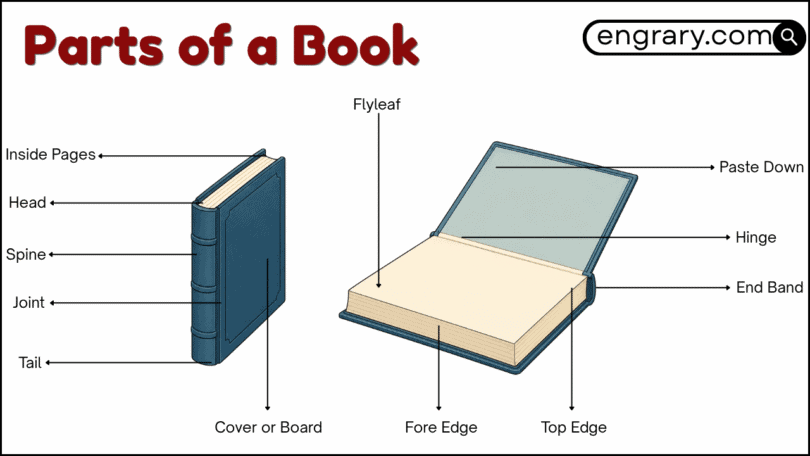
Parts of a book are the sections and elements that make up a complete publication. Together, these parts organize content and help readers move through the book from the first page to the last.
A labeled diagram makes book structure easier to understand because it shows where each part is located. While some parts protect and identify the book, others help readers find, understand, and reference information.
Parts of a Book With Labeled Diagram
Parts of a book with a labeled diagram show the main sections and elements of a book in a visual format. Together, these labels help students, teachers, and readers identify the structure of a book more easily.
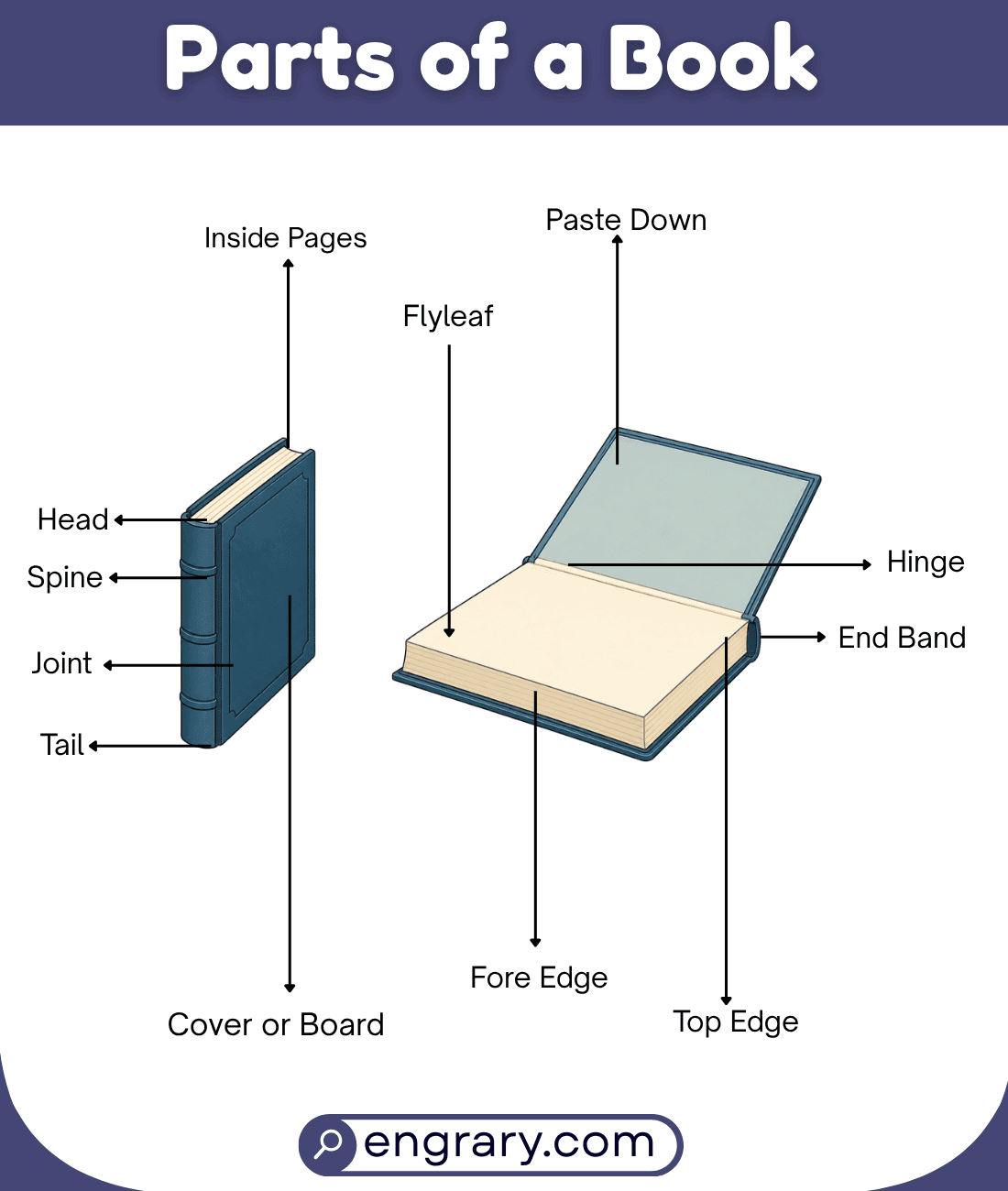
What Are the Parts of a Book?
The parts of a book are the sections that organize its content and information. These parts help readers identify the book, navigate its pages, and understand how the material is arranged.
Most books contain external parts, front matter, body matter, and back matter. Each section serves a different purpose and contributes to the overall structure of the publication.
Main Parts of a Book
The main parts of a book work together to organize content and improve the reading experience. These sections help readers identify the book, navigate information, and understand how the content is structured.
Front Matter
Front matter is the section that appears before the main content of a book. It introduces the publication and provides important information for readers.
Body Matter
Body matter contains the main content of the book. It includes chapters, lessons, stories, or information that readers came to read.
Back Matter
Back matter appears after the main content. It provides reference materials, supporting information, and additional resources.
Front Cover
The front cover is the outer front part of a book. It displays the title, author name, and cover design while protecting the pages inside.
Spine
The spine is the side section that connects the front and back covers. It helps readers identify the book when it is placed on a shelf.
Back Cover
The back cover is the outer rear section of the book. It often contains a summary, reviews, publisher details, or a barcode.
Title Page
The title page displays the book title, author name, and publisher information. It serves as the primary identification page inside the book.
Table of Contents
The table of contents lists chapters and major sections in order. It helps readers locate information quickly.
Chapter
A chapter is a major division of a book’s content. It organizes information into smaller and easier-to-read sections.
Heading
A heading introduces a major topic within the content. It helps readers understand what a section is about.
Subheading
A subheading divides a larger topic into smaller sections. It improves organization and makes information easier to follow.
Illustration
An illustration is a picture, diagram, chart, or image included in a book. It supports learning and helps explain information visually.
Glossary
A glossary is a list of important words and their meanings. It helps readers understand unfamiliar terms used in the book.
Index
An index is an alphabetical list of topics and page numbers. It helps readers find specific information quickly.
Appendix
An appendix contains additional information related to the main content. It provides extra details without interrupting the flow of the book.
External Parts of a Book
External parts are visible before the book is opened. Together, these parts protect the publication and help readers recognize it.
Front Cover
Located on the front of the book, the front cover displays the title, author name, and cover design. It protects the pages and creates the first impression of the book.
Spine
Positioned along the side edge, the spine connects the front and back covers. It usually displays the title and author for easy identification on a shelf.
Back Cover
Found on the rear outside surface, the back cover often contains a summary, reviews, a barcode, or publisher information. It helps readers learn more about the book before reading it.
Dust Jacket
Used on many hardcover books, the dust jacket is a removable paper cover. It protects the book and often includes artwork, reviews, and author information.
Binding
Binding is the structure that holds the pages and covers together. It keeps the book secure and allows pages to open and turn smoothly.
Internal Parts of a Book
Internal parts are the sections found inside the covers. Together, these parts organize information and guide readers through the publication.
The inside of a book is generally divided into front matter, body matter, and back matter. Each section has a specific role in presenting and supporting the content.
Front Matter Parts
Front matter appears before the main content of a book. Together, these parts introduce the publication and provide important details for readers.
Half Title Page
The half title page displays only the title of the book. It usually appears before the full title page.
Title Page
The title page shows the book title, author name, and publisher. It serves as the primary identification page inside the book.
Copyright Page
The copyright page contains legal and publication information. It may include copyright notices, edition details, ISBN numbers, and publisher information.
Dedication Page
The dedication page allows the author to honor a person or group. It often appears near the beginning of the book.
Foreword
A foreword is an introductory section written by someone other than the author. It explains the value or significance of the book.
Preface
The preface is an introduction written by the author. It explains the purpose, background, or inspiration behind the book.
Acknowledgments
Acknowledgments are used to thank people who contributed to the creation of the book. They recognize supporters, editors, researchers, and other contributors.
Introduction
The introduction prepares readers for the main content. It provides background information and explains what the book will cover.
Body Matter Parts
Body matter forms the main section of a book. Together, these parts present the information, lessons, stories, or ideas contained in the publication.
Chapter
A chapter is a major division of the main content. It organizes information into smaller, easier-to-read sections.
Main Text
The main text is the primary written content of the book. It contains the information or story readers came to read.
Heading
A heading introduces a major topic within the content. It helps readers understand the organization of the material.
Subheading
A subheading divides a larger topic into smaller sections. It improves readability and organization.
Illustration
An illustration is a picture, drawing, diagram, chart, or image included in a book. It helps explain information visually.
Table
A table presents information in rows and columns. It helps readers compare and understand data quickly.
Chart
A chart displays information in a visual format. It helps readers identify patterns, relationships, and trends.
Page Number
A page number is a numbered marker found on a page. It helps readers locate chapters, sections, and specific information.
Back Matter Parts
Back matter appears after the main content of a book. These parts give readers extra information, source details, definitions, and tools for finding topics.
Glossary
A glossary is a list of important words and their meanings. It helps readers understand key terms used in the book.
Appendix
An appendix is a section that adds extra information related to the main content. It supports the book without interrupting the main reading flow.
Bibliography
A bibliography is a list of books, articles, websites, or sources used during research. It helps readers find more information about the topic.
References
References are detailed source citations included in a book. They show where specific facts, ideas, or research information came from.
Endnotes
Endnotes are notes placed at the end of a chapter or book. They provide extra explanation without crowding the main text.
Index
An index is an alphabetical list of topics, names, and keywords with page numbers. It helps readers find information quickly.
Afterword
An afterword is a closing section placed after the main content. It may share final thoughts, updates, or reflections about the book.
Parts of a Book and Their Functions
Each part of a book has a specific role. Some parts help identify the book, while others organize content or support learning.
| Part | Function |
|---|---|
| Front Cover | Protects the book and shows key details |
| Spine | Helps identify the book on a shelf |
| Title Page | Shows the title, author, and publisher |
| Table of Contents | Helps readers find sections |
| Chapter | Organizes the main content |
| Glossary | Explains important terms |
| Bibliography | Lists research sources |
| Index | Helps readers locate topics |
Parts of a Fiction Book vs Nonfiction Book
Fiction and nonfiction books share some parts, but they are not always structured the same way. Fiction books focus on story, while nonfiction books focus on facts, information, and explanation.
| Fiction Book | Nonfiction Book |
|---|---|
| Prologue | Introduction |
| Chapters | Chapters |
| Story Content | Informational Content |
| Epilogue | Appendix |
| Characters | References |
| Narrative Structure | Bibliography |
Parts of a Textbook
Textbooks include many regular book parts, but they also contain learning features. These parts help students understand lessons, review ideas, and study important information.
Unit Title
A unit title introduces a major group of lessons. It helps students understand the main topic of a larger section.
Lesson Title
A lesson title names a smaller learning section. It guides students to a specific topic within the unit.
Learning Objectives
Learning objectives explain what students should learn. They give a clear purpose for the lesson or chapter.
Chapter Sections
Chapter sections divide textbook information into smaller parts. They help students study one topic at a time.
Illustrations
Illustrations include pictures, diagrams, maps, or charts. They support visual learning and make ideas easier to understand.
Activities
Activities are tasks or exercises included in a textbook. They help students practice what they have learned.
Review Questions
Review questions appear at the end of a lesson or chapter. They help students check their understanding.
Glossary
A textbook glossary explains important academic words. It helps students learn subject-specific vocabulary.
Index
The index helps students find topics, names, and keywords. It is useful for review and quick reference.
Common Mistakes When Learning Book Parts
Many learners confuse book parts because some sections look similar or appear close together. Knowing each part’s purpose makes identification easier.
Confusing the Cover and Title Page
The cover is found outside the book. The title page appears inside and gives formal publication details.
Confusing the Foreword and Preface
A foreword is usually written by someone other than the author. A preface is written by the author.
Confusing the Glossary and Index
A glossary explains word meanings. An index shows where topics appear in the book.
Confusing Chapters and Sections
Chapters are major divisions of the main content. Sections are smaller parts within chapters.
Assuming Every Book Has the Same Parts
Not every book contains a glossary, appendix, foreword, or index. The parts included depend on the type and purpose of the book.
Why Understanding Book Parts Matters
Understanding book parts helps readers use books more effectively. It improves reading, studying, research, and navigation.
Students can find information faster, while writers and teachers can organize content more clearly. Knowing book structure also helps readers understand how different types of books are built.
Parts of a Book Key Takeaways
The parts of a book work together to organize content and improve the reading experience. External parts help protect and identify the book, while front matter introduces the publication, body matter contains the main content, and back matter provides reference tools and supporting information.
Understanding book parts helps students, teachers, writers, and readers navigate books more effectively. A labeled diagram makes these sections easier to identify, while knowledge of book structure improves reading, studying, research, and publishing skills.
FAQs
The main parts of a book are external parts, front matter, body matter, and back matter. These sections organize the book from the outside cover to the final reference pages.
Front matter is the section that appears before the main content. It may include the title page, copyright page, dedication, foreword, preface, acknowledgments, and introduction.
Body matter is the main content section of a book. It includes chapters, main text, headings, illustrations, tables, and page numbers.
Back matter appears after the main content. It may include a glossary, appendix, bibliography, references, index, endnotes, and afterword.
Optional parts include the dedication page, foreword, preface, acknowledgments, appendix, bibliography, glossary, index, and afterword. The included parts depend on the book type and purpose.
You May Also Like