Saying I understand is simple and useful, but it does not always fit every situation in the same way. Sometimes you want to show basic understanding, sometimes empathy, and sometimes a more professional or supportive response. Using the right phrase can make your English sound more natural and more thoughtful.
This guide shares different ways to say I understand in English, along with simple meanings and examples. You will also see which phrases work best in casual conversations, friendly situations, workplace communication, and texts or chats.
Common Alternatives to I Understand
These are some of the most common and useful alternatives to I understand. They work well in many everyday situations.
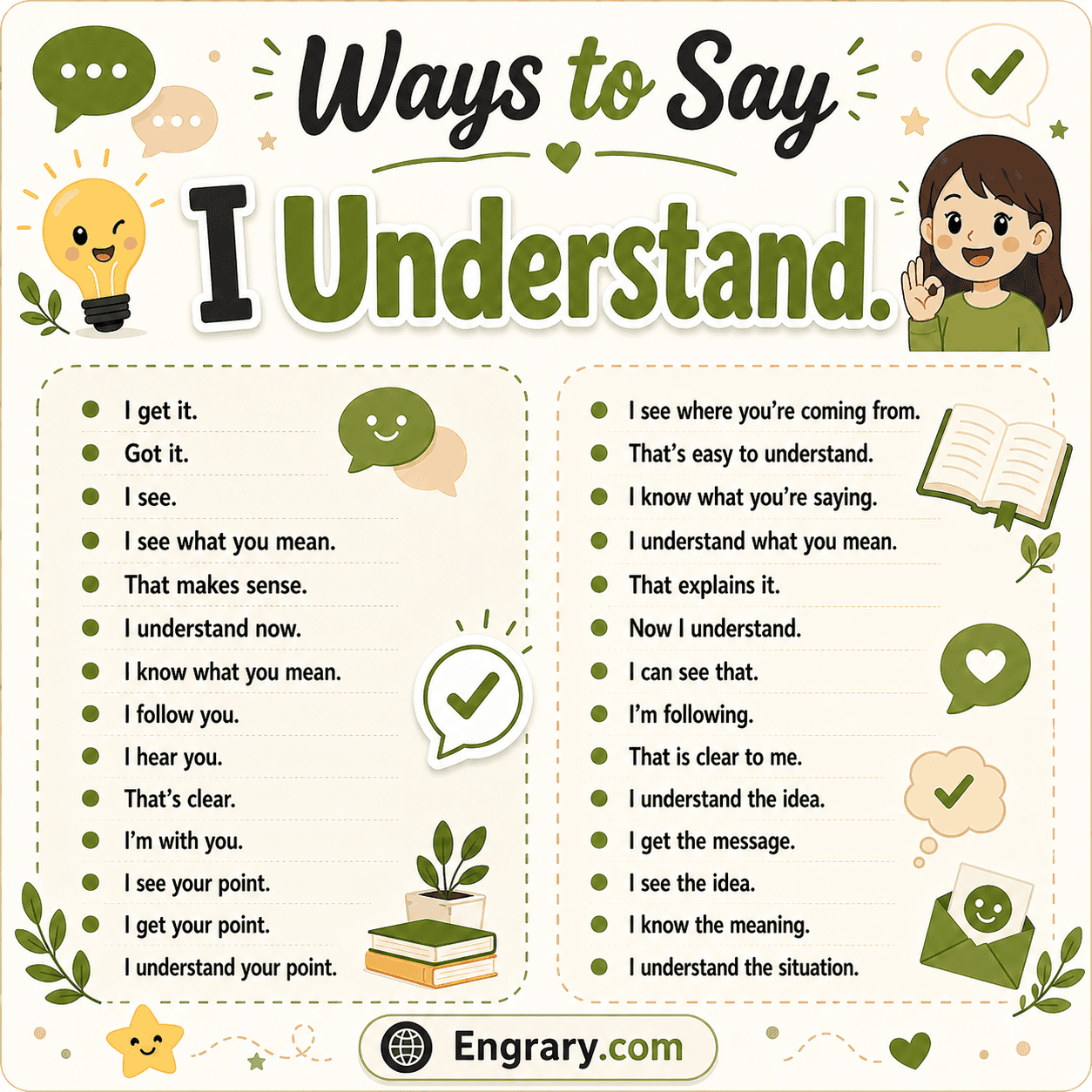
- I understand: the standard phrase for showing that you understand something.
Example: I understand what you mean. - I see: a natural and common alternative.
Example: I see, that explains it. - I get it: casual and very common in speech.
Example: I get it now. - That makes sense: useful when something seems logical or clear.
Example: That makes sense to me. - I understand what you mean: fuller and more specific.
Example: I understand what you mean. - I know what you mean: common when sharing the same feeling or idea.
Example: I know what you mean. - I follow you: useful when someone is explaining a point or idea.
Example: I follow you so far. - I see your point: good when someone is giving an opinion or argument.
Example: I see your point. - Got it: short and common for instructions or information.
Example: Got it. - I hear you: often used when acknowledging someone’s feelings or frustration.
Example: I hear you.
Polite and Formal Ways to Say I Understand
These phrases work best when you want to sound respectful, polished, or more formal.
- I understand: still one of the safest formal choices.
Example: I understand your concern. - I understand your point: polite and clear.
Example: I understand your point. - I see what you mean: formal enough in many respectful conversations.
Example: I see what you mean. - I understand the situation: useful in careful or professional discussion.
Example: I understand the situation. - I appreciate your explanation: shows understanding and respect.
Example: I appreciate your explanation. - I acknowledge that: formal and measured.
Example: I acknowledge that. - That is clear: useful when confirming information.
Example: That is clear. - I follow your reasoning: strong for thoughtful or academic discussion.
Example: I follow your reasoning. - I understand your concern: especially useful in sensitive or professional situations.
Example: I understand your concern. - I appreciate your perspective: respectful and thoughtful.
Example: I appreciate your perspective.
Casual and Everyday Ways to Say I Understand
These phrases sound relaxed and natural in daily conversation.
- I get it: one of the most common casual alternatives.
Example: I get it. - I see: simple and natural.
Example: I see. - Got it: short and common.
Example: Got it. - Makes sense: casual and clear.
Example: Makes sense. - I know what you mean: useful in everyday agreement or shared understanding.
Example: I know what you mean. - I hear you: common in supportive conversations.
Example: I hear you. - I follow: natural when someone is explaining something.
Example: I follow. - Okay, I get it: casual and direct.
Example: Okay, I get it now. - Right, I see: common in speech.
Example: Right, I see. - That makes sense to me: casual but still thoughtful.
Example: That makes sense to me.
Friendly and Empathetic Ways to Show Understanding
These phrases sound warmer and more personal than basic understanding replies.
- I hear you: warm and supportive.
Example: I hear you. - I understand how you feel: useful when someone is upset or emotional.
Example: I understand how you feel. - I get where you’re coming from: friendly and conversational.
Example: I get where you’re coming from. - I can see why you feel that way: thoughtful and empathetic.
Example: I can see why you feel that way. - That sounds really difficult: useful when responding to someone’s problem.
Example: That sounds really difficult. - I understand your frustration: warm and supportive.
Example: I understand your frustration. - I know this is hard: gentle and caring.
Example: I know this is hard. - I can imagine how that feels: empathetic and personal.
Example: I can imagine how that feels. - I see why that matters to you: useful for emotional or personal concerns.
Example: I see why that matters to you. - I understand your situation: supportive and clear.
Example: I understand your situation.
Professional Alternatives to I Understand at Work
These phrases work especially well with coworkers, managers, clients, or in meetings.
- Understood: one of the safest workplace alternatives.
Example: Understood, I’ll take care of it. - I understand: still very strong in professional communication.
Example: I understand the issue. - I see your point: useful in discussions and meetings.
Example: I see your point. - That makes sense: natural and professional in many settings.
Example: That makes sense. - I follow your reasoning: useful for more detailed discussions.
Example: I follow your reasoning. - I understand the concern: strong for formal or client-facing replies.
Example: I understand the concern. - I appreciate the clarification: polite and professional.
Example: I appreciate the clarification. - I see what you mean: clear and workplace-safe.
Example: I see what you mean. - That is clear: useful for confirming instructions or next steps.
Example: That is clear. - I understand the next steps: strong for process, tasks, and workflow.
Example: I understand the next steps.
Ways to Say I Understand in Texts and Chats
These phrases are short, natural, and easy to use in messages.
- Got it: one of the most common text replies.
Example: Got it. - I get it: casual and natural.
Example: I get it. - I see: simple and clear.
Example: I see. - Makes sense: very common in chat.
Example: Makes sense. - Understood: short and useful in work chats.
Example: Understood. - Okay, got it: natural and easygoing.
Example: Okay, got it. - I hear you: useful in supportive chats.
Example: I hear you. - Yep, I get it: casual and friendly.
Example: Yep, I get it. - Right, I see: common in quick replies.
Example: Right, I see. - Gotcha: very casual and conversational.
Example: Gotcha.
Stronger Phrases to Show Understanding and Support
Sometimes you want your response to sound deeper or more emotionally supportive than plain understanding.
- I completely understand: stronger than a plain I understand.
Example: I completely understand. - I understand exactly what you mean: clear and strong.
Example: I understand exactly what you mean. - I really understand how you feel: emotionally supportive.
Example: I really understand how you feel. - I can completely see your point: stronger and more thoughtful.
Example: I can completely see your point. - I totally get it: casual but strong.
Example: I totally get it. - I understand why this matters: useful in emotional or meaningful situations.
Example: I understand why this matters. - I fully understand your concern: polished and supportive.
Example: I fully understand your concern. - I truly understand your frustration: warm and empathetic.
Example: I truly understand your frustration. - I can see exactly why you feel that way: strong emotional understanding.
Example: I can see exactly why you feel that way. - I understand and I’m here for you: supportive and caring.
Example: I understand and I’m here for you.
How to Choose the Right I Understand Phrase
Choose the phrase based on what kind of understanding you want to show. For simple everyday understanding, phrases like I see, I get it, or got it work well. If you want to sound more polite or formal, I appreciate your explanation, I acknowledge that, or I understand your concern may fit better. In emotional situations, warmer phrases like I hear you, I understand how you feel, or I can see why you feel that way sound more supportive. At work, understood, that is clear, or I appreciate the clarification are often better than casual replies.
What to Say Instead of I Understand in Different Situations
Sometimes the best phrase depends on the exact situation.
- I see: best for simple understanding.
- I get it: best for casual daily conversation.
- That makes sense: best when something seems logical.
- I see your point: best for opinions and arguments.
- I hear you: best for emotional understanding.
- I understand your concern: best for sensitive or professional replies.
- Understood: best for workplace communication.
- I appreciate your perspective: best for respectful acknowledgment.
- I can see why you feel that way: best for empathy.
- I completely understand: best for stronger support or reassurance.
Summary
There are many ways to say I understand in English. Some sound casual, some formal, some professional, and some more empathetic or supportive.
The best phrase depends on whether you want to show simple understanding, acknowledgment, empathy, or emotional support. Once you understand the tone behind each option, it becomes much easier to choose the right one naturally.
FAQs
Another way to say I understand is I see, I get it, or that makes sense. The best choice depends on whether you want to sound casual, polite, or more supportive.
Formal alternatives include I appreciate your explanation, I acknowledge that, and I understand your concern. These work best in respectful or professional situations.
Friendly ways to say I understand include I hear you, I get where you’re coming from, and I know what you mean. These sound warmer and more personal than a plain reply.
At work, you can say understood, I appreciate the clarification, or that is clear. These sound more polished and professional than a casual response.
Empathetic ways to say I understand include I understand how you feel, I can see why you feel that way, and I understand your frustration. These are useful when you want to sound supportive and caring.
You May Also Like