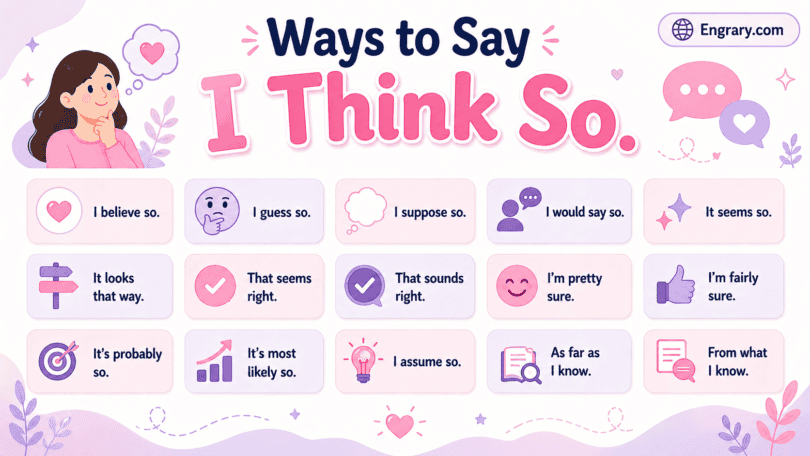
I think so is a common English phrase, but it does not always sound the same in every situation. Sometimes it means probably yes, sometimes it shows soft agreement, and sometimes it gives an uncertain confirmation when you are not fully sure.
This guide shares different ways to say I think so in English, along with simple meanings and examples. You will also see which phrases work best in casual conversations, friendly situations, workplace communication, and texts or chats.
Common Alternatives to I Think So
These are some of the most common and useful alternatives to I think so. They work well in many everyday situations.
- I think so: the standard phrase for a probable yes or uncertain confirmation.
Example: Do you think the store is open? I think so. - I believe so: slightly more confident and a little more polished.
Example: Is this the right file? I believe so. - I guess so: softer and more casual.
Example: Are we leaving now? I guess so. - Probably: short and natural when the answer is likely yes.
Example: Will she come? Probably. - It seems so: useful when something appears to be true.
Example: Is he upset? It seems so. - I suppose so: thoughtful and slightly hesitant.
Example: Should we wait? I suppose so. - Looks like it: natural in spoken English when something appears likely.
Example: Is it going to rain? Looks like it. - I’d say so: conversational and fairly confident.
Example: Was that the best choice? I’d say so. - That seems right: useful when something sounds correct.
Example: Is this the right answer? That seems right. - I think that’s right: similar to I think so, but a little more specific.
Example: Is Tuesday the meeting day? I think that’s right.
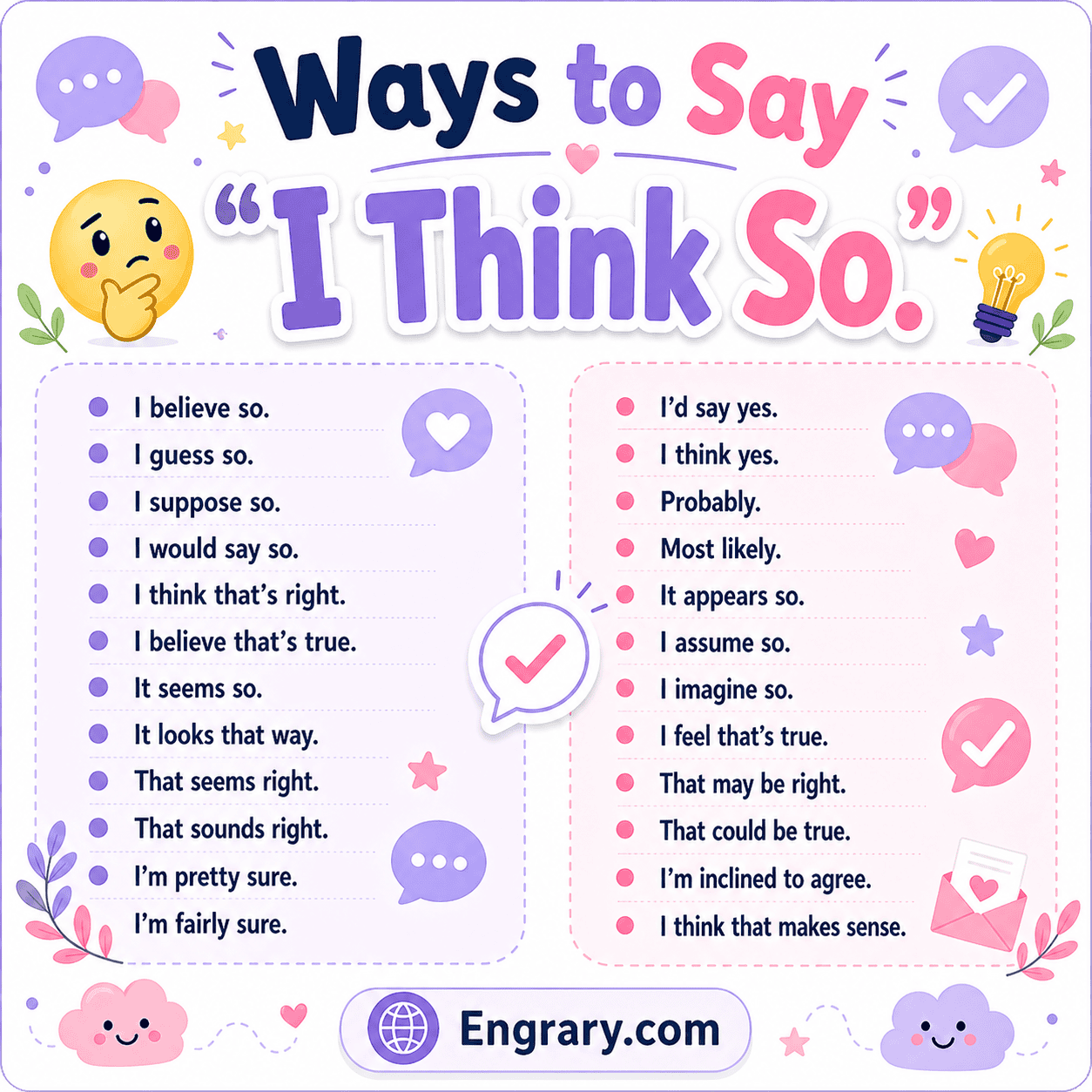
Polite and Formal Expressions for Tentative Yes
These phrases work best when you want to sound careful, respectful, or more formal.
- I believe so: one of the safest formal alternatives.
Example: Is that the final version? I believe so. - It appears so: formal and measured.
Example: Has the issue been resolved? It appears so. - That seems to be the case: polished and professional.
Example: Has the deadline changed? That seems to be the case. - I would say so: formal enough in many careful discussions.
Example: Would that be the correct interpretation? I would say so. - I think that is correct: clear and respectful.
Example: Is this the updated policy? I think that is correct. - It seems likely: useful when something is probably true.
Example: Will they approve it? It seems likely. - That appears to be right: formal and thoughtful.
Example: Is this the correct figure? That appears to be right. - I am inclined to think so: more polished and reflective.
Example: Do you think this will work? I am inclined to think so. - That would seem to be true: formal and careful.
Example: Is the report complete? That would seem to be true. - As far as I can tell, yes: useful when you want to sound accurate and cautious.
Example: Has everything been submitted? As far as I can tell, yes.
Casual and Everyday Ways to Say I Think So
These phrases sound relaxed and natural in daily conversation.
- I think so: still one of the most common casual choices.
Example: Are they home? I think so. - I guess so: casual and slightly uncertain.
Example: Should we leave now? I guess so. - Probably: short and common.
Example: Is he coming? Probably. - Looks like it: easy and conversational.
Example: Did they cancel the game? Looks like it. - I’d say so: natural and friendly.
Example: Was that a good idea? I’d say so. - Seems like it: casual and common in speech.
Example: Is she upset? Seems like it. - Could be: useful when you want to stay less certain.
Example: Is that what happened? Could be. - I suppose so: everyday but slightly thoughtful.
Example: Is this enough? I suppose so. - Yeah, I think so: very common in spoken English.
Example: Do you know him? Yeah, I think so. - I think that’s right: useful for casual confirmation.
Example: Is room 204 upstairs? I think that’s right.
Friendly Phrases for Soft Agreement
These phrases sound warmer and more personal than plain uncertain confirmation.
- I guess so: soft and easygoing.
Example: Should we try it? I guess so. - Yeah, I think so: friendly and natural.
Example: Is that the one? Yeah, I think so. - Looks like it: relaxed and conversational.
Example: Are they ready? Looks like it. - I’d say so: friendly and lightly confident.
Example: Is she the best person for it? I’d say so. - I think you’re right: useful when you gently agree with someone.
Example: Do you think this is the best option? I think you’re right. - That seems right to me: warm and thoughtful.
Example: Is this the correct road? That seems right to me. - I’m pretty sure: a little stronger than I think so.
Example: Is this his bag? I’m pretty sure. - I think that sounds right: natural for confirming an idea or detail.
Example: Is six o’clock the meeting time? I think that sounds right. - Seems that way: casual and friendly.
Example: Do they already know? Seems that way. - I’d go with yes: useful when you want to sound conversational and supportive.
Example: Should we approve it? I’d go with yes.
Professional Alternatives to I Think So at Work
These phrases work especially well with coworkers, managers, clients, or in meetings.
- I believe so: professional and measured.
Example: Is that the latest version? I believe so. - It appears so: clear and workplace-safe.
Example: Has the payment been processed? It appears so. - That seems to be the case: polished and professional.
Example: Has the schedule been finalized? That seems to be the case. - As far as I can tell, yes: useful when you want to sound careful and accurate.
Example: Has everyone responded? As far as I can tell, yes. - That would seem correct: formal and cautious.
Example: Is this the approved format? That would seem correct. - It looks likely: useful for cautious forecasting.
Example: Will we meet the deadline? It looks likely. - I think that is accurate: clear and professional.
Example: Is this summary correct? I think that is accurate. - From what I can see, yes: natural in workplace communication.
Example: Has the issue been fixed? From what I can see, yes. - That appears to be right: polished and neutral.
Example: Is this the right account number? That appears to be right. - At this stage, I believe so: very useful when the answer may still change.
Example: Are we still on schedule? At this stage, I believe so.
Text and Chat Replies for I Think So
These phrases are short, natural, and easy to use in messages.
- I think so: still very common in chat.
Example: I think so. - Probably: quick and natural.
Example: Probably. - I guess so: casual and soft.
Example: I guess so. - Looks like it: easy and conversational.
Example: Looks like it. - Seems so: short and simple.
Example: Seems so. - Maybe: useful when you want to stay even less certain.
Example: Maybe. - Yeah, I think so: friendly and common in messages.
Example: Yeah, I think so. - Kinda seems like it: very casual and chatty.
Example: Kinda seems like it. - I’d say yeah: informal and natural.
Example: I’d say yeah. - Pretty sure: stronger and quick.
Example: Pretty sure.
Softer Phrases for Uncertain Confirmation
Sometimes I think so is not really strong agreement. It is a soft yes that still leaves room for doubt.
- I guess so: one of the softest alternatives.
Example: Will it work? I guess so. - I suppose so: thoughtful and hesitant.
Example: Is that okay? I suppose so. - Probably: likely yes, but not certain.
Example: Will they join us? Probably. - It seems so: useful when something appears true.
Example: Is he serious? It seems so. - Maybe: weaker and more uncertain than I think so.
Example: Are they coming? Maybe. - I’m not completely sure, but yes: very clear when you want to sound honest.
Example: Is this the final draft? I’m not completely sure, but yes. - I think that’s right: soft and careful.
Example: Is this the correct answer? I think that’s right. - That seems likely: useful when the answer feels probable.
Example: Will the weather improve? That seems likely. - It looks that way: common for visible or likely situations.
Example: Is the meeting canceled? It looks that way. - As far as I know, yes: helpful when you want to show limited certainty.
Example: Has she already left? As far as I know, yes.
How to Choose the Right I Think So Phrase
Choose the phrase based on how certain you want to sound. If you want to give a simple probable yes, phrases like probably, I think so, or I’d say so work well. If you want to sound softer or less committed, I guess so, I suppose so, or maybe fit better. In formal or workplace settings, clearer options like I believe so, that seems to be the case, or as far as I can tell, yes sound more polished. It also helps to think about whether you are speaking casually, replying in a professional setting, or sending a quick message.
What to Say Instead of I Think So in Different Situations
Sometimes the best phrase depends on the exact situation.
- I believe so: best for professional or careful confirmation.
- I guess so: best for soft casual agreement.
- Probably: best for a quick likely yes.
- That seems to be the case: best for formal or workplace use.
- Looks like it: best for everyday spoken English.
- I’d say so: best for friendly, conversational confirmation.
- As far as I can tell, yes: best for careful accuracy.
- It appears so: best for polished formal use.
- I’m pretty sure: best when you want to sound slightly more confident.
- That seems right: best when confirming a detail or fact.
Summary
There are many ways to say I think so in English. Some sound casual, some formal, some professional, and some softer or more uncertain.
The best phrase depends on whether you want to show probable yes, weak agreement, uncertain confirmation, or soft approval. Once you understand the tone behind each option, it becomes much easier to choose the right one naturally.
FAQs
Another way to say I think so is I believe so, I guess so, or probably. The best choice depends on whether you want to sound casual, formal, or more careful.
Formal alternatives include I believe so, it appears so, and that seems to be the case. These work best in respectful or professional situations.
Friendly ways to say I think so include yeah, I think so, I’d say so, and I think you’re right. These sound warmer and more personal than a plain uncertain reply.
At work, you can say I believe so, as far as I can tell, yes, or that appears to be right. These sound clearer and more professional than a vague reply.
Soft ways to say I think so include I guess so, I suppose so, and maybe. These are useful when you want to sound uncertain or noncommittal.
You May Also Like