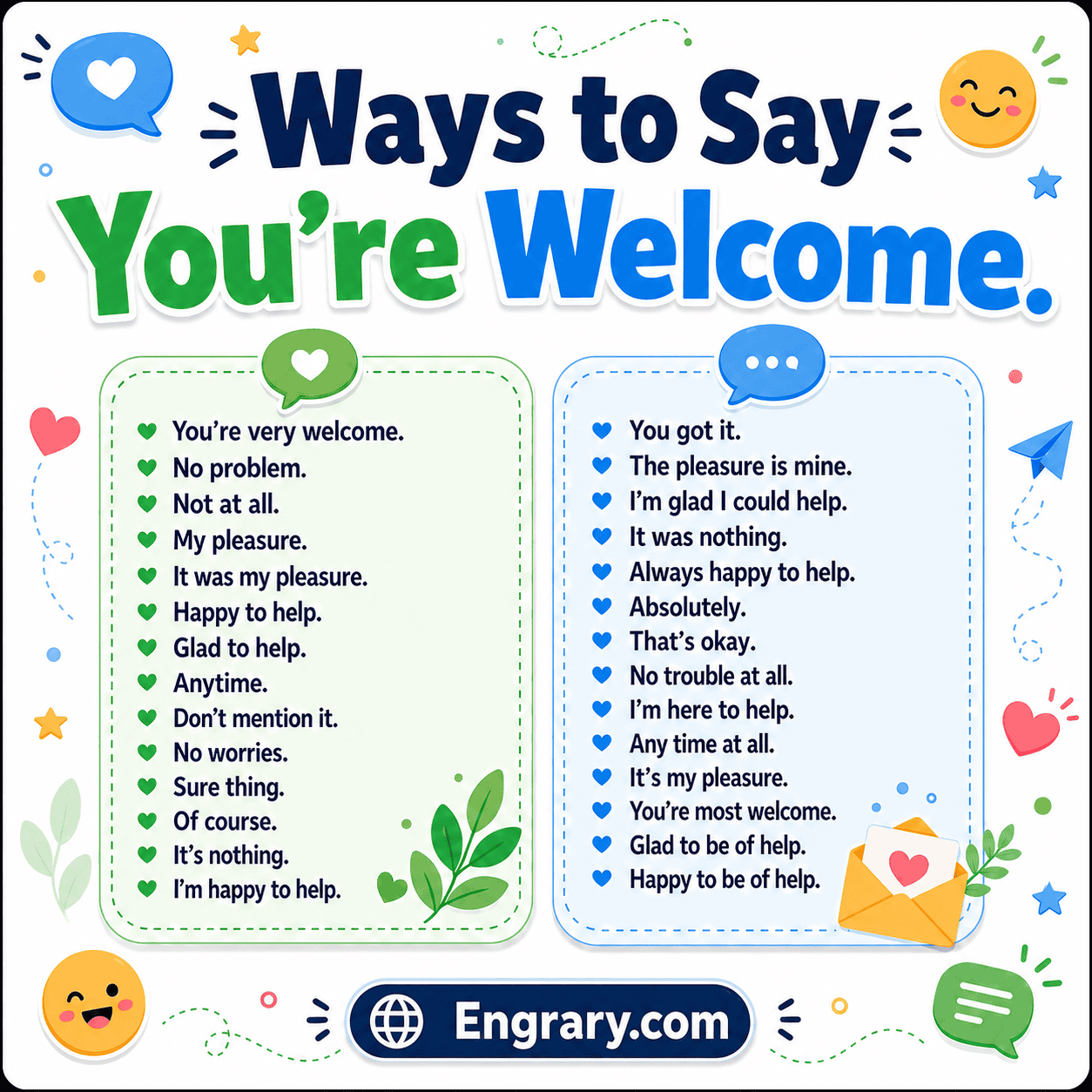
Saying you’re welcome is one of the most common ways to reply when someone thanks you. Still, English offers many other options, and the best one depends on the situation, the person, and the tone you want. Some replies mean it was no trouble, some mean I was happy to help, and others sound more formal or professional.
This guide shares different ways to say you’re welcome in English, along with simple meanings and examples. You will also see which phrases work best in casual conversations, friendly situations, workplace communication, and text messages.
Common Ways to Say You’re Welcome
These are some of the most common and useful alternatives to you’re welcome. They work well in many everyday situations.
- You’re welcome: the standard phrase and the safest choice in almost every situation.
Example: You’re welcome. - No problem: a very common reply that shows helping was not a burden.
Example: No problem. - No worries: relaxed and friendly, often used in casual conversation.
Example: No worries. - My pleasure: polite and warm, often used when you are happy to help.
Example: My pleasure. - Of course: natural and friendly, especially when the help felt easy or expected.
Example: Of course. - Anytime: casual and supportive, suggesting you would help again.
Example: Anytime. - Glad to help: clear and warm, especially when you want to sound supportive.
Example: Glad to help. - It was nothing: a modest reply that suggests the help was small.
Example: It was nothing. - Don’t mention it: a classic reply meaning the thanks is not necessary.
Example: Don’t mention it. - Sure thing: casual and easygoing.
Example: Sure thing.
Formal Ways to Say You’re Welcome
These phrases work best when you want to sound respectful, polished, or formal.
- You’re very welcome: a more polished version of the standard reply.
Example: You’re very welcome. - It was my pleasure: formal, warm, and very natural.
Example: It was my pleasure. - The pleasure was mine: polished and slightly more refined.
Example: The pleasure was mine. - I’m happy to help: respectful but still warm.
Example: I’m happy to help. - Certainly: short, formal, and professional.
Example: Certainly. - Not at all: formal and understated.
Example: Not at all. - It was no trouble at all: polite and reassuring.
Example: It was no trouble at all. - Please don’t mention it: formal and traditional in tone.
Example: Please don’t mention it. - I’m glad I could assist: useful in service, workplace, or formal situations.
Example: I’m glad I could assist. - It was my privilege: best when the situation is especially respectful or important.
Example: It was my privilege.
Casual Ways to Say You’re Welcome
These phrases sound relaxed and natural in daily conversation.
- No problem: one of the most common casual replies.
Example: No problem. - No worries: easygoing and friendly.
Example: No worries. - Sure thing: relaxed and helpful.
Example: Sure thing. - Anytime: casual and supportive.
Example: Anytime. - You got it: natural and friendly.
Example: You got it. - Of course: casual but still polite.
Example: Of course. - Don’t worry about it: suggests the favor was not a big deal.
Example: Don’t worry about it. - Happy to help: casual but warm.
Example: Happy to help. - No big deal: very relaxed and common in informal speech.
Example: No big deal. - It’s okay: simple and casual in everyday use.
Example: It’s okay.
Friendly Ways to Say You’re Welcome
These phrases sound warmer and more personal than basic casual replies.
- Glad to help: warm and natural.
Example: Glad to help. - Happy to help: supportive and friendly.
Example: Happy to help. - Anytime: suggests you would help again.
Example: Anytime. - Of course: friendly and easy to use.
Example: Of course. - You’re welcome: still works well when you want to stay simple and kind.
Example: You’re welcome. - It was nothing: modest and friendly.
Example: It was nothing. - Don’t mention it: warm and reassuring.
Example: Don’t mention it. - Always happy to help: slightly warmer than plain happy to help.
Example: Always happy to help. - No trouble at all: friendly and reassuring.
Example: No trouble at all. - I’m glad I could help: clear and personal.
Example: I’m glad I could help.
Professional Ways to Say You’re Welcome at Work
These phrases work especially well with coworkers, managers, clients, customers, or professional contacts.
- You’re very welcome: polished and safe in workplace settings.
Example: You’re very welcome. - My pleasure: professional and warm.
Example: My pleasure. - Certainly: concise and highly professional.
Example: Certainly. - I’m happy to help: supportive without sounding too casual.
Example: I’m happy to help. - I’m glad I could assist: very strong for professional or service-based situations.
Example: I’m glad I could assist. - It was no trouble at all: polished and reassuring.
Example: It was no trouble at all. - Of course: acceptable in many work settings when the tone is friendly.
Example: Of course. - Please let me know if you need anything else: especially strong in customer service and workplace follow-up.
Example: Please let me know if you need anything else. - Happy to be of help: professional and supportive.
Example: Happy to be of help. - I’m always glad to support: best in ongoing team or client relationships.
Example: I’m always glad to support.
Ways to Say You’re Welcome in Text Messages
These phrases are short, natural, and easy to send in chats or messages.
- No problem: one of the most common text replies.
Example: No problem. - No worries: casual and very common in messages.
Example: No worries. - Anytime: short and supportive.
Example: Anytime. - Of course: simple and natural.
Example: Of course. - Sure thing: casual and quick.
Example: Sure thing. - You got it: friendly and natural in chat.
Example: You got it. - Happy to help: short enough for text but still warm.
Example: Happy to help. - NP: a texting abbreviation for no problem.
Example: NP. - All good: very relaxed and message-friendly.
Example: All good. - No biggie: playful and informal.
Example: No biggie.
Warmer or More Supportive Ways to Say You’re Welcome
Sometimes you want your reply to sound more caring or more supportive than a plain you’re welcome.
- I’m glad I could help: warm and sincere.
Example: I’m glad I could help. - Always happy to help: supportive and friendly.
Example: Always happy to help. - It was the least I could do: modest and caring.
Example: It was the least I could do. - Of course, anytime: warm and reassuring.
Example: Of course, anytime. - That’s what I’m here for: caring and encouraging.
Example: That’s what I’m here for. - I’m just glad it helped: useful when the result mattered more than the effort.
Example: I’m just glad it helped. - No trouble at all: reassuring and kind.
Example: No trouble at all. - I’m happy I could be of help: supportive with a slightly more polished tone.
Example: I’m happy I could be of help. - It means a lot that I could help: warm and personal.
Example: It means a lot that I could help. - I’m always here to help: supportive and reassuring.
Example: I’m always here to help.
How to Choose the Right “You’re Welcome” Alternative
Choose the phrase based on the situation, the person, and the kind of meaning you want to express. If you want to show that helping was easy, phrases like no problem, no worries, or it was nothing work well. When you want to sound warmer, my pleasure, glad to help, or happy to help may be better. In work or customer-facing settings, safer options like you’re very welcome, certainly, or I’m glad I could assist sound more polished. It also helps to think about whether you are speaking, texting, or replying in a professional setting, because the same phrase does not always sound equally natural everywhere.
What to Say Instead of You’re Welcome in Different Situations
Sometimes the best reply depends on what you want to imply.
- No problem: best when you mean it was no trouble.
- My pleasure: best when you want to sound polite and happy to help.
- Glad to help: best when you want to sound warm and useful.
- I’m happy to help: best for supportive or professional situations.
- Of course: best for friendly, natural conversation.
- Don’t mention it: best when you want to suggest thanks is not necessary.
- Please let me know if you need anything else: best for client service and professional follow-up.
- It was the least I could do: best for modest, caring replies.
- Certainly: best for formal or workplace-safe tone.
- Anytime: best when you want to show future willingness to help.
Summary
There are many ways to say you’re welcome in English. Some sound casual, some professional, some warm, and some more supportive.
The best phrase depends on the situation, your relationship with the other person, and whether you want to suggest no trouble, happy to help, or no need to thank me. Once you understand the tone behind each option, it becomes much easier to choose the right one naturally.
FAQs
Another way to say you’re welcome is no problem, my pleasure, or glad to help. The best choice depends on whether you want to sound casual, polite, or warm.
Formal alternatives include You’re very welcome, It was my pleasure, and I’m glad I could assist. These work best in respectful or professional situations.
Friendly ways to say you’re welcome include happy to help, anytime, and don’t mention it. These sound warmer and more personal than a plain standard reply.
In a text, you can say no problem, no worries, NP, or all good. Short and natural replies usually work best in messages.
Professional alternatives include my pleasure, certainly, and please let me know if you need anything else. These are especially useful in workplace, client, and customer-facing communication.
You May Also Like