“I appreciate it” is a polite and natural way to show gratitude in English. It works well in many situations, but sometimes you may want a phrase that sounds warmer, more formal, more professional, or more heartfelt.
This guide shares different ways to say I appreciate it in English, along with simple meanings and examples. You will also see which phrases work best in casual conversations, friendly situations, workplace communication, and email or writing.
Common Ways to Say I Appreciate It
These are some of the most common and useful alternatives to I appreciate it. They work well in many everyday situations.
- I appreciate it: the standard phrase and one of the safest choices in most situations.
Example: I appreciate it. - Thanks, I appreciate it: slightly warmer than the plain form.
Example: Thanks, I appreciate it. - I really appreciate it: a natural and slightly stronger version.
Example: I really appreciate it. - I truly appreciate it: more sincere and thoughtful in tone.
Example: I truly appreciate it. - Much appreciated: short, polite, and common in both speech and messages.
Example: Much appreciated. - That means a lot: useful when someone’s help mattered to you.
Example: That means a lot. - I appreciate your help: clearer and more specific than the plain phrase.
Example: I appreciate your help. - I’m thankful: natural and sincere.
Example: I’m thankful for your support. - I value your help: respectful and slightly more polished.
Example: I value your help. - I’m grateful: stronger and more personal than a quick thank-you.
Example: I’m grateful for your help.
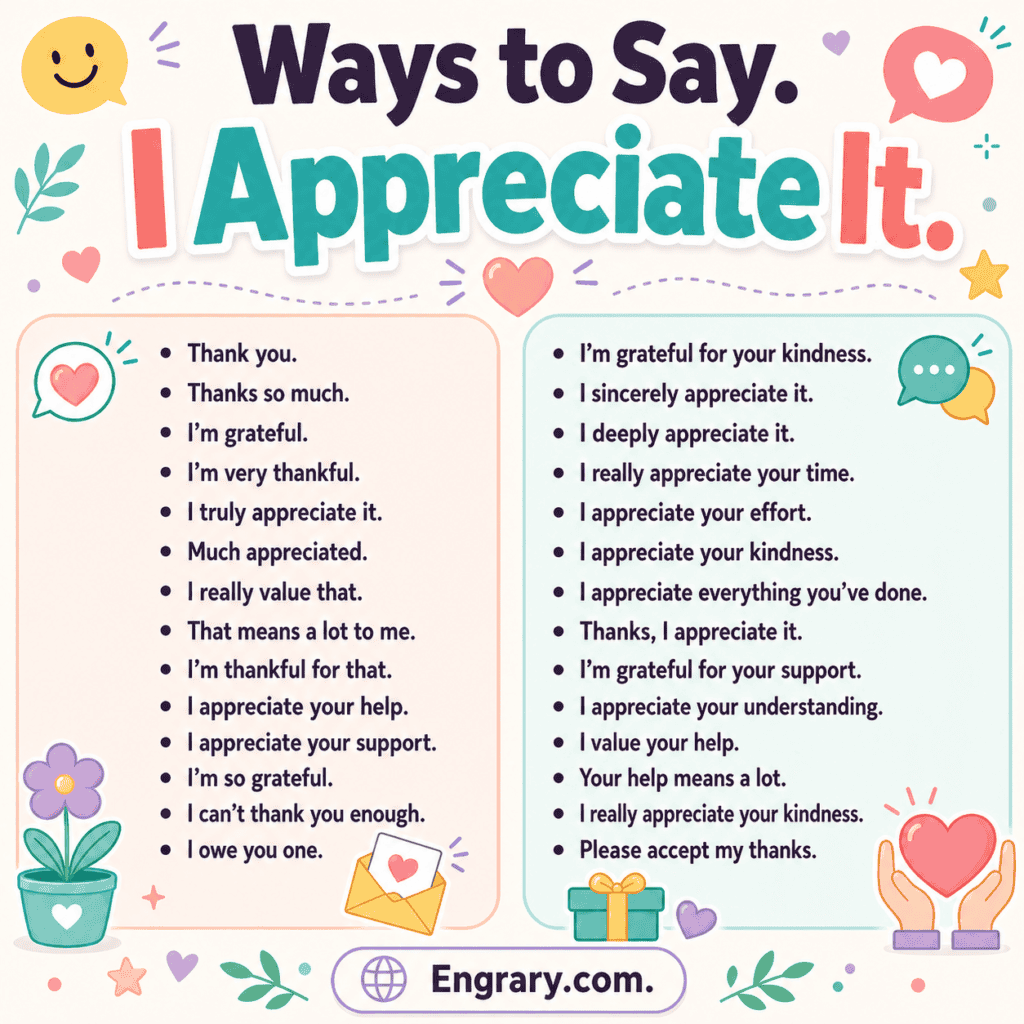
Formal Ways to Say I Appreciate It
These phrases work best when you want to sound respectful, polished, or formal.
- I sincerely appreciate it: polished and respectful.
Example: I sincerely appreciate it. - I truly appreciate your assistance: formal and professional.
Example: I truly appreciate your assistance. - I am very grateful: formal and clear without sounding too dramatic.
Example: I am very grateful for your help. - I deeply appreciate your support: strong and respectful.
Example: I deeply appreciate your support. - I genuinely appreciate your help: sincere and polished.
Example: I genuinely appreciate your help. - I value your assistance: formal and workplace-safe.
Example: I value your assistance. - I am sincerely thankful: formal and warm.
Example: I am sincerely thankful. - I greatly appreciate it: stronger than the standard phrase.
Example: I greatly appreciate it. - I appreciate your time and effort: useful when someone has made a real contribution.
Example: I appreciate your time and effort. - I am grateful for your support: formal and dependable.
Example: I am grateful for your support.
Casual Ways to Say I Appreciate It
These phrases sound relaxed and natural in daily conversation.
- Thanks, I appreciate it: simple and common.
Example: Thanks, I appreciate it. - Much appreciated: short and easygoing.
Example: Much appreciated. - I really appreciate it: casual but sincere.
Example: I really appreciate it. - Thanks, that means a lot: warm and natural.
Example: Thanks, that means a lot. - I owe you one: best when someone does you a favor.
Example: I owe you one. - Really appreciate it: informal and common in speech or text.
Example: Really appreciate it. - I appreciate that: natural when reacting to something kind or thoughtful.
Example: I appreciate that. - Thanks, that helped a lot: useful when someone’s action clearly made a difference.
Example: Thanks, that helped a lot. - Can’t thank you enough: stronger, but still common in informal conversation.
Example: Can’t thank you enough. - I’m grateful for that: casual but slightly deeper in tone.
Example: I’m grateful for that.
Friendly Ways to Say I Appreciate It
These phrases sound warmer and more personal than basic casual thanks.
- I really appreciate it: friendly and sincere.
Example: I really appreciate it. - That means a lot to me: personal and warm.
Example: That means a lot to me. - I’m so grateful: heartfelt and friendly.
Example: I’m so grateful. - I truly appreciate your help: warm and clear.
Example: I truly appreciate your help. - I appreciate you being there: especially useful for emotional support.
Example: I appreciate you being there. - I can’t thank you enough: strong, but still natural with close people.
Example: I can’t thank you enough. - I appreciate your kindness: good when the person was thoughtful or generous.
Example: I appreciate your kindness. - I’m thankful for your support: warm and supportive.
Example: I’m thankful for your support. - I really value this: simple and sincere.
Example: I really value this. - I appreciate it more than you know: strong and personal.
Example: I appreciate it more than you know.
Professional Ways to Say I Appreciate It at Work
These phrases work especially well with coworkers, managers, clients, interviewers, or professional contacts.
- I appreciate your support: professional and warm.
Example: I appreciate your support on this. - I truly appreciate your assistance: polished and workplace-safe.
Example: I truly appreciate your assistance. - I appreciate your time and effort: ideal when someone has put in real work.
Example: I appreciate your time and effort. - I value your input: especially useful with colleagues or managers.
Example: I value your input. - I am grateful for your help: respectful and professional.
Example: I am grateful for your help. - I sincerely appreciate your guidance: great for mentors, teachers, or supervisors.
Example: I sincerely appreciate your guidance. - I appreciate your prompt response: very useful in work email.
Example: I appreciate your prompt response. - I value your support: polished and adaptable.
Example: I value your support. - Thank you, I appreciate it: simple, professional, and safe.
Example: Thank you, I appreciate it. - I greatly appreciate your help on this: strong but still business-appropriate.
Example: I greatly appreciate your help on this.
Ways to Say I Appreciate It in Emails or Writing
Spoken appreciation and written appreciation do not always use the same wording naturally. In writing, especially in professional settings, fuller and more specific phrasing usually works better.
- I sincerely appreciate your support: polished and professional.
Example: I sincerely appreciate your support. - I truly appreciate your assistance: clear and formal.
Example: I truly appreciate your assistance. - I appreciate your time: excellent for meetings, interviews, and requests.
Example: I appreciate your time. - I value your help: concise and respectful.
Example: I value your help. - I am grateful for your response: strong for email replies.
Example: I am grateful for your response. - I appreciate your understanding: useful when discussing delays or changes.
Example: I appreciate your understanding. - I greatly appreciate your help: more emphatic in writing.
Example: I greatly appreciate your help. - Thank you, I appreciate it: simple and safe in many email contexts.
Example: Thank you, I appreciate it. - I appreciate your consideration: ideal for requests and formal notes.
Example: I appreciate your consideration. - I sincerely value your support: polished and professional.
Example: I sincerely value your support.
Stronger Ways to Say I Appreciate It
Sometimes plain I appreciate it is not enough. These phrases work better when you want to show deeper gratitude.
- I can’t tell you how much I appreciate it: strong and heartfelt.
Example: I can’t tell you how much I appreciate it. - I deeply appreciate it: serious and sincere.
Example: I deeply appreciate it. - I’m incredibly grateful: strong but natural.
Example: I’m incredibly grateful. - I truly can’t thank you enough: very strong gratitude.
Example: I truly can’t thank you enough. - This means so much to me: best when the help mattered emotionally.
Example: This means so much to me. - I appreciate it more than words can say: strong and expressive.
Example: I appreciate it more than words can say. - I sincerely appreciate everything: polished and heartfelt.
Example: I sincerely appreciate everything. - I’m deeply thankful: strong and sincere.
Example: I’m deeply thankful. - Your help means so much to me: warm and meaningful.
Example: Your help means so much to me. - I’m truly grateful for everything: heartfelt and natural.
Example: I’m truly grateful for everything.
How to Choose the Right “I Appreciate It” Phrase
Choose the phrase based on the situation, the person, and how strong your gratitude really is. For a small favor, simple options like much appreciated or thanks, I appreciate it usually work well. In work or formal writing, fuller phrases like I truly appreciate your assistance or I appreciate your time sound more polished. When the help is bigger or more personal, stronger options like I can’t thank you enough or I deeply appreciate it fit better. It also helps to think about whether you are speaking, texting, or writing an email, because the same phrase does not always sound equally natural in every format.
What to Say Instead of I Appreciate It in Different Situations
Sometimes the best phrase depends on what you are appreciating.
- Much appreciated: best for quick everyday appreciation.
- I truly appreciate your help: best for specific support.
- That means a lot: best for emotional or personal gratitude.
- I value your support: best for respectful professional appreciation.
- I’m grateful for your assistance: best for more formal help.
- I appreciate your time: best for meetings, interviews, and email.
- I really appreciate it: best for simple, sincere thanks.
- I can’t thank you enough: best for strong gratitude.
- I appreciate your understanding: best when someone has been patient or flexible.
- I deeply appreciate your support: best for significant help or encouragement.
Summary
There are many ways to say I appreciate it in English. Some sound casual, some formal, some professional, and some much more heartfelt.
The best phrase depends on the situation, your relationship with the other person, and how strong your gratitude is. Once you understand the tone behind each option, it becomes much easier to choose the right one naturally.
FAQs
Another way to say I appreciate it is much appreciated, I really appreciate it, or I’m grateful. The best choice depends on whether you want to sound casual, sincere, or more formal.
Formal alternatives include I sincerely appreciate it, I truly appreciate your assistance, and I am very grateful. These work best in respectful or professional situations.
Friendly ways to say I appreciate it include that means a lot to me, I’m so grateful, and I appreciate your kindness. These sound warmer and more personal than a plain thank-you.
In an email, you can say I appreciate your time, I sincerely appreciate your support, or I appreciate your consideration. These usually sound more polished than casual speech-based wording.
Stronger ways to say I appreciate it include I can’t tell you how much I appreciate it, I’m incredibly grateful, and this means so much to me. These are best when you want to express deeper appreciation.
You May Also Like