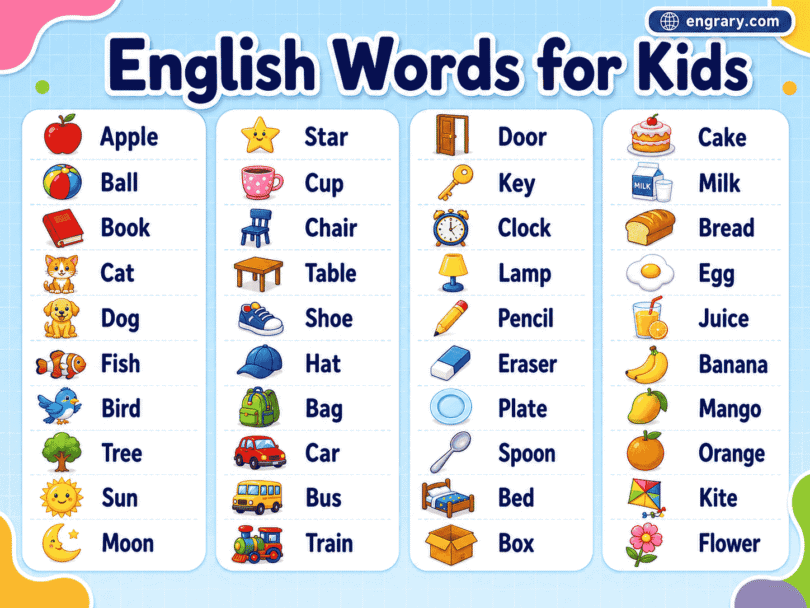
English words are easier for children to learn when they are connected with things they already know. Words about family, animals, food, school, toys, colors, actions, and weather feel simple because children see, hear, and use them in daily life.
When vocabulary is grouped by familiar topics, kids can understand new words faster and remember them for longer. The words in this list move from simple daily words to topic-based vocabulary, making them useful for reading practice, classroom lessons, flashcards, and picture vocabulary activities.
Common English Words for Kids
Common words help children begin speaking, reading, and understanding simple English.
- hello
- hi
- bye
- yes
- no
- please
- thanks
- sorry
- come
- go
- stop
- start
- sit
- stand
- walk
- run
- jump
- eat
- drink
- sleep
- wake
- play
- read
- write
- draw
- sing
- dance
- look
- see
- hear
- say
- ask
- open
- close
- give
- take
- make
- help
- wash
- clean
- big
- small
- hot
- cold
- good
- bad
- happy
- sad
- new
- old
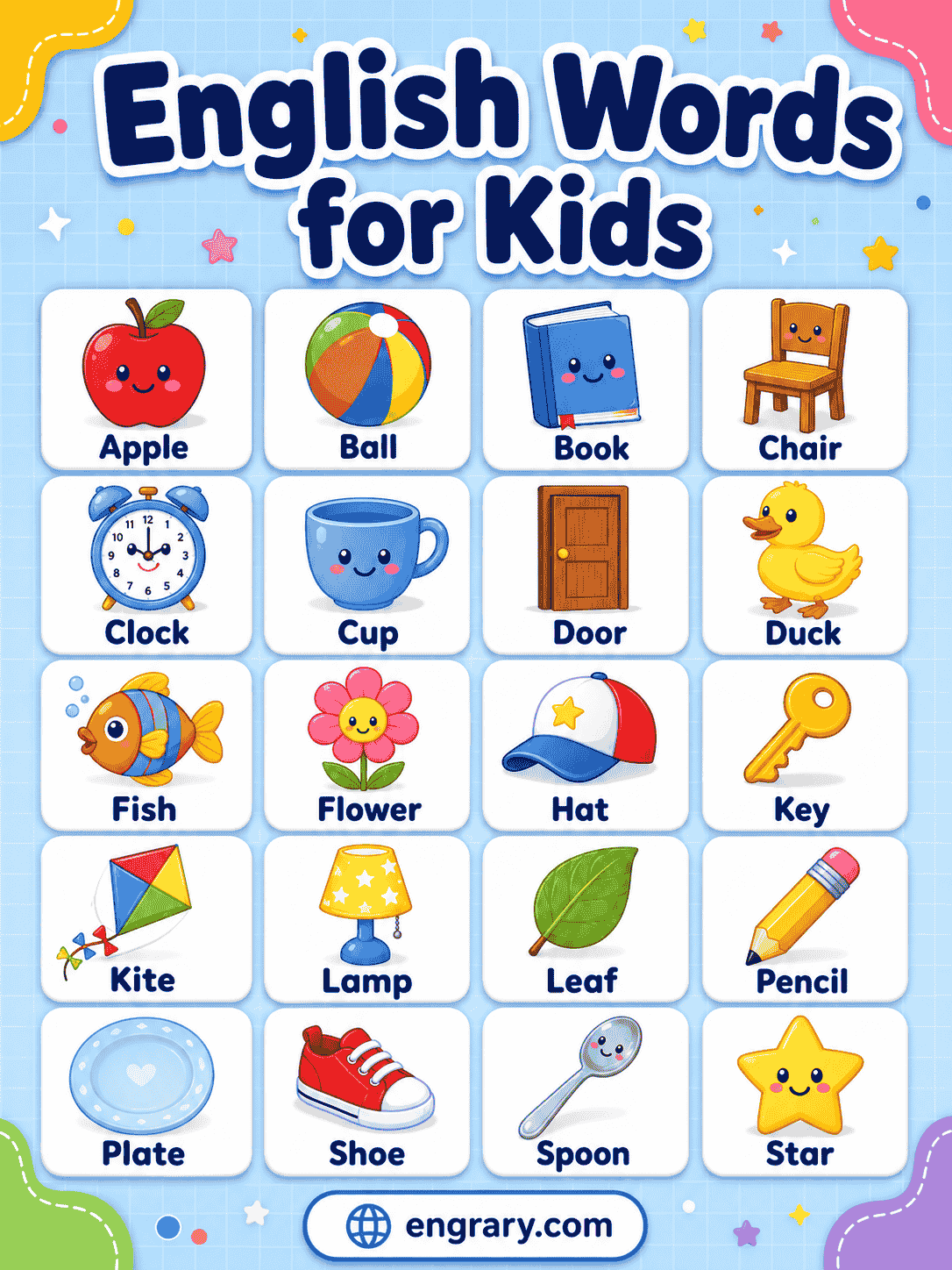
Basic English Words with Simple Meanings
Basic words are helpful for children because they explain common actions, feelings, and daily ideas.
- Hello — a word used to greet someone.
- Hi — a short greeting word.
- Bye — a word used when leaving.
- Yes — a word used to agree.
- No — a word used to disagree or refuse.
- Please — a polite word used when asking.
- Thanks — a word used to show gratitude.
- Sorry — a word used after a mistake.
- Come — to move closer.
- Go — to move away.
- Stop — to not continue.
- Start — to begin.
- Sit — to rest on a chair or seat.
- Stand — to be on your feet.
- Walk — to move using your feet.
- Run — to move fast on your feet.
- Jump — to push yourself into the air.
- Eat — to take food into the mouth.
- Drink — to take liquid into the mouth.
- Sleep — to rest with eyes closed.
- Wake — to stop sleeping.
- Play — to enjoy a game or activity.
- Read — to look at words and understand them.
- Write — to make words with a pen or pencil.
- Draw — to make a picture.
- Sing — to make music with the voice.
- Dance — to move the body with music.
- Look — to use the eyes.
- See — to notice with the eyes.
- Hear — to notice sound.
- Say — to speak words.
- Ask — to request an answer.
- Open — to make something not closed.
- Close — to shut something.
- Give — to hand something to someone.
- Take — to get or hold something.
- Make — to create something.
- Help — to make something easier for someone.
- Wash — to clean with water.
- Clean — not dirty.
- Big — large in size.
- Small — little in size.
- Hot — very warm.
- Cold — not warm.
- Good — nice or right.
- Bad — not good.
- Happy — feeling joy.
- Sad — feeling unhappy.
- New — not old.
- Old — not new.
Daily Use English Words for Kids
Daily use words help children talk about routines, needs, feelings, home, school, and simple actions.
- hello
- bye
- yes
- no
- okay
- please
- thanks
- sorry
- welcome
- good
- bad
- fine
- nice
- come
- go
- stop
- start
- wait
- now
- later
- today
- tomorrow
- yesterday
- morning
- night
- day
- time
- home
- school
- class
- friend
- teacher
- mother
- father
- food
- water
- milk
- bread
- book
- bag
- pencil
- chair
- table
- door
- window
- room
- bed
- toy
- ball
- game
- hand
- foot
- eye
- ear
- nose
- mouth
- happy
- sad
- hungry
- thirsty
- tired
- sleepy
- clean
- dirty
- hot
- cold
- big
- small
- fast
- slow
- open
- close
- give
- take
- help
- play
- read
- write
- draw
- wash
English Nouns for Kids
Nouns are naming words. They name people, animals, places, things, food, and nature words.
- mother
- father
- teacher
- student
- doctor
- nurse
- friend
- baby
- boy
- girl
- cat
- dog
- cow
- goat
- lion
- tiger
- bird
- fish
- rabbit
- monkey
- home
- school
- park
- market
- zoo
- garden
- classroom
- hospital
- shop
- library
- book
- pencil
- bag
- chair
- table
- ball
- toy
- cup
- plate
- clock
- apple
- banana
- rice
- bread
- milk
- egg
- cake
- juice
- sun
- tree
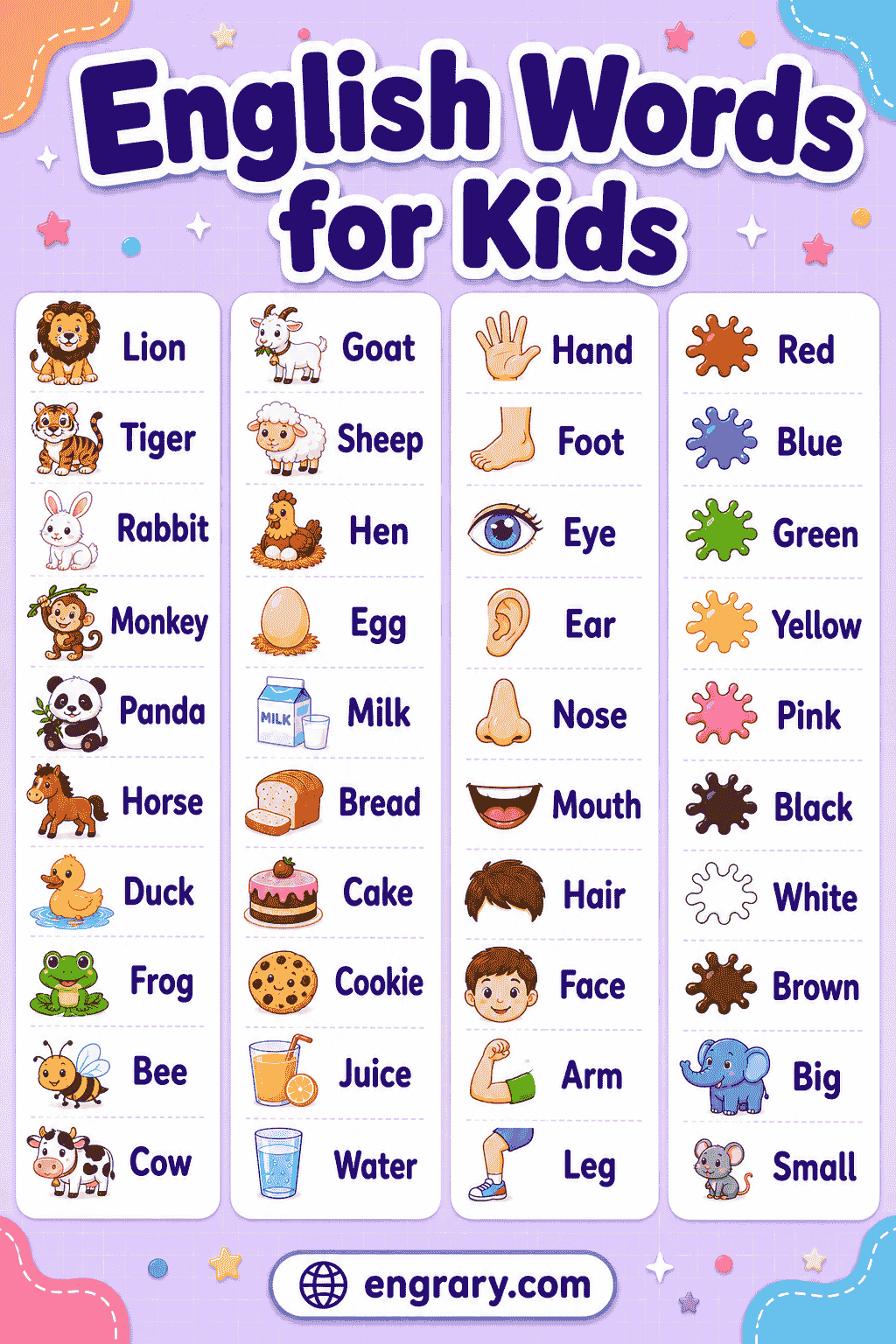
English Action Words for Kids
Action words show what someone is doing. They help children make clear and simple sentences.
- run
- walk
- jump
- hop
- skip
- crawl
- climb
- sit
- stand
- move
- sleep
- wake
- eat
- drink
- cook
- bake
- wash
- clean
- brush
- comb
- read
- write
- draw
- paint
- color
- cut
- paste
- fold
- count
- spell
- open
- close
- push
- pull
- lift
- carry
- throw
- catch
- kick
- hit
- clap
- wave
- point
- touch
- hold
- hug
- kiss
- smile
- laugh
- cry
- shout
- whisper
- talk
- listen
- hear
- say
- tell
- ask
- answer
- call
- think
- know
- learn
- teach
- choose
- find
- remember
- forget
- understand
- guess
- sing
- dance
- play
- build
- break
- fix
- make
- share
- hide
- seek
- bring
- send
- visit
- travel
- drive
- ride
- swim
- fly
- slide
- swing
- dig
- plant
- grow
- pick
- drop
- shake
- stop
- start
- help
- take
English Describing Words for Kids
Describing words help children talk about size, color, shape, feeling, taste, texture, and quality.
- big
- small
- tall
- short
- long
- wide
- narrow
- thick
- thin
- tiny
- heavy
- light
- full
- empty
- strong
- weak
- hard
- soft
- solid
- loose
- hot
- cold
- warm
- cool
- wet
- dry
- fresh
- stale
- sunny
- chilly
- smooth
- rough
- shiny
- dull
- clean
- dirty
- sticky
- slippery
- soft
- hard
- happy
- sad
- angry
- scared
- brave
- calm
- excited
- sleepy
- tired
- hungry
- good
- bad
- best
- worst
- nice
- pretty
- beautiful
- ugly
- safe
- dangerous
- sweet
- sour
- salty
- bitter
- spicy
- fresh
- tasty
- yummy
- bland
- hot
- round
- square
- flat
- curved
- straight
- broken
- whole
- open
- closed
- pointed
- near
- far
- early
- late
- first
- last
- front
- back
- top
- bottom
- many
- few
- all
- some
- same
- different
- one
- two
- both
- each
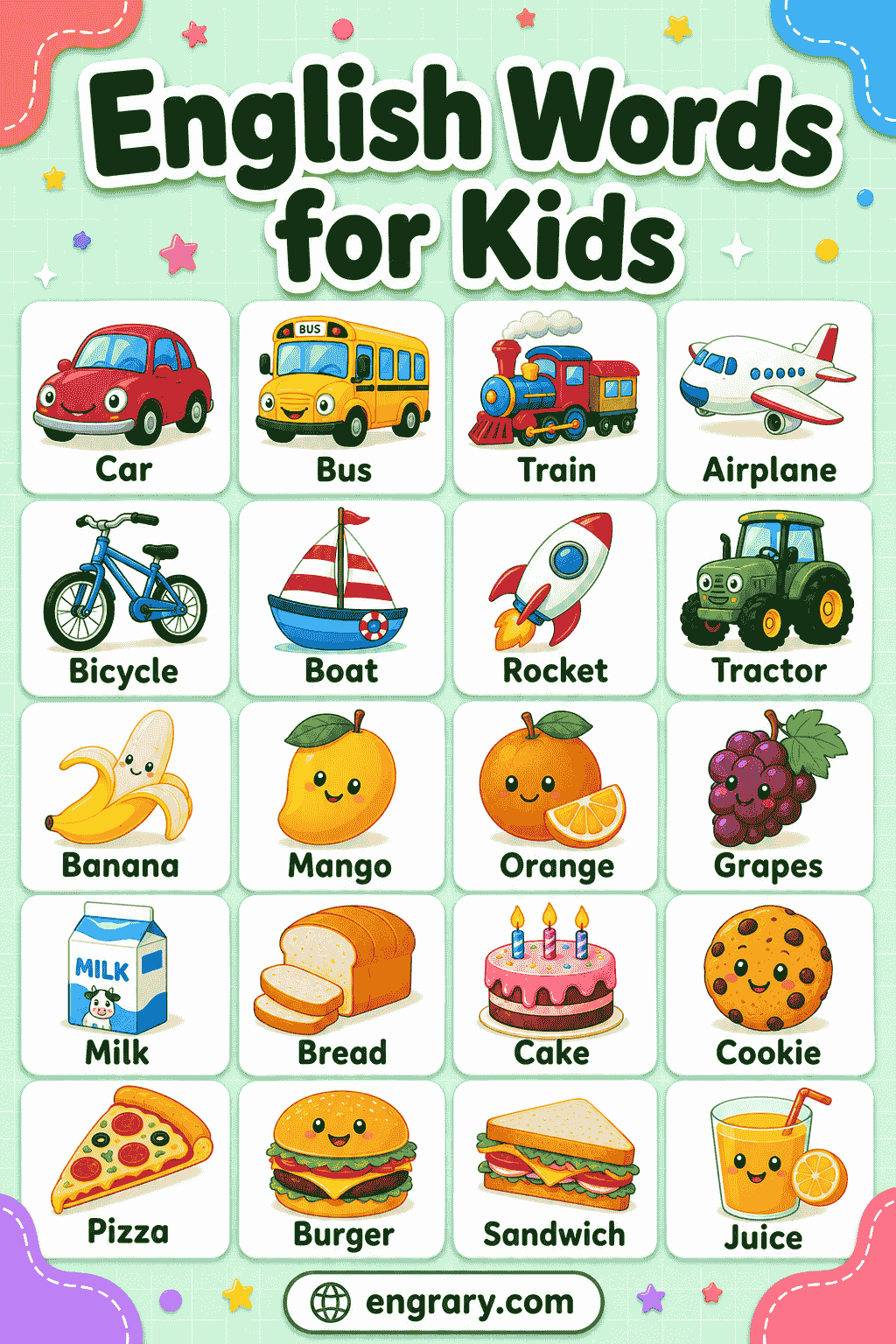
English Words by Topic for Kids
Topic groups make vocabulary easier to learn because children can connect new words with familiar people, places, objects, and activities.
Family and People Words
Family and people words help children name the people they know at home, school, and in the community.
- mother
- father
- mom
- dad
- parent
- brother
- sister
- baby
- child
- family
- grandfather
- grandmother
- grandpa
- grandma
- uncle
- aunt
- cousin
- nephew
- niece
- relative
- boy
- girl
- man
- woman
- adult
- person
- people
- friend
- neighbor
- guest
- teacher
- student
- classmate
- principal
- librarian
- coach
- monitor
- helper
- reader
- writer
- doctor
- nurse
- dentist
- driver
- pilot
- police officer
- firefighter
- guard
- postman
- cleaner
- farmer
- baker
- cook
- shopkeeper
- waiter
- artist
- singer
- dancer
- painter
- photographer
Animal and Bird Words
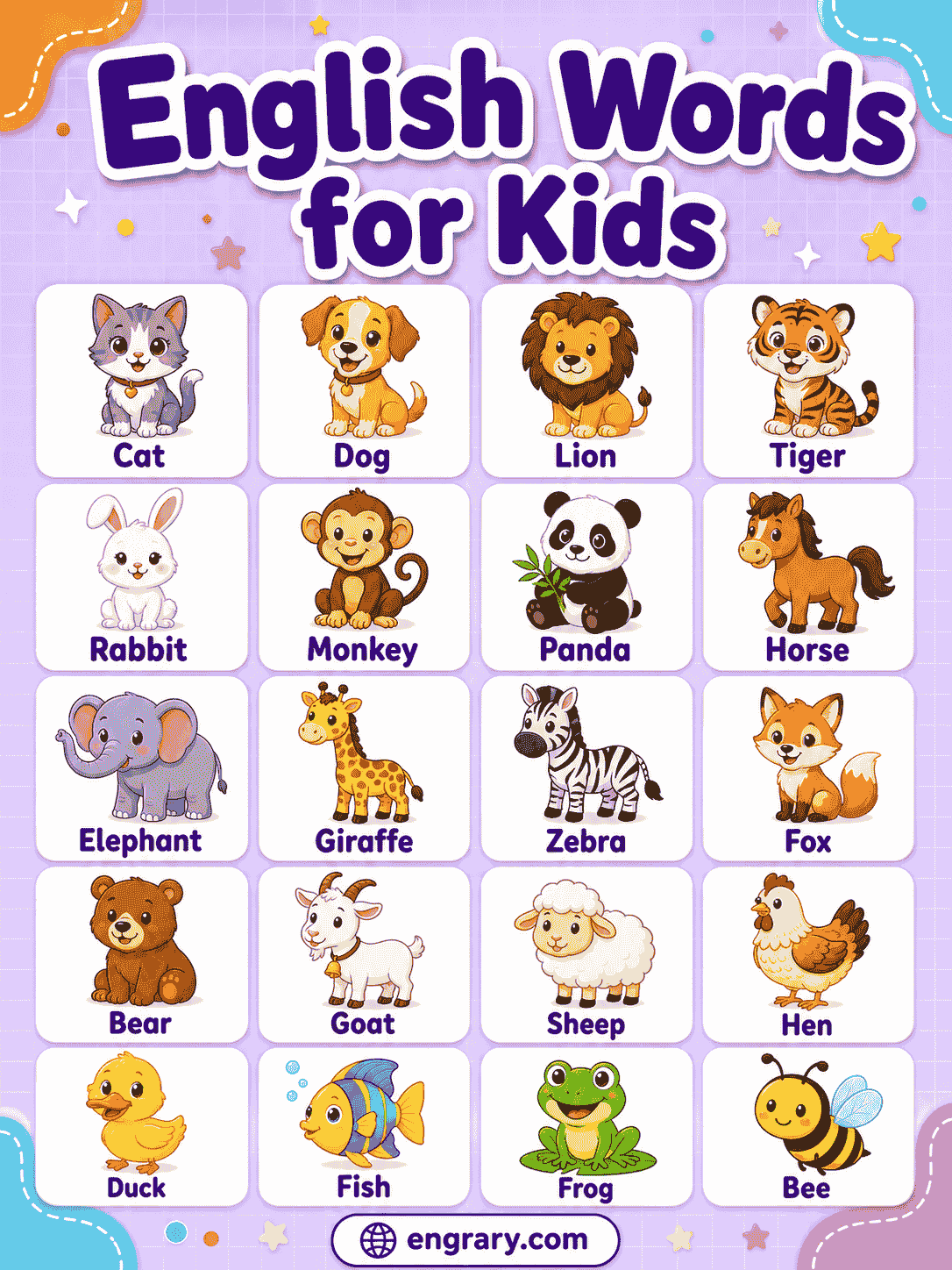
Animal and bird words are easy for children to learn with pictures, sounds, stories, and classroom activities.
- cat
- dog
- rabbit
- hamster
- parrot
- kitten
- puppy
- goldfish
- turtle
- mouse
- cow
- goat
- sheep
- horse
- donkey
- camel
- buffalo
- pig
- hen
- rooster
- lion
- tiger
- leopard
- cheetah
- panther
- bear
- panda
- elephant
- giraffe
- zebra
- deer
- fox
- wolf
- hyena
- kangaroo
- koala
- raccoon
- otter
- beaver
- monkey
- fish
- dolphin
- whale
- shark
- crab
- lobster
- octopus
- seal
- walrus
- seahorse
- snake
- lizard
- crocodile
- alligator
- turtle
- tortoise
- frog
- toad
- chameleon
- gecko
- butterfly
- bee
- ant
- fly
- mosquito
- beetle
- spider
- worm
- snail
- grasshopper
- bird
- duck
- hen
- chick
- goose
- swan
- pigeon
- dove
- parrot
- peacock
- crow
- eagle
- hawk
- owl
- sparrow
- robin
- flamingo
- ostrich
- penguin
- turkey
- woodpecker
- kingfisher
- pelican
- seagull
- vulture
- falcon
- crane
- stork
- heron
- nightingale
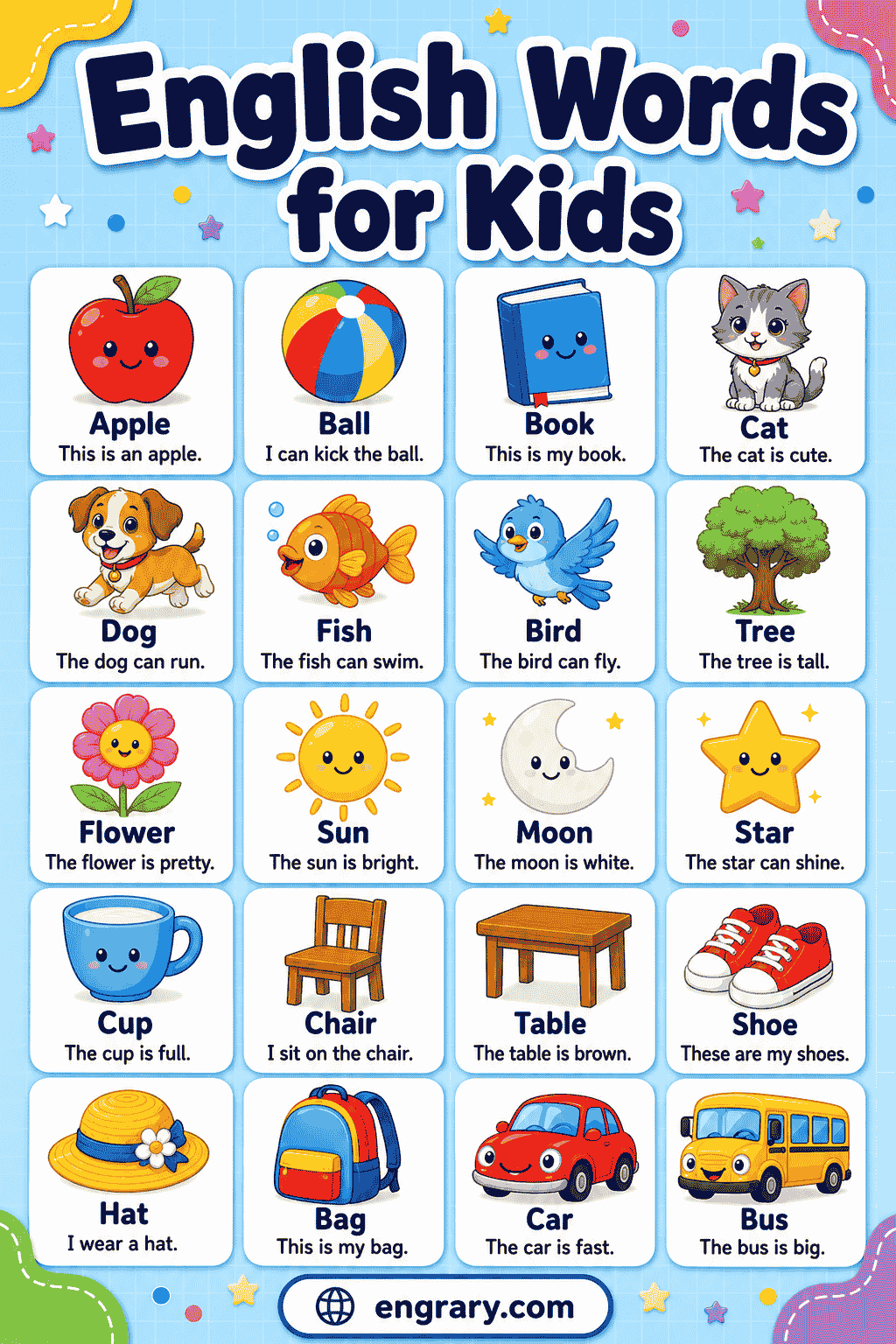
Fruit, Vegetable, and Food Words
Food words help children talk about fruits, vegetables, meals, snacks, drinks, and everyday eating.
- apple
- banana
- mango
- orange
- grapes
- pear
- peach
- plum
- cherry
- strawberry
- blueberry
- raspberry
- watermelon
- melon
- pineapple
- papaya
- guava
- kiwi
- coconut
- lemon
- date
- fig
- apricot
- raisin
- almond
- peanut
- walnut
- cashew
- pistachio
- hazelnut
- potato
- onion
- carrot
- cabbage
- cauliflower
- spinach
- lettuce
- cucumber
- pumpkin
- peas
- beans
- corn
- mushroom
- garlic
- ginger
- pepper
- chili
- eggplant
- broccoli
- radish
- rice
- bread
- egg
- milk
- cheese
- butter
- yogurt
- cream
- soup
- cereal
- noodles
- pasta
- pizza
- burger
- sandwich
- salad
- fries
- pancake
- waffle
- pie
- cake
- cookie
- biscuit
- candy
- chocolate
- ice cream
- muffin
- donut
- jam
- jelly
- chicken
- fish
- beef
- lamb
- meat
- sausage
- beans
- nuts
- cheese
- egg
- water
- juice
- tea
- milk
- lemonade
- smoothie
- soup
- shake
- cocoa
- coconut water
Color, Shape, and Number Words
Color, shape, and number words help children describe pictures, clothes, toys, classroom items, and objects around them.
- red
- blue
- green
- yellow
- black
- white
- pink
- purple
- orange
- brown
- gray
- gold
- silver
- violet
- navy
- cream
- beige
- maroon
- turquoise
- peach
- light
- dark
- bright
- pale
- colorful
- clear
- plain
- mixed
- shaded
- striped
- circle
- square
- triangle
- rectangle
- oval
- star
- heart
- diamond
- line
- dot
- cube
- cone
- sphere
- cylinder
- pyramid
- box
- ball
- ring
- tube
- block
- side
- edge
- corner
- curve
- point
- center
- top
- bottom
- middle
- end
- zero
- one
- two
- three
- four
- five
- six
- seven
- eight
- ten
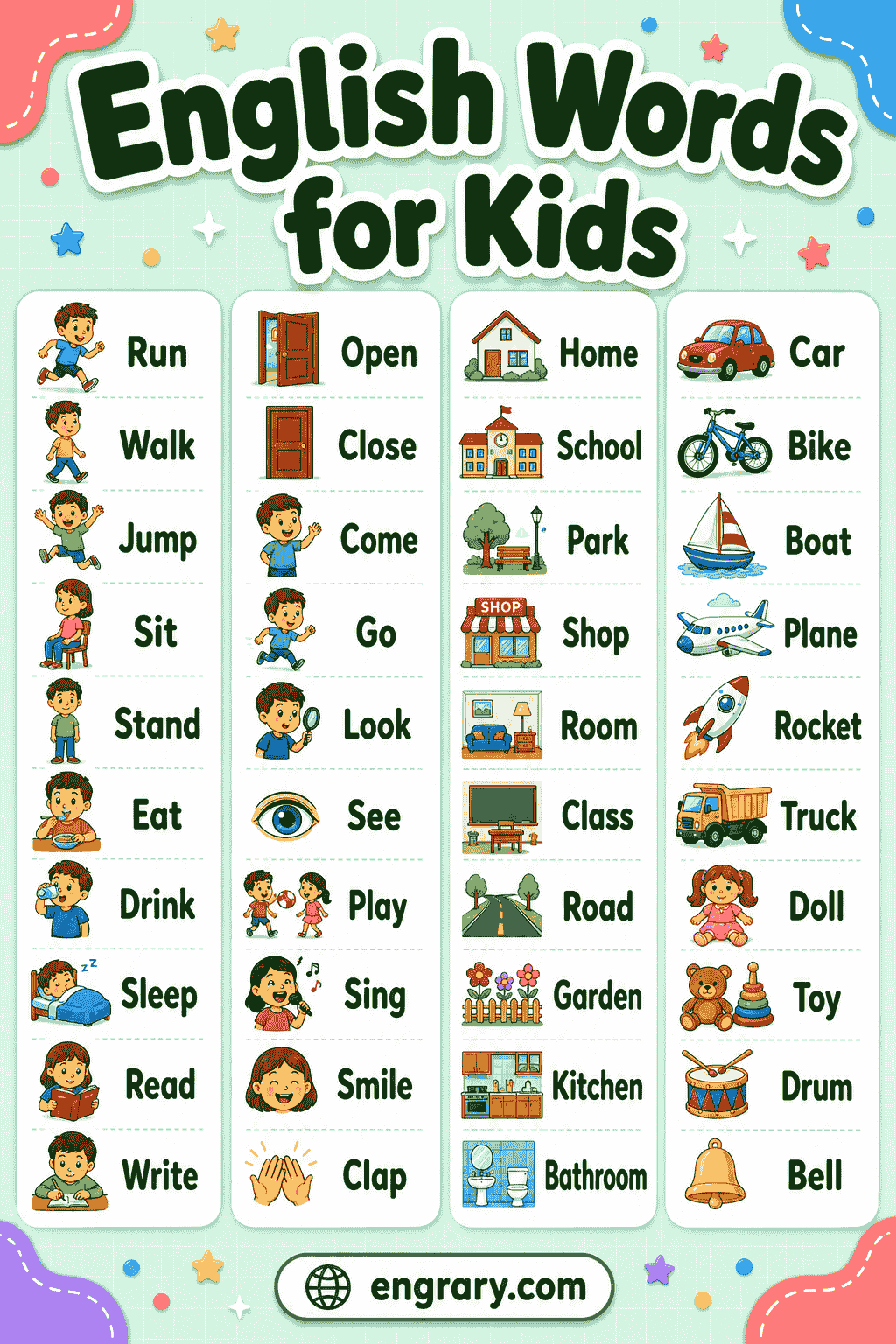
School and Classroom Words
School and classroom words help children name learning tools, school people, classroom objects, and school places.
- teacher
- student
- principal
- classmate
- monitor
- librarian
- coach
- helper
- friend
- learner
- book
- notebook
- page
- paper
- pencil
- pen
- marker
- crayon
- eraser
- sharpener
- ruler
- glue
- scissors
- tape
- board
- whiteboard
- blackboard
- chalk
- duster
- chart
- desk
- chair
- table
- shelf
- cupboard
- cabinet
- mat
- bench
- rack
- stool
- bag
- lunchbox
- bottle
- uniform
- shoes
- socks
- bell
- clock
- calendar
- map
- computer
- tablet
- screen
- keyboard
- mouse
- printer
- projector
- speaker
- camera
- display
- folder
- file
- card
- flashcard
- worksheet
- storybook
- dictionary
- drawing sheet
- label
- classroom
- library
- playground
- hallway
- office
- lab
- art room
- music room
- gate
- canteen
- homework
Body Parts and Clothes Words
Body and clothing words help children talk about themselves, movement, dressing, health, and daily routines.
- head
- hair
- face
- forehead
- eyebrow
- eye
- eyelash
- ear
- nose
- cheek
- mouth
- lip
- tooth
- teeth
- tongue
- chin
- jaw
- smile
- throat
- neck
- shoulder
- arm
- elbow
- wrist
- hand
- finger
- thumb
- nail
- chest
- back
- stomach
- waist
- hip
- leg
- knee
- ankle
- foot
- toe
- heel
- skin
- shirt
- T-shirt
- pants
- jeans
- shorts
- dress
- skirt
- coat
- jacket
- sweater
- hoodie
- uniform
- pajamas
- socks
- shoes
- boots
- sandals
- slippers
- raincoat
- swimsuit
- button
- zipper
- collar
- sleeve
- hood
- belt
- shoelace
- strap
- buckle
- hat
- cap
- scarf
- gloves
- tie
- glasses
- sunglasses
- watch
- bracelet
- necklace
- ring
- bag
- backpack
- purse
- wallet
- crown
- ribbon
- bow
- hairband
- clip
- tracksuit
- vest
- blouse
- cardigan
- suit
- gown
- apron
- helmet
- mask
- costume
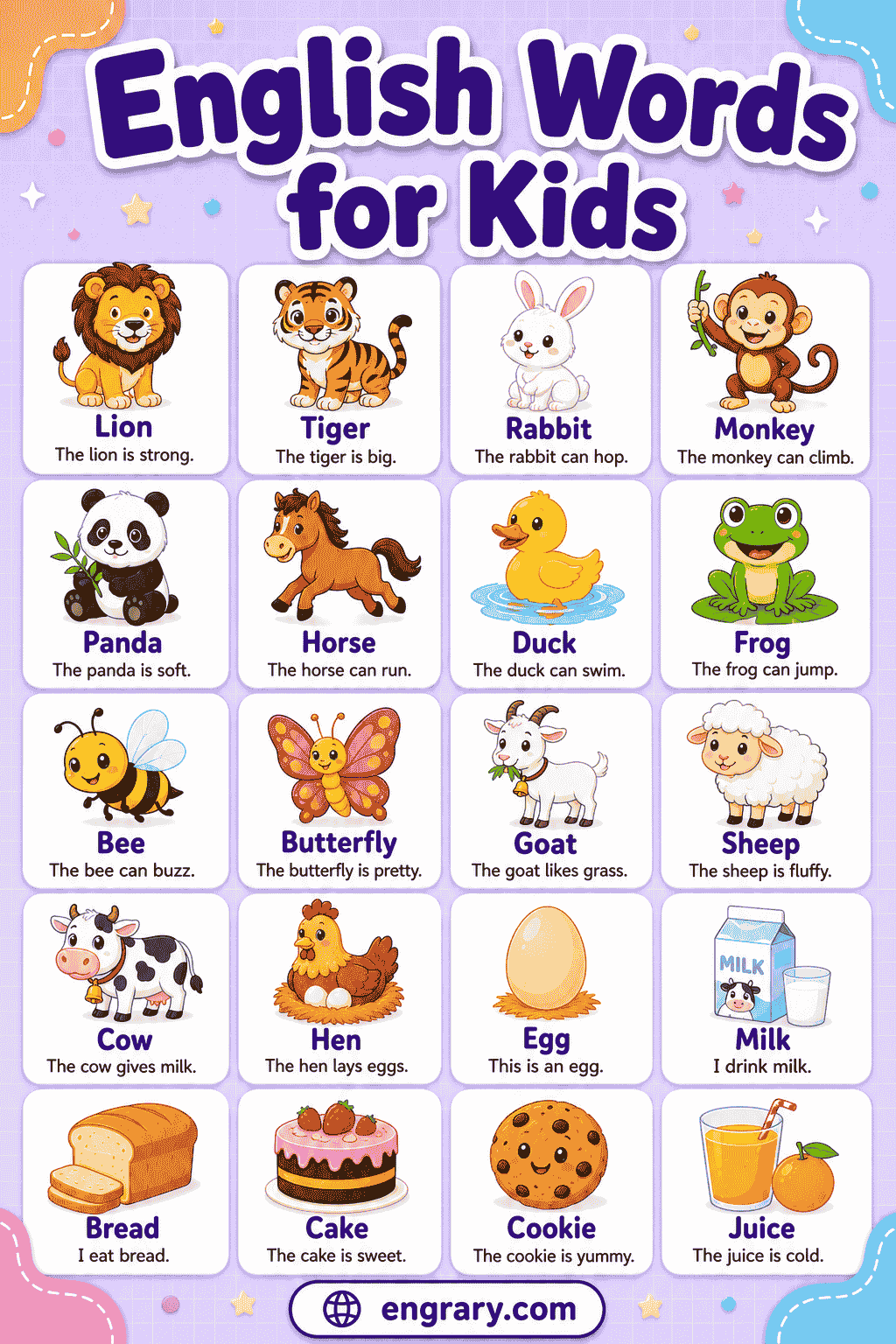
Home, Room, and Toy Words
Home and toy words feel familiar because children use them while playing, eating, resting, and spending time with family.
- house
- home
- room
- bedroom
- bathroom
- kitchen
- living room
- dining room
- hallway
- garden
- balcony
- roof
- wall
- floor
- ceiling
- door
- window
- stairs
- gate
- key
- bed
- pillow
- blanket
- sheet
- mattress
- sofa
- chair
- table
- desk
- shelf
- cupboard
- cabinet
- drawer
- box
- basket
- toy box
- bag
- rack
- closet
- wardrobe
- mirror
- clock
- lamp
- fan
- light
- curtain
- carpet
- rug
- towel
- soap
- plate
- bowl
- cup
- spoon
- fork
- knife
- pan
- pot
- stove
- fridge
- tap
- sink
- bucket
- broom
- mop
- brush
- comb
- cloth
- sponge
- duster
- toy
- ball
- doll
- teddy bear
- blocks
- puzzle
- kite
- car
- truck
- train
- plane
- boat
- robot
- drum
- flute
- guitar
- balloon
- marble
- yo-yo
- hoop
- rope
- swing
- slide
- bat
- board game
- video game
- clay
- paint
- stickers
- cards
Nature, Weather, and Outdoor Words
Nature and weather words help children describe the sky, seasons, plants, land, water, and outdoor places.
- sun
- moon
- star
- sky
- cloud
- rainbow
- sunlight
- sunrise
- sunset
- air
- rain
- wind
- storm
- thunder
- lightning
- snow
- ice
- fog
- mist
- breeze
- sunny
- cloudy
- windy
- rainy
- snowy
- hot
- cold
- warm
- cool
- wet
- spring
- summer
- autumn
- winter
- season
- morning
- evening
- night
- day
- weather
- tree
- leaf
- flower
- grass
- plant
- root
- stem
- branch
- seed
- fruit
- forest
- jungle
- desert
- mountain
- hill
- valley
- field
- farm
- garden
- park
- river
- lake
- pond
- sea
- ocean
- beach
- waterfall
- stream
- wave
- puddle
- sand
- rock
- stone
- soil
- mud
- island
- cave
- volcano
- cliff
- meadow
- nest
- hole
- shell
- feather
- web
- bush
- wood
- shade
- grassland
- den
- north
- south
- east
- west
- path
- road
- side
- place
- area
- land
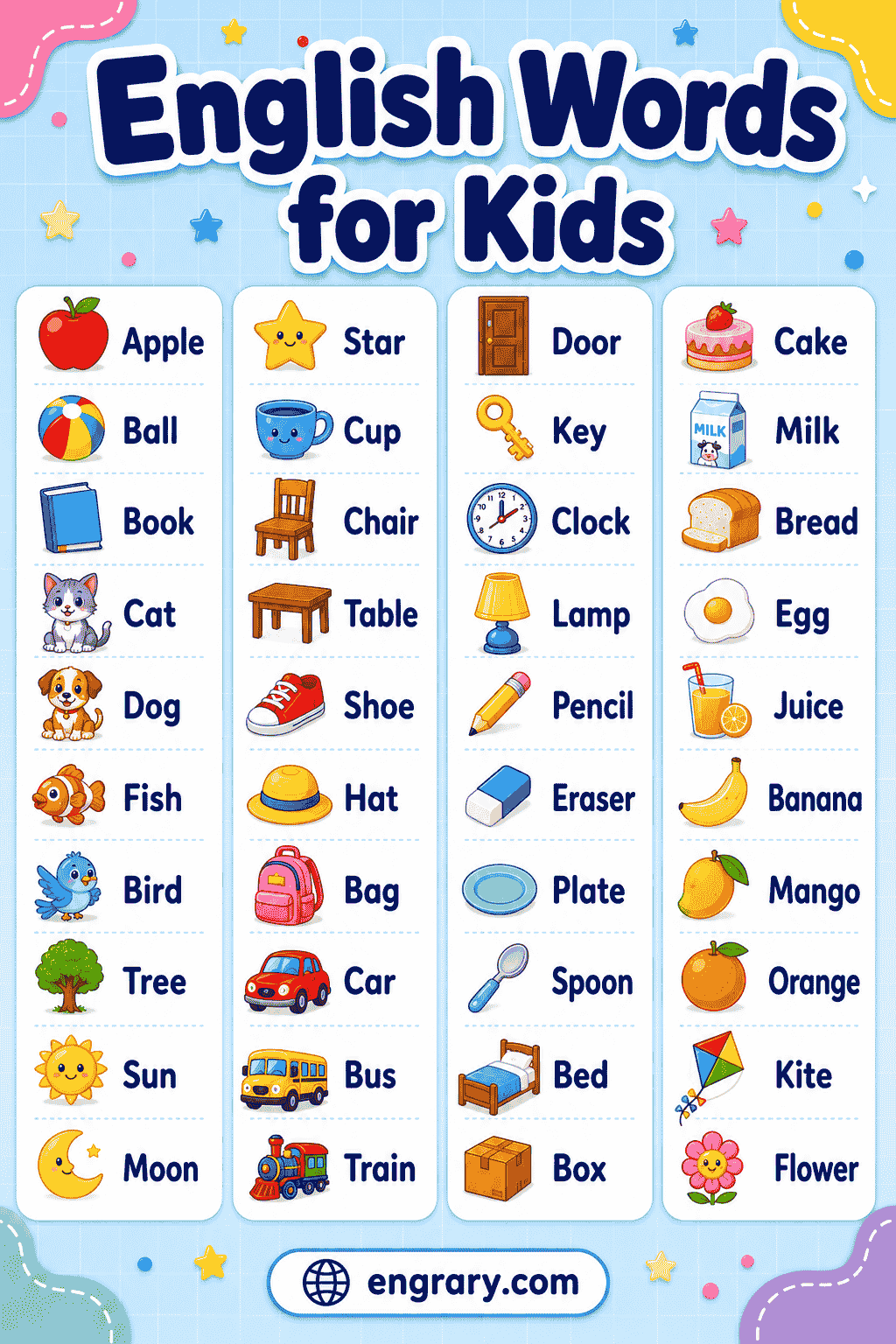
Places and Transport Words
Place and transport words help children talk about where people go and how they travel.
- city
- town
- village
- street
- road
- lane
- bridge
- park
- market
- shop
- store
- mall
- hospital
- clinic
- school
- library
- airport
- station
- hotel
- restaurant
- bank
- post office
- zoo
- museum
- farm
- playground
- beach
- garden
- office
- classroom
- bus stop
- train station
- crossing
- parking
- garage
- platform
- track
- runway
- traffic light
- road sign
- car
- bus
- train
- plane
- airplane
- bicycle
- bike
- boat
- ship
- taxi
- truck
- van
- scooter
- motorcycle
- ambulance
- fire truck
- police car
- tractor
- jeep
- subway
- trip
- travel
- journey
- ticket
- luggage
- suitcase
- map
- seat
- wheel
- passenger
- driver
- pilot
- rider
- traveler
- captain
- conductor
- tram
- rocket
- helicopter
- ferry
Opposite Words for Kids
Opposite words help children compare meanings and understand simple word pairs.
- big – small
- tall – short
- long – short
- wide – narrow
- thick – thin
- hot – cold
- warm – cool
- wet – dry
- sunny – cloudy
- fresh – stale
- happy – sad
- brave – scared
- kind – mean
- calm – angry
- awake – asleep
- good – bad
- clean – dirty
- new – old
- easy – hard
- right – wrong
- up – down
- in – out
- inside – outside
- near – far
- front – back
- left – right
- top – bottom
- come – go
- push – pull
- give – take
- day – night
- early – late
- first – last
- start – stop
- remember – forget
- loud – quiet
- shout – whisper
- laugh – cry
- talk – listen
- ask – answer
- sit – stand
- buy – sell
- open – closed
- find – lose
- build – break
- full – empty
- rich – poor
- safe – dangerous
- same – different
- beautiful – ugly
Question Words for Kids
Question words help children ask for information in simple conversations.
- what
- where
- who
- when
- why
- how
- which
- whose
- whom
- can
- do
- does
- did
- is
- are
- am
- was
- were
- will
- may
Polite Words and Phrases for Kids
Polite words and phrases help children speak kindly at home, school, and in public places.
- please
- thank you
- thanks
- thank you very much
- you are welcome
- welcome
- sorry
- I am sorry
- pardon me
- excuse me
- no problem
- may I
- can I
- yes please
- no thank you
- after you
- hello
- goodbye
- good morning
- good afternoon
- good evening
- good night
- nice to meet you
- how are you
- I am fine
- well done
- good job
- bless you
- have a nice day
- take care
English Vocabulary Words with Sentences
Short sentences help children understand how simple vocabulary works in real speech and writing.
- Cat — The cat is sleeping.
- Dog — The dog is running.
- Apple — I eat an apple.
- Milk — I drink milk.
- Book — This is my book.
- Pencil — I write with a pencil.
- Chair — The chair is brown.
- Ball — The ball is red.
- Run — I can run fast.
- Jump — The boy can jump.
- Read — She can read a story.
- Write — I write my name.
- Happy — The girl is happy.
- Sad — The baby is sad.
- Big — The elephant is big.
- Small — The mouse is small.
- Hot — The soup is hot.
- Cold — The ice is cold.
- Open — Open the door.
- Close — Close the box.
- Clean — My room is clean.
- Dirty — The shoes are dirty.
- Teacher — My teacher is kind.
- Friend — I play with my friend.
- Water — I drink water.
- Sun — The sun is bright.
- Rain — The rain is falling.
- Tree — The tree is tall.
- Bird — The bird can fly.
- Toy — This toy is new.
- Blue — The sky is blue.
- Round — The ball is round.
- Please — Please help me.
- Sorry — I am sorry.
- Thanks — Thanks for the gift.
- Where — Where is my bag?
- What — What is your name?
- Who — Who is at the door?
- Fast — The car is fast.
- Slow — The turtle is slow.
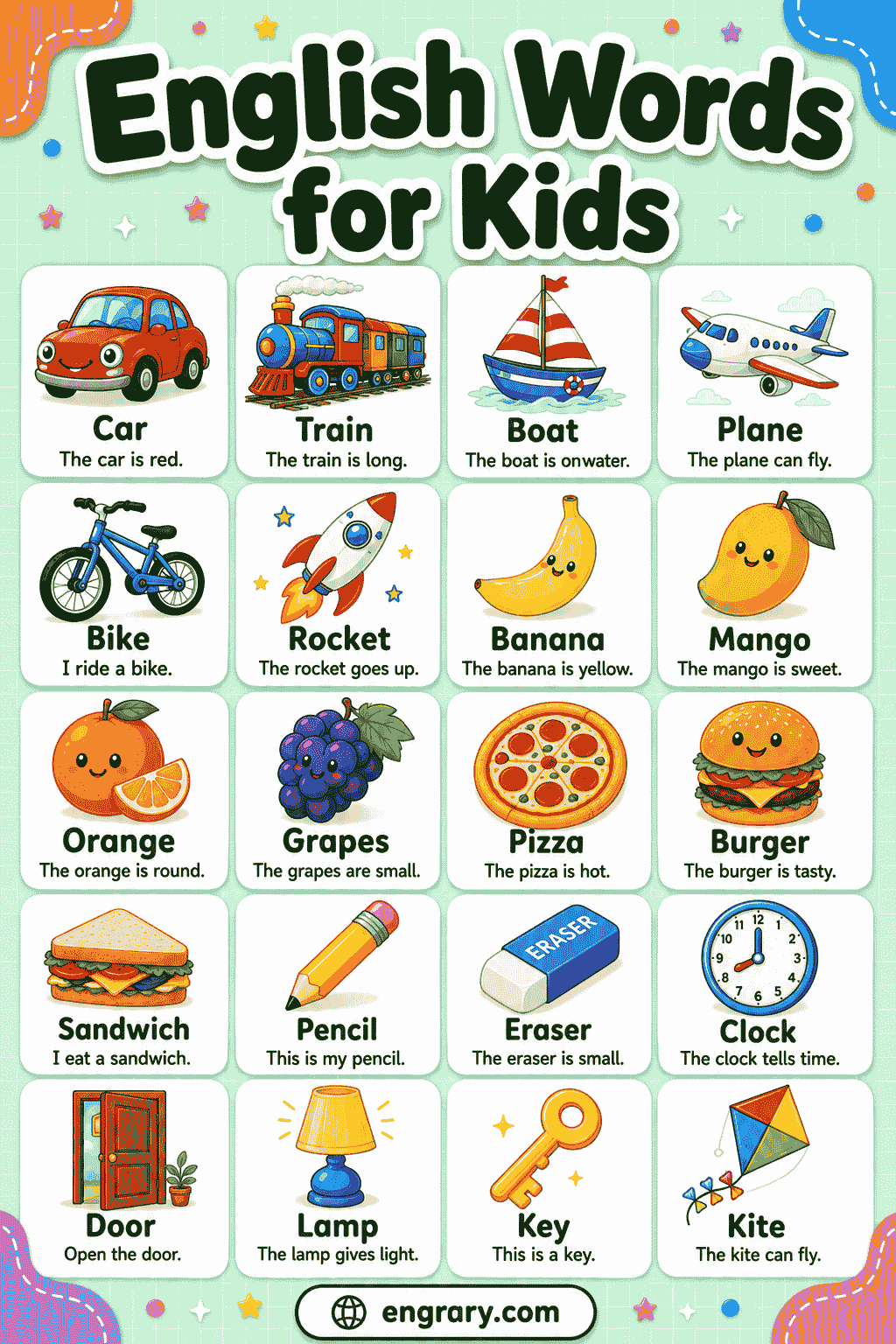
English Vocabulary Words Chart with Pictures
A picture chart helps children connect each word group with familiar examples.
| Word Group | Details |
|---|---|
| Common Words | Best for: daily speaking and beginner reading Examples: hello, bye, yes, no, please |
| Basic Words | Best for: simple meanings and early sentence practice Examples: come, go, eat, drink, play |
| Nouns | Best for: naming people, places, animals, and things Examples: mother, school, cat, book |
| Action Words | Best for: making short sentences Examples: run, jump, read, write |
| Describing Words | Best for: adding detail to speech and writing Examples: big, small, happy, clean |
| Topic Words | Best for: learning vocabulary in familiar groups Examples: animals, food, school, home |
| Opposite Words | Best for: comparing meanings Examples: hot – cold, big – small, up – down |
| Question Words | Best for: asking simple questions Examples: what, where, who, why |
How to Use These English Vocabulary Words
Use these words in small groups instead of teaching too many at once. Start with common words, then move to nouns, action words, describing words, and topic-based words. This order helps children learn words they can use in daily life first.
Children can practice by reading a word, saying it aloud, pointing to a picture, and using the word in a short sentence. For example, a child can look at a picture of a cat, say “cat,” and then say, “The cat is sleeping.”
Weekly Vocabulary Learning Plan for Kids
A weekly plan keeps vocabulary practice simple and organized for children.
- First day — learn common words used in daily speech.
- Second day — learn naming words for people, places, animals, and things.
- Third day — learn action words such as run, jump, eat, and read.
- Fourth day — learn describing words such as big, small, happy, and clean.
- Fifth day — learn topic words from animals, food, school, or home.
- Sixth day — make short sentences with the new words.
- Seventh day — review the words with pictures, flashcards, or real objects.
Easy Ways to Teach Vocabulary Words to Kids
Vocabulary practice should feel simple, active, and connected to real life.
- Use pictures — show a picture and say the word clearly.
- Use flashcards — repeat a small group of words daily.
- Use real objects — point to a book, cup, chair, toy, or bag.
- Use actions — act out words like run, jump, clap, and sleep.
- Use short sentences — help kids use one word in a simple sentence.
- Use word groups — teach animal words, food words, and school words separately.
- Use repetition — review old words before adding new ones.
- Use daily routines — teach words while eating, dressing, playing, and reading.
- Use games — play matching, sorting, guessing, and opposite word games.
- Use drawing — let children draw words like sun, house, apple, and tree.
FAQs
Basic English vocabulary words for kids include simple daily words such as hello, bye, yes, no, come, go, eat, drink, play, read, write, big, small, happy, and sad.
Children should first learn words connected to home, family, food, animals, school, body parts, toys, colors, actions, and polite phrases.
Kids can learn English vocabulary easily through pictures, flashcards, songs, games, real objects, short sentences, and daily practice.
Category-based learning helps children connect new words with familiar topics. Animal words, food words, school words, and home words are easier to remember when they are learned together.
Parents can teach vocabulary by naming objects, reading short books, using flashcards, asking simple questions, and repeating useful words during daily routines.
You May Also Like