“Are you okay?” is used to check someone’s mood, health, stress, safety, or emotional state. It can sound caring, but in some situations, it may also feel too direct or intense.
The best alternative depends on urgency, privacy, relationship, and the kind of support the person may need. Below are 85 natural ways to ask “are you okay” for polite messages, work, texts, emotional support, urgent safety checks, and caring conversations.
Best Are You Okay Phrase by Situation
| Situation | Better Phrase |
|---|---|
| Simple check-in | Is everything alright? |
| Polite message | I just wanted to check in. |
| Work message | Is everything alright on your end? |
| Casual text | You okay? |
| Emotional support | I’m here if you want to talk. |
| Someone seems quiet | You seem quieter than usual. |
| Urgent concern | Are you safe right now? |
| Need to offer help | Can I help with anything? |
| Giving space | No pressure, but I’m here. |
| Follow-up support | Do you want advice or just someone to listen? |
Are You Okay vs Are You Alright vs Are You Safe?
| Phrase | Tone | Best Use |
|---|---|---|
| Are you okay? | Direct, caring, and flexible. | General check-ins about mood, health, stress, or well-being. |
| Are you alright? | Slightly softer and polite. | When someone seems upset, tired, hurt, or not like themselves. |
| Are you safe? | Urgent and serious. | When there may be danger, harm, or immediate risk. |
| How are you holding up? | Warm and supportive. | When someone is dealing with stress, grief, pressure, or a hard time. |
Is “Are You Okay?” Polite or Too Direct?
“Are you okay?” is usually caring and polite when said gently. It works well when someone looks upset, tired, hurt, quiet, stressed, or different from usual.
However, it can feel too direct if the person is private, embarrassed, or not ready to talk. In sensitive moments, softer phrases like I just wanted to check in, I’m here if you want to talk, or No pressure, but I’m here may sound better.
Simple Alternatives to Are You Okay
Use these phrases for everyday check-ins.
Is everything alright?
A simple phrase for checking if someone is okay.
Example: Is everything alright?
Are you feeling okay?
A caring phrase for checking someone’s health or mood.
Example: Are you feeling okay today?
How are you feeling?
A gentle phrase for asking about someone’s condition.
Example: How are you feeling now?
Are you doing okay?
A softer version of “are you okay?”
Example: Are you doing okay?
Do you need anything?
A helpful phrase for offering support.
Example: Do you need anything right now?
Is everything okay?
A natural phrase for general concern.
Example: Is everything okay with you?
Are you alright?
A polite phrase when someone seems upset or hurt.
Example: Are you alright?
How are things going?
A softer phrase for a general check-in.
Example: How are things going today?
Is something bothering you?
A careful phrase when someone seems worried or upset.
Example: Is something bothering you?
Do you want to talk?
A simple phrase that invites conversation.
Example: Do you want to talk?
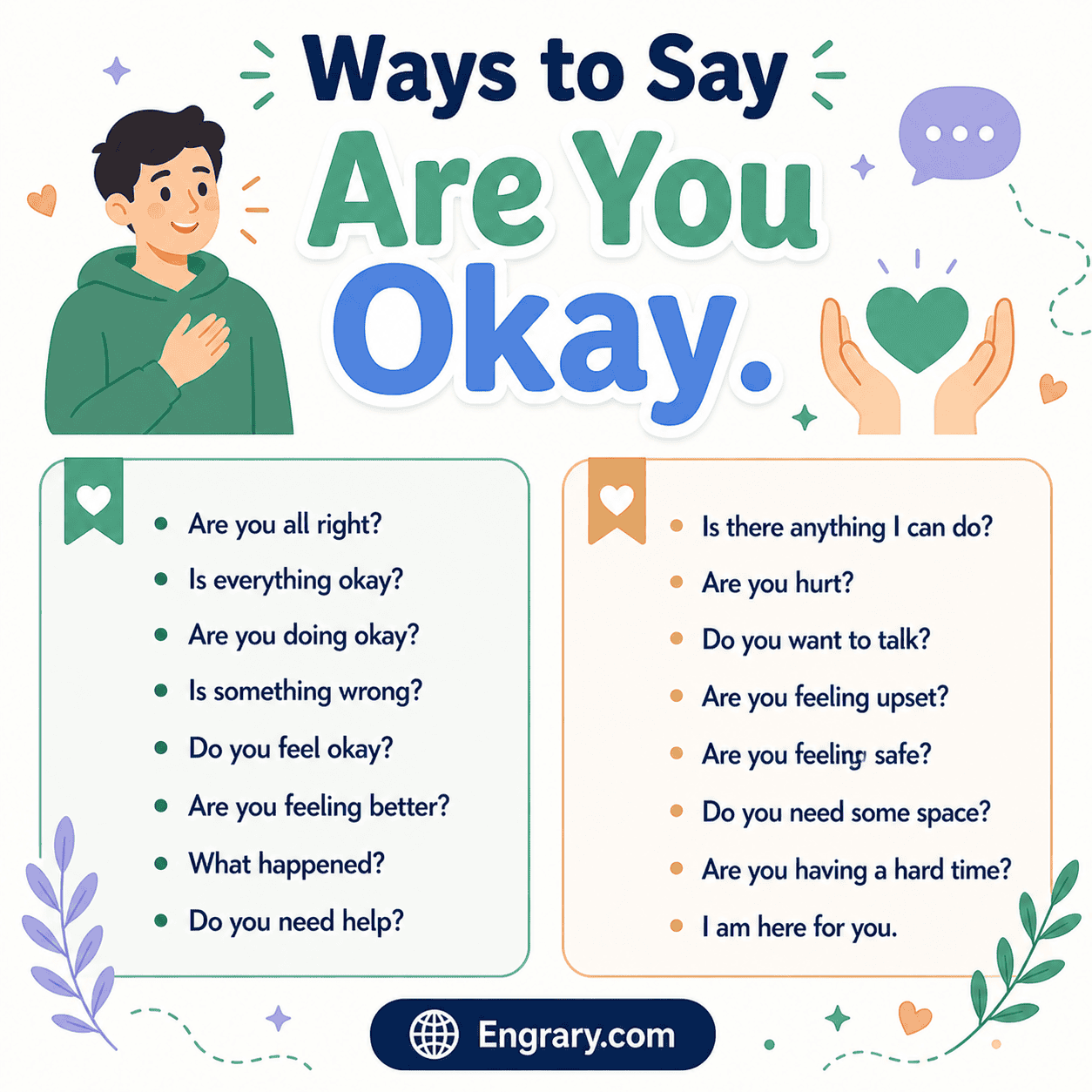
Polite Ways to Ask If Someone Is Okay
Use these phrases when you want to sound gentle and respectful.
I just wanted to check in
A polite phrase for showing concern.
Example: I just wanted to check in and see how you are.
Is everything okay on your end?
A respectful phrase for checking someone’s situation.
Example: Is everything okay on your end?
How are you holding up?
A warm phrase for asking how someone is managing.
Example: How are you holding up?
Would you like to talk about it?
A gentle phrase that gives the person a choice.
Example: Would you like to talk about it?
Can I help with anything?
A polite phrase for offering practical support.
Example: Can I help with anything?
I hope you’re doing okay
A soft phrase for messages.
Example: I hope you’re doing okay.
Please let me know if you need anything
A respectful phrase that offers help without pressure.
Example: Please let me know if you need anything.
I’m checking in to see how you’re doing
A clear and polite phrase.
Example: I’m checking in to see how you’re doing.
Would it help to talk for a minute?
A gentle phrase for inviting a short conversation.
Example: Would it help to talk for a minute?
Is there anything you’d like to share?
A respectful phrase that lets the person decide.
Example: Is there anything you’d like to share?
Professional Phrases for Work and Emails
Use these phrases for coworkers, managers, clients, teams, and workplace messages.
Is everything alright on your end?
A work-safe phrase for checking on someone.
Example: Is everything alright on your end?
I hope everything is going well
A polite professional check-in.
Example: I hope everything is going well.
Please let me know if you need any support
A professional phrase for offering help.
Example: Please let me know if you need any support.
Would it help to talk through this?
A work-friendly phrase for offering discussion.
Example: Would it help to talk through this?
Is there anything I can help with?
A professional support phrase.
Example: Is there anything I can help with?
I noticed things seem a bit busy; is there anything I can support?
A careful workplace phrase based on observation.
Example: I noticed things seem a bit busy; is there anything I can support?
How are things on your side?
A professional phrase for checking on someone’s situation.
Example: How are things on your side?
Let me know if you need a hand with anything
A friendly work-safe phrase.
Example: Let me know if you need a hand with anything.
I hope things are manageable on your end
A polished phrase for a busy or stressful work situation.
Example: I hope things are manageable on your end.
Would additional support be helpful?
A professional way to offer help.
Example: Would additional support be helpful?
Casual Ways to Ask Are You Okay
Use these phrases for friends, family, classmates, and relaxed chats.
You okay?
A short casual check-in.
Example: You okay?
Everything good?
A casual phrase for checking if things are fine.
Example: Everything good?
You doing alright?
A friendly phrase for asking if someone is okay.
Example: You doing alright?
What’s going on?
A casual phrase when something seems wrong.
Example: What’s going on?
Need anything?
A short phrase for offering help.
Example: Need anything?
You good?
A very casual phrase for close people.
Example: You good?
What happened?
A direct phrase when something seems wrong.
Example: What happened?
Are we okay?
A casual phrase for checking a relationship or situation.
Example: Are we okay?
Something wrong?
A short casual phrase when you notice a problem.
Example: Something wrong?
Want to talk?
A relaxed phrase for inviting someone to open up.
Example: Want to talk?
Short Texts and Quick Check-In Messages
Use these short phrases for quick messages, chats, comments, and short replies.
You okay?
Use this for a quick casual check-in.
Everything alright?
Use this when you want to check gently.
Need anything?
Use this to offer quick support.
Here if you need me.
Use this to show support without pressure.
Checking in.
Use this for a short caring message.
You doing okay?
Use this when someone seems upset or quiet.
Want to talk?
Use this when you want to invite conversation.
I’m here.
Use this for a short supportive reply.
All good?
Use this for a casual check-in.
Thinking of you.
Use this when you want to show care gently.
Warm Emotional Support Phrases
Use these phrases when someone seems sad, stressed, hurt, overwhelmed, or emotionally tired.
I’m here if you want to talk
A caring phrase that gives someone space.
Example: I’m here if you want to talk.
You don’t have to go through this alone
A supportive phrase for hard moments.
Example: You don’t have to go through this alone.
Do you want to talk about what happened?
A gentle phrase for inviting conversation.
Example: Do you want to talk about what happened?
I’m worried about you
A direct but caring phrase for concern.
Example: I’m worried about you.
Do you want advice or just someone to listen?
A thoughtful phrase for emotional support.
Example: Do you want advice or just someone to listen?
I care about you, and I’m here
A warm phrase for close relationships.
Example: I care about you, and I’m here.
You seem like you’re carrying a lot
A gentle phrase for someone under pressure.
Example: You seem like you’re carrying a lot.
You can talk to me if you want to
A soft phrase that avoids pressure.
Example: You can talk to me if you want to.
I’m not here to judge; I’m here to listen
A supportive phrase for sensitive moments.
Example: I’m not here to judge; I’m here to listen.
You matter to me, and I want to understand
A warm phrase for someone close.
Example: You matter to me, and I want to understand.
Gentle Observation-Based Check-Ins
Use these phrases when you notice a change in someone’s behavior, mood, or energy.
You seem quieter than usual
A gentle phrase when someone seems withdrawn.
Example: You seem quieter than usual.
I noticed you seem a little off today
A caring phrase when someone does not seem like themselves.
Example: I noticed you seem a little off today.
You don’t seem like yourself
A direct but caring observation.
Example: You don’t seem like yourself today.
I noticed you’ve been distant lately
A gentle phrase for someone who has pulled away.
Example: I noticed you’ve been distant lately.
You seem overwhelmed; do you want to talk?
A caring phrase for stress or pressure.
Example: You seem overwhelmed; do you want to talk?
You look tired; is everything alright?
A gentle phrase when someone seems exhausted.
Example: You look tired; is everything alright?
You seem upset; do you need anything?
A caring phrase when someone looks sad or bothered.
Example: You seem upset; do you need anything?
I noticed you’ve been quiet; I’m here if you need me
A supportive observation-based phrase.
Example: I noticed you’ve been quiet; I’m here if you need me.
You seem stressed today
A simple observation-based check-in.
Example: You seem stressed today; do you want to talk?
I noticed you left quickly; is everything alright?
A careful phrase when someone’s behavior seems unusual.
Example: I noticed you left quickly; is everything alright?
Urgent Ways to Ask If Someone Needs Help
Use these phrases when someone may be unsafe, hurt, in danger, or in immediate trouble.
Are you safe right now?
A direct phrase for urgent safety concerns.
Example: Are you safe right now?
Do you need immediate help?
A clear phrase for serious situations.
Example: Do you need immediate help?
Should I call someone for you?
A useful phrase when someone may need outside help.
Example: Should I call someone for you?
Are you hurt?
A direct phrase for physical concern.
Example: Are you hurt?
Can you tell me where you are?
A practical phrase in urgent situations.
Example: Can you tell me where you are?
Do you need me to come over?
A direct offer of support.
Example: Do you need me to come over?
Should we get help right now?
A clear phrase when the situation may be serious.
Example: Should we get help right now?
Can you call me now?
A direct phrase for urgent communication.
Example: Can you call me now?
Are you in danger?
A serious phrase for immediate safety concerns.
Example: Are you in danger?
Can you move somewhere safe?
A practical phrase for urgent moments.
Example: Can you move somewhere safe?
Phrases That Give Someone Space
Use these phrases when you want to show care without forcing the person to explain.
No pressure, but I’m here
A gentle phrase that respects boundaries.
Example: No pressure, but I’m here.
You don’t have to talk right now
A caring phrase that gives space.
Example: You don’t have to talk right now.
I’m here when you’re ready
A supportive phrase for someone who needs time.
Example: I’m here when you’re ready.
Take your time; I’m not going anywhere
A reassuring phrase for close relationships.
Example: Take your time; I’m not going anywhere.
I can give you space or stay with you
A thoughtful phrase that offers choice.
Example: I can give you space or stay with you.
You can answer when you’re ready
A gentle phrase for messages.
Example: You can answer when you’re ready.
No need to explain unless you want to
A respectful phrase that avoids pressure.
Example: No need to explain unless you want to.
I’ll be here either way
A supportive phrase for emotional moments.
Example: I’ll be here either way.
We can talk later if now is too much
A kind phrase that gives time.
Example: We can talk later if now is too much.
I respect your space, and I’m still here
A caring phrase that balances distance and support.
Example: I respect your space, and I’m still here.
Supportive Follow-Up Questions
Use these phrases after someone says they are not okay or seems unsure.
Do you want advice or just someone to listen?
A thoughtful phrase for offering the right kind of support.
Example: Do you want advice or just someone to listen?
What would help you most right now?
A practical phrase for offering support.
Example: What would help you most right now?
Would you like me to stay with you?
A caring phrase for emotional or urgent moments.
Example: Would you like me to stay with you?
Do you want to take a break?
A gentle phrase when someone seems overwhelmed.
Example: Do you want to take a break?
Who can we call for support?
A practical question when extra help may be needed.
Example: Who can we call for support?
Phrases to Use Carefully
Phrases to Use Carefully
Some phrases can sound harsh, blaming, intrusive, or panic-heavy depending on the situation.
| Phrase | Why to Use Carefully | Better Use |
|---|---|---|
| What’s wrong with you? | It can sound blaming or rude. | Avoid it in caring check-ins. |
| Why are you acting weird? | This may sound judgmental. | Use You seem quieter than usual instead. |
| Calm down. | People may hear it as dismissive when they are upset. | Use I’m here with you instead. |
| You’re overreacting. | This invalidates someone’s feelings. | Avoid this in emotional support. |
| What happened to you? | The phrase can sound dramatic or intrusive. | Use it gently only when there is real concern. |
What to Say Instead of Are You Okay in Different Situations
| Situation | Better Phrase |
|---|---|
| Simple check-in | Is everything alright? |
| Polite message | I just wanted to check in. |
| Work message | Is everything alright on your end? |
| Casual text | You okay? |
| Emotional support | I’m here if you want to talk. |
| Someone seems quiet | You seem quieter than usual. |
| Urgent concern | Are you safe right now? |
| Need to offer help | Can I help with anything? |
| Giving space | No pressure, but I’m here. |
| Follow-up support | Do you want advice or just someone to listen? |
How to Choose the Right Check-In Phrase
Choose the phrase based on urgency, privacy, relationship, and what kind of support the person may need. If you only want a simple check-in, use Is everything alright?, Are you doing okay?, or How are you feeling?
In professional settings, choose respectful phrases like Is everything alright on your end? or Please let me know if you need any support. For emotional support, use warmer wording such as I’m here if you want to talk or You don’t have to go through this alone. When safety may be an issue, be direct with Are you safe right now? or Do you need immediate help?
Summary
There are many ways to say “are you okay,” and the best phrase depends on whether you are checking someone’s mood, health, stress, safety, or emotional state. Is everything alright?, Are you doing okay?, and How are you feeling? work well for simple check-ins.
Professional, casual, urgent, emotional, and boundary-respecting phrases all fit different situations. The best phrase should show care without sounding harsh, nosy, or too intense.
FAQs
Another way to say “are you okay” is Is everything alright? You can also say Are you feeling okay?, How are you feeling?, Are you doing okay?, Do you need anything?, or Is everything okay?
Politely, you can say I just wanted to check in, Is everything okay on your end?, How are you holding up?, Would you like to talk about it?, or Can I help with anything?
Professionally, you can say Is everything alright on your end?, I hope everything is going well, Please let me know if you need any support, Would it help to talk through this?, or Is there anything I can help with?
If someone seems upset, you can say I’m here if you want to talk, You don’t have to go through this alone, Do you want to talk about what happened?, or Do you want advice or just someone to listen?
If safety may be a concern, ask directly. You can say Are you safe right now?, Do you need immediate help?, Should I call someone for you?, Are you hurt?, or Can you tell me where you are?.
You May Also Like