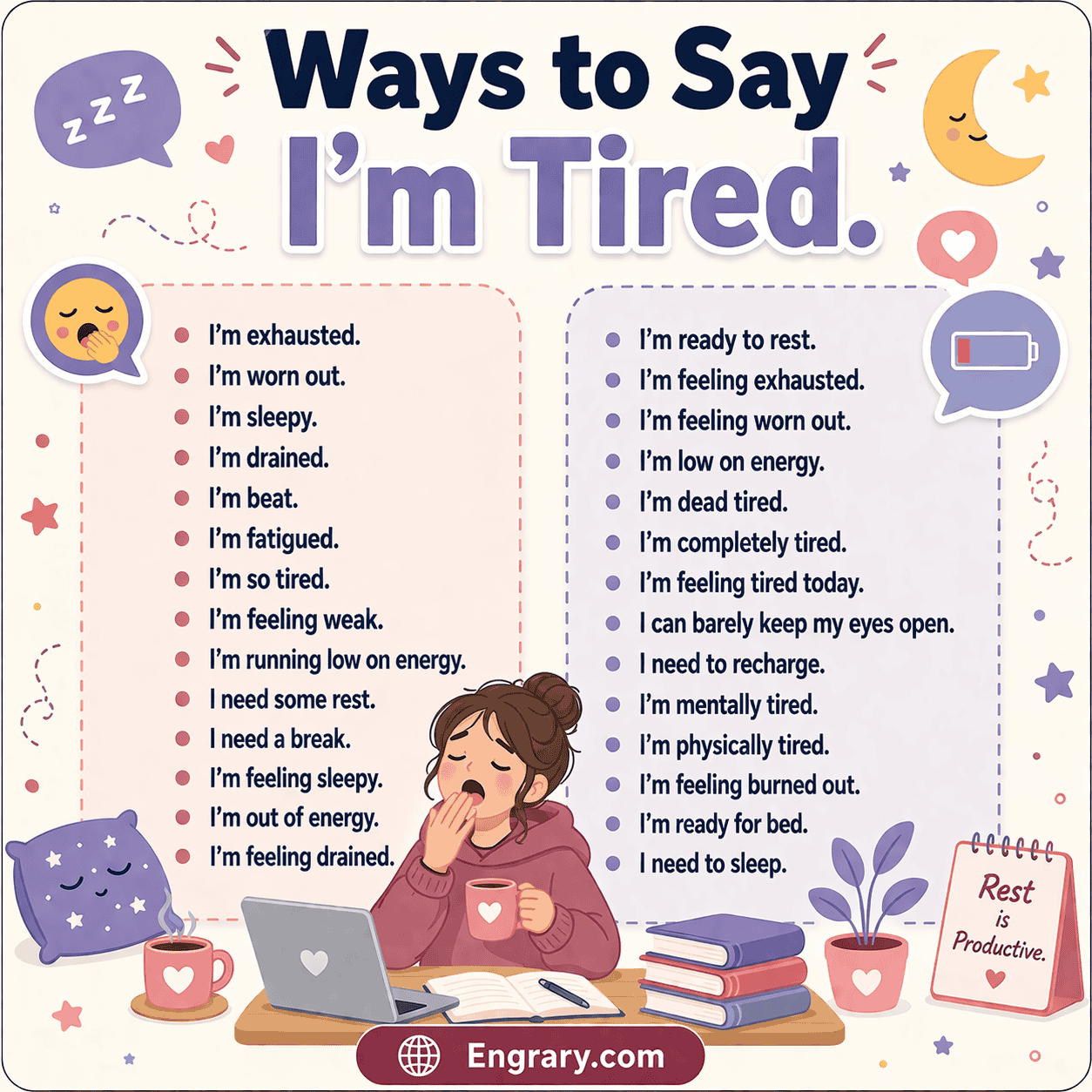
“I’m tired” is a simple English phrase, but it can describe many different feelings. Sometimes, it means you feel sleepy. However, it can also mean you feel physically exhausted, mentally drained, emotionally worn out, low on energy, or ready for rest.
Because tiredness has different levels, the best phrase depends on the cause, intensity, tone, and situation. For example, I’m exhausted sounds stronger than I’m feeling a bit tired, while I’m running low on energy today sounds more professional at work. Therefore, this guide gives you 120 natural alternatives for daily English, texts, work messages, bedtime talk, emotional moments, and casual conversations.
Best I’m Tired Phrase by Situation
| Situation | Better Phrase |
|---|---|
| Simple tiredness | I’m worn out. |
| Polite reply | I’m feeling a bit tired. |
| Work message | I’m running low on energy today. |
| Need a break | I could use a short break. |
| Very tired | I’m completely exhausted. |
| Sleepy | I can barely keep my eyes open. |
| Physical fatigue | My body feels worn out. |
| Mental fatigue | I’m mentally exhausted. |
| Emotional fatigue | I’m emotionally drained. |
| Casual text | I’m wiped. |
| Need rest | I need to recharge. |
Tired vs Sleepy vs Exhausted vs Drained
| Phrase | Meaning | Best Use |
|---|---|---|
| Tired | General low energy. | Everyday situations, work, school, and daily conversations. |
| Sleepy | Ready to sleep or struggling to stay awake. | Bedtime, late-night chats, or drowsiness. |
| Exhausted | Very tired physically or mentally. | Long workdays, travel, exercise, or heavy effort. |
| Drained | Low energy after stress, effort, or emotion. | Mental, emotional, social, or stressful situations. |
Is “I’m Tired” Polite and Professional?
“I’m tired” sounds natural in casual English, and it is not rude by itself. However, it may sound too personal or informal in some work situations, especially during meetings, deadlines, or professional updates.
Instead, use phrases that explain your energy level in a responsible way. For example, I’m running low on energy today, I could use a short break before continuing, or I may need to revisit this with a fresh mind sounds more professional. As a result, you can communicate your tiredness clearly without sounding careless.
Simple Alternatives to I’m Tired
These phrases work well in everyday situations because they sound clear and natural. However, some are stronger than others, so choose one that matches your energy level.
I’m exhausted
A common phrase for feeling very tired.
Example: I’m exhausted after today.
I’m worn out
A natural phrase for feeling tired after effort or a long day.
Example: I’m worn out.
I feel drained
A phrase for feeling like your energy is gone.
Example: I feel drained after that meeting.
I’m low on energy
A simple phrase for mild tiredness.
Example: I’m low on energy today.
I could use some rest
A polite phrase for saying you need a break or sleep.
Example: I could use some rest.
I’m feeling tired
A simple and natural phrase.
Example: I’m feeling tired today.
I don’t have much energy
A clear phrase for low energy.
Example: I don’t have much energy right now.
I need to rest
A direct phrase for needing recovery.
Example: I need to rest for a while.
I feel worn down
A phrase for feeling tired after stress or effort.
Example: I feel worn down today.
I’m feeling weak
A simple phrase for low physical energy.
Example: I’m feeling weak after the long trip.
Polite Ways to Say I’m Tired
These phrases help you sound gentle and respectful. They are useful when you do not want to sound too dramatic, but you still want to explain that you need rest or a short break.
I’m feeling a bit tired
A polite phrase for mild tiredness.
Example: I’m feeling a bit tired.
I’m running low on energy
A gentle phrase for low energy.
Example: I’m running low on energy.
I could use a short break
A polite phrase for needing rest.
Example: I could use a short break.
I’m not at my best right now
A respectful phrase for low energy or focus.
Example: I’m not at my best right now.
I may need some rest
A gentle phrase for saying you need recovery.
Example: I may need some rest.
I’m feeling a little worn out
A soft phrase for tiredness.
Example: I’m feeling a little worn out.
I need a moment to recharge
A polite phrase for needing a short pause.
Example: I need a moment to recharge.
I’m a little low on energy today
A polite phrase for not feeling fully energetic.
Example: I’m a little low on energy today.
I could use a quiet moment
A gentle phrase for needing calm or rest.
Example: I could use a quiet moment.
I’m feeling slightly drained
A polite phrase for low energy.
Example: I’m feeling slightly drained.
Professional Phrases for Work and Emails
At work, it is better to explain tiredness in a responsible way. Instead of sounding careless, these phrases show that you understand your energy level and want to stay effective.
I’m running low on energy today
A work-safe phrase for low energy.
Example: I’m running low on energy today.
I could use a short break before continuing
A professional phrase for needing a pause.
Example: I could use a short break before continuing.
I may need to revisit this with a fresh mind
A professional phrase when tiredness may affect focus.
Example: I may need to revisit this with a fresh mind.
I’m not at full capacity today
A careful phrase for low performance or energy.
Example: I’m not at full capacity today.
I’ll be more effective after a short rest
A professional phrase for explaining a break.
Example: I’ll be more effective after a short rest.
I need a quick reset before we continue
A work-friendly phrase for taking a short pause.
Example: I need a quick reset before we continue.
I’m feeling mentally stretched today
A professional phrase for mental fatigue.
Example: I’m feeling mentally stretched today.
I’d like to come back to this when I’m fresher
A polished phrase for postponing work due to low energy.
Example: I’d like to come back to this when I’m fresher.
I may need a short pause to regain focus
A professional phrase for low concentration.
Example: I may need a short pause to regain focus.
I’m experiencing some fatigue today
A formal phrase for tiredness.
Example: I’m experiencing some fatigue today.
Casual Ways to Say I’m Tired
These phrases sound natural with friends, family, classmates, and people you know well. However, avoid very casual phrases in formal emails or serious work messages.
I’m beat
A casual phrase for being very tired.
Example: I’m beat.
I’m wiped
A casual phrase for feeling very tired.
Example: I’m wiped after today.
I’m worn out
A natural casual phrase for tiredness.
Example: I’m worn out.
I’m done for today
A casual phrase for having no more energy.
Example: I’m done for today.
I’m running on fumes
A casual phrase for having very little energy left.
Example: I’m running on fumes.
I’m drained
A casual phrase for feeling low on energy.
Example: I’m drained.
I’m so tired
A simple casual phrase.
Example: I’m so tired.
I’m out of energy
A clear casual phrase for tiredness.
Example: I’m out of energy.
I’m dragging today
A casual phrase for moving slowly because you are tired.
Example: I’m dragging today.
I’m feeling rough
A casual phrase for feeling tired or not fully well.
Example: I’m feeling rough today.
Short Text Replies and Quick Tired Messages
These short replies work well in texts and chats. Since they are brief, they sound best with friends, close coworkers, or casual contacts.
So tired.
Use this for a short casual text.
I’m exhausted.
Use this when you are very tired.
Need rest.
Use this when you want to keep the message short.
I’m wiped.
Use this casually with friends.
I’m done for today.
Use this when you have no energy left.
Low energy today.
Use this for a simple update.
Need sleep.
Use this when tiredness means sleepiness.
I’m beat.
Use this for casual tiredness.
Can’t stay awake.
Use this when you are very sleepy.
Need a break.
Use this when you need rest or downtime.
Ways to Say You’re Very Tired
Use these phrases when normal tiredness does not feel strong enough. They show a higher level of exhaustion, so they fit long workdays, travel, stress, or heavy effort.
I’m completely exhausted
A strong phrase for extreme tiredness.
Example: I’m completely exhausted.
I’m dead tired
A casual phrase for being extremely tired.
Example: I’m dead tired.
I’m dead on my feet
A vivid phrase for being so tired you can barely keep going.
Example: I’m dead on my feet.
I’m totally wiped out
A casual phrase for very strong tiredness.
Example: I’m totally wiped out.
I can barely move
A strong phrase for physical exhaustion.
Example: I can barely move.
I’m beyond tired
A dramatic phrase for extreme fatigue.
Example: I’m beyond tired.
I’m completely worn out
A strong phrase for total tiredness.
Example: I’m completely worn out.
I have no energy left
A clear phrase for full exhaustion.
Example: I have no energy left.
I’m totally drained
A strong phrase for feeling empty of energy.
Example: I’m totally drained.
I’m at my limit
A phrase for extreme tiredness or overload.
Example: I’m at my limit today.
Ways to Say You’re Sleepy
Sometimes, “I’m tired” simply means you want to sleep. In that case, these phrases sound clearer because they focus on drowsiness, bedtime, or struggling to stay awake.
I’m sleepy
A simple phrase for wanting sleep.
Example: I’m sleepy.
I’m ready for bed
A natural phrase when you want to sleep.
Example: I’m ready for bed.
I can barely keep my eyes open
A vivid phrase for strong sleepiness.
Example: I can barely keep my eyes open.
I’m dozing off
A phrase for starting to fall asleep.
Example: I’m dozing off.
I need to sleep
A direct phrase for needing sleep.
Example: I need to sleep.
I’m getting drowsy
A polite phrase for becoming sleepy.
Example: I’m getting drowsy.
I’m about to fall asleep
A casual phrase for strong sleepiness.
Example: I’m about to fall asleep.
I need an early night
A natural phrase for needing to sleep earlier than usual.
Example: I need an early night.
I’m nodding off
A phrase for almost falling asleep.
Example: I’m nodding off.
My eyes are closing
A casual phrase for strong sleepiness.
Example: My eyes are closing.
Ways to Say You’re Physically Tired
These phrases fit tiredness that comes from the body. For example, you can use them after walking, exercising, traveling, cleaning, standing for hours, or doing physical work.
My body feels worn out
A clear phrase for physical tiredness.
Example: My body feels worn out.
I’m physically exhausted
A direct phrase for body fatigue.
Example: I’m physically exhausted.
My legs are tired
A simple phrase after walking, standing, or exercise.
Example: My legs are tired.
I’m sore and tired
A natural phrase after physical effort.
Example: I’m sore and tired.
I’m worn out from moving around
A phrase for tiredness from activity.
Example: I’m worn out from moving around.
I need to sit down for a while
A practical phrase for physical fatigue.
Example: I need to sit down for a while.
My body needs rest
A clear phrase for needing recovery.
Example: My body needs rest.
I’m tired from all the walking
A natural phrase after walking or travel.
Example: I’m tired from all the walking.
My whole body feels tired
A simple phrase for full-body fatigue.
Example: My whole body feels tired.
I feel physically drained
A phrase for physical exhaustion.
Example: I feel physically drained.
Ways to Say You’re Mentally Tired
Mental tiredness happens after thinking, studying, meetings, screen time, or making many decisions. Therefore, these phrases focus on focus, brain fatigue, and the need for a mental break.
I’m mentally exhausted
A clear phrase for mental fatigue.
Example: I’m mentally exhausted.
My brain is tired
A casual phrase for mental tiredness.
Example: My brain is tired.
I feel mentally drained
A phrase for low mental energy.
Example: I feel mentally drained.
I’m burned out from thinking
A casual phrase after too much mental effort.
Example: I’m burned out from thinking.
I need a mental break
A direct phrase for needing rest from thinking.
Example: I need a mental break.
My mind feels overloaded
A clear phrase for too much mental pressure.
Example: My mind feels overloaded.
I can’t focus anymore
A practical phrase for mental tiredness.
Example: I can’t focus anymore.
I need to clear my head
A natural phrase for needing mental rest.
Example: I need to clear my head.
My brain feels fried
A casual phrase for mental exhaustion.
Example: My brain feels fried.
I’m mentally spent
A phrase for having no mental energy left.
Example: I’m mentally spent.
Ways to Say You’re Emotionally Drained
Emotional tiredness often comes from stress, sadness, conflict, pressure, or overwhelm. Because this type of tiredness feels more personal, these phrases sound softer and more caring.
I’m emotionally drained
A clear phrase for emotional tiredness.
Example: I’m emotionally drained.
I feel emotionally exhausted
A strong phrase for emotional fatigue.
Example: I feel emotionally exhausted.
I’m worn down
A phrase for tiredness after stress or pressure.
Example: I’m worn down.
I’m overwhelmed and tired
A clear phrase for stress-based tiredness.
Example: I’m overwhelmed and tired.
I need some quiet time
A gentle phrase for emotional recovery.
Example: I need some quiet time.
I feel heavy today
A soft phrase for emotional tiredness.
Example: I feel heavy today.
I need a break from everything
A strong phrase for emotional overload.
Example: I need a break from everything.
I feel completely drained inside
A strong emotional phrase.
Example: I feel completely drained inside.
I’m emotionally worn out
A natural phrase for emotional fatigue.
Example: I’m emotionally worn out.
I need space to recover
A gentle phrase for emotional rest.
Example: I need space to recover.
Ways to Say You Need Rest
These phrases explain what you need next. Instead of only saying you feel tired, they clearly show that you need sleep, quiet time, a break, or recovery.
I need a break
A direct phrase for needing rest.
Example: I need a break.
I need some rest
A clear phrase for tiredness.
Example: I need some rest.
I need to recharge
A natural phrase for recovering energy.
Example: I need to recharge.
I need to slow down
A phrase for reducing activity.
Example: I need to slow down.
I need a little downtime
A gentle phrase for rest or quiet time.
Example: I need a little downtime.
I need to take it easy
A natural phrase for resting.
Example: I need to take it easy.
I need a pause
A short phrase for taking a break.
Example: I need a pause.
I need time to recover
A clear phrase after tiredness or stress.
Example: I need time to recover.
I need to rest my mind
A useful phrase for mental tiredness.
Example: I need to rest my mind.
I need to get my energy back
A natural phrase for recovery.
Example: I need to get my energy back.
Informal and Slang Ways to Say I’m Tired
These phrases sound casual, playful, or regional. As a result, they work best with friends and familiar people, but they may sound too informal in professional settings.
I’m pooped
A very casual phrase for being tired.
Example: I’m pooped.
I’m knackered
A British English phrase for being very tired.
Example: I’m knackered.
I’m shattered
A British English phrase for being extremely tired.
Example: I’m shattered.
I’m fried
A casual phrase for mental or physical exhaustion.
Example: I’m fried.
I’m spent
A phrase for having no energy left.
Example: I’m spent.
I’m bushed
A casual phrase for being very tired.
Example: I’m bushed.
I’m toast
A slang phrase for being exhausted or done.
Example: I’m toast.
I’m wiped out
A casual phrase for being very tired.
Example: I’m wiped out.
I’m zonked
A slang phrase for being extremely tired.
Example: I’m zonked.
I’m cooked
A slang phrase for being exhausted or finished for the day.
Example: I’m cooked.
Mild Ways to Say I’m Tired
Use these phrases when you feel only a little tired. They sound softer, so they are useful when you do not want to exaggerate your tiredness.
I’m a bit tired
A simple phrase for mild tiredness.
Example: I’m a bit tired.
I’m slightly tired
A polite phrase for low-level tiredness.
Example: I’m slightly tired.
I’m feeling a little slow today
A soft phrase for low energy.
Example: I’m feeling a little slow today.
I’m not fully energized today
A polite phrase for not feeling completely fresh.
Example: I’m not fully energized today.
I’m moving slowly today
A natural phrase for mild tiredness.
Example: I’m moving slowly today.
I’m not feeling very energetic
A clear phrase for low energy.
Example: I’m not feeling very energetic.
I could use a little rest
A gentle phrase for mild tiredness.
Example: I could use a little rest.
I’m feeling low-key tired
A casual phrase for mild tiredness.
Example: I’m feeling low-key tired.
I’m not fully awake yet
A phrase for morning tiredness.
Example: I’m not fully awake yet.
I need a little time to wake up
A natural phrase for early tiredness.
Example: I need a little time to wake up.
Workload and Burnout-Related Tiredness Phrases
These phrases fit tiredness caused by pressure, deadlines, overwork, or long-term stress. However, use burnout-related phrases carefully because they can suggest deeper exhaustion than normal tiredness.
I’m burned out
A phrase for deeper tiredness caused by long-term stress.
Example: I’m burned out.
I’m feeling burned out
A softer phrase for burnout-related tiredness.
Example: I’m feeling burned out lately.
I’m overloaded
A clear phrase for having too much to handle.
Example: I’m overloaded right now.
I’m stretched too thin
A phrase for having too many responsibilities.
Example: I’m stretched too thin this week.
I’m carrying too much right now
A phrase for emotional or workload pressure.
Example: I’m carrying too much right now.
I’m drained from the workload
A clear phrase for work-related exhaustion.
Example: I’m drained from the workload.
I need to step back for a bit
A polite phrase for needing distance or rest.
Example: I need to step back for a bit.
I need to reset before continuing
A useful phrase for recovering energy.
Example: I need to reset before continuing.
I’m feeling overextended
A professional phrase for being stretched beyond capacity.
Example: I’m feeling overextended.
I need to recover from the pace
A phrase for fatigue from a demanding schedule.
Example: I need to recover from the pace.
Phrases to Use Carefully
Some phrases can sound dramatic, slangy, regional, or too informal depending on the situation.
| Phrase | Why to Use Carefully | Better Use |
|---|---|---|
| I’m dead. | It is slang and can sound dramatic or unclear. | Use casually, or say I’m exhausted. |
| I’m knackered. | This is mostly British English and informal. | Use with people who understand the phrase. |
| I’m done. | It can mean tired, finished, angry, or giving up. | Use carefully, or say I’m done for today. |
| I’m burnt out. | This can refer to serious long-term stress. | Use when you truly mean burnout, not normal tiredness. |
| I’m wrecked. | It can sound very casual or intense. | Use casually, not in formal settings. |
What to Say Instead of I’m Tired in Different Situations
| Situation | Better Phrase |
|---|---|
| Simple tiredness | I’m worn out. |
| Polite reply | I’m feeling a bit tired. |
| Work message | I’m running low on energy today. |
| Need a break | I could use a short break. |
| Very tired | I’m completely exhausted. |
| Sleepy | I can barely keep my eyes open. |
| Physical fatigue | My body feels worn out. |
| Mental fatigue | I’m mentally exhausted. |
| Emotional fatigue | I’m emotionally drained. |
| Casual text | I’m wiped. |
| Need rest | I need to recharge. |
How to Choose the Right Tired Phrase
Choose the phrase based on the type and level of tiredness. If you feel generally tired, I’m worn out, I’m low on energy, or I could use some rest sounds natural. However, if you feel sleepy, use I’m ready for bed, I can barely keep my eyes open, or I’m dozing off.
For work or polite settings, choose softer phrases like I’m running low on energy today or I may need to revisit this with a fresh mind. Meanwhile, mental tiredness sounds clearer with I’m mentally exhausted or I need a mental break. If the tiredness feels emotional, phrases like I’m emotionally drained or I need some quiet time sound more caring and specific.
Summary
There are many ways to say “I’m tired,” and the best phrase depends on the type of tiredness you feel. For example, you may feel sleepy, physically exhausted, mentally tired, emotionally drained, low on energy, burned out, or simply in need of rest.
Overall, I’m worn out, I feel drained, and I’m exhausted work well in many everyday situations. However, professional, casual, text-ready, sleep-related, physical, mental, emotional, mild, burnout-related, and slang phrases all fit different needs. Therefore, choose the phrase that matches your energy level, relationship, and situation.
FAQs
Another way to say “I’m tired” is I’m worn out. You can also say I’m exhausted, I feel drained, I’m low on energy, I’m wiped out, or I could use some rest. However, the best option depends on how tired you feel.
Professionally, you can say I’m running low on energy today, I could use a short break before continuing, I may need to revisit this with a fresh mind, or I’ll be more effective after a short rest. These phrases sound responsible because they focus on energy and performance.
A polite way to say “I’m tired” is I’m feeling a bit tired. Other polite options include I’m running low on energy, I could use a short break, I’m not at my best right now, and I may need some rest. These phrases sound gentle and respectful.
In a text, you can say so tired, I’m exhausted, need rest, I’m wiped, I’m done for today, low energy today, or need sleep. Since texts are usually short, these quick phrases sound natural.
“Tired” means general low energy, while “exhausted” means very tired. So, use tired for normal low energy. However, use exhausted when you feel extremely worn out physically, mentally, or emotionally.
You May Also Like