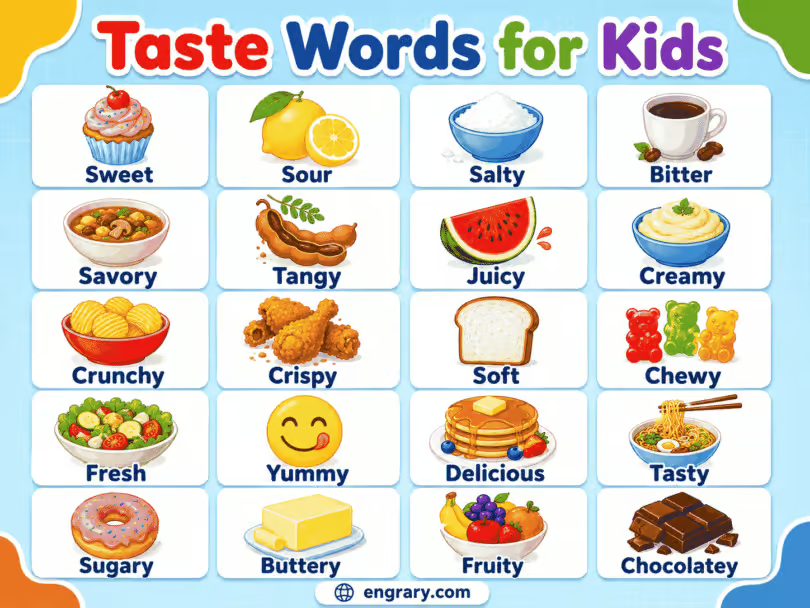
The first lick of sweet honey, the sharp bite of a lemon, and the salty crunch of a cracker can help kids discover a whole world of taste words. Children often know when food tastes “good,” but simple words like sweet, sour, salty, bitter, and spicy help them explain food more clearly.
Taste vocabulary is useful for preschool, kindergarten, ESL lessons, five senses activities, food picture cards, and simple speaking practice. These words help children describe what they eat without needing long or difficult explanations.
Taste Words Kids Learn First
Young children usually learn taste words from foods they eat often. Start with short, familiar words that are easy to say and easy to connect with real food.
- Sweet — tastes like sugar.
- Sour — has a sharp taste.
- Salty — tastes like salt.
- Spicy — feels hot in the mouth.
- Yummy — tastes good.
- Tasty — has a nice taste.
- Plain — simple, not strong.
- Fresh — clean and new-tasting.
- Mild — not strong.
- Bland — has little taste.
- Juicy — full of juice.
- Strong — has a big taste.
- New — not tasted before.
- Hot — warm in temperature.
- Cold — cool in temperature.
The Five Basic Tastes for Kids
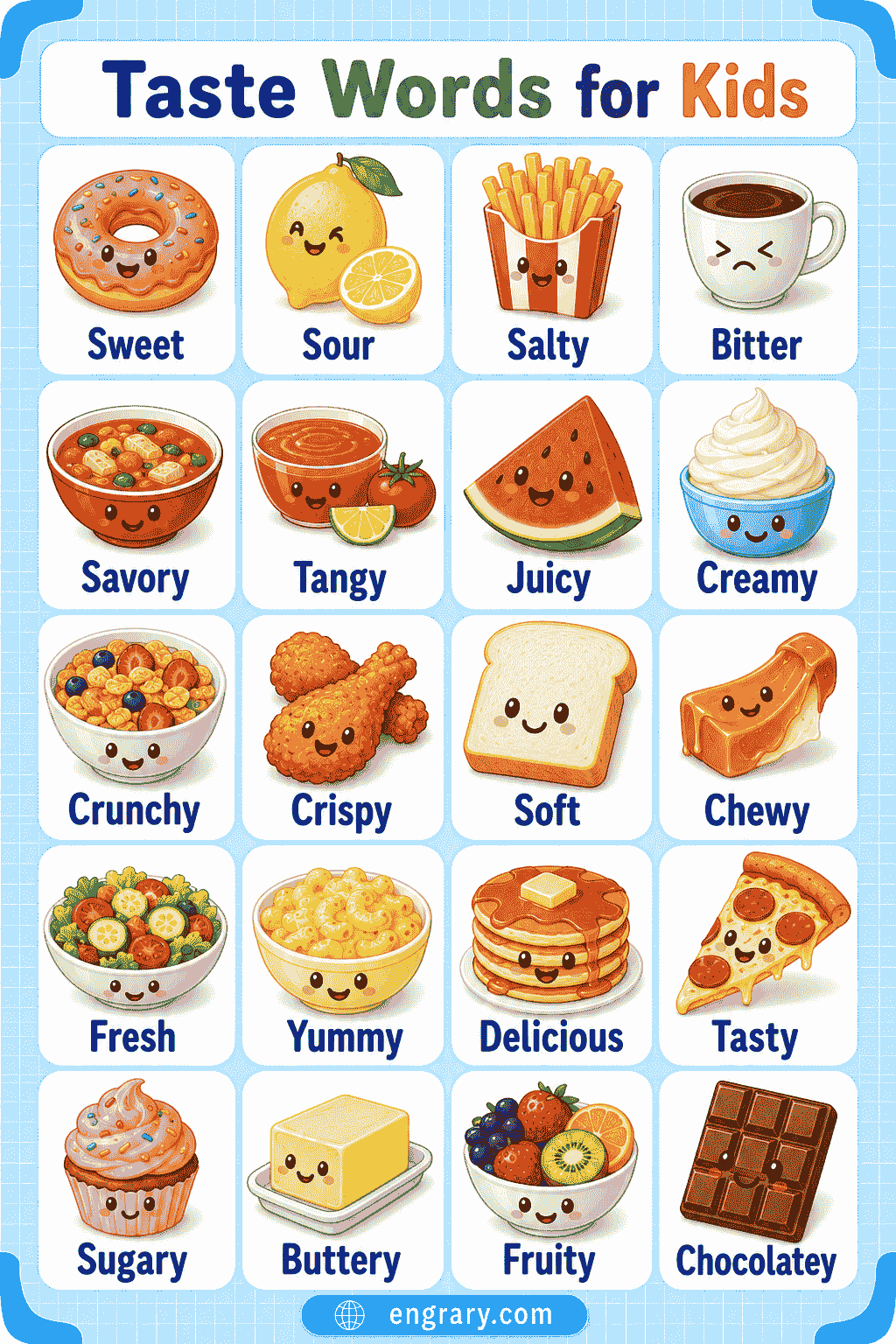
The five basic tastes are the main taste groups children can learn first. Keep the meanings simple, and use familiar foods when explaining them.
| Taste Word | Easy Meaning | Food Example |
|---|---|---|
| Sweet | tastes like sugar | honey, mango, candy |
| Sour | has a sharp taste | lemon, yogurt, sour candy |
| Salty | tastes like salt | chips, popcorn, crackers |
| Bitter | strong and not sweet | dark cocoa, bitter greens |
| Umami | a savory taste | soup, cheese, mushrooms |
More Taste Words Kids Can Use
After children learn the first taste words, they can use more describing words for food and drinks. These words help them talk about flavor in a clearer way.
- Savory — not sweet, rich-tasting.
- Tangy — sharp and lively.
- Fruity — tastes like fruit.
- Citrusy — tastes like lemon or orange.
- Minty — tastes like mint.
- Buttery — tastes like butter.
- Creamy — rich and smooth-tasting.
- Peppery — tastes like pepper.
- Zesty — bright and sharp.
- Rich — full and strong.
- Flavorful — full of taste.
- Delicious — very tasty.
- Sugary — very sweet.
- Tart — sharp and sour.
- Watery — thin with little taste.
- Smoky — tastes like smoke.
- Earthy — tastes natural and deep.
- Nutty — tastes like nuts.
- Herby — tastes like herbs.
- Garlicky — tastes like garlic.
Taste Words That Work Well in Pictures
Some taste words are easy to teach with pictures because the food clearly shows the taste. These work well for flashcards, posters, worksheets, and matching games.
- Sweet — honey, cupcake, mango
- Sour — lemon, lime, sour candy
- Salty — popcorn, chips, pretzels
- Bitter — dark cocoa, bitter greens
- Savory — soup, cheese, mushrooms
- Spicy — chili, pepper, spicy sauce
- Mild — plain rice, bread, milk
- Tangy — yogurt, orange, tomato sauce
- Fruity — berries, apple, fruit juice
- Minty — mint leaves, mint candy
- Buttery — toast, corn, popcorn
- Creamy — yogurt, pudding, cream soup
- Fresh — cucumber, watermelon, salad
- Bland — plain pasta, plain crackers, rice
- Juicy — orange, grapes, watermelon
Food Examples for Taste Words
Food examples help children understand taste words faster because they can connect the word with something familiar.
- Sweet foods: honey, mango, banana, dates, candy, cake
- Sour foods: lemon, lime, sour yogurt, sour candy, green apple
- Salty foods: crackers, popcorn, chips, pretzels, salted nuts
- Bitter foods: dark cocoa, bitter melon, some leafy greens
- Umami foods: cheese, mushrooms, soup, tomatoes, cooked meat
- Spicy foods: chili, pepper, spicy noodles, spicy sauce
- Mild foods: rice, bread, milk, plain pasta, boiled potato
- Tangy foods: yogurt, orange, tomato sauce, pickles
Umami and Savory Taste Words
Umami and savory can be harder for children because they are not as easy as sweet or salty. Use simple food examples instead of long science explanations.
- Umami — a savory taste.
- Savory — rich and not sweet.
- Cheesy — tastes like cheese.
- Meaty — tastes like cooked meat.
- Brothy — tastes like soup broth.
- Mushroomy — tastes like mushrooms.
- Tomatoey — tastes like tomatoes.
- Rich — full and deep in taste.
Spicy, Mild, Tangy, and Fresh Taste Words
These taste words help children describe foods that do not fit only into sweet, sour, salty, bitter, or umami.
- Spicy — feels hot in the mouth.
- Mild — not strong.
- Tangy — sharp and lively.
- Fresh — clean and new-tasting.
- Zesty — bright and sharp.
- Peppery — tastes like pepper.
- Citrusy — tastes like lemon or orange.
- Cool — fresh or lightly cold.
- Warm — gently hot.
- Strong — has a big taste.
- Plain — simple and not strong.
- Bland — has little taste.
Taste Words vs Texture Words
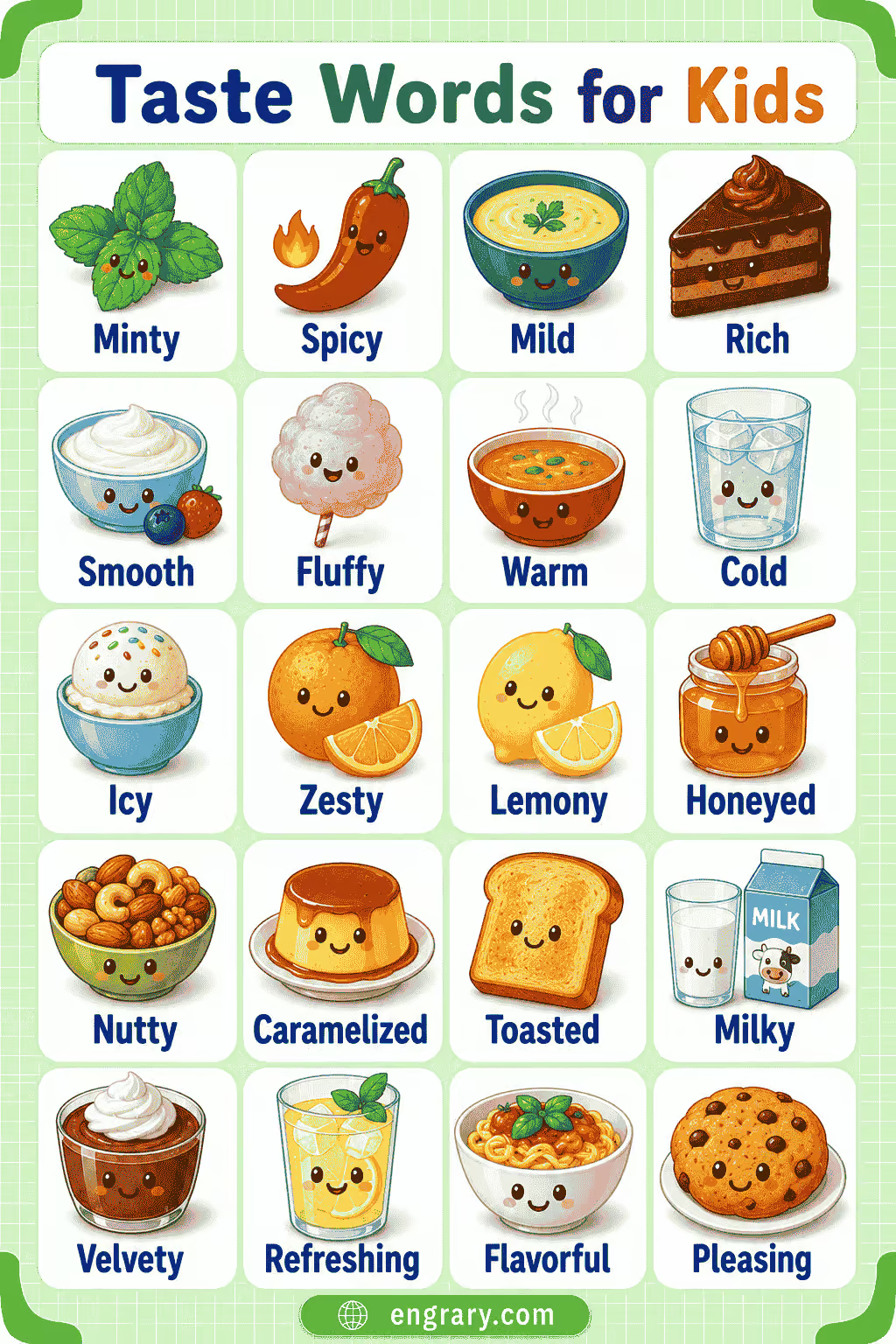
Taste words tell how food tastes. Texture words tell how food feels when we bite, chew, or touch it in the mouth.
| Taste Words | Texture Words |
|---|---|
| Sweet | Crunchy |
| Sour | Chewy |
| Salty | Crispy |
| Bitter | Dry |
| Savory | Smooth |
| Spicy | Sticky |
| Tangy | Soft |
| Mild | Hard |
- Sweet tells taste.
- Crunchy tells texture.
- Sour tells taste.
- Chewy tells texture.
- Salty tells taste.
- Crispy tells texture.
Gentle Words for Food Likes and Dislikes
Children can learn polite words to describe food without using rude or food-shaming language. These phrases help them talk about taste in a kind way.
- I like this taste.
- This tastes sweet.
- This tastes too sour for me.
- This is not my favorite.
- This taste is new to me.
- This tastes strong.
- This is a little spicy.
- This tastes plain.
- I am still learning this taste.
- May I try a small bite?
- I like the smell, but not the taste.
- This tastes different.
Taste Words for Preschool Kids
Preschool taste words should be short, familiar, and easy to connect with real foods. Use words children can say during snacks, meals, and picture-card activities.
- Sweet
- Sour
- Salty
- Yummy
- Hot
- Cold
- Spicy
- Plain
- Fresh
- Juicy
- Mild
- Bland
- Good
- New
- Strong
Taste Words for Kindergarten Kids
Kindergarten children can learn stronger taste words, sort taste and texture words, and use simple sentences to describe food.
- Bitter
- Umami
- Savory
- Tangy
- Fruity
- Citrusy
- Minty
- Buttery
- Creamy
- Peppery
- Zesty
- Flavorful
- Delicious
- Bland
- Sugary
- Tart
- Smoky
- Nutty
- Herby
- Texture
Taste Words Pronunciation Guide
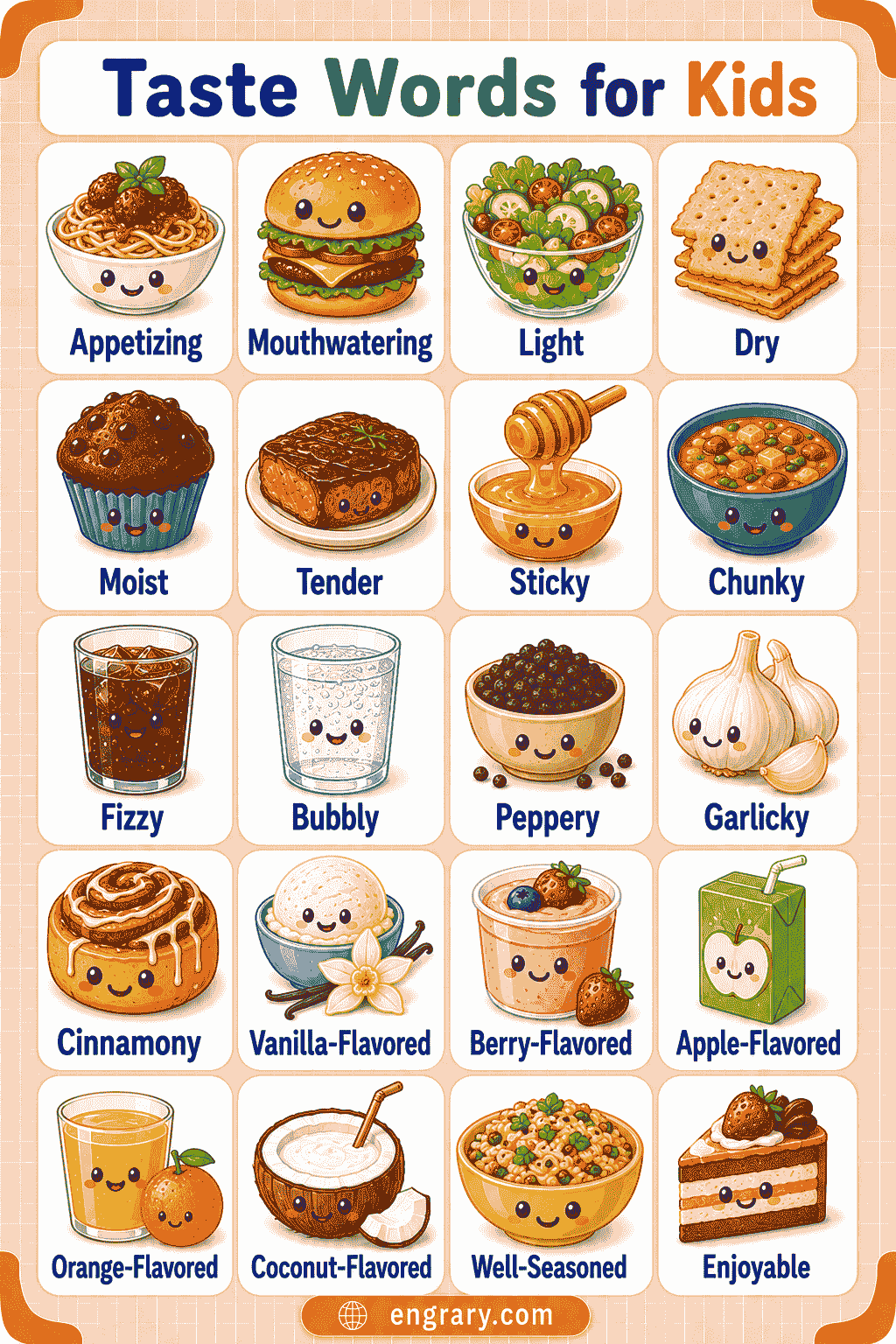
Pronunciation support helps children and ESL learners say harder taste words more clearly.
- 🔊 Bitter — /ˈbɪt.ər/
- 🔊 Savory — /ˈseɪ.vər.i/
- 🔊 Umami — /uːˈmɑː.mi/
- 🔊 Citrusy — /ˈsɪt.rə.si/
- 🔊 Tangy — /ˈtæŋ.i/
- 🔊 Creamy — /ˈkriː.mi/
- 🔊 Flavor — /ˈfleɪ.vər/
- 🔊 Delicious — /dɪˈlɪʃ.əs/
- 🔊 Texture — /ˈteks.tʃər/
- 🔊 Peppery — /ˈpep.ər.i/
Simple “It Tastes…” Sentences for Kids
Sentence practice helps children use taste words in real speech. Keep sentences short, clear, and easy to repeat.
- The mango tastes sweet.
- The lemon tastes sour.
- The popcorn tastes salty.
- The cocoa tastes bitter.
- The soup tastes savory.
- The chili tastes spicy.
- The rice tastes plain.
- The yogurt tastes tangy.
- The orange tastes citrusy.
- The watermelon tastes juicy.
- The crackers taste salty.
- The pudding tastes sweet.
- The mint tastes fresh.
- The sauce tastes strong.
- The bread tastes mild.
Sentence frames:
- It tastes _____.
- The food tastes _____.
- This drink tastes _____.
- My snack is _____.
- The fruit tastes _____.
- This taste is _____ to me.
Taste Words Quiz for Kids
Try this short taste words quiz.
1. Which word means “tastes like sugar”?
A. Sweet
B. Bitter
C. Crunchy
Answer: A. Sweet
2. Which food usually tastes sour?
A. Lemon
B. Honey
C. Bread
Answer: A. Lemon
3. Which word is a texture word, not a taste word?
A. Salty
B. Crunchy
C. Sour
Answer: B. Crunchy
FAQs
Kids should learn simple taste words first, such as sweet, sour, salty, spicy, yummy, plain, hot, and cold. These words are easy to connect with foods children already know.
The five basic tastes are sweet, sour, salty, bitter, and umami. Sweet tastes like sugar, sour tastes sharp, salty tastes like salt, bitter is strong and not sweet, and umami is savory.
Taste words describe flavor, such as sweet, sour, and salty. Texture words describe how food feels, such as crunchy, chewy, soft, and smooth.
Use familiar foods and simple words. For example, honey is sweet, lemon is sour, popcorn is salty, cocoa can be bitter, and soup can be savory.
Kids can say “This is not my favorite,” “This taste is new to me,” “This tastes too sour for me,” or “I am still learning this taste.” These phrases help children describe food kindly.
You May Also Like