
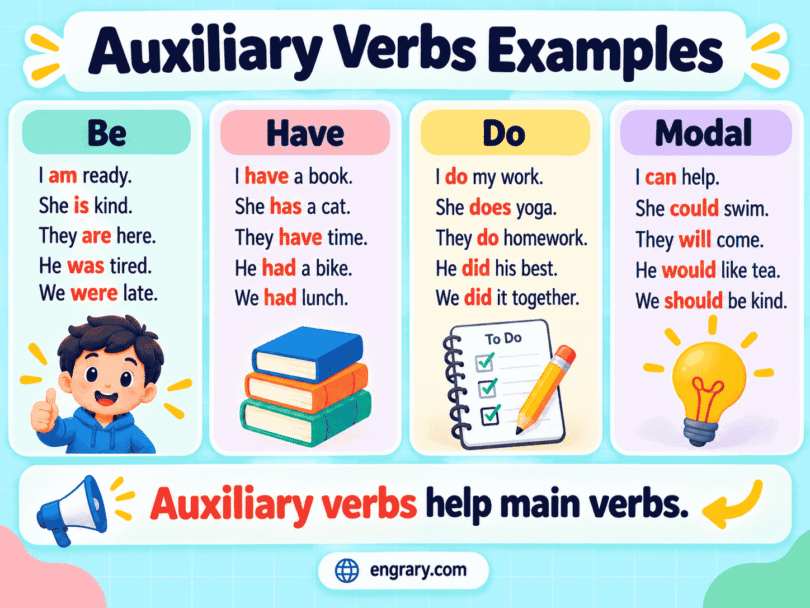
Auxiliary verbs help main verbs express tense, questions, negatives, ability, possibility, obligation, and other grammatical meanings. Seeing them in sentences makes it easier to understand what each helper does and which main verb it supports.
You’ll see examples with be, have, do, modal auxiliaries, questions, negatives, longer verb phrases, and exactly 80 auxiliary verb examples in sentences with the auxiliary and main verb clearly identified.
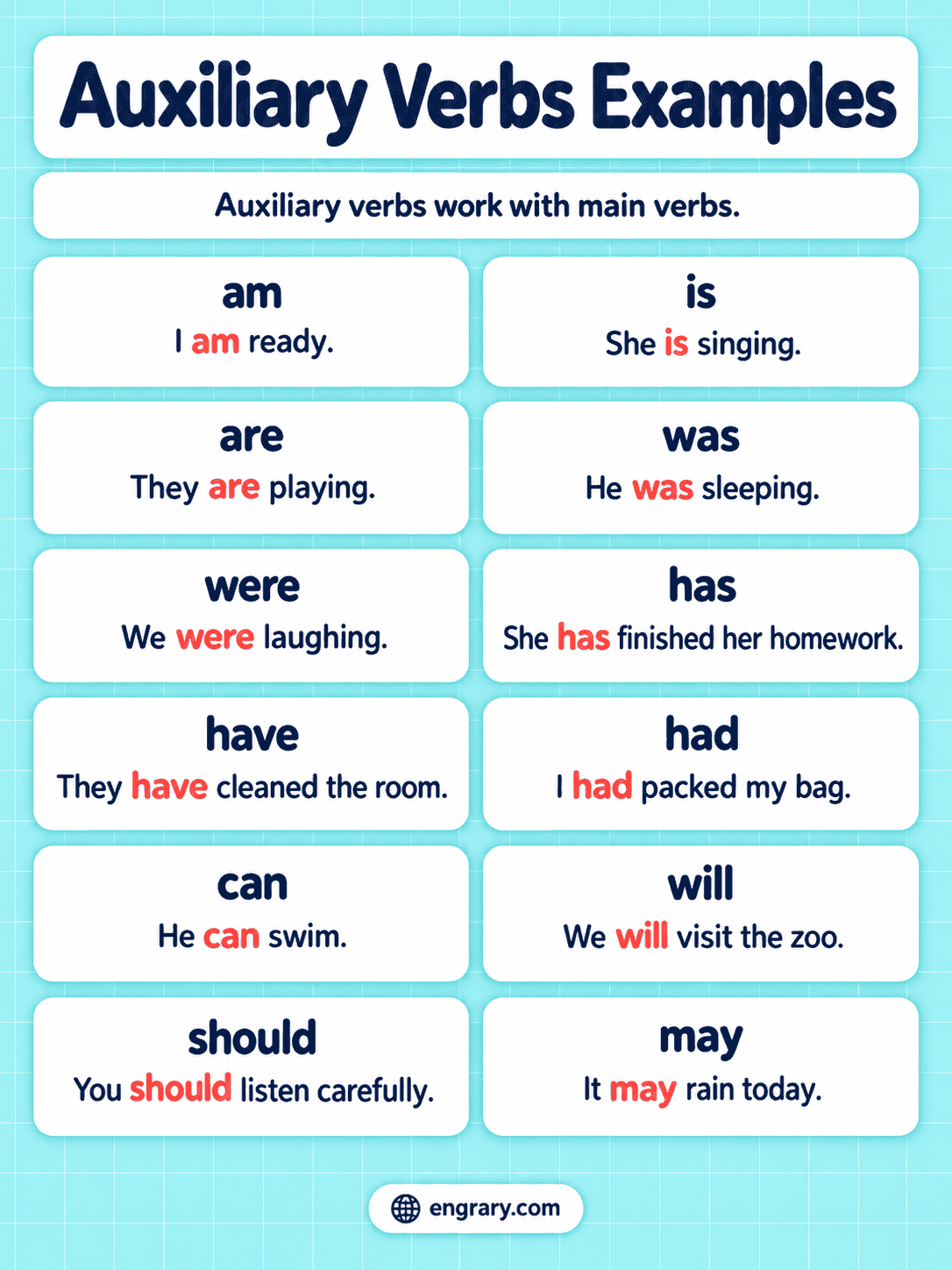
Auxiliary Verb Examples With Be
Forms of be often help form continuous and passive verb structures.
Examples:
She is reading a book.
They are playing outside.
Noah was sleeping.
We were studying.
Mia has been waiting.
The room is being cleaned.
The window was broken.
The cake was baked this morning.
In these sentences, forms of be support the main verb.
Auxiliary Verb Examples With Have
Forms of have help form perfect verb structures.
Examples:
She has finished her work.
They have eaten lunch.
We had left before noon.
Noah has written a story.
Mia has completed the task.
The students have learned the rule.
Dad had repaired the chair.
Ava has arrived safely.
The common pattern is:
have / has / had + past participle
Auxiliary Verb Examples With Do
Forms of do help form questions, negatives, and emphasis.
Questions
Do you like apples?
Does Mia play football?
Did they finish the work?
Do the children need help?
Negatives
She does not like milk.
We do not need help.
Noah did not arrive early.
They do not agree.
Emphasis
I do like this book.
She does want to help.
They did finish the project.
Noah does understand the rule.
Modal Auxiliary Verb Examples
Modal auxiliaries add meanings such as ability, possibility, permission, prediction, advice, and obligation.
Mia can swim.
Noah could help us.
You may enter.
She might come later.
They will arrive soon.
We would help if needed.
We shall begin now.
You should rest.
They must finish the work.
The modal auxiliary comes before the main verb.
Auxiliary Verbs in Questions
Auxiliaries often come before the subject in questions.
| Question | Auxiliary | Main Verb |
|---|---|---|
| Do you like apples? | do | like |
| Is she working? | is | working |
| Have they finished? | have | finished |
| Can Noah swim? | can | swim |
| Will Mia join us? | will | join |
| Did Ava call you? | did | call |
| Has Dad arrived? | has | arrived |
| Should we leave now? | should | leave |
These examples show that different auxiliaries can help form questions.

Auxiliary Verbs in Negative Sentences
Auxiliaries also help form negatives.
She does not like milk.
They are not playing outside.
We have not finished.
Mia cannot swim today.
Noah will not come tomorrow.
Ava did not answer.
Dad has not arrived.
We should not leave yet.
The auxiliary combines with not or a negative form to change the sentence meaning.
Auxiliary Verbs With More Than One Helper
A verb phrase can contain several auxiliaries.
They may have finished.
Auxiliaries:
- may
- have
Main verb:
- finished
She might have been waiting.
Auxiliaries:
- might
- have
- been
Main verb:
- waiting
Noah could have been sleeping.
Auxiliaries:
- could
- have
- been
Main verb:
- sleeping
Dad will have finished soon.
Auxiliaries:
- will
- have
Main verb:
- finished
Even with several auxiliaries, one main verb carries the central action or state.
Be, Have, and Do as Auxiliary vs Main Verbs
The same word can perform different jobs.
| Main Verb Use | Auxiliary Use |
|---|---|
| She is happy. | She is running. |
| I have a bicycle. | I have finished. |
| I do my homework. | Do you like English? |
For example:
She is happy.
Here, is functions as the main linking verb.
By contrast:
She is running.
Here:
is = auxiliary
running = main verb
Similarly:
I have a bicycle.
Here, have is the main verb.
But:
I have finished my homework.
Here, have is an auxiliary.
Auxiliary Verb Examples by Function
| Function | Example |
|---|---|
| Continuous | She is reading. |
| Perfect | They have finished. |
| Passive | The door was opened. |
| Question | Do you agree? |
| Negative | She does not agree. |
| Emphasis | I do understand. |
| Ability | Noah can swim. |
| Possibility | Mia might come. |
| Permission | You may leave. |
| Advice | You should rest. |
| Obligation | You must stop. |
| Prediction | They will arrive soon. |
This table shows that auxiliary verbs support different grammatical functions.
80 Auxiliary Verb Examples in Sentences
The following table gives exactly 80 examples.
| Sentence | Auxiliary Verb | Main Verb |
|---|---|---|
| Mia is reading a book. | is | reading |
| They are playing outside. | are | playing |
| Noah was sleeping quietly. | was | sleeping |
| We were studying together. | were | studying |
| Ava is drawing a flower. | is | drawing |
| Dad was cooking dinner. | was | cooking |
| The children are laughing. | are | laughing |
| Mia is writing a letter. | is | writing |
| They were waiting outside. | were | waiting |
| Noah is swimming now. | is | swimming |
| She has finished her work. | has | finished |
| They have eaten lunch. | have | eaten |
| We had left before noon. | had | left |
| Noah has written a story. | has | written |
| Mia has completed the task. | has | completed |
| The students have learned the rule. | have | learned |
| Dad had repaired the chair. | had | repaired |
| Ava has arrived safely. | has | arrived |
| We have seen that film. | have | seen |
| Noah had forgotten his bag. | had | forgotten |
| Do you like apples? | do | like |
| Does Mia play football? | does | play |
| Did they finish the work? | did | finish |
| She does not like milk. | does | like |
| We do not need help. | do | need |
| Noah did not arrive early. | did | arrive |
| I do understand the rule. | do | understand |
| She does want to help. | does | want |
| They did complete the project. | did | complete |
| Do the children know the answer? | do | know |
| Mia can swim. | can | swim |
| Noah could help us. | could | help |
| You may enter now. | may | enter |
| She might come later. | might | come |
| They will arrive soon. | will | arrive |
| We would help if needed. | would | help |
| We shall begin now. | shall | begin |
| You should rest. | should | rest |
| They must finish the work. | must | finish |
| Ava can draw well. | can | draw |
| Noah may join us. | may | join |
| We might leave early. | might | leave |
| Dad will repair the gate. | will | repair |
| Mia should study tonight. | should | study |
| The children must listen carefully. | must | listen |
| Ava could solve the puzzle. | could | solve |
| Noah would answer politely. | would | answer |
| We can visit tomorrow. | can | visit |
| She may stay longer. | may | stay |
| They should wait here. | should | wait |
| Is she working? | is | working |
| Have they finished? | have | finished |
| Can Noah swim? | can | swim |
| Will Mia join us? | will | join |
| Did Ava call you? | did | call |
| Has Dad arrived? | has | arrived |
| Should we leave now? | should | leave |
| Were they playing outside? | were | playing |
| Could Noah help us? | could | help |
| May I enter? | may | enter |
| They are not playing outside. | are | playing |
| We have not finished. | have | finished |
| Mia cannot swim today. | can | swim |
| Noah will not come tomorrow. | will | come |
| Ava did not answer. | did | answer |
| Dad has not arrived. | has | arrived |
| We should not leave yet. | should | leave |
| They must not enter. | must | enter |
| Mia is not sleeping. | is | sleeping |
| The children were not listening. | were | listening |
| They may have finished already. | may, have | finished |
| She might have been waiting. | might, have, been | waiting |
| Noah could have been sleeping. | could, have, been | sleeping |
| Dad will have finished soon. | will, have | finished |
| Mia may have forgotten the book. | may, have | forgotten |
| We should have left earlier. | should, have | left |
| They must have arrived already. | must, have | arrived |
| Ava could have won the race. | could, have | won |
| Noah might be studying now. | might, be | studying |
| The children will be playing outside. | will, be | playing |
These examples show primary auxiliaries, modal auxiliaries, questions, negatives, and longer verb phrases.
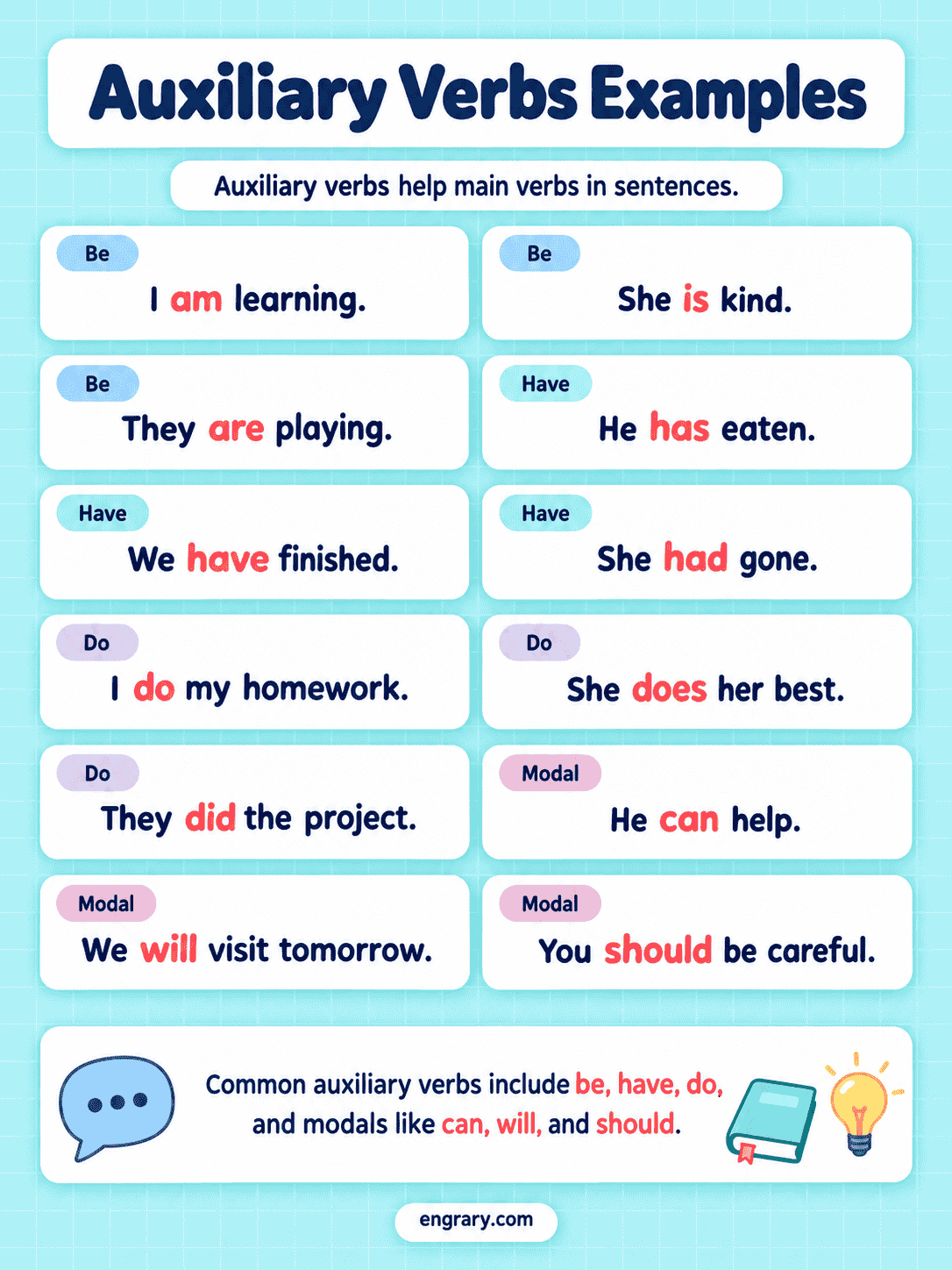
How to Identify the Auxiliary Verb in Each Example
First, find the verb phrase.
Next, identify the verb carrying the main action or state.
Any verb helping that main verb is an auxiliary.
For example:
She has been reading.
Verb phrase:
has been reading
Auxiliaries:
has, been
Main verb:
reading
Another example:
Noah can swim.
Auxiliary:
can
Main verb:
swim
Now compare:
Mia reads every night.
There is only one verb, so reads is the main verb and there is no auxiliary.
Common Auxiliary Verb Mistakes
| Mistake | Correct Understanding |
|---|---|
| Every form of be is auxiliary. | Be can also be a main or linking verb. |
| Have is always auxiliary. | It can also work as a main verb. |
| Do is always auxiliary. | It can also carry the main action. |
| Every sentence needs an auxiliary. | Many sentences use only a main verb. |
| Modal auxiliaries change like ordinary verbs. | Core modals generally do not. |
| The first verb is always the main verb. | Auxiliaries often come before the main verb. |
| Every auxiliary is followed by an -ing form. | Different auxiliaries require different verb forms. |
For example:
She is running.
Here, is is auxiliary.
By contrast:
She is happy.
Here, is is the main linking verb.
FAQs
Examples include She is reading, They have finished, Do you like apples?, Noah can swim, and We should leave.
Examples include is reading, are playing, was sleeping, were studying, and is being cleaned.
Examples with have include has finished, have eaten, and had left. Examples with do include Do you like apples?, She does not agree, and I do understand.
Common examples include can swim, could help, may leave, might come, will arrive, should study, and must finish.
Find the verb phrase, identify the main verb, and then identify the verb or verbs helping it. In She has been reading, has and been are auxiliaries, while reading is the main verb.
You May Also Like



Leave a Comment