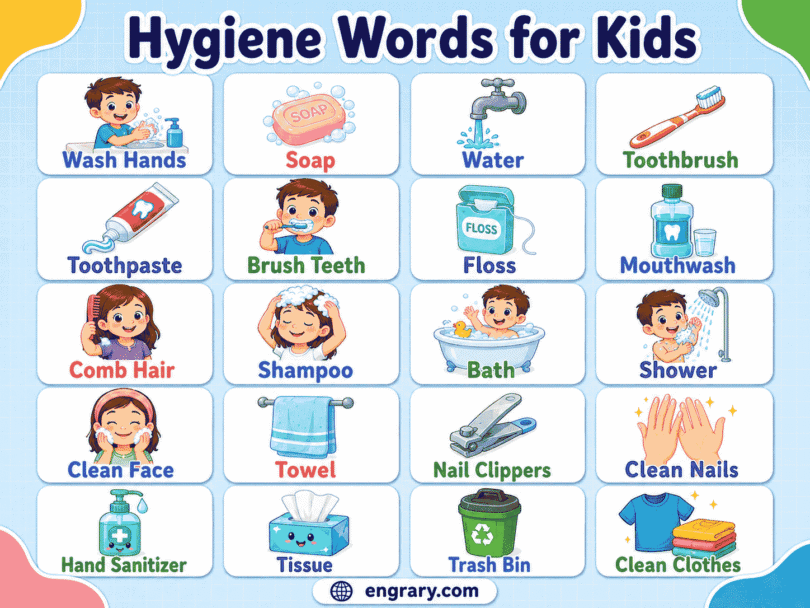
Warm water runs over soapy hands, a toothbrush moves across small teeth, and a clean towel waits beside the sink. These familiar moments give children useful language for actions they perform every day.
These hygiene words for kids help young learners understand personal-care directions, name the items they use, and explain familiar routines. Clear language also makes handwashing, brushing, bathing, and other hygiene tasks easier to learn and remember.
Personal Hygiene and Cleanliness Words
Personal hygiene means the habits people use to clean and care for their bodies. It includes washing the hands, body, face, and hair, caring for the teeth and nails, covering coughs and sneezes, and changing into clean clothing.
- Hygiene — /ˈhaɪdʒiːn/ 🔊 Habits that help keep the body clean.
- Cleanliness — The condition of being clean.
- Personal care — Actions used to clean and care for the body.
- Clean — Washed or free from unwanted dirt.
- Dirty — Needing to be washed or cleaned.
- Hygienic — /haɪˈdʒɛnɪk/ 🔊 Supporting cleanliness and health.
- Dirt — Material such as soil, dust, sweat, or grime that makes something unclean.
- Germs — A child-friendly term for tiny organisms or infectious particles, some of which can cause illness.
Hygiene describes the actions used to stay clean, while cleanliness describes the result.
Washing your hands is a hygiene habit. Clean hands are the result.
Hygiene language should describe a temporary condition or needed action without shaming a child. For example, “Your hands need washing” is clearer and kinder than labeling the child as dirty.
Common Hygiene Action Words
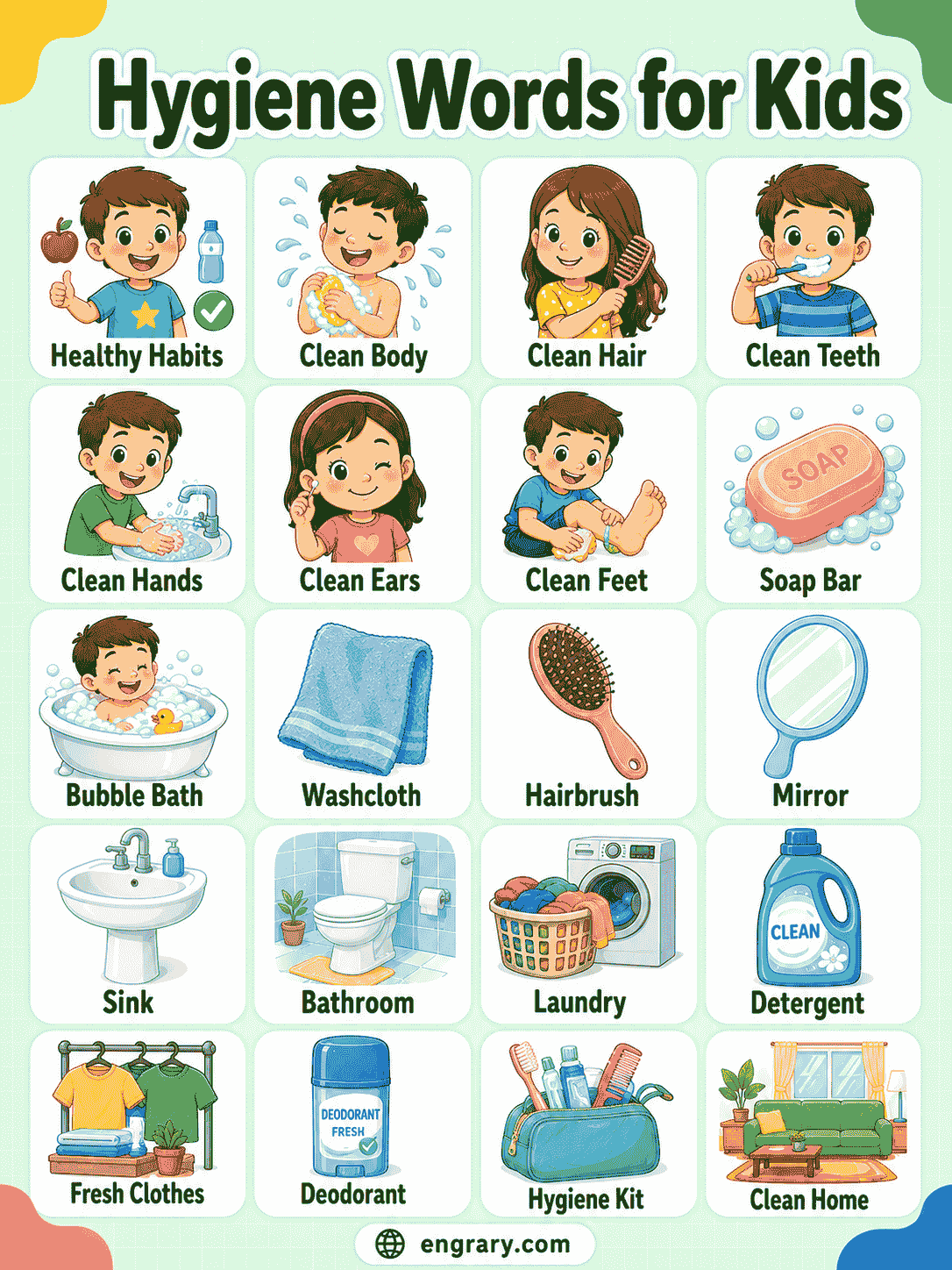
Children hear action words whenever a parent, caregiver, or teacher explains a personal-care routine. Therefore, these verbs form the most useful part of hygiene vocabulary.
- Wash — Clean something with water, usually with soap.
- Wet — Cover something with water or another liquid.
- Lather — Make foam or bubbles by rubbing soap with water.
- Scrub — Rub firmly to remove dirt.
- Rinse — Use clean water to remove soap or loosened dirt.
- Wipe — Clean or dry with paper, a tissue, or a cloth.
- Dry — Remove water or moisture.
- Brush — Clean or arrange something with a brush.
- Floss — Clean between the teeth with dental floss.
- Comb — Arrange or untangle hair with a comb.
- Trim — Cut a small amount to make something shorter or neater.
- Bathe — Wash the body in water.
- Cover — Place something over the mouth or nose.
- Flush — Send water through a toilet to clear it.
- Change — Replace used clothing with clean clothing.
These hygiene actions often appear with a body part or personal-care item:
- wash your face;
- scrub your hands;
- rinse off the soap;
- dry with a towel;
- brush your teeth;
- floss between your teeth;
- comb your hair;
- trim your nails;
- change your clothes.
Quick Map of Hygiene Actions and Items
This hygiene word map connects each action with the item used, its purpose, and the result.
| Action | Item used | Used on or for | Result |
|---|---|---|---|
| Wash | Soap | Hands | Clean hands |
| Scrub | Soap and water | Nail areas | Cleaner nails |
| Brush | Toothbrush | Teeth | Clean teeth |
| Floss | Dental floss | Between teeth | Cleaner spaces |
| Wash | Shampoo | Hair and scalp | Clean hair |
| Comb | Comb | Hair | Neater hair |
| Dry | Towel | Hands or body | Dry skin |
| Trim | Nail clippers | Nails | Shorter nails |
| Wipe | Tissue | Nose | A clean nose |
| Change | Clean clothes | Dressing | Clean clothing |
Some items support more than one hygiene routine. For instance, soap may be used on the hands or body, while a towel can dry the hands, face, hair, or skin.
Hand Hygiene and Germ-Control Words
Hands touch food, books, desks, toys, pets, door handles, and playground equipment. As a result, children hear hand-hygiene language throughout the day.
- Palm — The inside surface of the hand.
- Fingernails — The hard coverings at the ends of the fingers.
- Soap — A product used with water to clean the skin.
- Sink — A basin where people wash their hands or face.
- Faucet — The fixture that controls water flowing into a sink.
- Paper towel — Absorbent paper used for drying.
- Hand sanitizer — /ˈsænɪtaɪzər/ 🔊 A product that reduces many germs on the hands.
The five main handwashing steps are:
wet → lather → scrub → rinse → dry
First, wet the hands with clean running water. Next, add soap and rub the hands together to make a lather. Scrub the palms, backs of the hands, spaces between the fingers, and areas beneath the nails for at least 20 seconds. Finally, rinse away the soap and dry the hands.
Useful hand-hygiene phrases include:
- Turn on the faucet.
- Wet your hands.
- Make a soapy lather.
- Scrub between your fingers.
- Rinse off the soap.
- Dry your hands completely.
Soap and water are the best choice in most situations, especially when hands look or feel dirty. When they are unavailable, an alcohol-based hand sanitizer containing at least 60% alcohol may be used. Children younger than six need adult supervision to prevent swallowing the sanitizer or getting it in their eyes.
Dental Hygiene Vocabulary
Dental hygiene means caring for the teeth, gums, tongue, and mouth. Brushing and flossing use different items, although both belong to regular oral care.
- Toothbrush — A small brush used to clean teeth.
- Toothpaste — A paste placed on a toothbrush.
- Bristles — /ˈbrɪsəlz/ 🔊 The thin fibers on a toothbrush.
- Dental floss — Thin material used to clean between teeth.
- Gums — The soft tissue surrounding the teeth.
- Tongue — The movable part inside the mouth.
- Plaque — A sticky film that can collect on teeth.
- Cavity — A damaged area in a tooth.
- Dentist — A healthcare professional who cares for teeth and gums.
A toothbrush is the tool, whereas toothpaste is the product placed on its bristles. Meanwhile, dental floss cleans the narrow spaces between teeth.
Children commonly hear these dental-hygiene phrases:
- Put toothpaste on the toothbrush.
- Brush the front and back of your teeth.
- Floss between your teeth.
- Rinse the toothbrush after brushing.
- Let the toothbrush air-dry.
- Visit the dentist for a checkup.
Each person should use a separate toothbrush. After use, the toothbrush should be rinsed, stored upright, and allowed to air-dry. The American Dental Association advises against sharing toothbrushes because doing so may exchange bodily fluids and microorganisms.
Hygiene Words for Bathing and Body Care
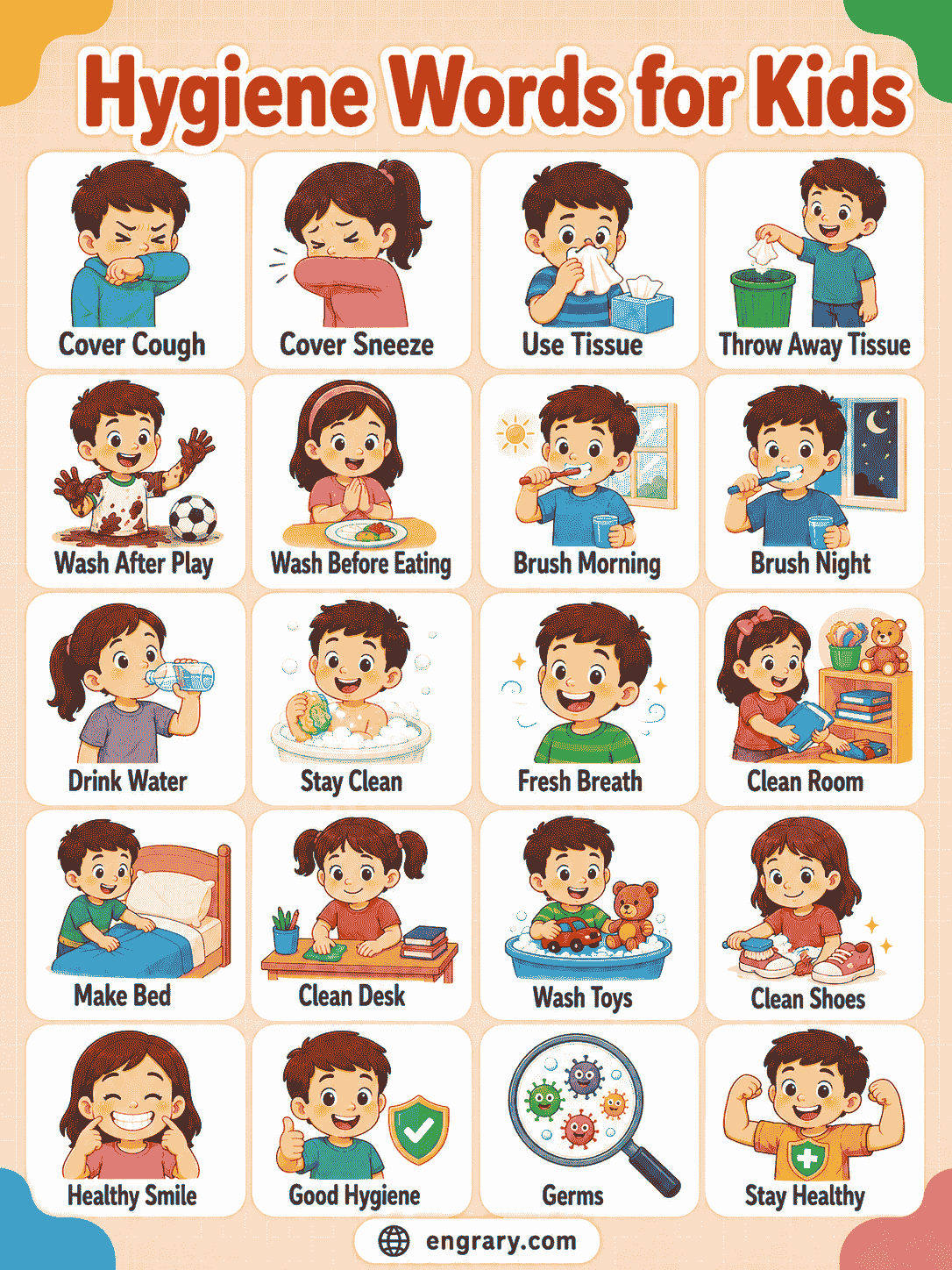
A bath or shower helps wash sweat, dirt, and unwanted substances from the skin. Families may follow different schedules and routines, but the basic body-hygiene words remain familiar.
- Skin — The outer covering of the body.
- Bath — Water held in a tub for washing the body.
- Shower — Running water used to wash the body.
- Washcloth — A small cloth used to wash the face or body.
- Towel — An absorbent cloth used mainly for drying.
A child may take a bath or take a shower. During either routine, the child can wash with soap, rinse with water, dry with a towel, and put on clean clothing.
The words bath and bathe have different grammatical roles:
- I took a bath.
- I bathed before bedtime.
Similarly, a washcloth and a towel have different jobs. A washcloth helps clean the skin, whereas a towel mainly removes water afterward.
Hair and Scalp Hygiene Vocabulary
Hair hygiene includes washing the hair and scalp, rinsing away shampoo, drying the hair, and gently removing knots.
- Hair — Strands that grow from the skin, especially on the head.
- Scalp — The skin beneath the hair on the head.
- Shampoo — A product used to wash the hair and scalp.
- Comb — A tool with rows of teeth used on hair.
- Hairbrush — A brush with bristles used to arrange or untangle hair.
A simple hair-hygiene sequence is:
wet → add shampoo → wash → rinse → dry → comb
A hairbrush and a comb can both arrange or untangle hair. However, a hairbrush has bristles, while a comb has rows of teeth.
Useful hair-hygiene phrases include:
- Wet your hair.
- Wash the scalp gently.
- Rinse away the shampoo.
- Dry your hair with a towel.
- Comb the hair carefully.
Regular washing helps remove dirt, sweat, oil, and product residue from the hair and scalp.
Nail Hygiene Words
Nail hygiene focuses on keeping fingernails and toenails clean and neatly trimmed.
- Toenails — The hard coverings at the ends of the toes.
- Nail brush — A small brush used to clean around or beneath nails.
- Nail clippers — A small tool used to shorten nails.
Children can scrub around and beneath their nails with soap, water, or a nail brush. In addition, younger children may need an adult to handle nail clippers safely.
Useful nail-hygiene phrases include:
- Scrub beneath your nails.
- Rinse the nail brush.
- Ask an adult for help.
- Trim the nails carefully.
- Put the clippers away safely.
CDC nail-hygiene guidance recommends keeping nails short, cleaning underneath them with soap and water or a nail brush, and cleaning grooming tools before use.
Restroom Hygiene Vocabulary
Restroom hygiene should use direct, calm, and respectful language. Some children learn each step independently, while others need reminders or physical support.
- Restroom — A public or school room containing toilets and sinks.
- Bathroom — A room in a home that may contain a toilet, sink, bathtub, or shower.
- Toilet — A fixture used for urination and bowel movements.
- Toilet paper — Soft paper used after using the toilet.
A basic restroom-hygiene routine follows this order:
use the toilet → wipe → flush → wash hands → dry hands
Useful restroom-hygiene phrases include:
- I need to use the restroom.
- Please remember to flush.
- Wash your hands afterward.
- Dry your hands before leaving.
Handwashing is especially important after using the restroom and before eating. Younger children and children with certain disabilities may need additional help completing the routine.
Cough and Sneeze Hygiene Words
Personal hygiene also includes handling coughs, sneezes, and used tissues in a clean way.
- Cough — A sudden action that forces air from the lungs through the mouth.
- Sneeze — A quick burst of air through the nose and mouth.
- Tissue — Soft disposable paper used for the nose or mouth.
- Trash can — A container used for garbage.
Children can use these cough-and-sneeze hygiene phrases:
- Cover your cough with a tissue.
- Sneeze into your elbow when a tissue is unavailable.
- Blow your nose into a clean tissue.
- Throw the used tissue in the trash can.
- Wash your hands afterward.
Covering coughs and sneezes with a tissue or elbow, throwing used tissues away, and cleaning the hands afterward can help limit the spread of respiratory germs.
Clothing Hygiene and Cleanliness Words
Sweat, spills, outdoor play, and everyday use can make clothing ready for washing. Therefore, children need a few simple clothing-hygiene terms.
- Clean clothes — Clothing that has been washed and is ready to wear.
- Dirty clothes — Clothing that needs washing.
- Laundry — Clothes and fabrics that need washing or have been washed.
- Laundry basket — A container used to hold clothing for washing.
Useful clothing-hygiene phrases include:
- Change into clean clothes.
- Place dirty socks in the laundry basket.
- Put on clean underwear.
- Change sweaty clothing.
- Wear dry socks.
- Hang up a damp towel.
Neutral wording keeps the focus on the task:
These clothes are ready for the laundry.
Hygiene Sentences Children Can Use
Hygiene vocabulary becomes more useful when children can place the words inside complete sentences.
- I need to wash my hands.
- Please pass me the towel.
- The soap is beside the sink.
- My hands are still wet.
- I rinsed off all the bubbles.
- There is toothpaste on my toothbrush.
- I need help trimming my nails.
- My hair needs combing.
- I threw the tissue in the trash can.
- These clothes need washing.
- I washed my hands after recess.
- I forgot to flush the toilet.
Children can also ask for hygiene help politely:
- Can you help me reach the soap?
- May I have a clean towel?
- Can you help me with the nail clippers?
- Where should I put the dirty clothes?
- May I go wash my hands?
Common Mistakes with Hygiene Vocabulary
Beginner learners may know the correct hygiene word but use it with the wrong verb or sentence pattern.
| Incorrect sentence | Correct sentence |
|---|---|
| I am brush my teeth. | I am brushing my teeth. |
| I take shower every day. | I take a shower every day. |
| Wash the soap from your hands. | Rinse the soap from your hands. |
| I washed my teeth. | I brushed my teeth. |
| Dry your hands with water. | Rinse your hands with water. |
| I comb my teeth. | I brush my teeth. |
| I have a bath yesterday. | I took a bath yesterday. |
| My hands have dirty. | My hands are dirty. |
| I am wash my face. | I am washing my face. |
| I threw the tissue to the trash can. | I threw the tissue in the trash can. |
The verb brush normally goes with teeth, while comb goes with hair. Likewise, children wash with soap but rinse with clean water.
How Similar Hygiene Terms Differ
Several hygiene terms appear in the same routines but describe different actions, objects, or ideas.
| Hygiene terms | Main difference |
|---|---|
| Hygiene and cleanliness | Hygiene means the habits used to stay clean; cleanliness is the condition of being clean. |
| Wash and rinse | Washing cleans with water and usually soap; rinsing removes soap with clean water. |
| Rub and scrub | Rubbing may be gentle; scrubbing uses firmer repeated movement. |
| Wipe and dry | Wiping moves across a surface; drying removes moisture. |
| Brush and comb | A brush has bristles; a comb has rows of teeth. |
| Bath and bathe | Bath is usually a noun; bathe is a verb. |
| Shower and bath | A shower uses running water; a bath uses water held in a tub. |
| Towel and washcloth | A towel mainly dries; a washcloth helps wash the skin. |
| Toothbrush and toothpaste | A toothbrush is the tool; toothpaste is the product used on it. |
| Dirt and germs | Dirt is physical material; germs are tiny agents, some of which may cause illness. |
Hygiene Routine Practice for Kids
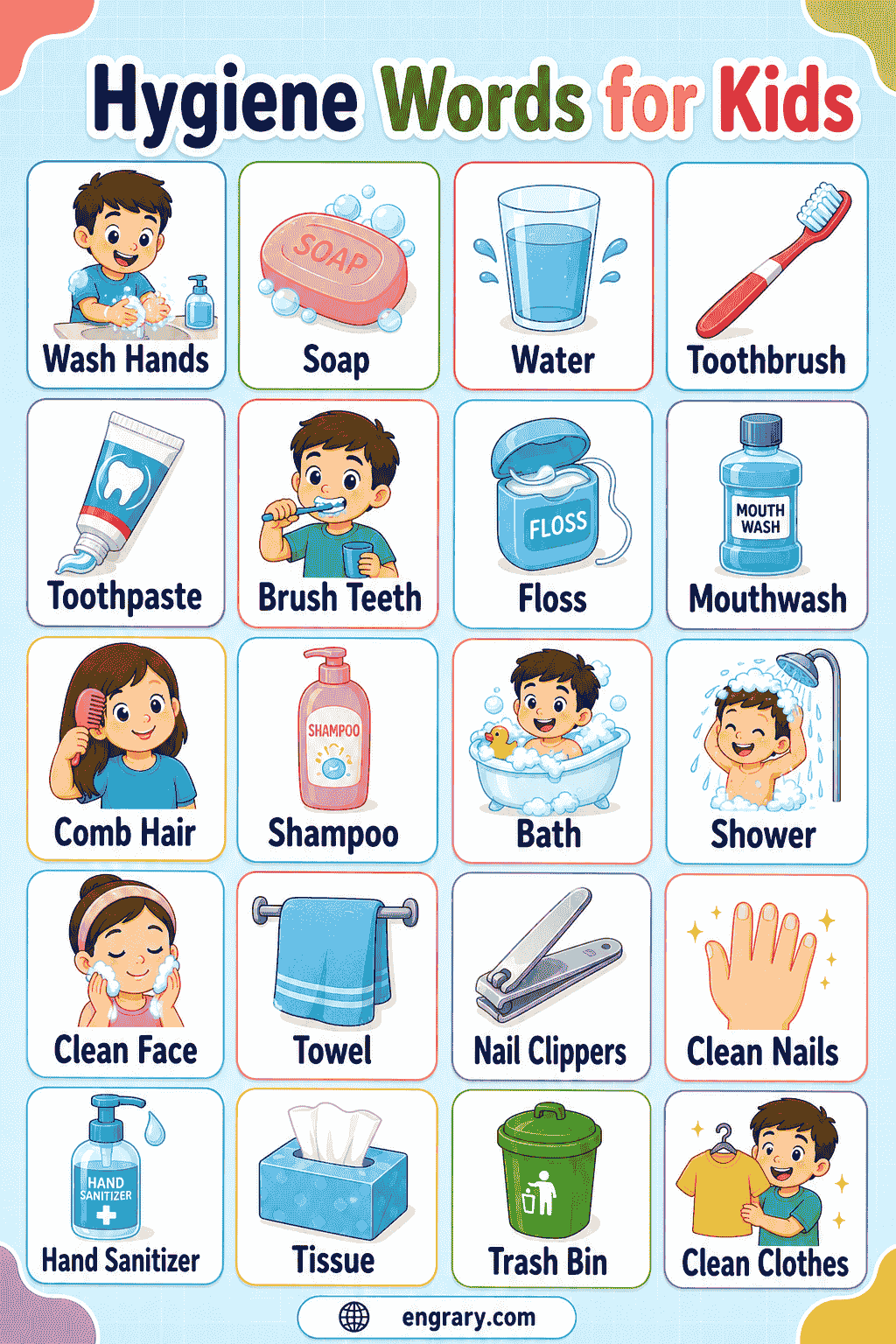
Complete Each Hygiene Routine
- Wet → lather → scrub → ______ → dry
- Toothbrush → toothpaste → ______ teeth
- Tissue → blow your nose → throw it away → ______ hands
- Shampoo → wash hair → ______ with water
- Use the toilet → wipe → ______ → wash hands
- Nail clippers → ______ nails → put the clippers away
- Dirty socks → laundry basket → wash → ______ → wear again
- Washcloth → wash face → towel → ______ face
Match Each Hygiene Item with Its Job
- Dental floss
- Shampoo
- Tissue
- Hairbrush
a. Washing the hair and scalp
b. Wiping or blowing the nose
c. Cleaning between the teeth
d. Removing knots from hair
Find the Hygiene Mistake
- Mia uses shampoo to wash her hands. What should she use?
- Ben dries his hands before rinsing away the soap. Which action should come first?
- Ava uses a comb to clean her teeth. Which hygiene item does she need?
- Leo leaves his used tissue on the desk. Where should he put it?
- Emma washes her hands but forgets the areas beneath her nails. Which action word describes cleaning those areas firmly?
Answer key:
- rinse
- brush
- wash
- rinse
- flush
- trim
- dry
- dry
- c
- a
- b
- d
- soap
- rinse
- toothbrush
- trash can
- scrub
FAQs
Hygiene means the habits children use to keep their bodies clean and care for themselves.
Hygiene describes actions such as washing, brushing, and bathing. Cleanliness describes the clean condition produced by those actions.
Washing cleans with water and usually soap. In contrast, rinsing uses clean water to remove soap and loosened dirt.
A comb is mainly a grooming and personal-care item. It can be part of a hygiene routine because it helps remove knots and keep hair orderly after washing.
Toothbrushes touch saliva and microorganisms. Sharing one may transfer bodily fluids and germs between people.
You May Also Like