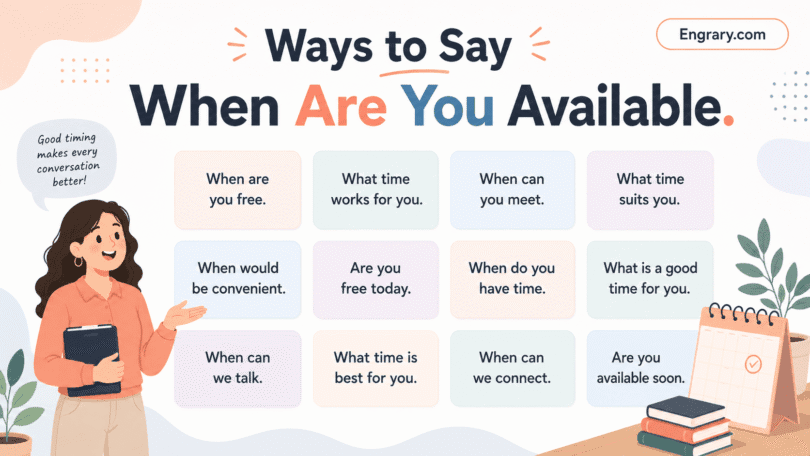
“When are you available?” is a useful English question for scheduling meetings, calls, interviews, appointments, or casual plans. It asks someone to share a time or date when they are free.
However, the phrase can sound a little direct if you do not add context. In professional emails, “Could you share your availability this week?” sounds smoother. When making casual plans, “When are you free?” sounds more natural. For meetings, “What time works best for you?” is often polite and flexible.
This guide gives you 100 ways to say “When are you available?” in English with examples for emails, meetings, calls, interviews, clients, coworkers, remote work, time zones, text messages, and friendly plans.
Best Alternatives to “When Are You Available?” by Situation
| Situation | Better Phrase |
|---|---|
| General availability | When are you available? |
| Polite scheduling | What time works best for you? |
| Professional email | Please let me know your availability |
| Meeting request | Would you be available for a meeting? |
| Call request | Are you available for a quick call? |
| Current availability | Is now a good time? |
| Specific time options | Would Monday or Tuesday work for you? |
| Interview scheduling | Could you share your availability for an interview? |
| Client scheduling | Please share a few times that work for you |
| Casual text | When are you free? |
“When Are You Available?” vs “Are You Available?” vs “What Time Works Best?”
These phrases are related, but they do not ask the same thing. “When are you available?” asks for a time or date. “Are you available?” asks a yes-or-no question. “What time works best?” sounds more flexible because it lets the other person choose a suitable time.
| Phrase | Meaning | Best Use |
|---|---|---|
| When are you available? | Asks for a time or date | General scheduling |
| Are you available? | Asks yes/no availability | Checking if someone is free |
| What time works best? | Polite and flexible scheduling question | Meetings, calls, plans |
| Please let me know your availability | Professional email phrase | Work emails |
| When are you free? | Casual and friendly | Friends, family, texts |
| Is now a good time? | Checks immediate availability | Calls, quick chats |
| Would you be available for a call? | Polite call request | Work, clients, meetings |
| Could you share a few times that work for you? | Reduces back-and-forth | Professional scheduling |
When to Use “When Are You Available?” in English
Use “When are you available?” when you need someone to tell you a suitable time. It works for meetings, calls, appointments, interviews, lessons, and casual plans.
Still, the best version depends on the situation. At work, “Could you share your availability?” sounds professional. With friends, “When are you free?” sounds relaxed. If you want to reduce back-and-forth, offer options like “Would Monday or Tuesday work for you?”
Professional Ways to Ask “When Are You Available?” in Emails
Use these phrases when scheduling something in a professional email.
Could you share your availability this week?
A professional way to ask for open times.
Example: Could you share your availability this week for a quick call?
Please let me know your availability.
A common email phrase for scheduling.
Example: Please let me know your availability for a meeting.
What time would be convenient for you?
A polite phrase that respects the other person’s schedule.
Example: What time would be convenient for you this week?
Could you let me know a suitable time?
A polished phrase for scheduling.
Example: Could you let me know a suitable time to discuss this?
Please share a few times that work for you.
A useful phrase that reduces scheduling back-and-forth.
Example: Please share a few times that work for you next week.
Would you be available for a quick call?
A professional phrase for a short call.
Example: Would you be available for a quick call tomorrow?
Could we schedule a time to discuss this?
A clear phrase for arranging a discussion.
Example: Could we schedule a time to discuss this further?
Please let me know when you are free.
A simple professional phrase.
Example: Please let me know when you are free to connect.
What time works best for your schedule?
A polite phrase for asking about timing.
Example: What time works best for your schedule?
Could you confirm your availability?
A professional phrase for checking availability.
Example: Could you confirm your availability for Friday?
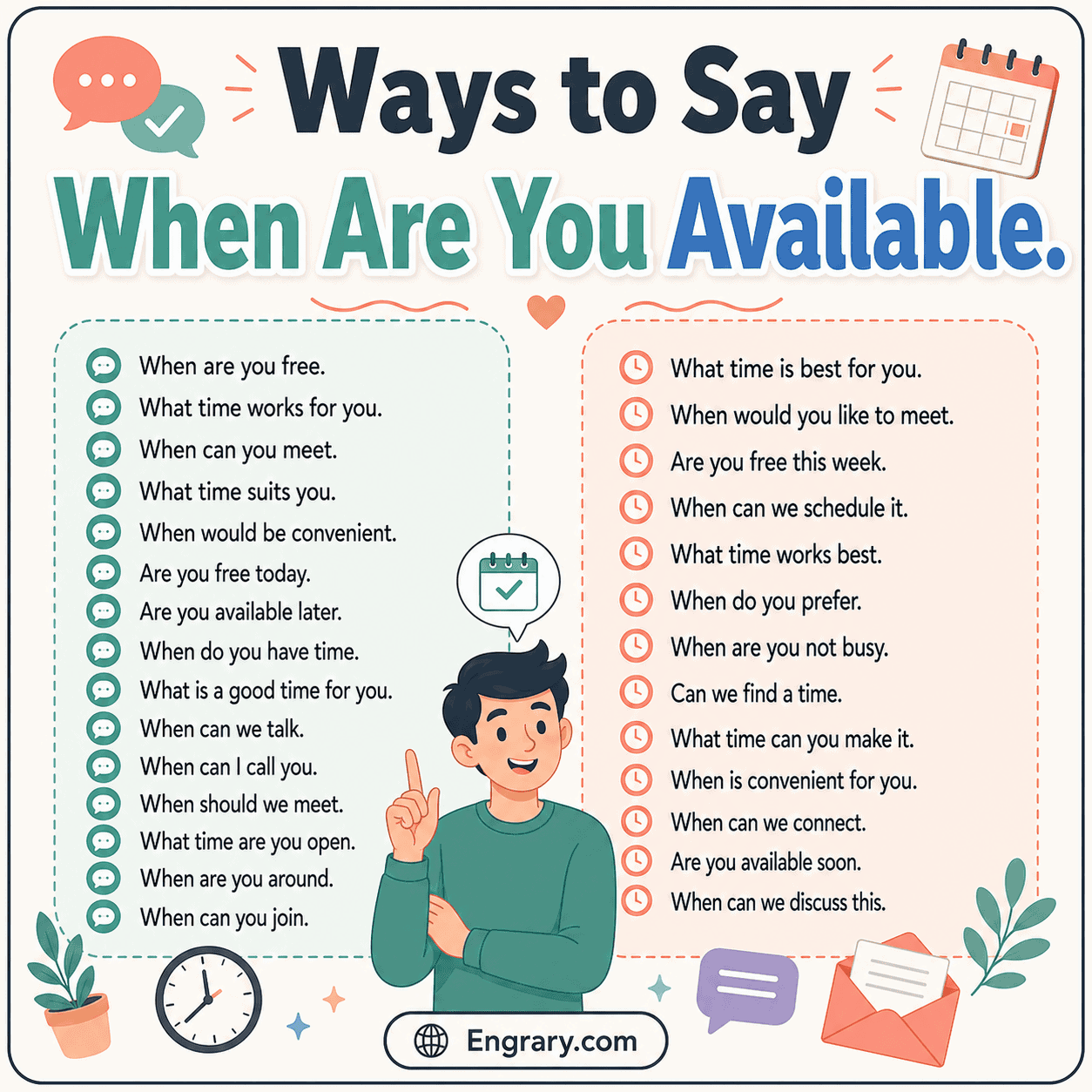
Email Phrases for Asking Someone’s Availability
These phrases work well in work emails, client messages, and formal scheduling.
Could you share your available times?
A direct but polite email phrase.
Example: Could you share your available times for next week?
Please let me know a convenient time to connect.
A polished phrase for calls or meetings.
Example: Please let me know a convenient time to connect.
Would you have time to meet this week?
A polite phrase for checking meeting availability.
Example: Would you have time to meet this week?
Could you send over your availability?
A natural workplace phrase.
Example: Could you send over your availability for Thursday?
Please let me know what time would suit you.
A formal and respectful phrase.
Example: Please let me know what time would suit you best.
Follow-Up Phrases When They Haven’t Shared a Time
Use these when someone has not replied with their availability yet.
Just following up to check your availability.
A polite reminder phrase.
Example: Just following up to check your availability for our call.
Could you let me know what time works for you?
A gentle follow-up question.
Example: Could you let me know what time works for you this week?
I wanted to check if you had a preferred time.
A soft professional follow-up.
Example: I wanted to check if you had a preferred time for the meeting.
Please let me know when you get a chance.
A polite reminder without pressure.
Example: Please let me know when you get a chance.
Would any time this week work for you?
A flexible follow-up phrase.
Example: Would any time this week work for you?
Meeting and Call Phrases for Finding a Good Time
These phrases are useful for scheduling meetings, calls, quick chats, and work discussions.
Are you available for a meeting?
A direct phrase for checking meeting availability.
Example: Are you available for a meeting this afternoon?
Would you be available for a call?
A polite phrase for asking about a call.
Example: Would you be available for a call tomorrow?
Could we schedule a quick call?
A professional phrase for arranging a short call.
Example: Could we schedule a quick call this week?
What time works for a meeting?
A simple phrase for meeting scheduling.
Example: What time works for a meeting on Friday?
When would be a good time to connect?
A polished phrase for arranging a conversation.
Example: When would be a good time to connect?
Could we find a time to discuss this?
A professional phrase for setting a discussion.
Example: Could we find a time to discuss this in more detail?
Are you free for a short meeting this week?
A natural phrase for quick scheduling.
Example: Are you free for a short meeting this week?
Would you have time for a quick discussion?
A polite phrase for asking about someone’s time.
Example: Would you have time for a quick discussion tomorrow?
Can we schedule a time to talk?
A clear phrase for arranging a conversation.
Example: Can we schedule a time to talk about the plan?
When would you be available to meet?
A direct scheduling phrase.
Example: When would you be available to meet?
Polite Ways to Ask What Time Works Best for Them
These phrases sound flexible because they let the other person choose the best time.
What time works best for you?
A polite and common scheduling question.
Example: What time works best for you?
What time would be convenient for you?
A respectful phrase for scheduling.
Example: What time would be convenient for you tomorrow?
When would be a good time?
A natural way to ask for availability.
Example: When would be a good time to call?
What time suits you best?
A polite phrase for asking about preference.
Example: What time suits you best this week?
Please let me know what time works.
A clear phrase for scheduling.
Example: Please let me know what time works for you.
Which time would work better for you?
A useful phrase when giving options.
Example: Which time would work better for you, 10 a.m. or 2 p.m.?
What time would fit your schedule?
A professional phrase for respecting someone’s calendar.
Example: What time would fit your schedule?
When would be most convenient?
A polished phrase for professional scheduling.
Example: When would be most convenient for you?
Please choose a time that works for you.
A flexible phrase for offering choice.
Example: Please choose a time that works for you.
What time would you prefer?
A polite question about preference.
Example: What time would you prefer for the call?
Ways to Ask “When Are You Available?” with Specific Time Options
Specific options help people answer faster and reduce back-and-forth.
Would Monday or Tuesday work for you?
A clear phrase with two options.
Example: Would Monday or Tuesday work for you?
Are you available tomorrow afternoon?
A specific availability question.
Example: Are you available tomorrow afternoon for a call?
Would 2 p.m. or 4 p.m. work better?
A helpful phrase with exact time choices.
Example: Would 2 p.m. or 4 p.m. work better for you?
Please let me know which time works best.
A polite phrase after giving options.
Example: Please let me know which time works best.
I’m available between 1 and 3 p.m. Which time works for you?
A clear phrase that gives your availability first.
Example: I’m available between 1 and 3 p.m. Which time works for you?
Would next Wednesday work for a call?
A specific date-based question.
Example: Would next Wednesday work for a call?
Are you free at 10 a.m. or 2 p.m.?
A casual but clear option-based phrase.
Example: Are you free at 10 a.m. or 2 p.m.?
Does Friday morning work for you?
A common scheduling phrase.
Example: Does Friday morning work for you?
Would sometime this week work?
A flexible phrase for general timing.
Example: Would sometime this week work for a quick meeting?
Are you available after 3 p.m.?
A useful phrase with a time range.
Example: Are you available after 3 p.m. today?
Ways to Ask If Someone Is Available Right Now
Use these phrases when you want to talk or meet immediately.
Is now a good time?
A polite phrase for checking current availability.
Example: Is now a good time to talk?
Are you available right now?
A direct phrase for immediate availability.
Example: Are you available right now for a quick question?
Do you have a moment?
A polite phrase for asking for a little time.
Example: Do you have a moment to discuss this?
Is this a good time to talk?
A respectful phrase before starting a conversation.
Example: Is this a good time to talk?
Are you free for a minute?
A casual phrase for quick availability.
Example: Are you free for a minute?
Do you have time now?
A direct phrase for immediate timing.
Example: Do you have time now to look at this?
Can we talk for a moment?
A natural phrase for a short conversation.
Example: Can we talk for a moment?
Are you available for a quick chat?
A friendly work phrase.
Example: Are you available for a quick chat?
Is it okay to call now?
A polite phrase before calling.
Example: Is it okay to call now?
Do you have a few minutes?
A common phrase for quick discussions.
Example: Do you have a few minutes to talk?
Scheduling Phrases for Clients, Managers, and Coworkers at Work
These phrases sound professional with clients, managers, coworkers, and team members.
Please share a few times that work for you.
A professional phrase for scheduling efficiently.
Example: Please share a few times that work for you.
Could you let me know your availability this week?
A polite workplace phrase.
Example: Could you let me know your availability this week?
Would you be available to discuss this?
A professional phrase for a meeting or call.
Example: Would you be available to discuss this tomorrow?
Please let me know a convenient time.
A polished scheduling phrase.
Example: Please let me know a convenient time to connect.
Could we schedule a time to review this?
A useful phrase for work reviews.
Example: Could we schedule a time to review this together?
What time works best for your calendar?
A professional phrase for respecting someone’s schedule.
Example: What time works best for your calendar?
Would you have time to connect this week?
A polite phrase for scheduling.
Example: Would you have time to connect this week?
Could you confirm a suitable time?
A formal phrase for confirmation.
Example: Could you confirm a suitable time for the meeting?
Please send your preferred meeting time.
A direct but professional phrase.
Example: Please send your preferred meeting time.
Could we align on a time that works for everyone?
A team-friendly scheduling phrase.
Example: Could we align on a time that works for everyone?
Interview Scheduling Phrases for Availability
Use these phrases when arranging interviews, hiring calls, candidate meetings, or recruiter conversations.
Could you share your availability for an interview?
A professional interview scheduling phrase.
Example: Could you share your availability for an interview next week?
What times are you available for an interview?
A clear phrase for interview scheduling.
Example: What times are you available for an interview?
Please let me know your availability for a call.
A useful recruiter-style phrase.
Example: Please let me know your availability for a call with the hiring team.
Would you be available for an interview this week?
A polite phrase for checking interview timing.
Example: Would you be available for an interview this week?
Could you confirm your preferred interview time?
A professional confirmation phrase.
Example: Could you confirm your preferred interview time?
Please share a few times that work for your schedule.
A polite phrase that gives flexibility.
Example: Please share a few times that work for your schedule.
Are you available for a short interview on Friday?
A specific interview scheduling phrase.
Example: Are you available for a short interview on Friday?
What time would be convenient for the interview?
A respectful phrase for interview planning.
Example: What time would be convenient for the interview?
Could we schedule your interview for next week?
A professional scheduling phrase.
Example: Could we schedule your interview for next week?
Please let us know when you would be available.
A formal phrase for availability.
Example: Please let us know when you would be available.
Casual Ways to Ask “When Are You Available?” in Text Messages
These short phrases work well with friends, family, classmates, and close coworkers.
When are you free?
A casual way to ask for availability.
Example: When are you free?
When can you talk?
A simple phrase for a conversation.
Example: When can you talk?
What time works?
A short scheduling phrase.
Example: What time works for you?
Are you free later?
A casual phrase for later plans.
Example: Are you free later today?
When do you have time?
A natural phrase for availability.
Example: When do you have time to meet?
Free today?
A very short casual text.
Example: Free today?
Can you talk now?
A direct text phrase for immediate availability.
Example: Can you talk now?
What time are you free?
A casual phrase for choosing a time.
Example: What time are you free tomorrow?
When should we meet?
A friendly planning phrase.
Example: When should we meet?
Are you around later?
A casual text phrase.
Example: Are you around later?
Friendly Ways to Make Plans Without Sounding Pushy
These phrases make scheduling feel relaxed and flexible.
Let me know what time works for you.
A friendly and flexible phrase.
Example: Let me know what time works for you.
We can meet whenever you’re free.
A relaxed phrase for flexible plans.
Example: We can meet whenever you’re free.
Tell me what day works best.
A simple phrase for planning.
Example: Tell me what day works best.
No rush—just let me know when you’re free.
A gentle phrase that removes pressure.
Example: No rush—just let me know when you’re free.
I’m flexible, so choose a time that works for you.
A helpful phrase for easy scheduling.
Example: I’m flexible, so choose a time that works for you.
Let me know when you have time.
A relaxed phrase for availability.
Example: Let me know when you have time.
We can plan around your schedule.
A considerate phrase for scheduling.
Example: We can plan around your schedule.
Pick whatever time is easiest for you.
A casual flexible phrase.
Example: Pick whatever time is easiest for you.
Tell me when would be good.
A friendly phrase for making plans.
Example: Tell me when would be good.
Let me know what works best.
A natural phrase for flexible scheduling.
Example: Let me know what works best.
Time-Zone and Remote Meeting Availability Phrases
Use these phrases when scheduling remote meetings, international calls, or online appointments.
What time works best in your time zone?
A useful phrase for international scheduling.
Example: What time works best in your time zone?
Could you share your availability in your local time?
A clear phrase for remote scheduling.
Example: Could you share your availability in your local time?
I’m available from 2 to 5 p.m. your time.
A helpful phrase that avoids confusion.
Example: I’m available from 2 to 5 p.m. your time.
What time works for you for a remote call?
A professional remote meeting phrase.
Example: What time works for you for a remote call?
Could we find a time that works across time zones?
A useful phrase for global teams.
Example: Could we find a time that works across time zones?
Please share your availability with your time zone.
A clear email phrase.
Example: Please share your availability with your time zone.
Would this time work in your time zone?
A phrase for checking time-zone fit.
Example: Would this time work in your time zone?
What time would be easiest for you remotely?
A flexible remote scheduling question.
Example: What time would be easiest for you remotely?
Could you confirm the time zone for the meeting?
A practical phrase for avoiding mistakes.
Example: Could you confirm the time zone for the meeting?
Let me know a time that works for your schedule and time zone.
A complete remote scheduling phrase.
Example: Let me know a time that works for your schedule and time zone.
Phrases That Can Sound Too Direct or Demanding
Some availability questions are useful, but they can sound abrupt, rushed, or too casual in the wrong situation.
| Phrase | Why to Use Carefully | Better Situation |
|---|---|---|
| When are you available? | Clear, but can sound abrupt without context | Add the meeting reason |
| Are you free? | Casual; not ideal for formal emails | Friends or informal chats |
| Tell me your availability | Direct and may sound demanding | Avoid or soften |
| When can you talk? | Fine casually, blunt professionally | Casual messages |
| Are you available now? | Can feel sudden without context | Add “for a quick call” |
| Send me your times | Too direct | Use “Could you share…” |
| ASAP | Can sound rushed or unclear | True urgency only |
| Pick a time | Can sound commanding | Use carefully |
| What time? | Too short and vague | Add context |
| Call me when free | Casual and unclear | Texts only |
Common Scheduling Mistakes with “When Are You Available?”
Many English learners ask “Are you available?” when they actually need a specific time. If you need a date or time, ask “When are you available?” or “What time works best for you?”
Avoid asking for availability without explaining the reason. Instead of saying only “When are you available?” say “When are you available for a quick call?” or “Could you share your availability for a meeting this week?” For remote work, include the time zone so both people understand the exact time.
Real-Life Examples for Emails, Calls, Interviews, and Texts
Professional email
A: Could you share your availability this week?
B: I’m available Tuesday or Thursday afternoon.
Call request
A: Is now a good time to talk?
B: I have five minutes now.
Interview scheduling
A: Could you share your availability for an interview?
B: I’m available Friday morning.
Specific time options
A: Would 2 p.m. or 4 p.m. work better?
B: 4 p.m. works better for me.
Casual text
A: When are you free?
B: I’m free after 6.
Best “When Are You Available?” Phrase Choices for Work, Texts, and Meetings
| Situation | Better Phrase |
|---|---|
| General availability | When are you available? |
| Polite scheduling | What time works best for you? |
| Professional email | Please let me know your availability |
| Meeting request | Would you be available for a meeting? |
| Call request | Are you available for a quick call? |
| Current availability | Is now a good time? |
| Specific time options | Would Monday or Tuesday work for you? |
| Interview scheduling | Could you share your availability for an interview? |
| Client scheduling | Please share a few times that work for you |
| Casual text | When are you free? |
How to Ask for Availability Without Extra Back-and-Forth
A clear availability request should include the reason, the time range, and any important details. Instead of asking only “When are you available?” try “Could you share your availability this week for a quick 15-minute call?”
Offering specific options also helps. Phrases like “Would Monday or Tuesday work for you?” or “I’m available between 1 and 3 p.m. Which time works best?” make it easier for the other person to reply quickly.
Summary
“When are you available?” is natural in English, but the best alternative depends on the situation. You may need a professional email phrase, a meeting request, a call request, an interview scheduling phrase, a casual text, or a time-zone-friendly option.
For professional emails, say “Could you share your availability this week?” or “Please let me know your availability.” For casual plans, use “When are you free?” or “What time works?” To reduce back-and-forth, offer options such as “Would Monday or Tuesday work for you?”
FAQs
Another way to say “When are you available?” is “What time works best for you?” You can also say “Could you share your availability?” or “When are you free?”
A professional way to ask is “Could you share your availability this week?” You can also say “Please let me know your availability” or “What time would be convenient for you?”
“When are you available?” asks for a time or date. “Are you available?” asks whether someone is free or not, so it usually needs more context.
In an email, you can say “Could you share your availability this week?” or “Please share a few times that work for you.” These phrases sound polite and professional.
Instead of “What time works best for you?” you can say “What time would be convenient for you?” “When would be a good time?” or “Please choose a time that works for you.”
You May Also Like