Material nouns name the physical substances and materials we use, see, eat, drink, or make things from. Learning common examples helps children understand the difference between a material such as wood and an object such as a table.
You’ll see easy material noun examples, meanings, categories, sentence use, quantity expressions, and comparisons with object and abstract nouns. You’ll also learn how context can change meaning and practice identifying and using material nouns correctly.

What Is a Material Noun?
A material noun names a physical substance or material.
Common examples include:
- wood;
- gold;
- cotton;
- glass;
- water;
- steel;
- plastic;
- wool;
- sugar;
- paper.
For example:
The carpenter used wood for the table.
Here, wood names the material.
Similarly:
The ring contains gold.
The word gold names the substance rather than the object.
A simple rule is:
material noun = the substance or material itself
20 Easy Material Noun Examples
The following table gives 20 familiar material nouns with their types and common uses.
| Material Noun | Type | Common Use |
|---|---|---|
| gold | metal | jewelry |
| silver | metal | jewelry and utensils |
| iron | metal | tools and structures |
| steel | metal | buildings and tools |
| copper | metal | wires and pipes |
| wood | natural material | furniture |
| stone | natural material | buildings and decoration |
| clay | natural material | pots and bricks |
| glass | manufactured material | windows and bottles |
| plastic | manufactured material | toys and containers |
| cotton | fabric and fiber | clothing |
| wool | fabric and fiber | sweaters and blankets |
| silk | fabric and fiber | clothing |
| leather | material | shoes and bags |
| water | liquid | drinking and cooking |
| milk | liquid | food and drinks |
| oil | liquid | cooking |
| sugar | food substance | food and drinks |
| salt | food substance | cooking |
| paper | manufactured material | books and writing |
These examples show that material nouns can name metals, natural substances, fabrics, liquids, food substances, and manufactured materials.
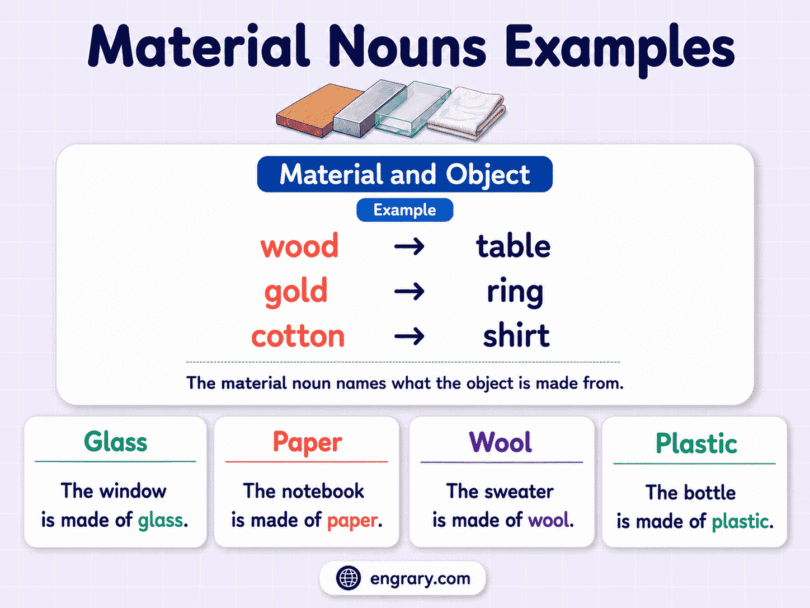
Materials and the Objects Made From Them
Children often understand material nouns more easily when they compare the material with an object made from it.
| Material | Object |
|---|---|
| wood | table |
| gold | ring |
| glass | bottle |
| cotton | shirt |
| wool | sweater |
| leather | bag |
| steel | spoon |
| plastic | toy |
| clay | pot |
| paper | book |
For example:
The table is made of wood.
Here, table names the object, while wood names the material.
Likewise:
The ring contains gold.
The word ring names the object, whereas gold identifies the material.
Therefore, the main distinction is:
material → what something consists of
object → the thing itself
Common Material Nouns With Meanings
The following examples explain some common material nouns in more detail.
Wood
Wood is a natural material that comes from trees and people commonly use it for furniture, doors, flooring, and construction. In The table is made of wood, the word wood names the material rather than the object.
Gold
Gold is a valuable yellow metal used in jewelry, decoration, electronics, and other products. In The necklace contains gold, gold names the physical substance.
Silver
Silver is a shiny metal that people use for jewelry, utensils, coins, and decorative items. In The bracelet contains silver, silver functions as a material noun.
Steel
Steel is a strong metal material widely used in buildings, tools, machines, vehicles, and bridges. In Workers used steel for the frame, steel names the material.
Cotton
Cotton is a soft natural fiber used to make shirts, towels, sheets, and many other fabrics. In Mia wore a cotton shirt, cotton identifies the material.
Wool
Wool is a natural fiber that usually comes from sheep and provides warmth in clothing and blankets. In The sweater contains wool, wool names the fiber.
Glass
Glass is a hard material that is often transparent and commonly appears in windows, bottles, jars, and screens. In The window is made of glass, glass names the substance.
Plastic
Plastic is a manufactured material used in containers, toys, packaging, tools, and many everyday products. In The bottle is made of plastic, plastic identifies the material.
Water
Water is a liquid substance that people use for drinking, cooking, washing, farming, and many other purposes. In We need water for the plants, water names the substance itself.
Clay
Clay is a soft natural material that becomes firm when it dries or receives heat. People commonly use it to make pots, bricks, tiles, and decorative objects.
Leather
Leather is a durable material made from processed animal hide and used for shoes, belts, bags, and furniture. In The bag is made of leather, leather names the material.
Paper
Paper is a thin manufactured material commonly used for writing, printing, books, packaging, and crafts. In Noah used paper for the project, paper refers to the material.
Common Material Nouns by Type
Material nouns belong to several useful groups. These categories help students connect similar examples without memorizing one long list.
Metals
Metals provide materials for jewelry, construction, tools, machines, wires, and household objects.
Common examples include:
- gold;
- silver;
- iron;
- steel;
- copper;
- aluminum;
- bronze.
For example:
The wire contains copper.
Workers used steel for the bridge.
The necklace contains gold.
Natural Materials
Natural materials come from nature and often require little or moderate processing before people use them.
Examples include:
- wood;
- stone;
- clay;
- sand;
- coal;
- marble.
For example:
The desk is made of wood.
The artist shaped clay into a pot.
The statue contains marble.
Fabrics and Fibers
Fabrics and fibers provide materials for clothes, blankets, bags, curtains, and many household products.
Examples include:
- cotton;
- wool;
- silk;
- leather;
- nylon;
- polyester.
For example:
Mia wore a cotton shirt.
The scarf contains silk.
The sweater contains wool.
Liquids
Liquid material nouns name substances that flow and take the shape of their containers.
Examples include:
- water;
- milk;
- oil;
- ink;
- paint.
For example:
We need water for the garden.
Noah spilled ink on the paper.
Add a little oil to the pan.
Food Substances
Many ingredients and food substances also function as material nouns.
Examples include:
- rice;
- flour;
- sugar;
- salt;
- butter.
For example:
The baker used flour for the bread.
Add some sugar to the tea.
We need more rice for dinner.
Manufactured and Building Materials
People process or manufacture many materials for construction, packaging, household products, and everyday objects.
Examples include:
- plastic;
- glass;
- cement;
- concrete;
- rubber;
- paper;
- ceramic;
- brick.
For example:
The bottle is made of plastic.
The workers mixed cement.
The tire contains rubber.
Material Nouns in Sentences
Material nouns appear naturally in everyday sentences. The bold words below name the substances or materials.
Wood
The carpenter used wood to make the table.
Gold
The ring contains gold.
Silver
The necklace contains silver.
Cotton
Mia wore a cotton shirt.
Wool
The sweater contains wool.
Silk
The scarf is made of silk.
Glass
The window is made of glass.
Steel
Workers used steel for the building frame.
Plastic
The toy is made of plastic.
Water
We need water for the plants.
Milk
The child drank milk with breakfast.
Oil
Add a little oil to the pan.
Sugar
Noah added sugar to the tea.
Paper
Mia used paper for the craft project.
Clay
The artist shaped clay into a bowl.
Material Nouns With Quantity Expressions
Most material nouns function as uncountable nouns when they name the substance itself. Therefore, English often uses quantity expressions instead of counting the material directly.
| Material Noun | Quantity Expression |
|---|---|
| water | a bottle of water |
| wood | a piece of wood |
| paper | a sheet of paper |
| rice | a cup of rice |
| flour | a bag of flour |
| oil | a little oil |
| sugar | some sugar |
| milk | some milk |
For example:
Dad bought a piece of wood.
Mia used a sheet of paper.
We need a bag of flour.
Add a little oil to the pan.
Similarly, we commonly say:
- some water;
- some sugar;
- some milk;
- a cup of rice.
These expressions make the quantity clear without treating the material itself as an ordinary countable object.
Same Material Noun, Different Meaning
Some nouns can name a material in one sentence and a countable object, document, or serving in another. Therefore, context determines the meaning.
Glass
The window is made of glass.
Here, glass names a material.
She washed two glasses.
Here, glasses names drinking containers.
Paper
We need more paper.
Here, paper names the material.
She submitted two papers.
In this sentence, papers means written documents.
Coffee
I drink coffee every morning.
Here, coffee refers to the beverage generally.
We ordered two coffees.
Here, coffees means two servings.
This difference explains why it is inaccurate to say that material nouns are always uncountable. They are usually uncountable when they refer to the substance itself, but a different meaning can create a countable use.
Material Nouns vs. Object Nouns
Material nouns name substances, while object nouns name individual things.
| Material Noun | Object Noun |
|---|---|
| wood | chair |
| gold | ring |
| glass | bottle |
| cotton | shirt |
| wool | sweater |
| leather | bag |
| steel | spoon |
| plastic | toy |
Compare:
The chair is made of wood.
Chair names the object, while wood names the material.
Another example:
The bottle is made of glass.
Bottle names the object. In contrast, glass identifies the substance.
This comparison helps children avoid treating every physical object as a material noun.
Material Nouns vs. Abstract Nouns
Material nouns and abstract nouns differ in what they name.
| Material Noun | Abstract Noun |
|---|---|
| gold | honesty |
| water | happiness |
| cotton | kindness |
| steel | courage |
| wood | freedom |
A material noun names a physical substance.
An abstract noun names a quality, feeling, state, or idea.
For example:
The necklace contains gold.
The noun gold names a physical material.
Honesty builds trust.
The noun honesty names a quality rather than a physical substance.
Therefore:
material noun → physical substance
abstract noun → nonphysical quality, feeling, state, or idea
Common Material Noun Mistakes
The following mistakes often occur when learners confuse substances with objects or use countable-noun patterns with materials.
| Mistake | Better Form | Why? |
|---|---|---|
| a gold | gold | Gold usually functions as an uncountable material noun. |
| a water | some water | Water usually names an uncountable substance. |
| table = material noun | wood = material noun | Table names the object; wood names the material. |
| two woods | two pieces of wood | A quantity expression measures the material. |
| glass always means material | Check the context. | Glass can name a material or an object. |
| Every physical noun is a material noun. | Material nouns name substances. | A chair or bottle usually names an object. |
Context is especially important with nouns such as glass, paper, and coffee, because their meanings can change.
FAQs
What are some examples of material nouns?
Common material nouns include gold, silver, iron, steel, wood, glass, plastic, cotton, wool, silk, leather, water, milk, oil, sugar, salt, paper, and clay.
What is the difference between a material noun and an object noun?
A material noun names the substance, while an object noun names the thing itself. For example, wood is a material noun, while table is an object noun.
Are material nouns usually countable or uncountable?
Most material nouns are uncountable when they refer to the substance itself. Therefore, we usually say some water, some sugar, or a piece of wood rather than counting the material directly.
Can the same word have a material and countable meaning?
Yes. For example, glass can name a material, while glasses can name drinking containers. Similarly, coffee can name the beverage generally, while two coffees can mean two servings.
How can you use material nouns in sentences?
Material nouns often identify what something consists of or name a substance directly. For example, The table is made of wood and We need water for the plants both use material nouns naturally.
You May Also Like