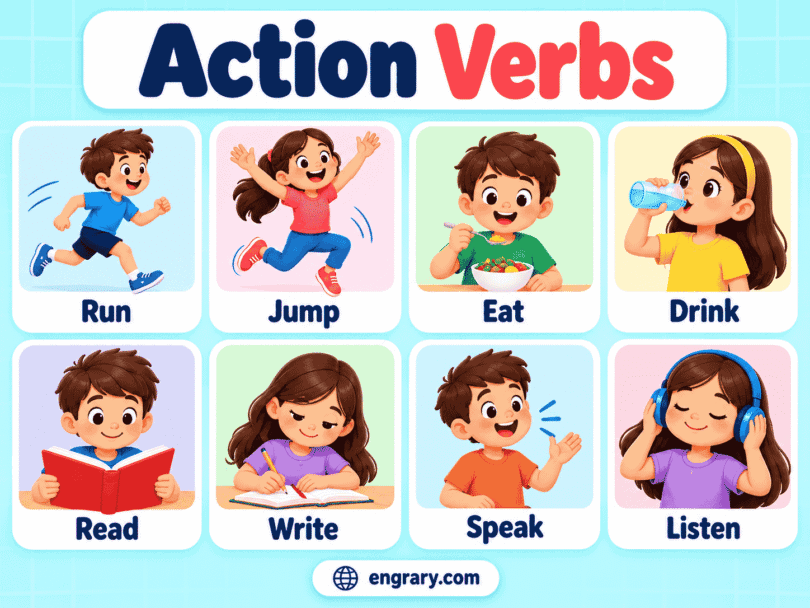
Action verbs tell what a person, animal, thing, or subject does. They can describe physical actions such as run, jump, carry, and throw, as well as mental actions such as decide, choose, imagine, and plan.
You’ll find a practical list of common action verbs, followed by a complete A to Z reference. In addition, the article groups verbs by everyday use, shows physical and mental actions, gives sentence examples, and explains a few commonly confused verbs.

What Is an Action Verb?
An action verb describes an action performed by the subject.
Examples include:
- run
- jump
- write
- build
- speak
- choose
- decide
- plan
For example:
Mia runs every morning.
The children build a tower.
Noah writes a story.
She chooses a book.
Action verbs can describe both visible physical actions and actions of the mind.
100 Most Common Action Verbs
These are useful everyday action verbs in base form.
| Action Verb | Action Verb | Action Verb | Action Verb |
|---|---|---|---|
| ask | answer | bake | build |
| call | carry | catch | choose |
| clap | clean | climb | close |
| cook | copy | count | crawl |
| create | cut | dance | decide |
| draw | drink | drive | drop |
| eat | explain | fix | fold |
| give | grab | greet | help |
| hold | hop | imagine | invite |
| jump | kick | learn | lift |
| listen | make | move | open |
| organize | pack | paint | pick |
| plan | plant | play | pour |
| practice | prepare | press | pull |
| push | read | repair | reply |
| ride | roll | run | say |
| send | serve | shake | shop |
| shout | sing | sit | skip |
| slide | solve | speak | stand |
| study | swim | sweep | take |
| talk | teach | tell | think |
| throw | touch | travel | turn |
| type | use | visit | wait |
| wake | walk | wash | watch |
| whisper | work | wrap | write |
These verbs cover movement, communication, school, home, work, play, and mental activity.

A to Z Action Verbs List
The following list uses base forms for consistency.
Action Verbs Starting With A
- accept
- act
- add
- admire
- admit
- advise
- agree
- aim
- answer
- apologize
- applaud
- apply
- argue
- arrange
- arrive
- ask
- assemble
- attach
- attack
- avoid
Action Verbs Starting With B
- bake
- balance
- bathe
- bend
- bite
- blink
- block
- boil
- bounce
- bow
- break
- breathe
- bring
- brush
- build
- bump
- bury
- buy
- button
- borrow
Action Verbs Starting With C
- call
- carry
- catch
- change
- chase
- check
- choose
- chop
- clap
- clean
- climb
- close
- collect
- color
- compare
- complain
- cook
- copy
- count
- crawl
- create
- cry
- cut

Action Verbs Starting With D
- dance
- decide
- decorate
- deliver
- describe
- design
- dig
- discover
- discuss
- dive
- dodge
- drag
- draw
- dream
- dress
- drink
- drive
- drop
- dry
- dust
Action Verbs Starting With E
- earn
- eat
- edit
- empty
- encourage
- enter
- erase
- escape
- examine
- exchange
- exercise
- explore
- express
- explain
- evaluate
Action Verbs Starting With F
- face
- fall
- fasten
- feed
- fetch
- fight
- fill
- find
- finish
- fix
- flip
- float
- fold
- follow
- forgive
- freeze
- fry

Action Verbs Starting With G
- gather
- get
- give
- glance
- glue
- go
- grab
- greet
- grind
- grow
- guard
- guess
- guide
- gulp
Action Verbs Starting With H
- hammer
- hand
- handle
- hang
- help
- hide
- hike
- hit
- hold
- hop
- hug
- hurry
- hunt
Action Verbs Starting With I
- identify
- imagine
- imitate
- improve
- inform
- inspect
- instruct
- introduce
- investigate
- invite
- iron
- illustrate
Action Verbs Starting With J
- jog
- join
- joke
- judge
- jump
- juggle
- journey
- jam
- jerk

Action Verbs Starting With K
- kayak
- keep
- kick
- kiss
- knead
- kneel
- knit
- knock
Action Verbs Starting With L
- laugh
- lead
- leap
- learn
- leave
- lend
- lick
- lift
- light
- listen
- load
- lock
- look
- lower
Action Verbs Starting With M
- make
- manage
- march
- mark
- measure
- mend
- mix
- model
- mop
- move
Action Verbs Starting With N
- name
- navigate
- negotiate
- nibble
- nod
- note
- notice
- number
- nurture

Action Verbs Starting With O
- obey
- observe
- obtain
- offer
- open
- operate
- order
- organize
- outline
Action Verbs Starting With P
- pack
- paint
- peel
- pick
- place
- plan
- plant
- play
- point
- polish
- pour
- practice
- prepare
- press
- protect
- pull
- punch
- push
Action Verbs Starting With Q
- question
- queue
- quit
- quiz
- quote
- quiver
Action Verbs Starting With R
- race
- rake
- reach
- read
- receive
- remove
- repair
- repeat
- reply
- rescue
- rest
- return
- ride
- roll
- rub
- run
- rush

Action Verbs Starting With S
- save
- say
- search
- select
- send
- serve
- sew
- shake
- share
- shop
- shout
- show
- sing
- sit
- skip
- slide
- solve
- speak
- spell
- stand
- start
- study
- sweep
- swim
Action Verbs Starting With T
- take
- talk
- taste
- teach
- tell
- text
- think
- throw
- tidy
- tie
- touch
- trace
- train
- translate
- travel
- try
- turn
- type
Action Verbs Starting With U
- uncover
- underline
- undo
- unite
- unlock
- unload
- unpack
- update
- upload
- use
Action Verbs Starting With V
- verify
- view
- visit
- volunteer
- vote
Action Verbs Starting With W
- wait
- wake
- walk
- warn
- wash
- watch
- water
- wave
- wear
- weigh
- whisper
- wipe
- work
- wrap
- write
Action Verbs Starting With X
Common action verbs beginning with X are rare.
- x-ray
For example:
The nurse x-rays the patient’s arm.
Action Verbs Starting With Y
- yank
- yawn
- yell
- yield
- yodel
Action Verbs Starting With Z
- zap
- zigzag
- zip
- zoom
Letters such as Q, X, Y, and Z naturally have fewer common action verbs, so their sections are shorter.

Action Verbs by Everyday Use
Grouping action verbs by situation makes them easier to learn and remember.
| Situation | Action Verbs |
|---|---|
| Classroom | read, write, ask, answer, listen, study, solve |
| Playground | run, jump, climb, throw, catch, skip, slide |
| Kitchen | cook, cut, chop, pour, wash, serve, bake |
| Home | clean, sweep, mop, fold, pack, open, close |
| Conversation | speak, ask, answer, tell, explain, reply, whisper |
| Work | organize, prepare, build, repair, deliver, design, measure |
For example, read, write, solve, and study fit naturally in classroom situations. Meanwhile, run, jump, climb, and catch commonly describe playground actions.
Physical vs Mental Action Verbs
Action verbs can describe physical or mental activity.
| Physical Action Verbs | Mental Action Verbs |
|---|---|
| run | decide |
| jump | choose |
| carry | imagine |
| build | plan |
| throw | compare |
| climb | calculate |
| cut | solve |
| push | evaluate |
Physical actions can usually be observed directly. By contrast, mental actions involve thinking, choosing, planning, comparing, or solving.
Action Verbs in Everyday Sentences
Action verbs change form when they appear in sentences.
Ava accepts the invitation.
Noah builds a model.
Mia carries the books.
The children dance together.
She explains the answer.
Dad fixes the chair.
We gather the leaves.
The child hops across the floor.
They imagine a new ending.
Noah jumps over the rope.
Mia kicks the ball.
The students listen carefully.
She measures the table.
He nods politely.
The teacher organizes the books.
We paint a picture.
The student questions the result.
They read every evening.
The children swim in the pool.
Mia throws the ball.
We unlock the door.
They visit the museum.
Noah writes a story.
The nurse x-rays his arm.
The child yawns after lunch.
The car zooms down the road.
These examples show how base-form verbs change to fit real sentences.
Commonly Confused Action Verbs
Some action verbs are easy to confuse because their meanings are related.
| Verb | Main Use |
|---|---|
| hear | receive sound naturally |
| listen | pay attention to sound |
| see | notice with the eyes |
| look | direct your eyes toward something |
| watch | look at something for a period of time |
| say | speak words |
| tell | give information to someone |
| bring | move something toward a place/person |
| take | move something away or to another place |
For example:
I hear music.
I listen to music carefully.
Similarly:
She says hello.
She tells me the answer.
These verbs may be related, but their sentence patterns and meanings differ.
How Action Verbs Change in Sentences
The A to Z list uses base forms because they work best as reference forms.
For example:
run
can change to:
runs
ran
running
Likewise:
write
can become:
writes
wrote
writing
Compare:
I walk to school.
She walks to school.
They walked yesterday.
The main list still uses walk because the base form keeps the reference consistent.
Action Verbs vs Stative Verbs
Not every verb describes an action.
An action verb describes an activity or action. A stative verb usually describes a state, possession, belief, relationship, or condition.
| Action Verb | Stative Verb |
|---|---|
| run | know |
| build | own |
| shout | believe |
| carry | belong |
| write | prefer |
For example:
She runs every morning.
Here, runs describes an action.
By contrast:
She knows the answer.
Here, knows usually describes a state.
Common Mistakes With Action Verbs
| Mistake | Correct Understanding |
|---|---|
| Action verbs only describe physical movement. | They can also describe mental actions such as decide and choose. |
| Every verb is an action verb. | Some verbs mainly describe states. |
| An A to Z list should mix run, ran, and running. | Base forms keep the list consistent. |
| Every letter needs the same number of verbs. | Some letters naturally have fewer common action verbs. |
| Similar verbs always mean the same thing. | Hear/listen and say/tell have different uses. |
| Action verbs always need an object. | Some action verbs can stand without a direct object. |
For example, jump clearly describes a physical action. Meanwhile, decide describes a mental action.
Likewise, listen describes an intentional action, while hear often describes receiving sound rather than deliberately performing an action.
FAQs
An action verb describes something a person, animal, thing, or subject does. Examples include run, write, build, throw, choose, and plan.
Common action verbs include walk, run, jump, read, write, speak, carry, open, close, build, cook, clean, throw, catch, decide, and plan.
Yes. Clear mental action verbs include decide, choose, imagine, plan, compare, calculate, solve, and evaluate.
The base form gives a consistent reference form. For example, write represents related forms such as writes, wrote, and writing.
Letters such as Q, X, Y, and Z have fewer common everyday action verbs, so their sections are naturally shorter.
You May Also Like