
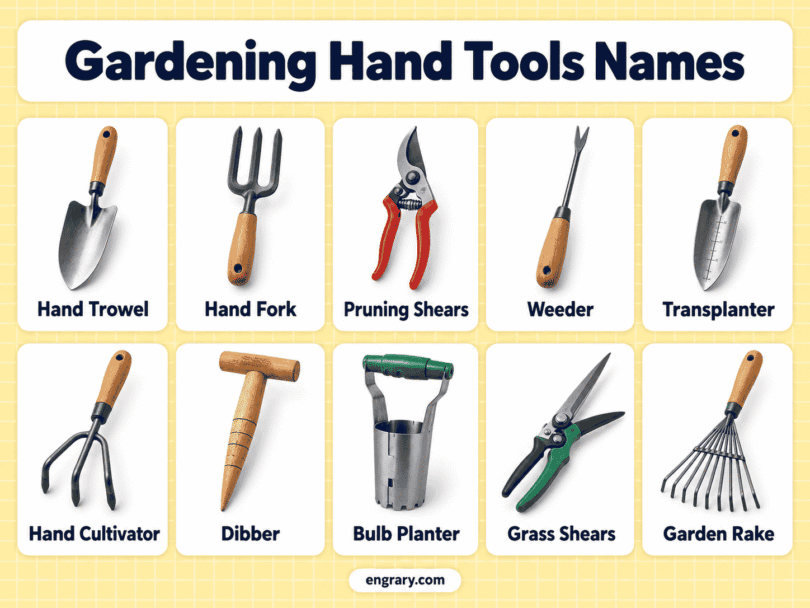
Gardening hand tools are small, manually operated tools used for planting, digging, loosening soil, removing weeds, pruning plants, and other close-up garden work. Learning gardening hand tools names with pictures and uses makes these tools easier to identify and choose for different tasks.
This guide covers 40 gardening hand tools names with short descriptions and recognition clues. The list focuses on genuine handheld tools rather than lawn machines, large equipment, or general garden accessories.
Gardening Hand Tools Used for Everyday Garden Work
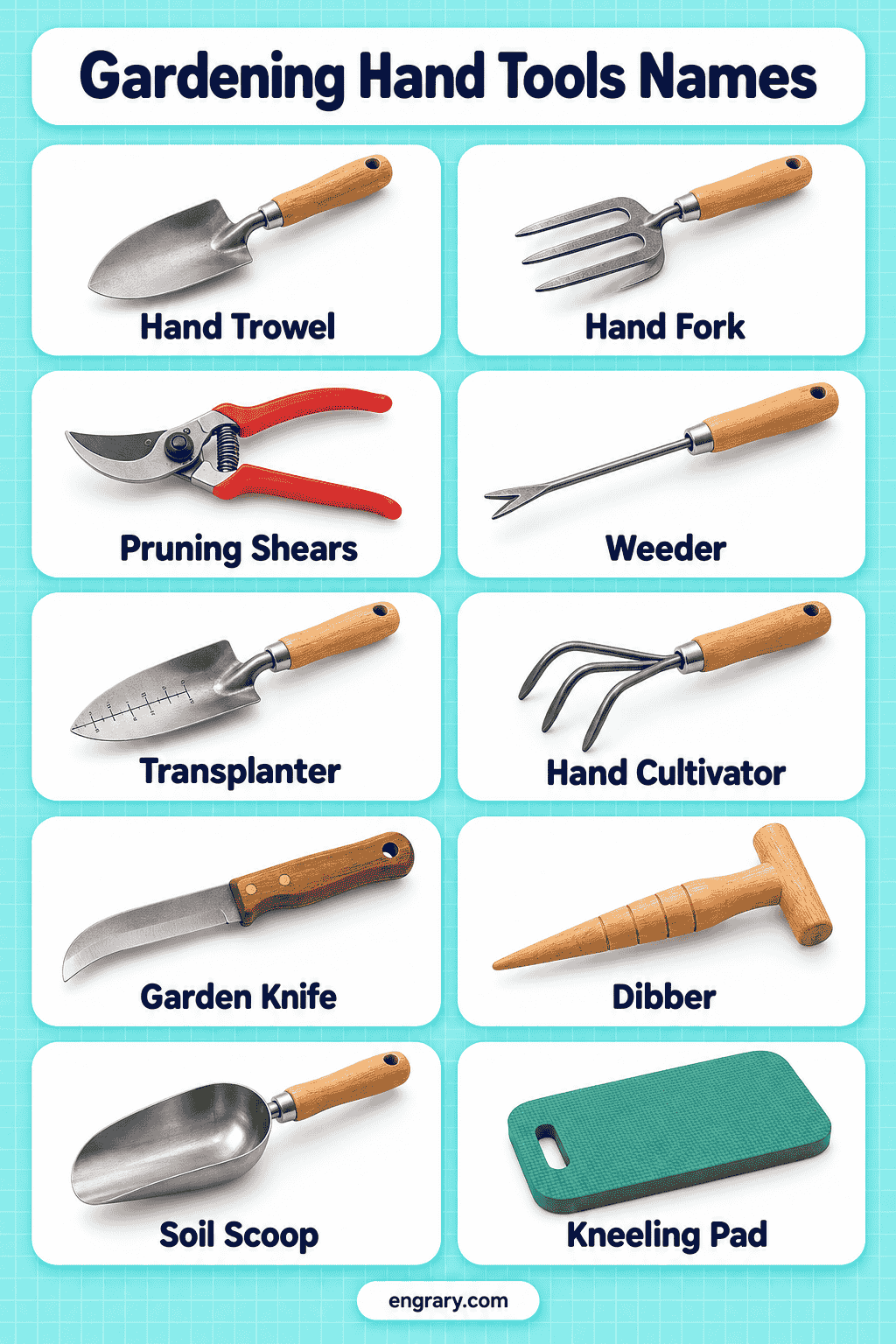
Many everyday gardening jobs can be handled with a small group of compact tools. The following hand tools are among the easiest to recognize and cover planting, soil work, weeding, trimming, and other routine garden tasks.
1. Hand Trowel
A hand trowel has a short handle and a small scoop-shaped blade. Gardeners use it for digging planting holes, moving soil, and working around individual plants.
2. Hand Fork
A hand fork has several short, sturdy metal tines attached to a compact handle. It helps loosen soil and work around established plants.
3. Hand Cultivator
A hand cultivator usually has three or more curved claw-like tines. It breaks up surface soil and helps prepare small planting areas.
4. Hand Rake
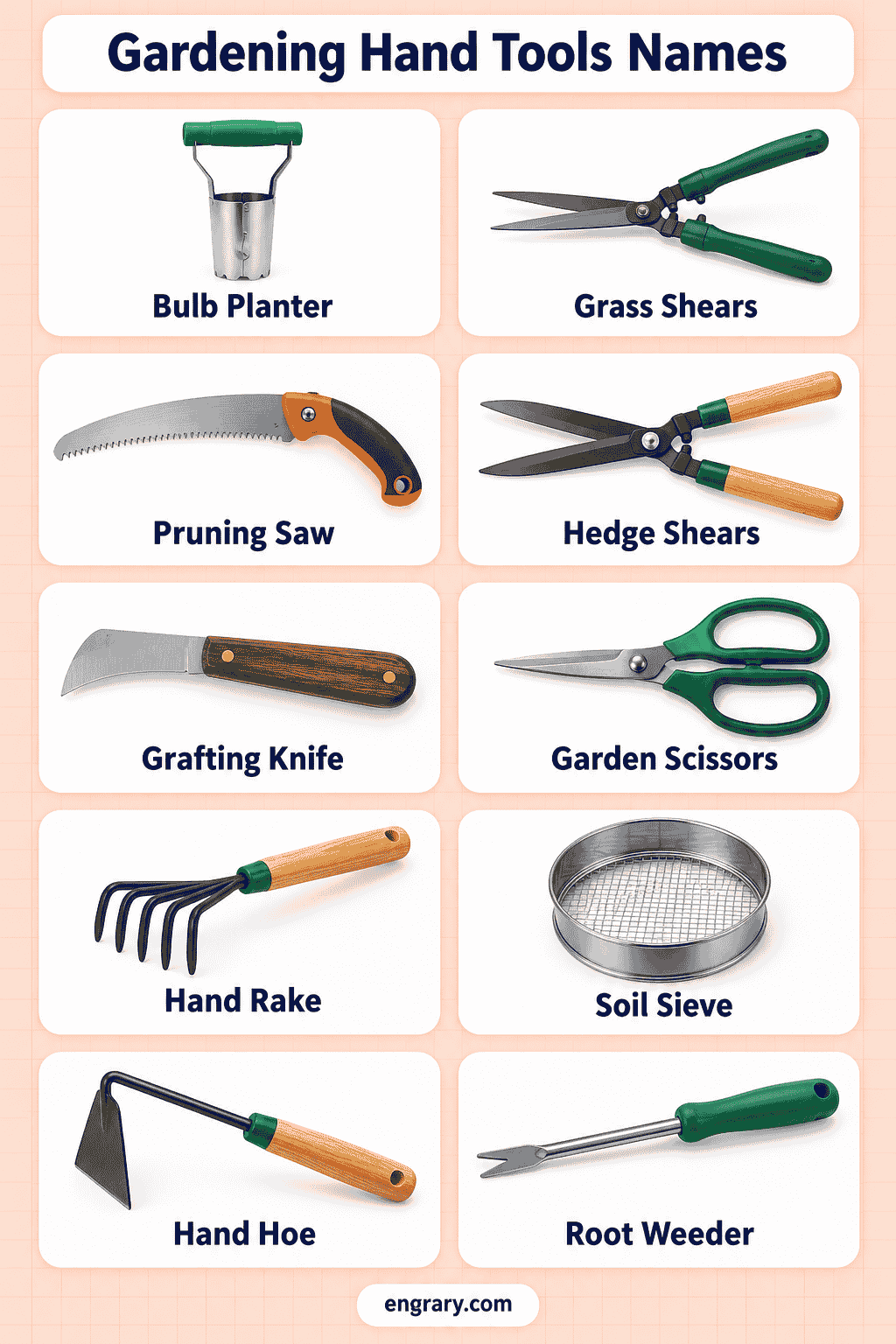
A hand rake looks like a miniature garden rake with a short handle. It helps gather small debris and level soil in tight spaces.
5. Hand Hoe
A hand hoe combines a short handle with a small flat or angled blade. It is useful for shallow cultivation and removing young weeds.
6. Hand Weeder
A hand weeder is a compact tool designed for removing individual weeds from beds, borders, and containers.
7. Forked Weeder
A forked weeder has a narrow shaft ending in a split or V-shaped tip. The fork helps grip weeds near their base.
8. Dibber
A dibber is a pointed planting tool used to make small holes for seeds, seedlings, and young plants. It is also called a dibble.
9. Bulb Planter
A bulb planter has a short hollow cylindrical head that removes a small plug of soil. It creates a neat hole for bulbs.
10. Soil Scoop
A soil scoop has a deep curved blade that holds loose soil or potting mix. Its shape makes filling pots and containers easier.
11. Transplanting Trowel
A transplanting trowel has a long, narrow blade. It is designed for working around roots and placing seedlings in confined spaces.
12. Pruning Shears
Pruning shears are compact cutters used on small stems and light woody growth. They are also known as secateurs or hand pruners.
13. Garden Scissors
Garden scissors have slim cutting blades suited to herbs, flowers, soft stems, and other light trimming jobs.
14. Garden Snips
Garden snips are small precision cutters with narrow blades. They work well for delicate stems, flowers, and detailed trimming.
15. Flower Snips
Flower snips have fine blades designed for cutting blooms and soft flower stems cleanly.
16. Garden Knife
A garden knife is a sturdy handheld cutting tool used for several close-up gardening jobs, including cutting plant material and opening garden supplies.
17. Hori Hori Knife
A hori hori is a strong garden knife with a pointed blade. Its distinctive shape allows it to combine cutting, digging, and light weeding functions.
18. Pruning Knife
A pruning knife has a compact sharp blade made for controlled cuts on smaller plant material.
19. Grafting Knife
A grafting knife has a specialized sharp blade designed for making clean, precise cuts during grafting work.
20. Seed Sower
A seed sower is a small handheld device that releases seeds in a more controlled way, especially when the seeds are tiny.
Small Digging and Soil-Working Tools
Some handheld tools are designed specifically for breaking compact soil, making small holes, and working around roots where full-size digging tools would be awkward.
21. Mini Spade
A mini spade has a compact flat blade and short handle. It is useful for small digging jobs, raised beds, and container gardening.
22. Root Digger
A root digger has a narrow, strong working end that helps loosen soil around stubborn roots and deeply rooted weeds.
23. Hand Auger
A hand auger has a spiral-shaped metal section that turns into the soil to create small planting holes.
24. Widger
A widger is a slim, narrow planting tool used for lifting seedlings, making small holes, and working carefully around young plants.
Hand Tools for Soil Loosening and Cultivation
Cultivation tools work mainly in the upper layer of soil. Their teeth or blades help break crusted soil, create a finer surface, and work between closely spaced plants.
25. Three-Prong Cultivator
A three-prong cultivator has three strong curved tines. It loosens surface soil and breaks small clumps around plants.
26. Five-Prong Cultivator
A five-prong cultivator has a broader set of curved tines, allowing it to work a slightly wider patch of soil.
27. Hand Claw
A hand claw has curved pointed teeth that resemble claws. Gardeners use it to scratch, loosen, and aerate surface soil.
28. Mini Cultivator Hoe
A mini cultivator hoe combines a small cultivating head with a compact hoe-like blade, allowing both soil loosening and shallow weed control.
Hand Weeding Tools
Weeds vary in size and root structure, so several hand tools have developed for specific types of removal. These tools allow gardeners to work precisely around wanted plants.
29. Dandelion Weeder
A dandelion weeder has a long narrow shaft with a notched or forked tip designed to work around deep taproots.
30. Cape Cod Weeder
A Cape Cod weeder has a narrow angled blade attached to a short handle. It helps slice weeds close to the soil surface.
31. Crack Weeder
A crack weeder has a thin hooked or narrow blade designed for removing weeds from gaps between paving stones and along edges.
32. Root Weeder
A root weeder has a narrow working end intended to loosen and lift weeds together with more of their root system.
Small Pruning and Cutting Tools
Fine garden cutting requires tools that can work accurately around stems, shoots, flowers, and delicate plant growth. These tools are smaller than loppers, pruning saws, and other larger cutting equipment.
33. Bonsai Scissors
Bonsai scissors have short, sharp blades and comfortable handles for precise trimming of small shoots and fine plant growth.
34. Budding Knife
A budding knife has a small specialized blade used for controlled cuts during budding and related plant-propagation work.
35. Harvesting Knife
A harvesting knife is a compact cutting tool used for cutting suitable vegetables, herbs, flowers, or other garden produce.
36. Fruit Snips
Fruit snips are small cutters with narrow blades that help remove fruits or delicate stems without unnecessary pulling.
Tools for Seeds, Bulbs, and Transplanting
Planting seeds and young plants requires precision. Small planting tools help create controlled holes, lift seedlings, and work in limited spaces.
37. Seedling Transplanter
A seedling transplanter is a narrow handheld tool designed to lift or place young seedlings while disturbing surrounding soil as little as possible.
38. Planting Stick
A planting stick is a simple pointed handheld tool for making small planting holes for seeds, plugs, or young seedlings.
Specialist Hand Tools for Close Garden Work
A few compact tools serve more specialized jobs where ordinary trowels, weeders, or scissors may not offer enough precision.
39. Bonsai Root Rake
A bonsai root rake is a small rake-like tool used for careful work around compact root systems and soil during bonsai care.
40. Soil Blocker
A soil blocker is a handheld tool that presses moist growing mix into small blocks for starting seeds without ordinary pots.
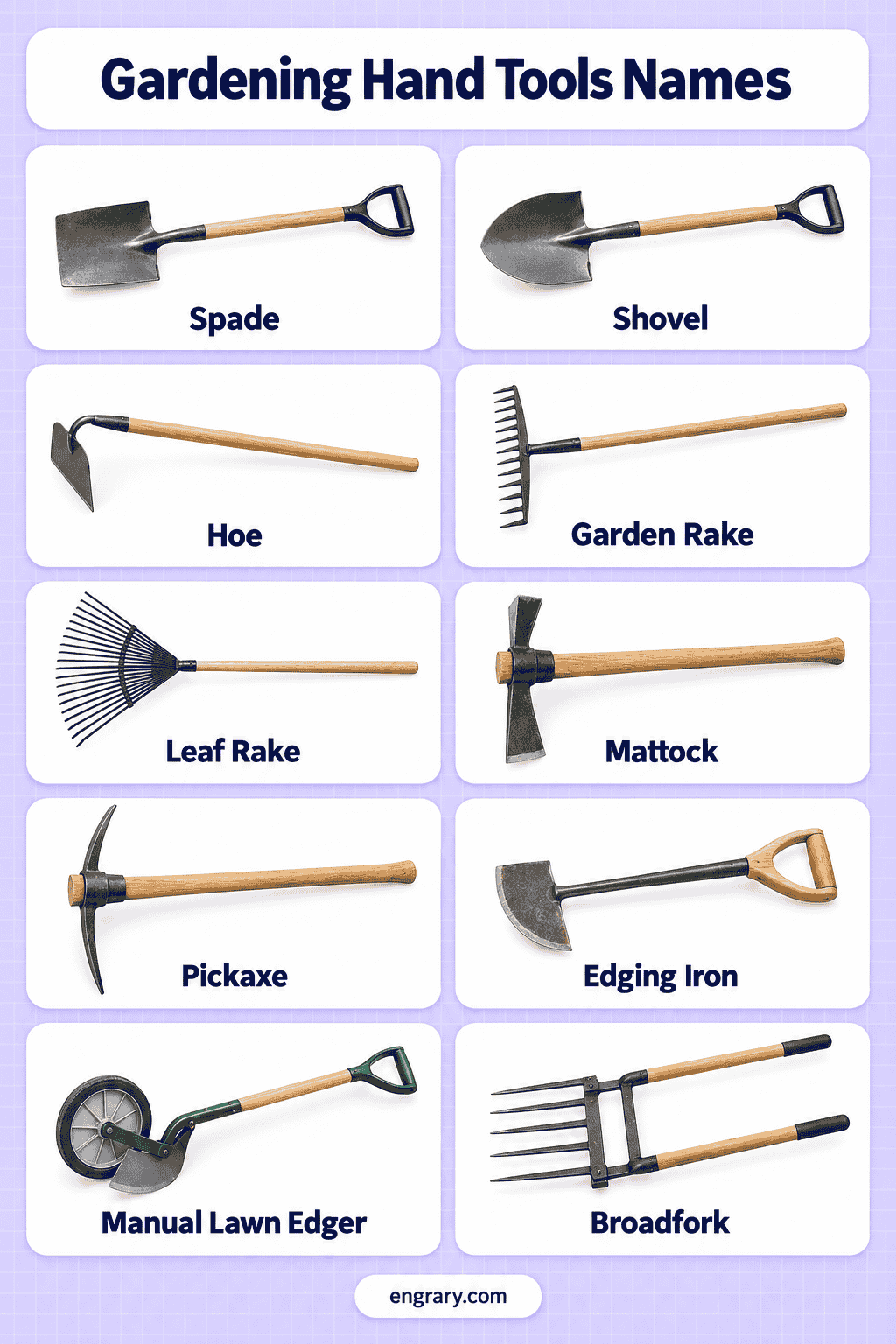
Gardening Hand Tools That Are Easy to Confuse
Several gardening hand tools look similar but differ in shape and purpose. Comparing their main features makes identification much easier.
| Tools | Main Difference |
|---|---|
| Hand Trowel vs Transplanting Trowel | A hand trowel has a broader scoop-shaped blade, while a transplanting trowel usually has a narrower blade for working around roots and seedlings. |
| Hand Trowel vs Soil Scoop | A trowel is mainly shaped for digging, while a soil scoop has a deeper curved blade for carrying loose soil or potting mix. |
| Hand Fork vs Hand Cultivator | A hand fork generally has straighter sturdy tines, while a cultivator usually has curved claw-like tines for surface soil work. |
| Dibber vs Bulb Planter | A dibber creates a narrow planting hole, while a bulb planter removes a wider plug of soil. |
| Hand Weeder vs Forked Weeder | A hand weeder can take several forms, while a forked weeder specifically has a divided tip for working around individual weeds. |
| Pruning Shears vs Garden Scissors | Pruning shears have stronger cutting jaws for stems, while garden scissors have slimmer blades for lighter cutting. |
| Garden Snips vs Pruning Shears | Garden snips suit delicate, precise cuts, while pruning shears handle somewhat stronger stems. |
Alternate Names for Gardening Hand Tools
Gardening vocabulary can vary between regions and manufacturers. Therefore, learning common alternate terms helps readers recognize the same tool under different names.
| Main Name | Common Alternate Name |
|---|---|
| Pruning Shears | Secateurs, Hand Pruners |
| Dibber | Dibble |
| Transplanting Trowel | Transplanter |
| Hand Cultivator | Hand Claw |
| Garden Snips | Pruning Snips |
| Hori Hori Knife | Soil Knife, Weeding Knife |
| Hand Trowel | Garden Trowel |
| Seedling Transplanter | Seedling Lifter |
These alternate terms should not be counted as additional tools because they often refer to the same or closely related hand tool.
Frequently Asked Questions
Common gardening hand tools include a hand trowel, hand fork, hand cultivator, hand weeder, dibber, pruning shears, garden scissors, soil scoop, and bulb planter.
A hand trowel usually has a broader blade for general digging and scooping. A transplanting trowel has a narrower blade that works more easily around roots and young plants.
Hand weeders, forked weeders, dandelion weeders, Cape Cod weeders, crack weeders, and root weeders are all designed for different types of weed removal.
Dibbers, bulb planters, seed sowers, planting sticks, hand trowels, and seedling transplanters are useful for planting seeds, bulbs, and young plants.
Pruning shears, garden scissors, garden snips, flower snips, bonsai scissors, pruning knives, and fruit snips are common handheld cutting tools for plant care.
You May Also Like


Leave a Comment