

Gardening involves many different jobs, from preparing soil and planting seeds to pruning plants, watering beds, and maintaining lawns. Learning gardening tools names with pictures and uses makes it easier to recognize the right equipment for each type of garden work.
This guide covers 65 gardening tools names with short descriptions to help you identify their shape and basic purpose. The tools include common hand tools, digging equipment, pruning tools, watering equipment, lawn-care tools, and several specialized garden tools.
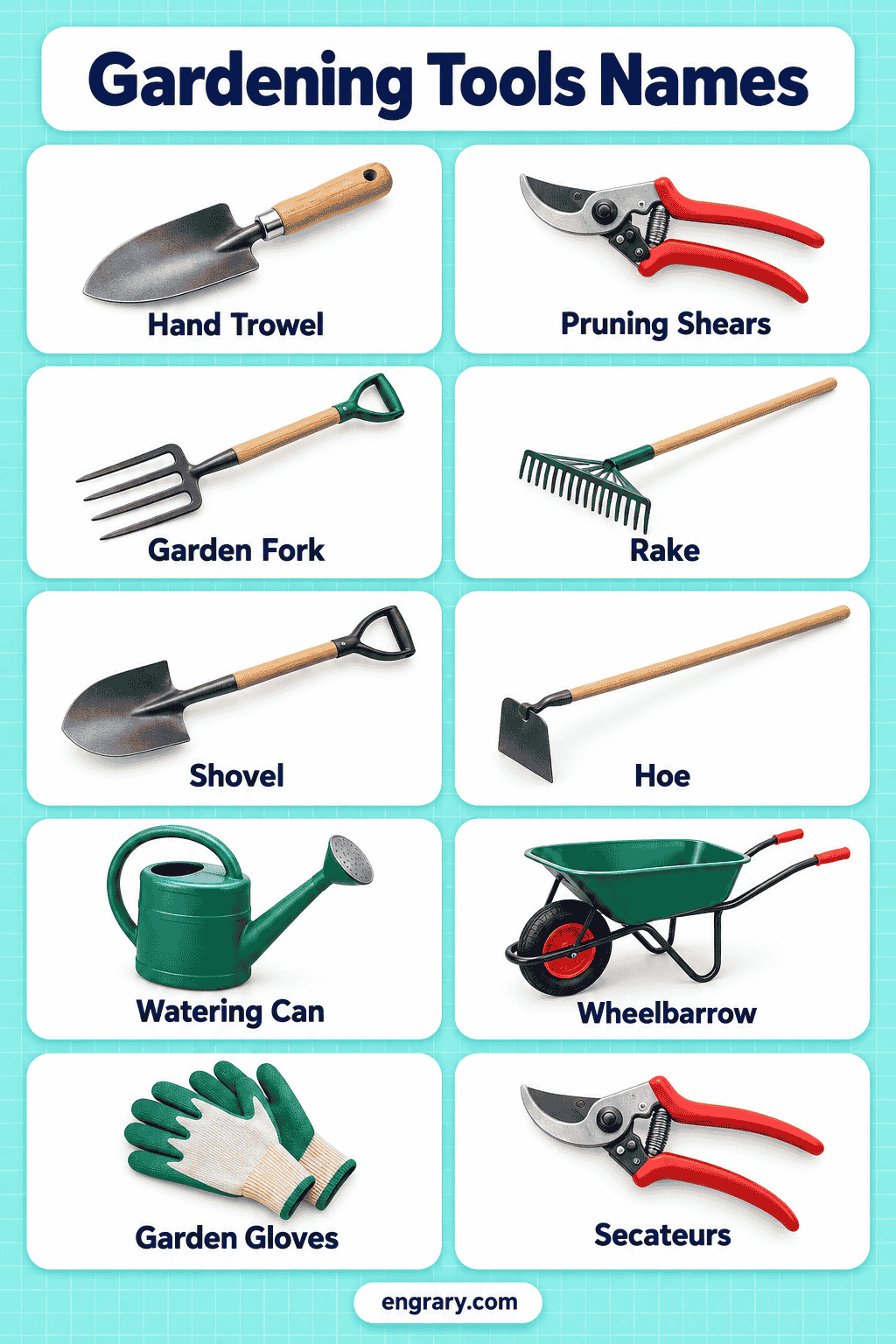
Gardening Tools Found in Everyday Garden Work
Many gardening jobs rely on a relatively small group of tools that gardeners use regularly. These tools cover digging, planting, pruning, watering, lawn care, cleaning, and moving garden materials.
1. Spade
A spade has a flat or slightly curved blade with a relatively straight cutting edge. Gardeners use it for digging, edging beds, and moving soil.
2. Shovel
A shovel usually has a broad, curved blade that holds loose material. It is useful for moving soil, compost, gravel, and other garden materials.
3. Garden Fork
A garden fork has a long handle and several strong metal tines. It helps loosen compacted soil, lift plants, and turn organic matter.
4. Hand Trowel
A hand trowel is a small scoop-shaped digging tool with a short handle. Gardeners commonly use it for planting, transplanting, and working in containers.
5. Hand Fork
A hand fork has a short handle and several small metal tines. It loosens soil around plants and works well in small garden spaces.
6. Garden Hoe
A garden hoe has a long handle with a blade mounted at the end. It helps loosen surface soil and remove young weeds.
7. Garden Rake
A garden rake has a rigid straight head with short metal teeth. Gardeners use it to level soil, break small clumps, and prepare planting areas.
8. Leaf Rake
A leaf rake has a wide fan-shaped head with flexible tines. It gathers fallen leaves, grass clippings, and other lightweight garden debris.
9. Pruning Shears
Pruning shears are small handheld cutters designed for stems and light plant growth. They are also commonly called secateurs or hand pruners.
10. Loppers
Loppers resemble large pruning shears with long handles. Their extra reach and leverage make them useful for thicker branches.
11. Hedge Shears
Hedge shears have two long blades and two handles. Gardeners use them to shape hedges and trim larger areas of soft plant growth.
12. Pruning Saw
A pruning saw has a toothed blade designed for woody branches that are too large for ordinary pruning shears.
13. Dibber
A dibber is a pointed hand tool used to create small holes in soil for seeds, seedlings, and young plants. It is also called a dibble.
14. Bulb Planter
A bulb planter usually has a hollow cylindrical head that removes a plug of soil. This creates a neat hole for planting bulbs.
15. Hand Weeder
A hand weeder is a compact tool designed to loosen or pull weeds from around garden plants.
16. Watering Can
A watering can is a portable container with a handle and long spout. Many have a rose attachment that spreads water into a gentle shower.
17. Garden Hose
A garden hose is a flexible tube that carries water around the garden. It can connect to several watering attachments.
18. Watering Wand
A watering wand is a long watering attachment with a shower-style head. Its extended shape helps gardeners reach containers and crowded beds.
19. Sprinkler
A sprinkler distributes water over a wider garden or lawn area through several small streams or sprays.
20. Wheelbarrow
A wheelbarrow has a deep tray, handles, and one or more wheels. It helps move soil, compost, plants, leaves, and other garden materials.
21. Garden Cart
A garden cart is a wheeled carrier with a larger supporting body. It is useful for transporting tools, plants, compost, and garden waste.
22. Lawn Mower
A lawn mower cuts grass to a more even height. Different designs are available for small gardens and larger lawns.
23. String Trimmer
A string trimmer cuts grass and light vegetation in places a lawn mower cannot easily reach. It is also called a strimmer or weed trimmer in some regions.
24. Lawn Edger
A lawn edger creates a defined boundary along lawn edges, paths, beds, and other borders.
25. Garden Scissors
Garden scissors are compact cutting tools used for light trimming, flowers, herbs, and other soft plant material.
Digging and Soil Preparation Tools
Healthy planting often begins with soil preparation. In addition to familiar spades and forks, several specialized tools help loosen, break, sift, and level garden soil.
26. Broadfork
A broadfork has a wide bar fitted with several long tines and two upright handles. It loosens garden soil across a broader area.
27. Mattock
A mattock is a long-handled ground-working tool with a heavy metal head. Its shape suits tougher soil and ground preparation.
28. Pick Mattock
A pick mattock combines a pointed pick on one side with a broader mattock blade on the other. It is designed for difficult, compacted ground.
29. Soil Scoop
A soil scoop has a deep curved blade that holds loose soil or potting mix. It works especially well when filling containers and raised beds.
30. Hand Cultivator
A hand cultivator has several curved or pointed tines attached to a short handle. It loosens the upper soil layer in confined areas.
31. Soil Sieve
A soil sieve consists of a mesh screen held inside a frame. It separates larger stones and debris from finer soil or compost.
32. Garden Tamper
A garden tamper has a flat heavy base attached to a handle. It helps firm and level prepared soil surfaces.
Tools for Planting and Transplanting
Planting tools help gardeners create suitable holes, establish straight rows, and move young plants with less disturbance. Their smaller shapes make them useful for more precise garden work.
33. Transplanting Trowel
A transplanting trowel has a narrower blade than a standard hand trowel. Its shape makes it useful for placing seedlings and working between established plants.
34. Seed Sower
A seed sower is a small device that helps release seeds more evenly. It is particularly useful when handling very small seeds.
35. Row Marker
A row marker creates visible lines or regular spacing for planting seeds and young plants in organized rows.
36. Planting Line
A planting line consists of a cord stretched between markers or stakes. It provides a straight guide when creating garden rows.
37. Garden Auger
A garden auger has a spiral-shaped boring section that creates holes in soil. Gardeners may use it when preparing repeated planting holes.

Hoes, Cultivators, and Weeding Tools
Weeding tools come in several shapes because weeds grow under different soil conditions and around different plants. Hoes generally work across the soil surface, while specialized weeders target individual weeds more precisely.
38. Stirrup Hoe
A stirrup hoe has a loop-shaped metal blade that moves just below or across the soil surface to disturb young weeds.
39. Dutch Hoe
A Dutch hoe has a relatively flat blade designed for shallow soil work and weed control between plants.
40. Draw Hoe
A draw hoe has a blade positioned across the handle. Gardeners pull it through soil to cultivate the surface and manage weeds.
41. Forked Weeder
A forked weeder has a narrow, divided tip that helps work around the base of individual weeds.
42. Weed Puller
A weed puller is designed to grip or lift individual weeds, particularly those that need to be removed from a specific spot.
Pruning and Cutting Tools
Different plants require different cutting tools. Small handheld cutters suit light stems, while longer or specialized tools help gardeners reach or manage larger woody growth.
43. Pole Pruner
A pole pruner places a pruning mechanism at the end of a long pole, allowing gardeners to reach higher branches from ground level.
44. Pole Saw
A pole saw combines a long pole with a saw blade or cutting head. It is intended for branches positioned above ordinary hand-saw reach.
45. Pruning Knife
A pruning knife has a compact sharp blade suited to precise plant trimming and other small gardening cuts.
46. Grafting Knife
A grafting knife has a specialized blade designed for clean, controlled cuts during plant grafting work.
Types of Garden Rakes and Their Uses
Rakes may look similar at first, but their heads and tines reveal their main purpose. Some prepare soil, while others collect debris or work on lawn surfaces.
47. Hand Rake
A hand rake is a small short-handled rake designed for working between plants, inside containers, and in confined garden beds.
48. Lawn Rake
A lawn rake has flexible tines suited to removing loose material from grass surfaces.
49. Thatch Rake
A thatch rake has stronger specialized teeth that help lift accumulated material from the surface of a lawn.
50. Landscape Rake
A landscape rake has a wide head with rigid teeth. It helps level larger soil or landscape surfaces.
Watering Tools and Equipment
Watering equipment ranges from simple containers to hose attachments and systems that spread water across larger areas. Choosing the right format mainly depends on the size and location of the plants being watered.
51. Hose Nozzle
A hose nozzle attaches to the end of a garden hose and controls the shape or direction of the water stream.
52. Hose Reel
A hose reel holds a garden hose in a coiled position for easier storage and organization.
53. Garden Sprayer
A garden sprayer is a container with a spray mechanism used to apply water or other garden liquids in a controlled way.
54. Soaker Hose
A soaker hose releases water gradually through small openings along its length, allowing water to reach the surrounding soil.
Tools for Lawn Care and Edging
Lawns require more than mowing alone. Several tools help manage grass edges, improve the lawn surface, and distribute materials more evenly.
55. Grass Shears
Grass shears are handheld cutters with blades designed for trimming grass around borders and other small areas.
56. Lawn Aerator
A lawn aerator creates small openings in the soil beneath grass. Its identifying feature is a set of spikes or hollow tines.
57. Scarifier
A scarifier has teeth or blades that work across the lawn surface to remove accumulated material and loosen the upper layer.
58. Broadcast Spreader
A broadcast spreader has a hopper and spreading mechanism that distributes granular garden materials across a wider area.

Garden Cleanup and Material-Moving Tools
Once pruning, planting, or lawn work is complete, gardeners often need equipment for gathering and transporting loose material. These tools help keep garden areas organized.
59. Garden Broom
A garden broom has stiff bristles designed for sweeping paths, patios, and other outdoor surfaces.
60. Leaf Blower
A leaf blower produces a strong stream of air that moves fallen leaves and lightweight garden debris into a more manageable area.
61. Garden Shredder
A garden shredder is powered equipment that reduces suitable garden cuttings and plant debris into smaller pieces.
62. Garden Trug
A garden trug is an open carrying container traditionally used for collecting flowers, vegetables, weeds, and small gardening tools.
63. Compost Fork
A compost fork has several long tines and is shaped for lifting and moving loose compost and similar garden material.
Specialized Tools for Larger Garden Jobs
Some garden jobs require equipment beyond basic hand tools. These machines are mainly associated with larger soil areas or more intensive garden preparation.
64. Garden Tiller
A garden tiller uses rotating tines to work and loosen soil over a larger area than most hand cultivators.
65. Rotavator
A rotavator is powered soil-working equipment with rotating blades or tines. It is commonly associated with preparing larger areas of ground.
Gardening Tools That Are Easy to Confuse
Several gardening tools have similar appearances or overlapping uses. Focusing on their shape and scale makes them much easier to identify.
| Tools | Main Difference |
|---|---|
| Spade vs Shovel | A spade usually has a flatter blade for digging and edging, while a shovel generally has a broader scooped blade for moving loose material. |
| Garden Rake vs Leaf Rake | A garden rake has rigid teeth for soil, while a leaf rake has flexible fan-shaped tines for lightweight debris. |
| Garden Fork vs Hand Fork | A garden fork is full-sized and long-handled; a hand fork is compact and designed for close work around plants. |
| Hoe vs Cultivator | A hoe usually has a blade for surface soil and weeds, while a cultivator normally uses tines to loosen soil. |
| Pruning Shears vs Loppers | Pruning shears are compact handheld cutters, while loppers have much longer handles and larger cutting heads. |
| Hedge Shears vs Pruning Shears | Hedge shears have long blades for shaping broader plant surfaces, while pruning shears make individual cuts. |
| Dibber vs Bulb Planter | A dibber creates a narrow planting hole, while a bulb planter removes a wider plug of soil. |
| Edger vs String Trimmer | An edger creates a defined lawn boundary, while a string trimmer cuts grass in areas that are difficult for a mower to reach. |
Alternate Names for Gardening Tools
Gardening vocabulary varies between regions, particularly between British and American English. Therefore, recognizing alternate names can make garden-tool vocabulary easier to understand.
| Main Name | Alternate Name |
|---|---|
| Pruning Shears | Secateurs, Hand Pruners |
| Dibber | Dibble |
| Garden Hose | Hose, Hosepipe |
| String Trimmer | Strimmer, Weed Trimmer |
| Garden Fork | Digging Fork |
| Lawn Mower | Lawnmower |
| Garden Tiller | Tiller |
| Rotavator | Rotary Tiller |
These alternate terms should not be counted as additional tools because they usually describe the same or closely equivalent item.
Frequently Asked Questions
Some of the most common gardening tools include a spade, shovel, garden fork, hand trowel, hoe, rake, pruning shears, watering can, garden hose, and wheelbarrow.
A spade usually has a flatter blade that suits digging and edging. In contrast, a shovel generally has a broader, more curved blade suited to lifting and moving loose materials.
Common weeding tools include hand weeders, forked weeders, weed pullers, garden hoes, stirrup hoes, Dutch hoes, and cultivators.
Pruning shears suit smaller stems, while loppers and pruning saws handle larger woody growth. Hedge shears are mainly used for shaping hedges, while pole pruners extend reach to higher branches.
A garden rake has a rigid head with short teeth for leveling and preparing soil. A leaf rake has a wider fan-shaped head with flexible tines for gathering leaves and lightweight garden debris.
You May Also Like



Leave a Comment