
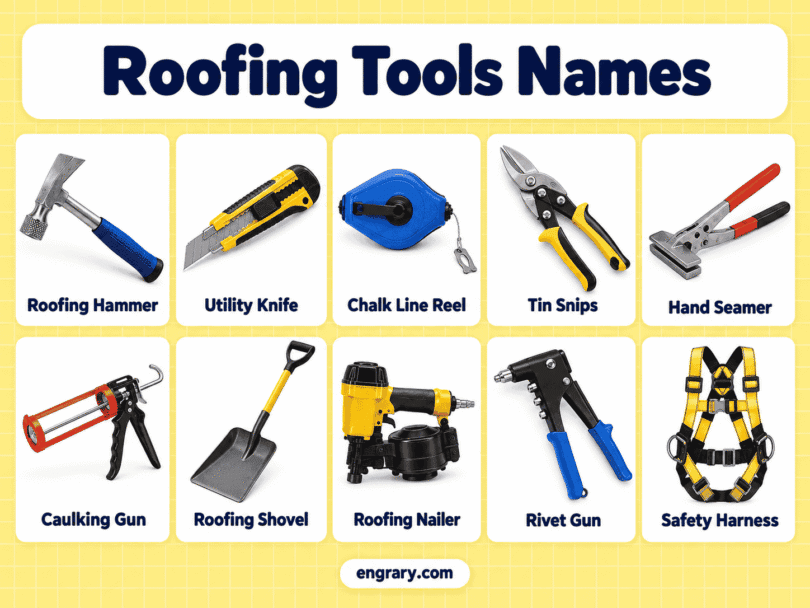
Roofers rely on a distinctive mix of cutting, fastening, measuring, removal, bending, seaming, and finishing tools. Some tools suit asphalt shingles, while others belong mainly to slate, metal, flashing, or membrane roofing.
Learning roofing tools names with pictures makes each tool easier to recognize by shape and purpose. This guide covers 45 useful roofing tools, from roofing hatchets and tear-off shovels to slate rippers, metal snips, hand seamers, roofing nailers, and seam rollers.
Roofing Tools You Can Recognize by Shape and Job
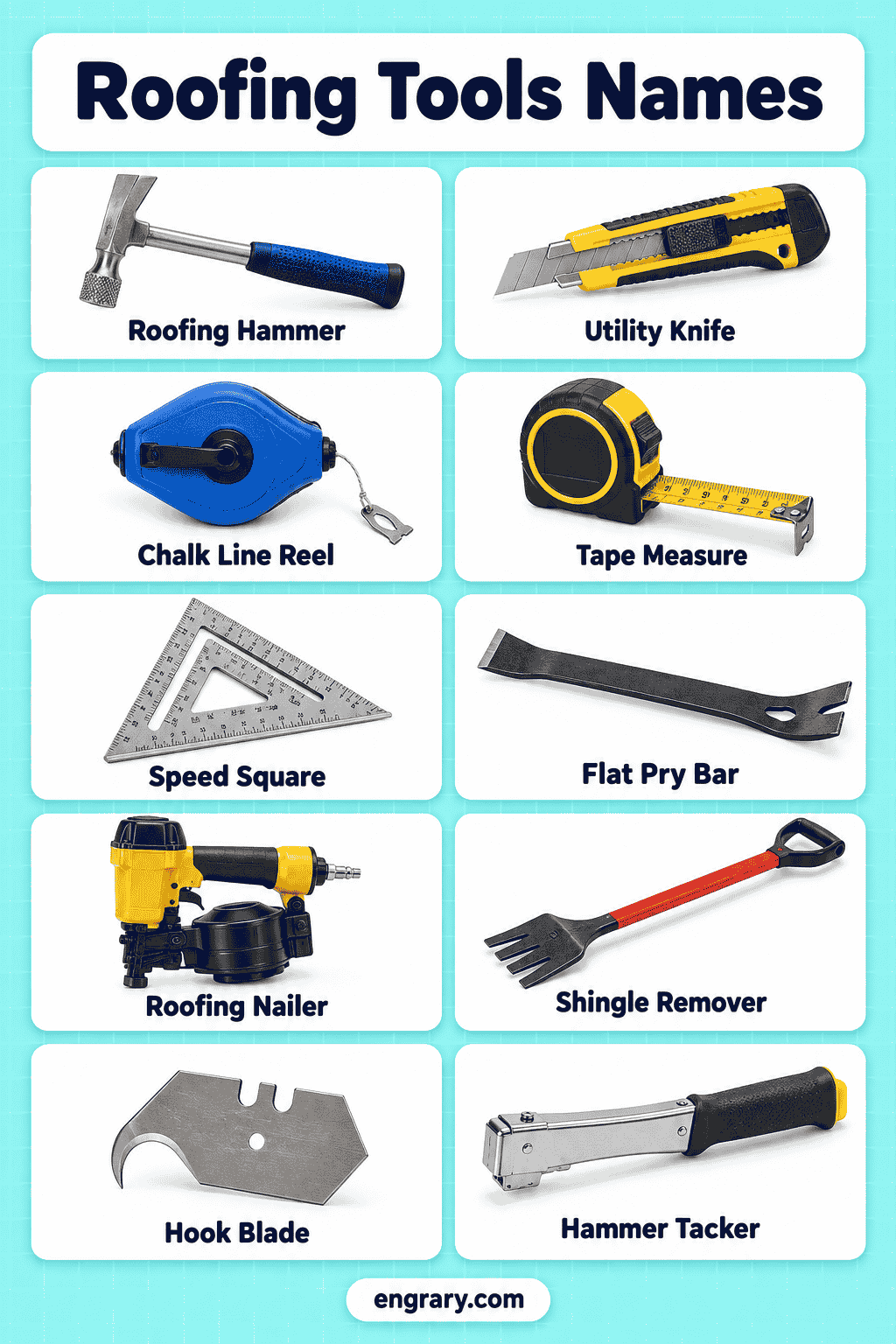
Many roofing tools reveal their purpose through their design. For example, wide jaws help form sheet metal, hooked blades cut flexible roofing materials, and long narrow rippers suit slate work. Meanwhile, broad tear-off heads make roofing-removal tools easy to distinguish from ordinary construction equipment.
Roofing Hatchet
A roofing hatchet combines a striking face with a cutting edge. Many designs also include nail-removal or shingle-measuring features.
Roofing Knife
A roofing knife cuts shingles, felt, membranes, and other flexible roofing materials. Its sturdy handle usually accepts replaceable blades.
Utility Knife
A utility knife provides a compact option for general cutting and trimming. Roofers commonly fit it with replaceable straight or hooked blades.
Hook Blade Knife
A hook blade knife has a curved cutting edge that bends inward like a hook. As a result, its blade looks noticeably different from a standard straight utility blade.
Shingle Cutter
A shingle cutter helps trim roofing shingles to shape or size. Unlike a general knife, its design focuses more directly on roofing material.
Roofing Nailer
A roofing nailer drives roofing nails quickly. Its compact body and fastener magazine make it easy to recognize.
Coil Roofing Nailer
A coil roofing nailer stores nails inside a round magazine. Therefore, the circular magazine provides its clearest visual clue.
Hammer Tacker
A hammer tacker drives staples through a striking motion. Its long, narrow body resembles a cross between a stapler and a small hammer.
Shingle Gauge
A shingle gauge gives roofers a repeated spacing or positioning reference. Some roofing hatchets also include gauge features in their heads.
Roofing Shovel
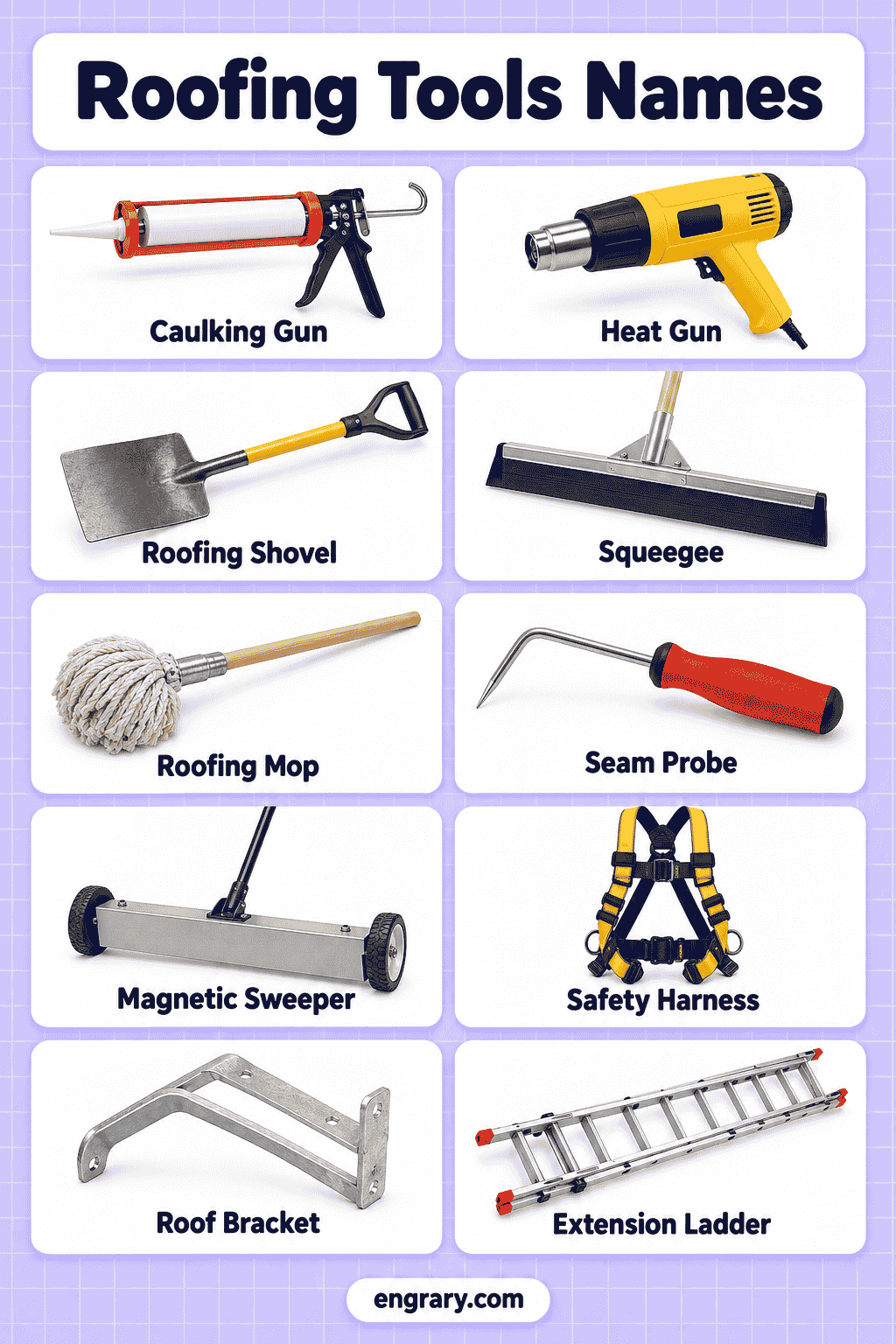
A roofing shovel has a long handle and a broad head for lifting old roof coverings. Many versions include teeth or notches near the working edge.
Pry Bar
A pry bar provides strong leverage for lifting roofing components and loosening fasteners. In contrast to a roofing shovel, it has a much smaller working end.
Flat Bar
A flat bar has a thin, flattened body that can slide beneath shingles, flashing, and trim. Consequently, it suits more controlled prying work.
Tear-Off Bar
A tear-off bar gives roofers extra leverage when removing old roofing materials. Depending on the design, it may have a longer handle than a standard pry bar.
Slate Ripper
A slate ripper has a long, narrow metal body with a shaped end. Its unusual length and slim profile make it one of the easiest slate tools to identify.
Slater’s Hammer
A slater’s hammer has a specialized head designed around slate work. It looks noticeably different from an ordinary claw hammer.
Slate Cutter
A slate cutter trims roofing slate to the required shape or size. Designs may resemble heavy shears or compact lever tools.
Slate Punch
A slate punch creates fixing holes in slate. Its pointed working end provides a simple recognition clue.
Tin Snips
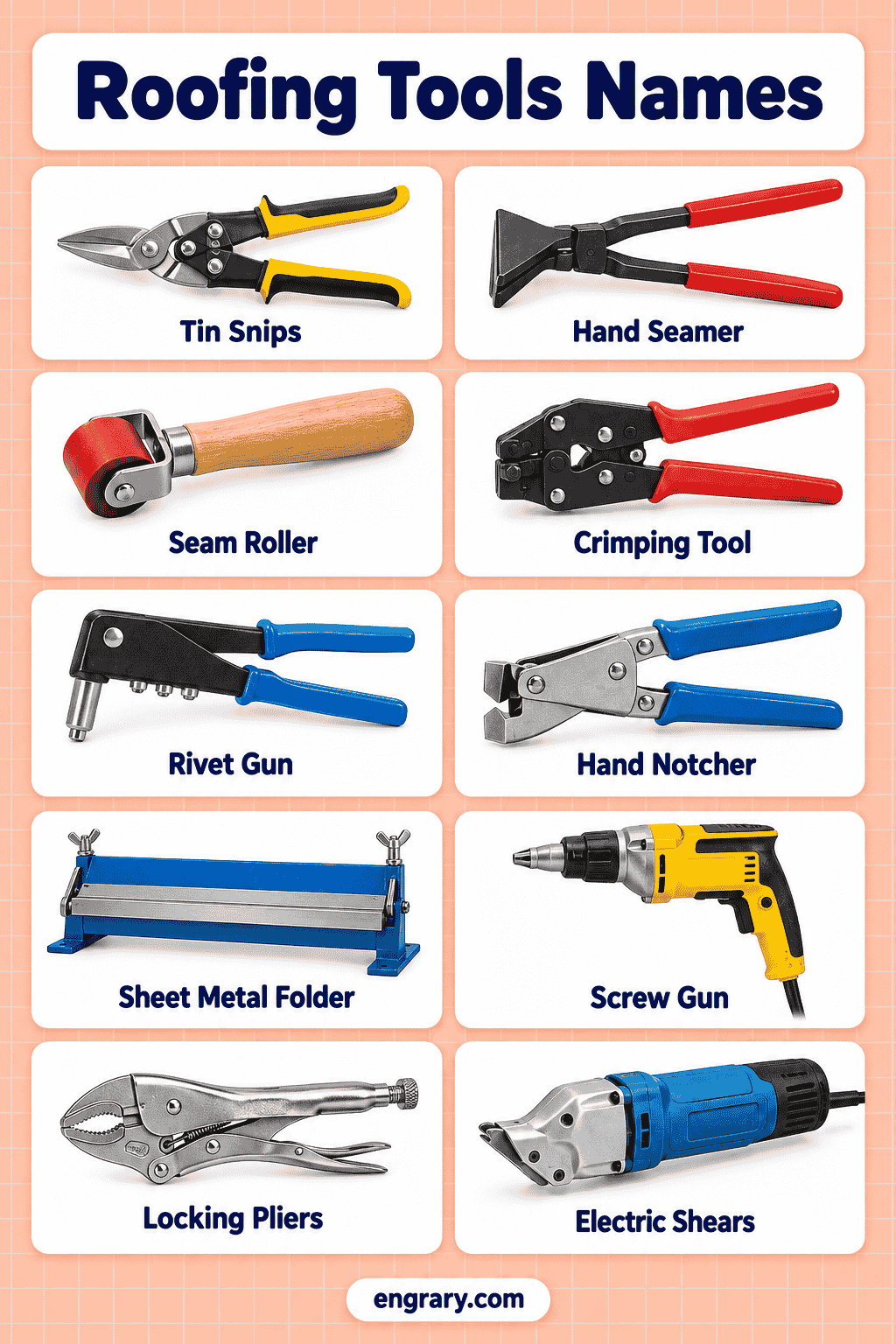
Tin snips resemble heavy scissors and cut thin sheet metal. Roofers often use them around flashing and metal-roof details.
Aviation Snips
Aviation snips use compound handles and short cutting jaws. Because of this mechanical design, they look heavier than traditional tin snips.
Hand Seamer
A hand seamer has wide, flat jaws and plier-like handles. Instead of cutting sheet metal, it grips and bends it.
Nibbler
A nibbler cuts metal by removing a series of small sections. Its cutting action differs clearly from the long scissor-like movement of snips.
Folding Tool
A folding tool helps create controlled bends in flashing and roofing metal. Most designs have broad, flat working surfaces or slots.
Metal Bender
A metal bender forms bends, edges, and curves in roofing sheet. Depending on the design, it may use rollers or compact hand-operated components.
Lead Dresser
A lead dresser has a broad, smooth working face for shaping lead roofing and flashing. Unlike an ordinary hammer, it spreads pressure over a wider area.
Roof Seam Roller
A roof seam roller has a small roller mounted in a handheld frame. Roofers use its rolling pressure along seams and flexible roofing materials.
Together, these tools cover the core vocabulary of shingle work, roof removal, slate roofing, metal forming, fastening, and seam finishing.
Shingle Roofing Tools and Their Distinctive Features
Asphalt-shingle roofing has a recognizable set of cutting, fastening, spacing, and handling tools. Although roofers also carry general hand tools, the names below connect much more closely with shingle work.
Roofing Hatchet
A roofing hatchet combines multiple functions in one compact tool. It normally has a striking face on one side and a cutting edge on the other. In addition, some designs include nail slots or shingle gauges.
Roofing Knife
A roofing knife cuts flexible roof coverings and underlay materials. Many models accept different blade styles, which makes the knife more adaptable than a single fixed blade.
Utility Knife
A utility knife performs general trimming jobs around roofing work. However, its broad construction use makes it less roofing-specific than a dedicated roofing knife.
Hook Blade Knife
A hook blade knife uses an inward-curving cutting blade. Because of its distinctive shape, beginners can usually separate it from a straight-blade utility knife at a glance.
Shingle Cutter
A shingle cutter focuses specifically on trimming roof shingles. As a result, it deserves its own name rather than simply falling under the general label of “knife.”
Roofing Nailer
A roofing nailer drives roofing nails through a powered mechanism. Its compact size helps roofers work around roof surfaces more easily than with larger framing nailers.
Coil Roofing Nailer
A coil roofing nailer holds nails in a circular magazine. Therefore, its round side magazine immediately separates it from nailers that use straight fastener strips.
Hammer Tacker
A hammer tacker drives staples whenever the roofer strikes its head against the material. In comparison, a conventional staple gun normally uses a trigger or squeeze action.
Shingle Gauge
A shingle gauge provides a repeated measurement or spacing reference. Depending on the design, it may appear as a separate accessory or as part of another roofing tool.
These names give shingle roofing a more precise vocabulary than a simple list of “hammer, knife, and nail gun.”
Roof Tear-Off Tools for Removing Old Materials
Roofers need leverage when stripping worn shingles and other roof coverings. Consequently, tear-off tools usually have strong handles, broad lifting heads, or flattened ends that can reach beneath existing materials.
Roofing Shovel
A roofing shovel has a long handle and broad lifting head. Many designs add teeth, serrations, or raised fulcrum features near the blade.
Tear-Off Shovel
A tear-off shovel belongs to the same general tool family as a roofing shovel. In many cases, the two names describe closely related designs rather than completely different tools.
Shingle Remover
A shingle remover is a broad name for a tool that lifts old shingles and roofing fasteners. Some manufacturers apply the term to specialized tear-off shovels.
Pry Bar
A pry bar supplies strong leverage in a much smaller package. Therefore, it suits controlled removal around individual roofing components.
Flat Bar
A flat bar has a thinner body than most pry bars. Because of its slim shape, it can slide beneath overlapping roof materials with less clearance.
Tear-Off Bar
A tear-off bar combines a levering end with a longer body for removal work. It sits somewhere between a compact pry bar and a long-handled tear-off shovel in appearance.
Terms such as roof ripper may also describe certain removal tools. However, these names often overlap, so treating every label as a separate tool would artificially increase the count.
Slate Roofing Tools with Unusual Names
Slate roofing introduces several specialist tools that rarely appear in general construction vocabulary. Moreover, their unusual shapes make them especially useful for picture-based learning.
Slater’s Hammer
A slater’s hammer has a specialist head designed for slate work. Its narrow working features distinguish it from a standard claw hammer.
Slate Ripper
A slate ripper uses a very long, narrow steel body with a shaped end. Therefore, it looks more like a slim metal strip than a conventional pry tool.
Slater’s Ripper
Slater’s ripper is an alternate name for the slate ripper. Since both terms describe the same broad tool type, they should not count as two separate tools.
Slate Cutter
A slate cutter trims roofing slate. Depending on the model, it may use shear-like jaws or a lever mechanism.
Slate Punch
A slate punch creates fixing holes in slate. However, some slate cutters incorporate a punching function, so the two features may appear together in one tool.
These specialist terms help separate slate-roofing vocabulary from tools used mainly with shingles or sheet metal.
Metal Roofing Tools for Cutting, Bending, and Seaming
Metal roofing creates one of the richest specialist tool groups in roofing. Most importantly, readers should distinguish tools that cut metal from tools that bend, fold, or close seams.
Tin Snips
Tin snips use scissor-like blades to cut thin sheet metal. Their simple construction makes them visually different from compound aviation snips.
Aviation Snips
Aviation snips use compound leverage, shorter jaws, and larger handles. As a result, they look more mechanical than traditional tin snips.
Left-Cut Snips
Left-cut snips favor curved cuts in one direction. Their jaw orientation distinguishes them from right-cut versions.
Right-Cut Snips
Right-cut snips use the opposite cutting orientation. Therefore, the two directional versions belong to the same tool family rather than separate categories of roofing equipment.
Straight-Cut Snips
Straight-cut snips suit straighter cutting paths. Their jaw position focuses more on forward cutting than tight directional curves.
Offset Snips
Offset snips place the handles above or away from the cutting line. Consequently, the user’s hands stay farther from the cut sheet edge.
Hand Seamer
A hand seamer has wide rectangular jaws that grip a broad strip of sheet metal. Unlike snips, it bends and crimps rather than cuts.
Seaming Pliers
Seaming pliers is another term commonly associated with wide-jaw hand-seaming tools. The name emphasizes their plier-like handles.
Metal Bender
A metal bender creates curves, bends, or edge profiles in roofing sheet. Some models use hand-operated rollers instead of flat jaws.
Folding Tool
A folding tool produces controlled folds in flashing and sheet metal. Usually, its broad, flat form makes it easy to distinguish from cutting tools.
Nibbler
A nibbler cuts sheet metal through a succession of small bites. Therefore, it follows a different cutting principle from both tin snips and aviation snips.
Panel Cutter
A panel cutter cuts metal roofing panels and similar sheet products. Its size and design vary according to the roofing system.
Seam Locker
A seam locker closes or tightens formed metal seams. Rather than removing material, it works with an already shaped metal edge.
Electric Seamer
An electric seamer uses powered movement to close standing seams. In contrast, a hand seamer relies entirely on manual pressure.
The easiest rule to remember is:
Snips and nibblers cut metal, while seamers and benders shape or close it.
Roofing Snips and Cutting Directions Explained
Roofing snips often look similar, yet their jaw orientation changes how they follow a cutting line. Therefore, grouping the main snip names together helps beginners understand the family without treating every version as an unrelated tool.
Tin Snips
Traditional tin snips resemble heavy scissors and generally have simpler blade and handle construction.
Aviation Snips
Aviation snips add compound leverage. Consequently, they usually have short jaws and relatively large handles.
Left-Cut Snips
Left-cut snips favor curves in one direction. The cutting jaws sit at an angle that supports that path.
Right-Cut Snips
Likewise, right-cut snips favor the opposite curve direction through their reversed jaw orientation.
Straight-Cut Snips
Straight-cut snips focus more naturally on forward cuts. However, the exact cutting ability still depends on the specific snip design.
Offset Snips
Offset snips raise the handles away from the cutting surface. As a result, they look noticeably different from standard inline aviation snips.
These terms describe variations within the snip family, not entirely separate categories of roofing tools.
Flashing and Lead Roofing Tools
Roof flashing requires careful shaping around roof edges, valleys, joints, and penetrations. Therefore, flashing tools usually emphasize broad shaping surfaces rather than sharp cutting edges.
Lead Dresser
A lead dresser has a broad, smooth face that shapes lead sheet. Because it spreads pressure across a wider area, it looks very different from a steel striking hammer.
Bossing Mallet
A bossing mallet has a rounded or specially shaped head for forming sheet material. In addition, its smoother face helps distinguish it from tools designed primarily for striking nails.
Hand Seamer
A hand seamer grips a wide section of sheet material between flat jaws. Consequently, it can form smaller folds without cutting the sheet.
Folding Tool
A folding tool provides a straight working surface for forming bends in thin sheet metal and flashing.
Drip Edge Folding Tool
A drip edge folding tool focuses on narrow roof-edge and flashing profiles. Its more specialized form gives it a clearer roofing identity than a general folding tool.
These tools overlap with sheet-metal work. Nevertheless, roofers encounter them specifically when shaping flashing, edges, and weatherproofing details.
Roofing Fastening Tools and How They Differ
Roof coverings may rely on nails, staples, or screws, depending on the roof system and material. As a result, roofing fastening tools vary greatly in magazine shape and driving mechanism.
Roofing Nailer
A roofing nailer drives roofing nails through a powered mechanism. Its relatively compact body suits roof-covering work.
Coil Roofing Nailer
A coil roofing nailer feeds nails from a circular magazine. Therefore, the round magazine provides its strongest identification clue.
Hammer Tacker
A hammer tacker drives staples when the user strikes the tool against the material.
Hammer Stapler
Hammer stapler is another common name for a hammer tacker. Since both terms describe the same broad mechanism, they should not count as separate primary tools.
Staple Gun
A staple gun normally drives staples through a trigger or squeeze action. In contrast, a hammer tacker depends on impact.
Screw Gun
A screw gun drives screws repeatedly with a powered mechanism. It commonly appears in some metal-roofing and sheet-fastening work.
The fastening vocabulary becomes easier to remember this way:
Roofing nailer → nails
Hammer tacker → impact-driven staples
Staple gun → trigger-driven staples
Screw gun → screws
Seam Rollers and Tools Used with Roofing Membranes
Membrane roofing adds a smaller group of specialist names. Although these tools matter in commercial roofing, they should remain secondary in a broad roofing-vocabulary article.
Roof Seam Roller
A roof seam roller has a small roller mounted in a hand frame. The user applies pressure by moving the roller along the roofing seam.
Membrane Roller
A membrane roller is a broader term for a hand roller that presses flexible membrane materials.
Hand Roller
A hand roller provides a compact rolling surface for smaller seams and details. Depending on the roofing system, it may overlap with the term membrane roller.
Hot-Air Welder
A hot-air welder supplies controlled heated air for certain thermoplastic membrane systems. Its powered body and hot-air nozzle make it visually distinct from hand rollers.
Consequently, membrane tools add useful vocabulary without requiring the article to become a technical membrane-installation guide.
Roofing Layout Tools That Support Accurate Work
Roofers also rely on several measuring and layout tools that appear in carpentry and general construction. However, these supporting names still matter because accurate roof layout depends on clear reference lines and measurements.
Chalk Line
A chalk line stores a chalk-coated string inside a reel. When snapped against a surface, the string leaves a long straight reference mark.
Tape Measure
A tape measure uses a retractable marked blade to check lengths, spacing, and roof dimensions.
Framing Square
A framing square has two rigid arms fixed at a right angle. Its large L-shaped body makes it easy to recognize.
Combination Square
A combination square uses an adjustable head that slides along a ruled blade. Therefore, it looks quite different from the fixed framing square.
Level
A level contains bubble vials for checking alignment. Roofers may use different lengths depending on the work area.
These tools support roofing work, but roofing-specific tools such as hatchets, slate rippers, seamers, and tear-off shovels remain the stronger vocabulary targets.
Roofing Tool Names That Are Easy to Confuse
Some roofing tools share similar handles or body shapes. However, their working ends usually reveal their actual purpose.
| Tools | Main Difference |
|---|---|
| Roofing Hatchet vs Claw Hammer | A roofing hatchet adds roofing-oriented cutting or gauge features, while a claw hammer uses a conventional nail-pulling claw. |
| Roofing Shovel vs Pry Bar | A roofing shovel has a long handle and broad tear-off head; a pry bar provides compact levering power. |
| Slate Ripper vs Roofing Shovel | A slate ripper has a long, narrow steel body, whereas a roofing shovel has a broad lifting head. |
| Utility Knife vs Hook Blade Knife | A utility knife commonly uses a straight blade, while a hook blade knife uses an inward-curving cutting edge. |
| Tin Snips vs Hand Seamer | Tin snips cut sheet metal; a hand seamer grips and bends it. |
| Hammer Tacker vs Staple Gun | A hammer tacker drives staples by impact, whereas a staple gun normally uses a trigger or squeeze mechanism. |
| Hand Seamer vs Electric Seamer | A hand seamer relies on manual pressure, while an electric seamer closes seams with powered movement. |
| Slate Cutter vs Slate Ripper | A slate cutter trims slate, while a slate ripper focuses on removing or releasing slate pieces. |
Roofing Tool Names That Vary by Trade or Region
Roofing terminology changes between manufacturers, materials, regions, and trade traditions. Therefore, learning alternate names can help readers recognize the same tool in catalogs, training material, and everyday site conversations.
Roofing Hatchet / Shingler’s Hatchet
Both names can describe a hatchet designed specifically for shingle roofing.
Roofing Shovel / Tear-Off Shovel
These terms commonly describe closely related long-handled roof-removal tools.
Slate Ripper / Slater’s Ripper
Both names identify the distinctive long, narrow removal tool used in slate roofing.
Hammer Tacker / Hammer Stapler
Both terms describe an impact-operated stapling tool.
Hand Seamer / Seaming Pliers
These names often refer to wide-jaw hand tools that grip and bend sheet metal.
Roof Seam Roller / Membrane Roller
The terms can overlap depending on the roller shape and roofing material.
By treating alternate terminology carefully, the article teaches a broader vocabulary without artificially counting the same tool several times.
Frequently Asked Questions
Common roofing tools include roofing hatchets, roofing knives, hook blade knives, roofing shovels, pry bars, roofing nailers, hammer tackers, slate rippers, slate cutters, metal snips, hand seamers, folding tools, and seam rollers.
A roofing hatchet combines roofing-oriented features such as a cutting edge or shingle gauge with a striking face. In contrast, a claw hammer uses a conventional claw mainly for pulling nails.
Roofers commonly use a roofing shovel or tear-off shovel for broad removal work. Meanwhile, pry bars and flat bars provide more controlled leverage around individual pieces and fasteners.
Roofing snips cut sheet metal with sharpened jaws. A hand seamer, however, uses wide flat jaws to grip, bend, or crimp the metal.
Specialist slate-roofing tools include the slater’s hammer, slate ripper, slate cutter, and slate punch. Together, they form a distinctive tool group that differs clearly from shingle and metal-roofing equipment.
You May Also Like



Leave a Comment