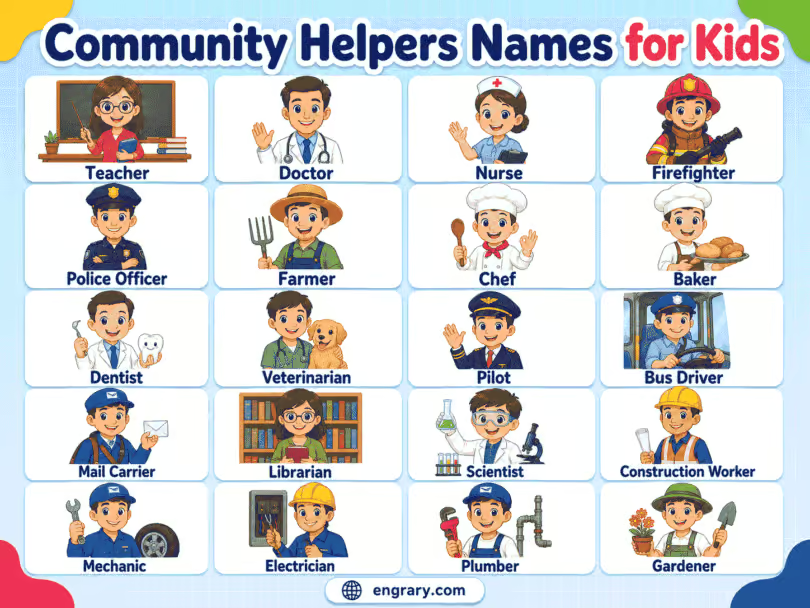
A firefighter carries a hose, a teacher opens a book, and a mail carrier brings letters to a neighborhood. Because children often recognize workers through their actions, uniforms, tools, and workplaces, pictures can make community-helper names easier to understand and remember.
A community helper is a person whose work helps people stay safe, healthy, educated, connected, supplied, or supported in daily life. This guide introduces 50 community helpers and explains what they do, where they work, and how children can recognize them.
Familiar Community Helper Names
Children may see some helpers every day, while they may meet others only during a special visit or emergency.
- Teacher
- Doctor
- Nurse
- Police officer
- Firefighter
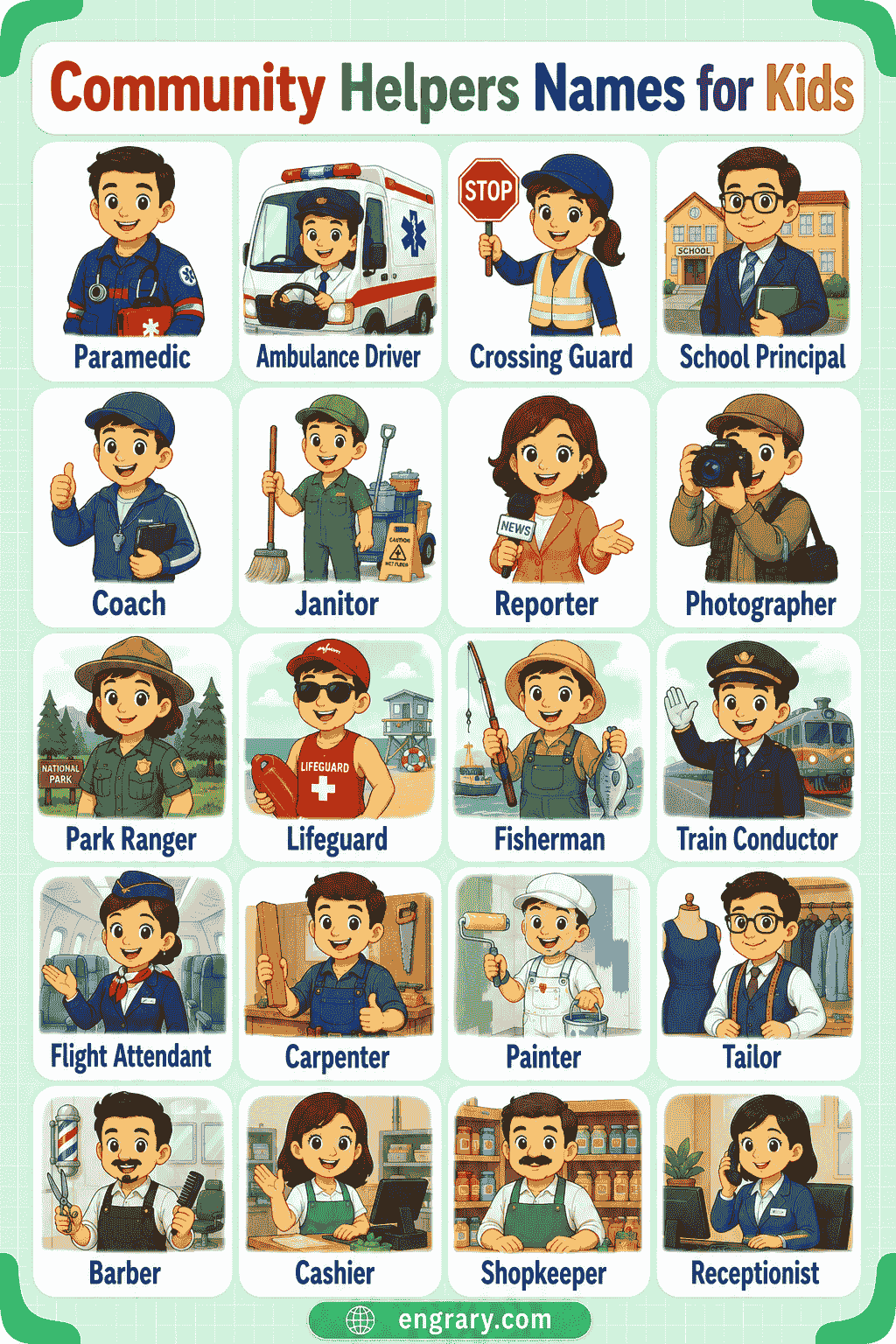
- Paramedic
- Crossing guard
- Librarian
- Mail carrier
- Farmer
- Baker
- Bus driver
- Veterinarian
- Plumber
- Mechanic

Safety and Emergency Helpers
Safety and emergency helpers respond when people face danger, injury, fire, crime, or another urgent problem. Although their duties differ, they all work to protect people and provide timely support.
Police officer — A police officer patrols communities, responds to reports, directs traffic, and helps protect the public. A badge, radio, uniform, or patrol car may help children identify this worker.
Firefighter — Firefighters respond to fires, rescues, vehicle crashes, and other emergencies. They often use helmets, protective clothing, hoses, ladders, and fire trucks.
Paramedic /ˌperəˈmedɪk/ 🔊 — A paramedic gives urgent medical care before and during transportation to a hospital. Medical bags, protective gloves, and an ambulance are common recognition clues.
Emergency dispatcher — This worker answers emergency calls, gathers important information, and sends police officers, firefighters, or paramedics to the correct location.
Crossing guard — Near schools and busy roads, a crossing guard helps children and other pedestrians cross safely. A reflective vest and handheld stop sign make the role easy to recognize.
Lifeguard — A lifeguard watches swimmers, warns people about unsafe behavior, and responds when someone is in danger near water. Whistles, rescue tubes, and raised chairs often identify the job.
Park ranger — Park rangers protect natural areas, guide visitors, explain park rules, and respond to outdoor problems. They may carry maps, radios, first-aid supplies, or binoculars.
Health and Animal-Care Helpers
Health helpers examine patients, prevent problems, provide treatment, and support recovery. Meanwhile, animal-care workers perform similar duties for pets, farm animals, and wildlife.
Doctor — A doctor examines patients, identifies health problems, and plans suitable treatment. Doctors commonly work in hospitals, clinics, and medical offices.
Nurse — Nurses monitor patients, give medicine, check vital signs, and provide ongoing care. In addition, they explain treatments and help patients feel comfortable.
Dentist — A dentist examines teeth and gums, treats dental problems, and helps people protect their oral health. Dental mirrors, masks, gloves, and treatment chairs are common clues.
Dental hygienist — This dental worker cleans teeth, checks for early problems, and teaches patients how to brush and floss effectively.
Pharmacist — A pharmacist prepares medicine, checks prescriptions, and explains how people should use medications safely. Most pharmacists work in pharmacies, hospitals, or clinics.
Veterinarian /ˌvetərəˈneriən/ 🔊 — A veterinarian examines and treats sick or injured animals. Depending on the workplace, the patients may include pets, farm animals, or wildlife.
Optometrist /ɑːpˈtɑːmətrɪst/ 🔊 — An optometrist checks eyesight, identifies common vision problems, and may prescribe glasses or contact lenses. Eye charts and vision-testing equipment help children recognize this role.
School and Learning Helpers
School and learning helpers guide children, organize educational spaces, and provide academic or personal support. Some work in schools, while others serve families through libraries or childcare centers.
Teacher — Teachers plan lessons, explain ideas, answer questions, and help students develop knowledge and skills. Books, classroom displays, and whiteboards often appear in their workplace.
Teaching assistant — A teaching assistant supports the teacher and helps students during lessons, group work, or individual activities.
Principal — The principal manages the school and supports teachers, students, staff members, and families. This person also helps make decisions about school programs and routines.
School counselor — A school counselor supports students with learning difficulties, friendships, emotions, future plans, and other personal concerns.
Librarian /laɪˈbreriən/ 🔊 — Librarians help people find, borrow, and use books, digital materials, and other information. They may also organize reading programs and learning activities.
Childcare worker — A childcare worker supervises young children and supports their meals, routines, play, safety, and early learning.
Helpers Who Grow, Sell, and Prepare Food
Food helpers grow crops, raise animals, sell groceries, prepare meals, and serve customers. As a result, their work connects farms, stores, kitchens, and dining areas.
Farmer — A farmer grows crops, raises animals, or produces food and other useful materials. Tractors, barns, fields, tools, and farm animals provide familiar visual clues.
Grocer — Grocers sell food, drinks, and household essentials in grocery stores or markets. They may arrange produce, stock shelves, or assist customers.
Chef — A chef plans and prepares meals in a professional kitchen. Unlike a home cook, a chef usually works in a restaurant, hotel, hospital, or another food-service workplace.
Baker — Bakers make bread, cakes, cookies, pastries, and other baked foods. Mixing bowls, dough, ovens, trays, and bakery displays help identify the job.
Server — A server welcomes restaurant customers, takes orders, brings food and drinks, and helps during the meal. This gender-neutral term can replace waiter or waitress when gender is unknown.
Helpers Who Build and Repair Things
Building and repair helpers create structures, install important systems, and fix damaged items. Because these workers may use dangerous tools or work areas, children should observe them only from a safe distance.
Construction worker — Construction workers help build or improve houses, schools, roads, bridges, and other structures. Hard hats and safety vests often make them easy to recognize.
Carpenter — A carpenter builds and repairs wooden structures, furniture, doors, and other objects. Hammers, measuring tapes, saws, and pieces of wood are common tools.
Plumber — Plumbers install and repair pipes, drains, faucets, toilets, and water systems. For example, a plumber may fix a leaking pipe or blocked drain.
Electrician /ɪˌlekˈtrɪʃən/ 🔊 — An electrician installs and repairs wiring, outlets, lights, and electrical equipment. Insulated tools and safety gear help this worker handle electricity carefully.
Mechanic — Mechanics inspect, maintain, and repair cars or other machines. They commonly work in repair shops and use wrenches, lifts, testing devices, and replacement parts.
Painter — Painters apply paint or protective coatings to walls, buildings, furniture, and other surfaces. Brushes, rollers, paint trays, and drop cloths often appear nearby.
Roofer — A roofer installs, replaces, and repairs roofs. Since roof work happens high above the ground, safety ropes, helmets, ladders, and secure footwear are essential.
Utility worker — Utility workers maintain important services such as electricity, water, gas, and communication lines. Service trucks, safety helmets, and outdoor equipment may identify them.
Helpers Who Keep Places Clean and Cared For
Clean and well-maintained places support health, safety, and comfort. Therefore, these helpers collect waste, clean shared spaces, care for buildings, and maintain plants.
Sanitation worker /ˌsænəˈteɪʃən ˌwɜːrkər/ 🔊 — A sanitation worker collects and transports household waste or recycling. Garbage collector is another common American term.
Street sweeper — This worker removes litter, leaves, dirt, and debris from streets, sidewalks, and public areas. Some street sweepers use brooms, while others operate cleaning vehicles.
Custodian — A custodian cleans and maintains schools, offices, hospitals, and other public buildings. Besides cleaning, the worker may check rooms, move supplies, or report repair problems.
Cleaner — Cleaners wash, dust, vacuum, and organize homes, businesses, or shared indoor spaces. Their tools may include cloths, mops, buckets, brushes, and vacuum cleaners.
Gardener — Gardeners plant, water, trim, and care for flowers, lawns, shrubs, and other plants. They may work in private gardens, parks, schools, or public spaces.
Helpers Who Transport People and Deliver Items
Transport and delivery helpers move passengers, letters, meals, and packages between locations. Although many of them operate vehicles, their main responsibility is serving people safely and reliably.
Bus driver — A bus driver carries passengers along a planned route and stops at marked locations. The driver also checks traffic, follows schedules, and helps passengers board safely.
School-bus driver — This trained driver transports children to and from school. In addition, the driver follows special safety procedures when students enter or leave the bus.
Taxi driver — A taxi driver takes paying passengers to requested locations. Navigation tools, a fare meter, or a marked taxi may help identify the job.
Train operator — A train operator controls or monitors a passenger or freight train. Depending on the rail system, the worker may manage speed, stops, signals, and safety checks.
Pilot — Pilots fly airplanes or other aircraft and make decisions about routes, weather, takeoff, and landing.
Flight attendant — A flight attendant supports passenger safety and comfort during a flight. Before departure, this worker explains safety procedures and checks the cabin.
Mail carrier — Mail carriers deliver letters and packages to homes and businesses. A mailbag, postal vehicle, uniform, or collection route may identify the role.
Food-delivery driver — This driver brings prepared meals or groceries to homes, workplaces, and other locations. Insulated delivery bags help keep food at a suitable temperature.
Community and Public-Service Helpers
Some helpers connect people with public services, support families, assist animals, or volunteer their time. Their work may happen in offices, neighborhoods, shelters, post offices, or community programs.
Social worker — A social worker connects individuals and families with care, support, information, and community resources. This trained professional may work in schools, hospitals, agencies, or family-service programs.
Postal clerk — Postal clerks help customers mail letters and packages, buy postage, complete forms, and collect certain items at a post office.
Animal-control officer — This community worker responds to concerns involving lost, stray, injured, or unsafe animals. The officer may transport animals to a shelter or help reunite pets with their owners.
Volunteer — A volunteer gives time and effort to help other people, animals, or community projects without receiving regular pay for the work. Volunteering is an activity rather than one specific profession.
Match Helpers with Their Tools and Workplaces
Tools, vehicles, and workplaces provide helpful recognition clues. However, real workers may use many different items depending on the exact task.
| Community helper | Familiar tool or item | Common workplace |
|---|---|---|
| Doctor | Stethoscope | Hospital or clinic |
| Firefighter | Hose | Fire station and emergency scenes |
| Teacher | Books or whiteboard | School |
| Librarian | Book scanner | Library |
| Carpenter | Hammer | Workshop or building site |
| Plumber | Pipe wrench | Homes and buildings |
| Mechanic | Wrench | Vehicle repair shop |
| Baker | Oven or mixing bowl | Bakery |
| Crossing guard | Handheld stop sign | School crossing |
| Sanitation worker | Garbage truck | Streets and collection routes |
| Mail carrier | Mailbag | Post office and neighborhood |
| Veterinarian | Animal-care tools | Animal hospital or clinic |
Community Helpers Children Often Confuse
Some helpers work in related places or solve similar problems. Still, their training and main responsibilities make each role different.
| Community helpers | Main difference |
|---|---|
| Doctor and nurse | A doctor identifies health problems and plans treatment, while a nurse monitors and supports patients during care. |
| Doctor and paramedic | A doctor usually works in a medical facility, whereas a paramedic gives urgent care before and during transportation. |
| Dentist and dental hygienist | A dentist diagnoses and treats dental problems, while a hygienist cleans teeth and supports preventive care. |
| Police officer and firefighter | Police officers support law and public safety, while firefighters respond to fires, rescues, and other emergencies. |
| Teacher and librarian | A teacher leads lessons, whereas a librarian helps people find and use information. |
| Chef and baker | A chef prepares many kinds of meals, while a baker mainly makes bread, cakes, and pastries. |
| Farmer and grocer | A farmer produces food, whereas a grocer sells food and household essentials. |
| Plumber and electrician | A plumber works with pipes and water systems, while an electrician works with wiring and electricity. |
| Mechanic and tow-truck driver | A mechanic repairs vehicles, whereas a tow-truck driver moves vehicles that cannot travel safely. |
| Mail carrier and delivery driver | A mail carrier delivers postal mail, while a delivery driver may bring food, groceries, packages, or other products. |

Using Community Helper Names in Sentences
Use a before a job name that begins with a consonant sound:
- My mother is a nurse.
- Jordan is a firefighter.
- Mr. Lee is a teacher.
- Her neighbor is a veterinarian.
By contrast, use an before a job name that begins with a vowel sound:
- Priya is an electrician.
- My uncle is an optometrist.
- She works as an emergency dispatcher.
Plural forms describe helpers as a group:
- Teachers help children learn.
- Paramedics respond to medical emergencies.
- Farmers grow crops and raise animals.
- Mail carriers deliver letters and packages.
- Gardeners care for plants and outdoor spaces.
Use works at for a particular workplace or organization:
- A librarian works at a library.
- A mechanic works at a repair shop.
- The firefighter works at a fire station.
- A postal clerk works at a post office.
Use works in for a type of place, field, department, or indoor setting:
- A nurse may work in a hospital.
- The chef works in a restaurant kitchen.
- A teacher works in education.
- The social worker works in a family-support program.
Precise action verbs make sentences more informative:
- A teacher teaches students.
- The doctor examines a patient.
- A nurse monitors vital signs.
- Firefighters respond to emergencies.
- The baker bakes fresh bread.
- A plumber repairs pipes.
- The mail carrier delivers letters.
- A gardener trims the plants.
| Incorrect sentence | Correct sentence |
|---|---|
| She is teacher. | She is a teacher. |
| He work at a hospital. | He works at a hospital. |
| A firefighter put out fires. | A firefighter puts out fires. |
| The doctor help sick people. | The doctor helps sick people. |
| My sister is an police officer. | My sister is a police officer. |
| A librarian sells library books. | A librarian helps people borrow and use library resources. |
Who Helps in Each Situation?
Guess the Community Helper
- This person teaches children in a classroom.
- This worker uses a hose and responds to fires.
- This person helps people find and borrow books.
- This worker repairs pipes and water systems.
- This professional treats sick or injured animals.
- This worker delivers letters and packages.
- This person helps children cross a busy road.
- This worker inspects and repairs cars.
Match the Helper with the Tool
- doctor;
- firefighter;
- carpenter;
- plumber;
- crossing guard;
- baker;
- sanitation worker;
- librarian.
Tools or items:
- stethoscope;
- hose;
- hammer;
- pipe wrench;
- handheld stop sign;
- oven;
- garbage truck;
- book scanner.
Match the Helper with the Workplace
- teacher;
- nurse;
- veterinarian;
- mechanic;
- chef;
- librarian;
- firefighter;
- pharmacist.
Workplaces:
- school;
- hospital or clinic;
- animal hospital;
- repair shop;
- restaurant kitchen;
- library;
- fire station;
- pharmacy.
Choose the Right Helper
- A pet becomes sick.
- A car will not start.
- A fire begins in a building.
- Someone has severe tooth pain.
- A water pipe starts leaking.
- The power stops working safely.
- A child cannot find a library book.
- Students need help crossing a busy street.
Complete the Sentences
- A teacher ___ children learn.
- A plumber repairs water ___.
- A veterinarian cares for sick ___.
- A mail carrier ___ letters and packages.
- A firefighter works at a fire ___.
- An electrician works with electrical ___.
- A baker makes bread and ___.
- A crossing guard helps people cross the ___.
Answer Key
Guess the community helper
- teacher
- firefighter
- librarian
- plumber
- veterinarian
- mail carrier
- crossing guard
- mechanic
Match the helper with the tool
- doctor → stethoscope;
- firefighter → hose;
- carpenter → hammer;
- plumber → pipe wrench;
- crossing guard → handheld stop sign;
- baker → oven;
- sanitation worker → garbage truck;
- librarian → book scanner.
Match the helper with the workplace
- teacher → school;
- nurse → hospital or clinic;
- veterinarian → animal hospital;
- mechanic → repair shop;
- chef → restaurant kitchen;
- librarian → library;
- firefighter → fire station;
- pharmacist → pharmacy.
Choose the right helper
- veterinarian
- mechanic
- firefighter
- dentist
- plumber
- electrician
- librarian
- crossing guard
Complete the sentences
- helps
- pipes
- animals
- delivers
- station
- wiring
- cakes or pastries
- street or road
FAQs
Children can begin with teacher, doctor, nurse, police officer, firefighter, paramedic, librarian, mail carrier, farmer, bus driver, veterinarian, plumber, and mechanic.
Many jobs support society, but early-learning community-helper lessons usually focus on people who directly help with safety, health, education, food, transportation, repairs, cleanliness, and public services.
Terms such as police officer, firefighter, mail carrier, server, and sanitation worker show that people of any gender can perform these jobs.
Children can look at the person’s actions, workplace, tools, vehicle, and protective clothing. However, they should not rely only on stereotypes because uniforms and job settings vary.
Labeled pictures, situation clues, role-play, tool matching, and short action sentences help children connect each helper’s name with the service the person provides.
You May Also Like