
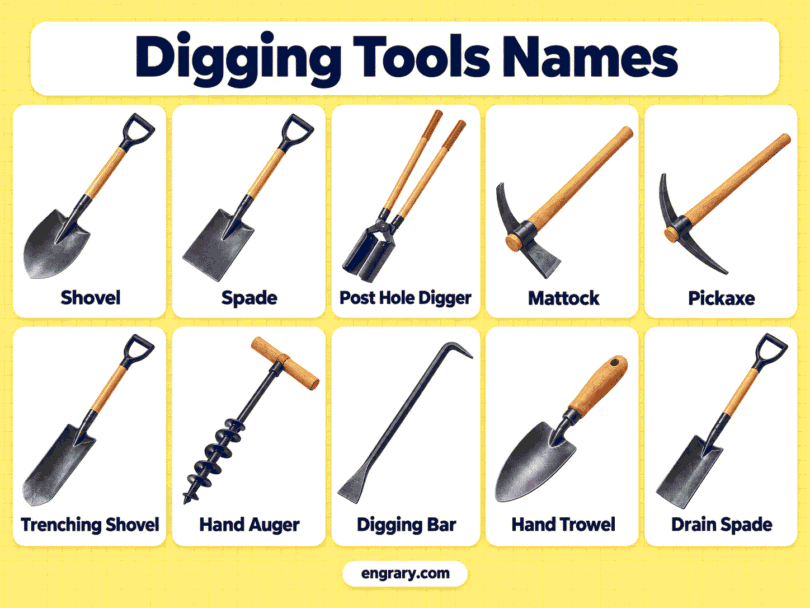
Digging tools come in many shapes for cutting into soil, lifting earth, making planting holes, opening trenches, and breaking hard ground. Learning digging tools names with pictures and uses makes it easier to recognize the differences between spades, shovels, forks, augers, and other soil-working tools.
This guide covers 45 digging tools names with short descriptions and simple identification clues. The list includes full-size digging tools, small hand tools, hole-making tools, and equipment designed for tougher or more compacted ground.
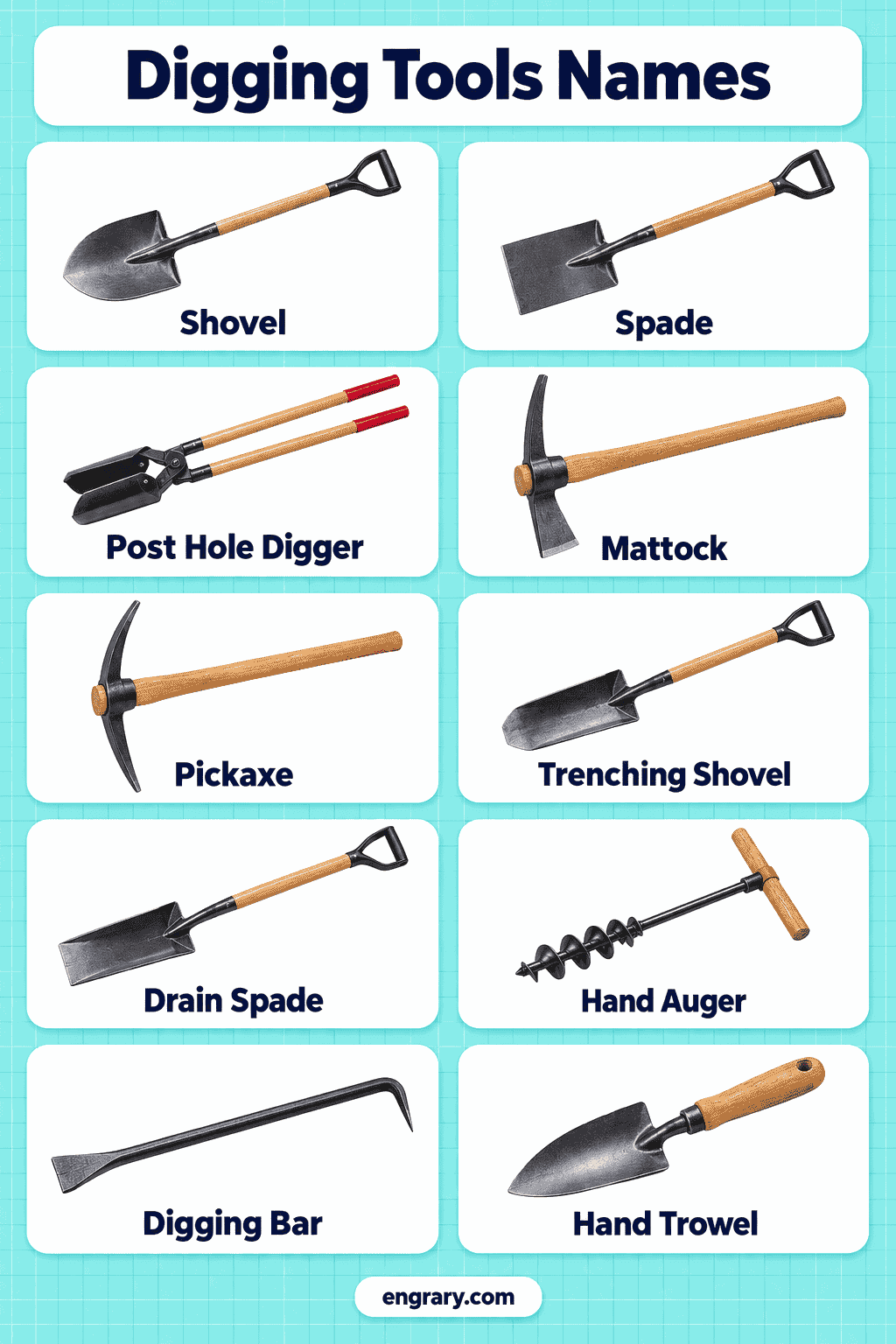
Digging Tools Used for Different Types of Ground Work
Different digging jobs require different blade shapes, handle lengths, and working heads. Some tools cut directly into soil, while others loosen compacted ground, scoop earth, or create narrow planting holes.
1. Digging Spade
A digging spade has a flat, strong blade with a relatively straight cutting edge. It is commonly used for cutting into soil and turning small sections of ground.
2. Round-Point Shovel
A round-point shovel has a broad blade that narrows toward a rounded point. The pointed shape helps it penetrate ordinary soil more easily.
3. Digging Fork
A digging fork has a long handle and several strong metal tines. It loosens compacted soil and lifts soil without using a solid blade.
4. Border Spade
A border spade is smaller and narrower than a standard digging spade. Its compact blade makes it useful around plants and in confined beds.
5. Border Fork
A border fork is a smaller version of a full-size digging fork. Gardeners use it where a large fork would be difficult to control.
6. Broadfork
A broadfork has a wide row of long tines with two upright handles. It loosens a broad section of soil while working from the surface.
7. Hand Trowel
A hand trowel has a short handle and a small scoop-shaped blade. It is useful for small holes and close digging around plants.
8. Transplanting Trowel
A transplanting trowel has a longer, narrower blade than a standard hand trowel. Its shape works well in restricted planting spaces.
9. Trenching Spade
A trenching spade has a long, narrow blade designed to work in confined strips of ground.
10. Drain Spade
A drain spade has a narrow elongated blade. It is used where a deep, relatively narrow opening is needed.
11. Trenching Shovel
A trenching shovel has a slim blade with raised sides that help lift loosened soil from narrow trenches.
12. Tree-Planting Shovel
A tree-planting shovel has a narrow pointed blade that can work around deeper planting spaces and roots.
13. Root Shovel
A root shovel has a strong pointed blade designed to penetrate soil where roots make ordinary digging more difficult.
14. Mattock
A mattock has a heavy metal head with a broad digging or cutting blade. It suits harder soil and ground containing roots.
15. Pick Mattock
A pick mattock combines a pointed pick on one side with a broader mattock blade on the other.
16. Pickaxe
A pickaxe has a heavy head with a pointed working end. It helps break very hard or compacted ground before soil is removed.
17. Digging Bar
A digging bar is a long, heavy metal bar with a pointed or chisel-shaped end. It is useful for penetrating resistant ground.
18. Post-Hole Digger
A post-hole digger has two long handles connected to paired digging blades. Its shape allows soil to be lifted from a narrow hole.
19. Hand Auger
A hand auger has a spiral-shaped boring head attached to a shaft or handle. Turning it creates relatively narrow holes in soil.
20. Garden Auger
A garden auger uses a spiral digging section to bore planting holes and loosen soil within a small circular area.
21. Dibber
A dibber is a pointed tool used to make small holes for seeds, plugs, and young plants. It is also known as a dibble.
22. Bulb Planter
A bulb planter has a hollow cylindrical head that removes a small plug of soil and leaves a planting hole behind.
23. Hori Hori Knife
A hori hori has a strong pointed blade with one or more cutting edges. Its blade shape allows it to perform small digging and soil-cutting jobs.
24. Grubbing Hoe
A grubbing hoe has a strong blade attached across a long handle. It is used for tougher surface digging and breaking compact soil.
25. Rock Bar
A rock bar is a long, heavy steel bar used to work around stones and stubborn compacted ground.
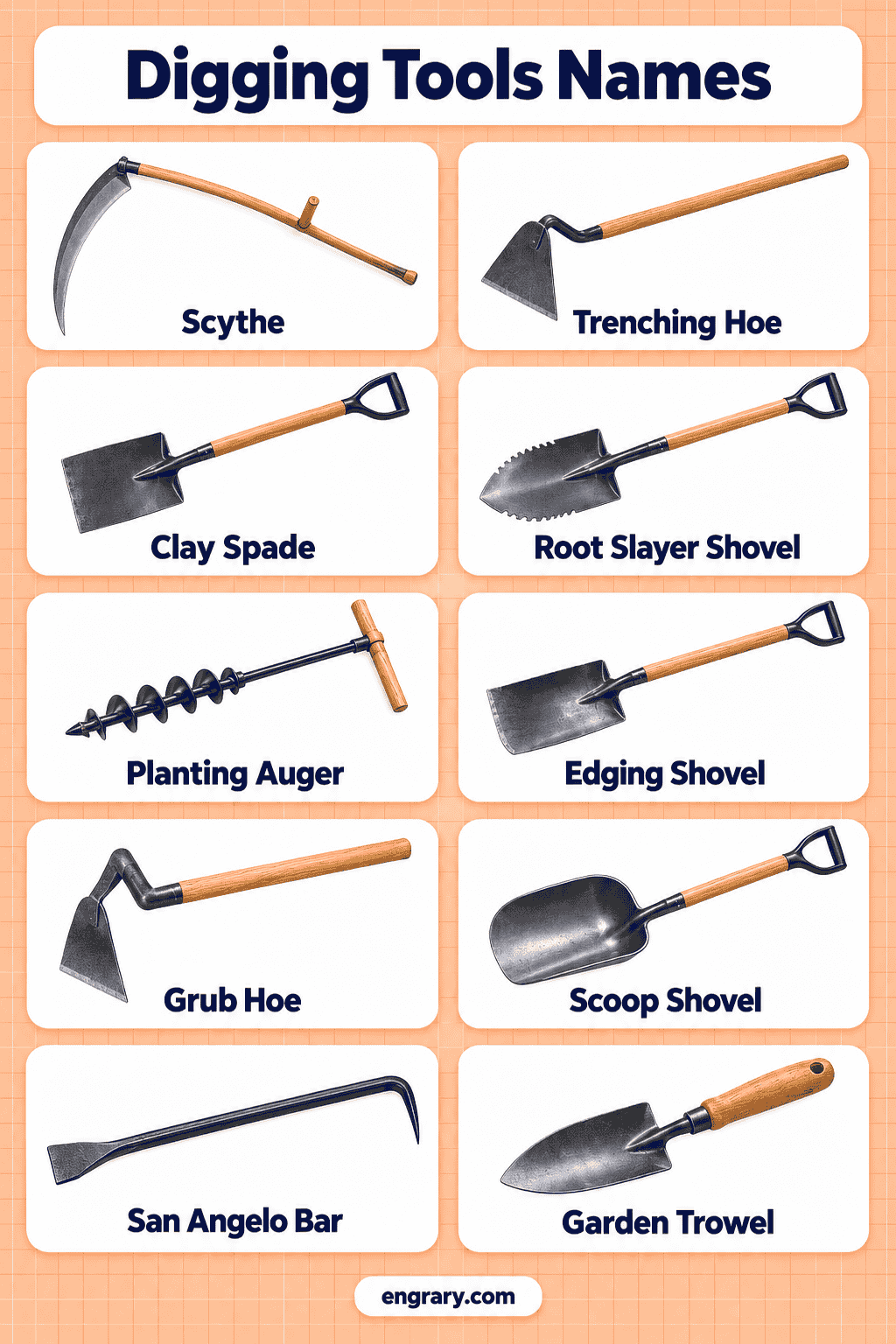
Types of Spades for Digging and Soil Work
Spades generally have flatter blades than many shovels, which makes them useful for controlled soil cutting and precise ground work. Several designs adapt this basic shape for different spaces and digging depths.
26. Garden Spade
A garden spade has a sturdy flat blade and long or medium-length handle. It is a general-purpose form used for soil cutting and digging.
27. Edging Spade
An edging spade has a flat or slightly curved blade designed to make clean cuts along soil boundaries and bed edges.
28. Planting Spade
A planting spade has a relatively narrow blade that fits into smaller areas when creating planting spaces.
29. Nursery Spade
A nursery spade typically has a strong narrow blade designed for digging around plants and working through established soil.
Types of Shovels for Digging and Moving Soil
Shovels vary considerably in blade shape. Pointed versions are useful for penetrating ground, while flatter or deeper designs work better for moving loosened soil and other materials.
30. Digging Shovel
A digging shovel has a strong pointed blade that combines soil penetration with the ability to lift loosened earth.
31. Square-Point Shovel
A square-point shovel has a broad blade with a straight lower edge. It works best for scooping and moving soil that has already been loosened.
32. Transfer Shovel
A transfer shovel has a wide blade with raised sides that hold loose soil or similar material while it is moved.
33. Scoop Shovel
A scoop shovel has a deep, bowl-like blade. It is primarily useful for moving larger amounts of loose material rather than cutting hard ground.
Forks Used for Digging and Loosening Ground
Digging forks penetrate soil with separate tines rather than a solid blade. This makes them especially useful where soil needs loosening or lifting rather than simply slicing.
34. Spading Fork
A spading fork has several strong tines and a full-length handle. The name often overlaps with digging fork, although terminology varies by region.
35. Potato Fork
A potato fork has multiple tines designed for lifting soil and underground crops with less solid blade contact.
Small Hand Digging Tools
Compact digging tools are useful for containers, raised beds, planting areas, and jobs that need more precision than a full-size shovel or spade can provide.
36. Soil Scoop
A soil scoop has a deep curved blade that holds loose soil or potting mix. It is more scoop-oriented than an ordinary hand trowel.
37. Garden Knife
A garden knife has a sturdy handheld blade that can assist with small soil-cutting and close digging jobs.
38. Mini Spade
A mini spade has a compact flat blade and shorter handle. It works well where a full-size spade would be awkward.
Tools for Digging Holes, Trenches, and Planting Spaces
Hole-making tools range from very small planting tools to equipment designed for deeper, narrower openings. Their shape usually determines the size and depth of the space they create.
39. Soil Auger
A soil auger uses a spiral boring section to penetrate and remove soil from a relatively narrow opening.
40. Post-Hole Auger
A post-hole auger has a larger spiral digging head intended for deeper, wider holes than small garden augers.
41. Planting Auger
A planting auger is a smaller auger designed mainly for repeated planting holes.
42. Trench Hoe
A trench hoe has a narrow working blade designed to open or shape shallow channels in soil.
Tools for Breaking Hard and Compacted Ground
Ordinary shovels and spades can struggle in very hard ground. Heavier tools use weight, narrow points, or stronger cutting edges to loosen resistant soil first.
43. Crowbar
A crowbar is a strong metal bar that can help loosen stubborn objects or compact material encountered during ground work.
44. Chisel Bar
A chisel bar is a long metal tool with a flattened chisel-shaped end for penetrating and loosening hard ground.
45. Tamper Digging Bar
A tamper digging bar combines a digging end with a broader tamping end, giving it more than one ground-working function.
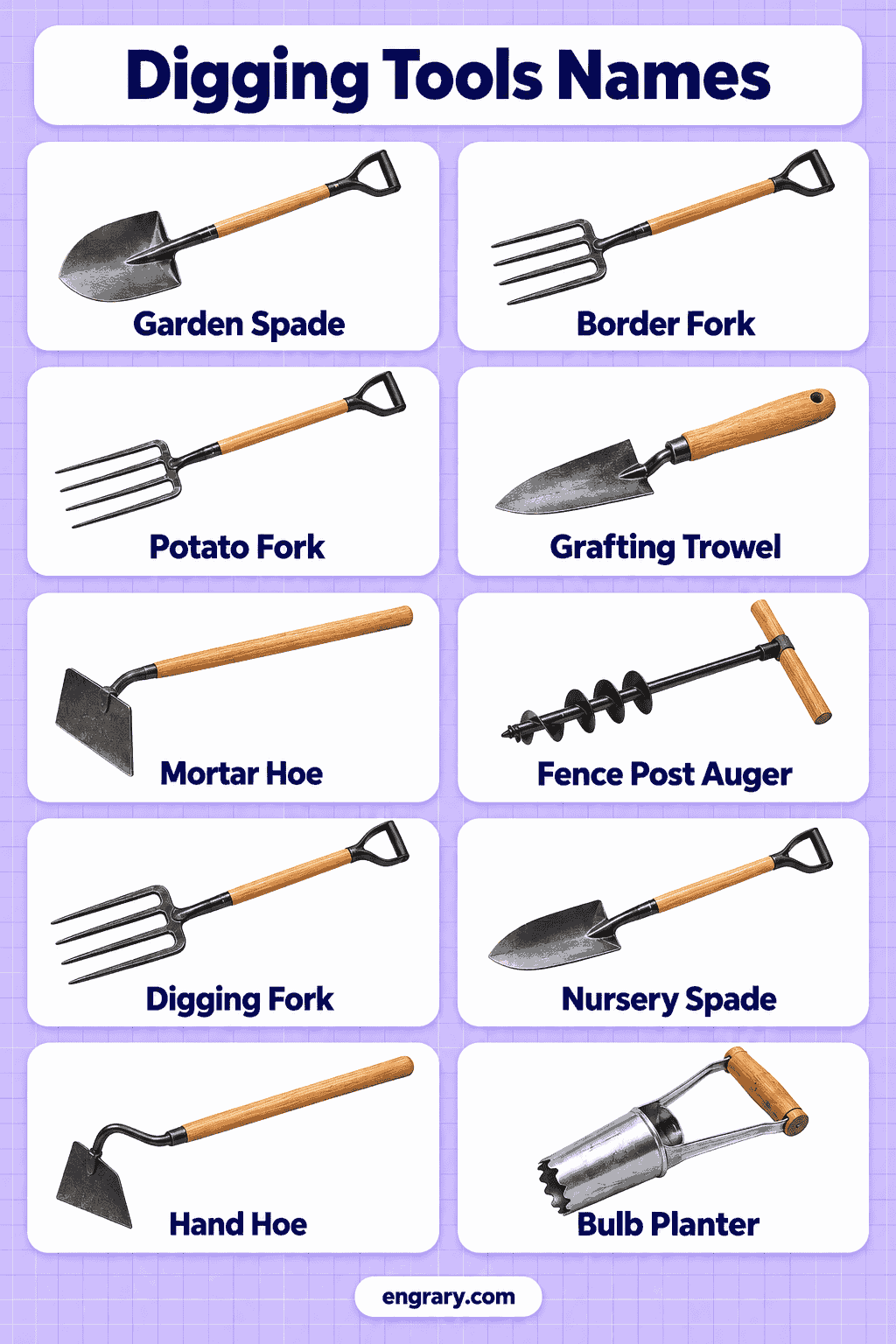
Digging Tools That Are Easy to Confuse
Several digging tools look similar because they perform related jobs. Blade width, point shape, tine arrangement, and overall size provide the easiest clues for telling them apart.
| Tools | Main Difference |
|---|---|
| Spade vs Shovel | A spade usually has a flatter blade for controlled soil cutting, while a shovel often has a broader or more curved blade for digging and moving material. |
| Digging Spade vs Border Spade | A digging spade is full-sized, while a border spade has a smaller, narrower blade for confined spaces. |
| Round-Point Shovel vs Square-Point Shovel | A round-point shovel penetrates soil more easily, while a square-point shovel is better suited to scooping loose material. |
| Trenching Spade vs Drain Spade | Both are narrow, but drain spades usually have especially long, slim blades for deeper confined work. |
| Digging Fork vs Border Fork | A digging fork is larger and suited to broader soil work, while a border fork is smaller for tighter spaces. |
| Digging Fork vs Broadfork | A digging fork has one handle and a narrower tine head, while a broadfork has two handles and spans a much wider area. |
| Hand Trowel vs Transplanting Trowel | A hand trowel has a broader blade, while a transplanting trowel is longer and narrower. |
| Post-Hole Digger vs Auger | A post-hole digger lifts soil with paired blades, while an auger bores into soil with a spiral head. |
| Mattock vs Pickaxe | A mattock includes a broad cutting or digging blade, while a pickaxe relies more heavily on pointed ends for breaking hard ground. |
Alternate Names for Digging Tools
Digging-tool terminology varies between regions and manufacturers. Therefore, the same or closely related tool may appear under more than one name.
| Main Name | Alternate Name |
|---|---|
| Digging Fork | Garden Fork, Spading Fork |
| Broadfork | U-Fork, Grelinette |
| Dibber | Dibble |
| Drain Spade | Drain Shovel |
| Trenching Spade | Trenching Shovel in some product naming |
| Hand Auger | Soil Auger in some contexts |
| Round-Point Shovel | Round Shovel |
| Hori Hori Knife | Soil Knife, Digging Knife |
These alternate terms should not automatically be counted as separate digging tools because their meanings often overlap.
Frequently Asked Questions
Common digging tools include spades, round-point shovels, digging forks, hand trowels, mattocks, pickaxes, post-hole diggers, augers, and digging bars.
A spade usually has a flatter blade that suits precise cutting and digging. A shovel often has a broader or more curved blade, and pointed versions work well for penetrating and lifting soil.
Trenching spades, trenching shovels, drain spades, and trench hoes are among the tools designed for narrow soil work and channels.
Mattocks, pick mattocks, pickaxes, digging bars, rock bars, and similar heavy ground-working tools can loosen resistant soil before it is removed with a shovel or spade.
A post-hole digger uses paired blades to grip and lift soil from a hole. An auger uses a spiral-shaped head that bores into the ground as it turns.
You May Also Like



Leave a Comment