
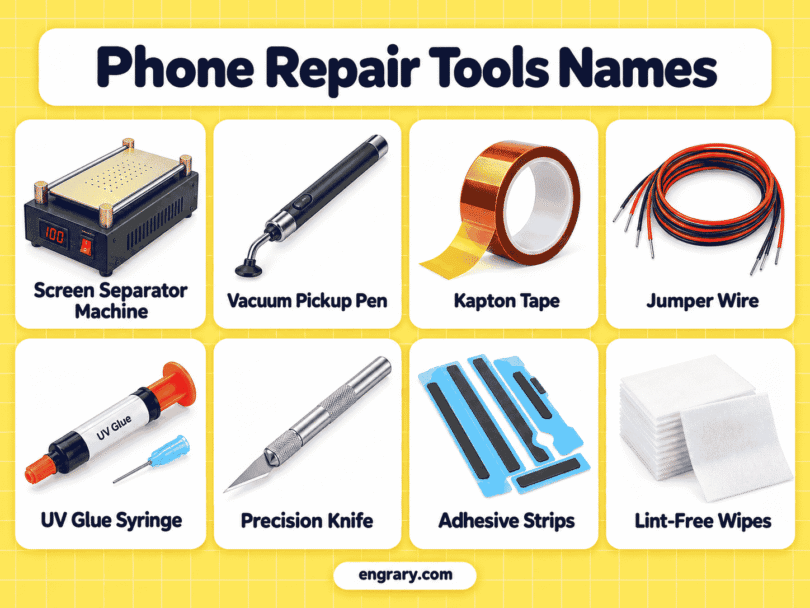
Phone repair tools help technicians open smartphones, remove screens and batteries, handle tiny screws, disconnect flex cables, diagnose faults, and repair damaged circuit boards. Learning common phone repair tools names in English makes it easier to recognize the equipment used for screen replacement, battery service, charging-port repair, microsoldering, and other smartphone repairs.
This article covers 70 phone repair tools with clear explanations of their main uses. You will also learn which tools suit common phone repairs, how basic repair differs from board-level work, which tools are easy to confuse, and what usually belongs on a professional phone repair bench.
Familiar Tools Used in Phone Repair
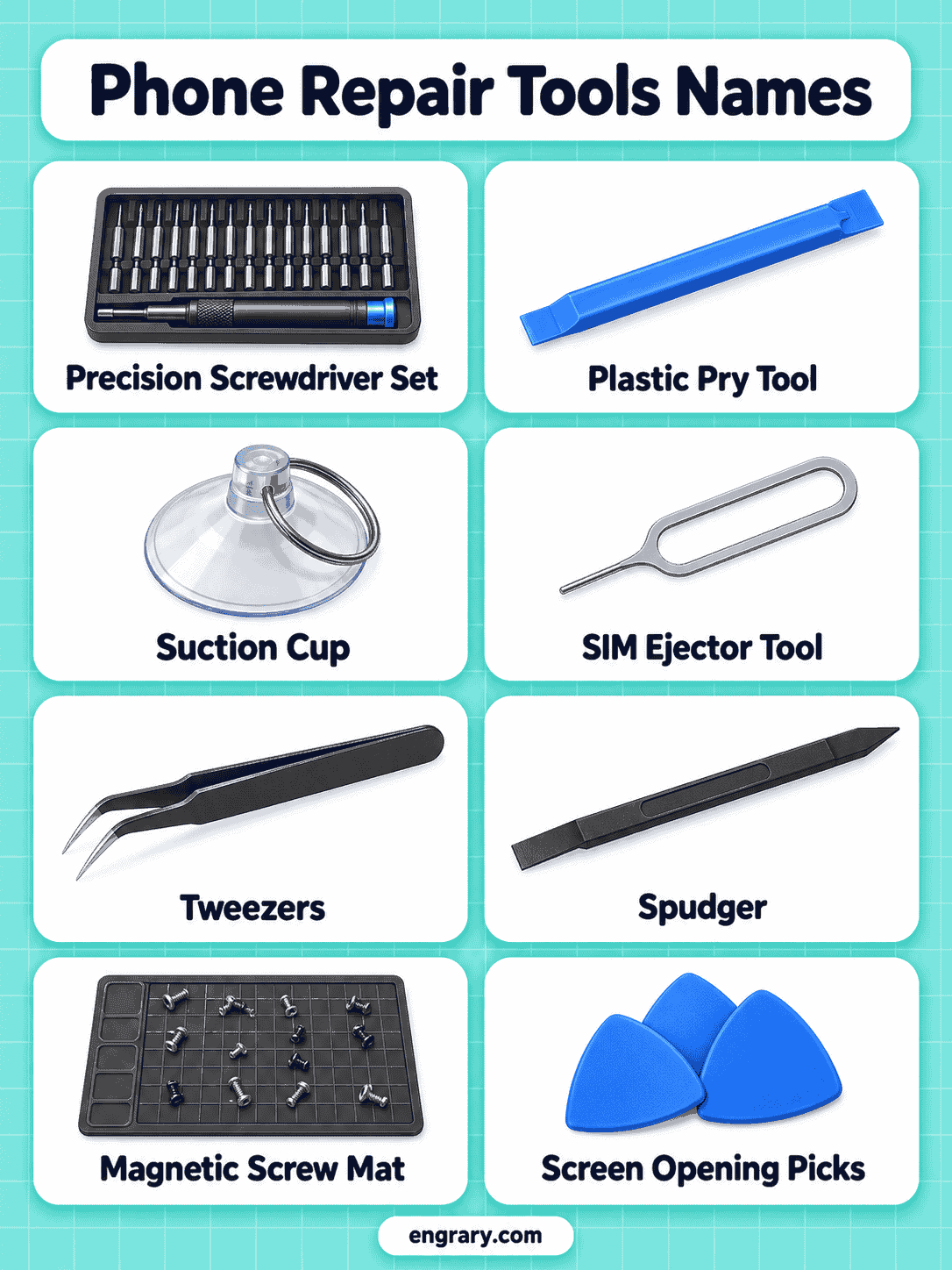
Phone repair uses small precision tools for opening devices, removing screws, lifting screens, handling tiny parts, and checking electrical components. Learning these tool names helps beginners and English learners recognize common equipment used in mobile phone maintenance and repair.
Precision Screwdriver
A precision screwdriver turns the tiny screws found inside smartphones and other electronic devices.
Phillips Screwdriver
A small Phillips screwdriver fits cross-shaped screws commonly used in phone frames and internal parts.
Pentalobe Screwdriver
A pentalobe screwdriver fits five-point screws found on some smartphones, especially around the outer casing.
Torx Screwdriver
A Torx screwdriver uses a star-shaped tip for matching screws inside certain phones and electronic devices.
Plastic Opening Pick
A plastic opening pick slides between phone panels to help separate screens, covers, or frames without scratching them easily.
Spudger
A spudger is a slim non-metal tool used to pry open connectors, lift cables, and separate small internal parts.
Suction Cup
A suction cup grips the screen surface and helps lift it away from the phone frame during disassembly.
Tweezers
Precision tweezers hold, position, and remove tiny screws, cables, stickers, and electronic components.
SIM Ejector Tool
A SIM ejector tool fits into the small release hole that opens a phone’s SIM card tray.
Plastic Pry Tool
A plastic pry tool separates clips, covers, bezels, and other fitted phone parts with less risk of surface damage.
Opening Card
A thin opening card slides around adhesive edges to help separate screens and back covers.
Heat Gun
A heat gun supplies controlled hot air that can soften adhesive around screens, back panels, and other bonded parts.
Heating Pad
A heating pad warms the phone surface evenly to soften adhesive before opening the device.
Soldering Iron
A soldering iron heats solder during electronic repair work on wires, connectors, and circuit board components.
Solder Wire
Solder wire melts during soldering and forms electrical connections between compatible metal parts.
Desoldering Pump
A desoldering pump removes melted solder from joints during component replacement or circuit board repair.
Multimeter
A multimeter checks electrical values such as voltage, resistance, and continuity when diagnosing phone faults.
Magnifying Lamp
A magnifying lamp enlarges small components while providing bright light for detailed repair work.
ESD Wrist Strap
An ESD wrist strap helps reduce electrostatic discharge when handling sensitive electronic components.
Parts Tray
A parts tray keeps tiny screws, brackets, connectors, and other phone components separated and organized during repair.
Tools for Opening a Phone Without Damaging It
Smartphone housings often use clips, adhesive, and tightly fitted panels. The following tools provide controlled access while reducing unnecessary damage.
Spudger
A non-metallic tip lifts connectors, routes cables, and performs gentle internal prying.
Plastic Opening Tool
Broad plastic edges release clips and separate housings without using a sharp metal blade.
Opening Pick
Its thin flexible profile slides through narrow seams and adhesive joints.
Jimmy Tool
A thin steel blade enters especially tight gaps where plastic tools may not fit.
Metal Spudger
Strong metal edges provide greater leverage for stubborn housings and adhesive.
Suction Handle
Vacuum pressure creates a lifting point on smooth glass or back covers.
Dual Suction Cup Tool
Opposing suction cups apply controlled separation between two phone panels.
Screen Opening Pliers
Paired grips lift and separate screens while distributing force more evenly.
Plastic Card Tool
A thin flexible card travels under adhesive-backed panels and batteries.
Precision Drivers for Tiny Phone Screws
Smartphones use several screw-head designs, so a repair kit usually needs more than one precision driver.
Precision Bit Driver
Interchangeable bits let one compact handle fit many miniature fastener types.
Phillips Precision Screwdriver
A small cross-shaped tip turns Phillips screws used in brackets, shields, and internal modules.
Pentalobe Screwdriver
Five-point engagement fits compatible exterior and internal phone screws.
Tri-Point Screwdriver
A three-wing profile handles specialized screws found in certain devices.
Torx Precision Screwdriver
Star-shaped engagement fits small Torx fasteners used in phone assemblies.
Torx Security Screwdriver
A center opening accommodates tamper-resistant Torx screws with a raised pin.
Flathead Precision Screwdriver
A narrow flat blade fits miniature slotted screws and selected adjustment points.
Standoff Screwdriver
Specialized tips remove or install standoff fasteners on compatible phone logic boards.
Micro Nut Driver
A tiny socket-style head turns miniature hex nuts and standoff hardware.
Tools for Handling Connectors and Tiny Components
Small phone components can easily bend, scratch, or disappear. Precision handling tools improve control around flex cables, cameras, shields, screws, and surface-mounted parts.
Precision Tweezers
Fine pointed tips position tiny screws, connectors, wires, and components.
Angled Tweezers
Bent tips reach around obstacles without forcing the technician’s hand into an awkward position.
Curved Tweezers
A curved profile improves access to components located beneath shields or cables.
Blunt Tweezers
Rounded ends handle delicate parts with less risk of puncturing flex cables.
Reverse Tweezers
Self-closing jaws hold components without constant finger pressure.
Ceramic Tweezers
Non-metallic tips tolerate heat and reduce electrical conductivity around sensitive work.
Probe and Pick Set
Fine hooks and points manipulate connectors, adhesive tabs, seals, and small parts.
Tools for Screen and Battery Removal
Screens and batteries are among the most commonly replaced phone components, but both often rely on strong adhesive.
Battery Spudger
A broad non-metallic edge lifts batteries with less risk of puncturing the cell.
Battery Lifting Tool
Controlled leverage raises a loosened battery away from the phone frame.
Screen Separator Tool
Mechanical support helps separate a display assembly from the housing after adhesive softens.
Thin Opening Blade
A very slim edge enters tight display or back-cover seams during initial separation.
Adhesive Separator
The flat working edge helps loosen bonded components after suitable heating.
Adhesive Removal Roller
A rolling surface gathers softened adhesive residue from compatible flat areas.
Screen Clamp
Gentle pressure holds a replacement display or back panel in position while adhesive bonds.
Heat and Adhesive-Separation Tools
Controlled heat makes many modern phone repairs easier because screens, batteries, and back covers often rely on adhesive rather than screws alone.
Heat Gun
Focused hot air softens adhesive around selected sections of a device.
Heating Pad
Even contact heat warms a larger phone surface more gradually.
Reusable Heating Tool
Stored heat provides localized warming without a continuous electrical heat source.
Hot Plate
A temperature-controlled flat surface warms displays, frames, or boards evenly during suitable repair work.
Adhesive Cutting Wire
Thin strong wire slices through softened adhesive between bonded panels.
Tools for Board-Level Phone Repair
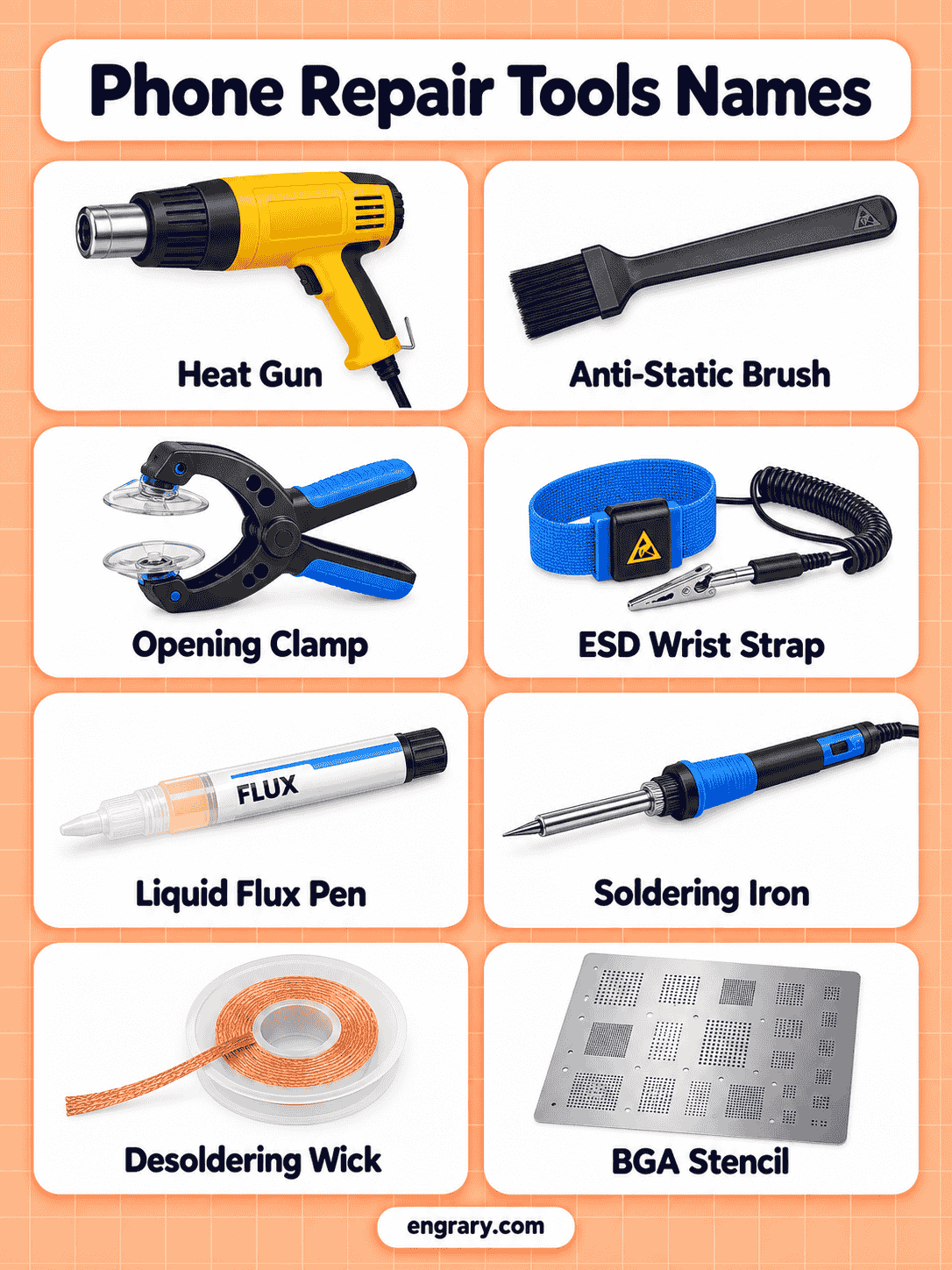
Board-level repair involves damaged connectors, charging circuits, pads, traces, and surface-mounted components. These jobs require much finer control than ordinary screen replacement.
Soldering Iron
A precision heated tip repairs solder joints, wires, pads, and small connectors.
Soldering Station
Adjustable temperature control provides more consistent heat during repeated bench work.
Hot Air Rework Station
Controlled airflow heats surface-mounted components without direct tip contact.
Hot Tweezers
Heated jaws warm both terminals of small two-sided components for removal or replacement.
PCB Holder
Adjustable supports keep the phone logic board stable during testing or soldering.
Board Vise
Clamping jaws secure small circuit boards while leaving the work area accessible.
Microsoldering Platform
A stable heat-resistant base organizes delicate board-level work beneath magnification.
PCB Preheater
Gentle heat from below reduces the amount of direct heat required during difficult rework.
BGA Rework Tool
Specialized heating and positioning support removal or installation of compatible ball-grid-array components.
Testing and Diagnostic Tools for Phones
Accurate diagnosis helps identify whether a fault comes from the battery, charging circuit, connector, logic board, or another phone component.
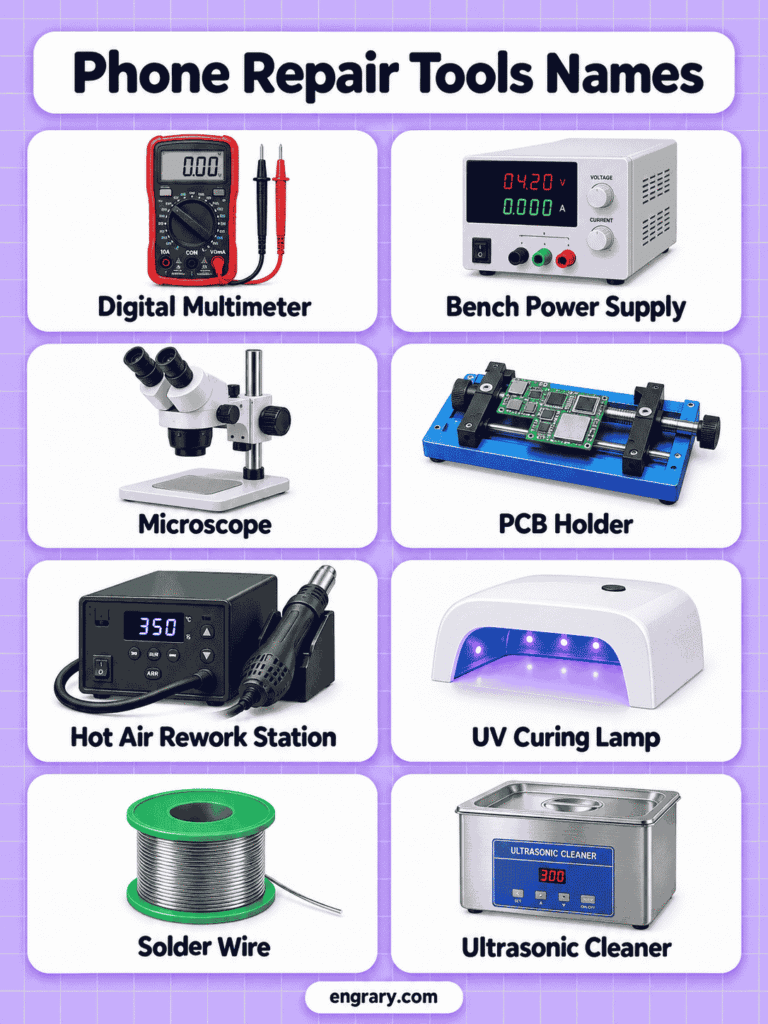
Digital Multimeter
Voltage, resistance, continuity, and diode readings support electrical fault diagnosis.
USB Power Meter
USB voltage, current, and power readings help evaluate charging behavior.
Bench Power Supply
Adjustable voltage and current reveal abnormal current draw during phone startup and board testing.
USB Ammeter
Current flowing through a USB connection can be monitored directly.
Charging Test Meter
Charging voltage and current provide quick clues about adapters, ports, and charging circuits.
Battery Activation Board
Compatible battery connections allow certain deeply discharged batteries to be checked or activated.
Logic Analyzer
Digital signal states can be captured when deeper communication-line diagnosis is required.
Thermal Camera
Heat patterns help locate unusually warm chips or areas caused by shorts and excessive current.
Magnification and Inspection Tools
Phone components and solder joints are often too small for reliable inspection with the naked eye.
Inspection Microscope
Optical magnification reveals solder bridges, damaged pads, corrosion, and broken traces.
Digital Microscope
A camera displays enlarged circuit-board areas on a connected screen.
Magnifying Lamp
Built-in lighting combines moderate magnification with a larger working area.
Head Magnifier
Wearable lenses provide hands-free enlargement during general precision work.
Jeweler’s Loupe
Compact optical magnification supports quick checks of connectors, pads, and tiny components.
ESD-Safe Phone Repair Tools
Electrostatic discharge can damage sensitive phone electronics, so controlled static handling is important during board and component work.
ESD Wrist Strap
A conductive strap helps equalize electrical potential when connected correctly to an ESD-safe ground.
ESD Mat
A dissipative work surface provides a safer area for handling static-sensitive parts.
ESD Brush
Conductive bristles help clean boards and connectors while reducing static buildup.
Grounding Cord
The cable connects compatible ESD equipment to an appropriate grounding point.
Tools for Keeping Screws and Parts Organized
Phones often contain many tiny screws with different lengths and thread types. Good organization prevents parts from being misplaced or installed in the wrong location.
Magnetic Project Mat
A magnetic surface holds small steel screws while allowing their positions to be labeled.
Screw Sorting Tray
Separate compartments keep screws and components grouped by repair stage.
Magnetic Parts Bowl
A shallow magnetic dish prevents loose metal fasteners from rolling away.
Parts Organizer
Multiple divided spaces store modules, clips, screws, shields, and small repair parts.
Cleaning Tools for Phone Repair
Dust, adhesive residue, corrosion, and debris can interfere with inspection and reassembly.
Precision Cleaning Brush
Small bristles reach connector areas, speaker openings, and tight board spaces.
Dust Blower
A focused air stream moves loose particles away from delicate components.
Fiberglass Scratch Brush
Fine abrasive fibers remove oxidation and surface contamination from suitable metal areas.
Tools Used for the Most Common Phone Repairs
Different repair jobs rely on different combinations of opening, heating, testing, and precision tools.
| Phone Repair | Useful Tools |
|---|---|
| Screen Replacement | Suction Handle, Opening Pick, Heating Pad |
| Battery Replacement | Battery Spudger, Heating Tool, Lifting Tool |
| Charging Port Repair | Microscope, Soldering Iron, Hot Air Station |
| Camera Replacement | Precision Driver, Tweezers, Spudger |
| Speaker Replacement | Opening Pick, Precision Screwdriver, Tweezers |
| Back Glass Removal | Heat Tool, Cutting Wire, Adhesive Separator |
| Board Diagnosis | Digital Multimeter, Bench Power Supply, Microscope |
| Microsoldering | Soldering Iron, Hot Air Station, PCB Holder |
These combinations reflect the different levels of disassembly and electrical work involved in smartphone repair.
Basic Phone Repair vs Board-Level Repair
Phone repair ranges from replacing complete modules to repairing tiny components directly on the logic board.
| Basic Phone Repair | Board-Level Repair |
|---|---|
| Precision Screwdriver | Inspection Microscope |
| Spudger | Soldering Station |
| Opening Pick | Hot Air Rework Station |
| Suction Handle | Bench Power Supply |
| Precision Tweezers | PCB Holder |
| Heating Pad | Digital Multimeter |
Basic repair usually focuses on opening the phone and replacing modules such as screens, batteries, speakers, or cameras. Board-level work requires electrical diagnosis, soldering, magnification, and microsoldering skills.
Phone Repair Tools That Are Easy to Confuse
Several phone-repair tools look similar but suit different levels of force, heat, or precision.
| Tools | Main Difference |
|---|---|
| Spudger vs Opening Pick | A spudger handles connectors and internal prying, while an opening pick slides through outer seams. |
| Plastic Opening Tool vs Metal Spudger | Plastic reduces scratching and electrical risk, while metal provides stronger leverage. |
| Suction Handle vs Screen Opening Pliers | A suction handle provides direct pulling force, while opening pliers apply controlled separation from two sides. |
| Heat Gun vs Heating Pad | A heat gun concentrates heat on one area, while a heating pad warms a broader surface more evenly. |
| Precision Tweezers vs Ceramic Tweezers | Precision tweezers suit general small-part handling, while ceramic tips tolerate heat and reduce conductivity. |
| Soldering Iron vs Hot Air Rework Station | An iron transfers heat through direct tip contact, while hot air heats a wider region without touching it. |
| Digital Multimeter vs USB Power Meter | A multimeter measures several electrical properties, while a USB meter focuses on power passing through USB. |
| Magnetic Project Mat vs Screw Sorting Tray | A magnetic mat holds steel screws in place, while a sorting tray separates parts into physical compartments. |
Tools Used for Screen, Battery, Camera, and Port Repairs
Phone components require different tools because access, adhesive strength, and connector types vary throughout the device.
| Phone Area | Typical Tools |
|---|---|
| Screen | Suction Handle, Opening Pick, Heating Pad |
| Battery | Battery Spudger, Lifting Tool, Heat Tool |
| Camera | Precision Driver, Tweezers |
| Charging Port | Microscope, Hot Air Station, Soldering Iron |
| Speaker | Spudger, Precision Screwdriver |
| Back Glass | Heating Tool, Cutting Wire, Adhesive Separator |
| Logic Board | Multimeter, Microscope, PCB Holder |
Tools Used at a Phone Repair Bench
A well-arranged phone repair bench usually combines precision hand tools with testing, magnification, heat, and ESD-control equipment.
Typical bench tools include:
- Precision Driver Set
- Magnetic Project Mat
- Inspection Microscope
- Bench Power Supply
- Soldering Station
- Hot Air Rework Station
- ESD Mat
- Parts Organizer
Keeping these tools within easy reach helps maintain a cleaner and more controlled repair process.
What Belongs in a Phone Repair Kit Besides Tools
Phone repair also depends on supplies and replacement materials that should not be counted as tools.
Replacement Adhesive
Pre-cut or liquid adhesive secures compatible screens, batteries, and back panels during reassembly.
Isopropyl Alcohol
Suitable cleaning alcohol helps loosen adhesive residue and clean selected electronic surfaces.
Solder
Filler metal forms electrical joints during soldering work.
Flux
Chemical flux improves solder flow and helps prepare metal surfaces.
Solder Wick
Braided copper absorbs molten solder during cleanup and pad preparation.
Thermal Paste
Thermal interface material helps transfer heat between compatible components and heat-spreading surfaces.
Replacement Screws
Correctly sized spare screws replace damaged or missing phone fasteners.
Screen Adhesive Strips
Pre-shaped adhesive helps reseal compatible replacement displays.
These items support phone repair but remain consumables, materials, or replacement parts rather than tools.
FAQs
Common phone repair tools include precision screwdrivers, spudgers, opening picks, suction handles, tweezers, heat tools, magnetic mats, multimeters, soldering equipment, and microscopes.
Technicians commonly use opening picks, plastic opening tools, spudgers, suction handles, screen opening pliers, thin blades, and suitable heating tools to separate phone housings and displays.
Screen and battery repairs often require precision drivers, opening picks, suction tools, heat sources, battery spudgers, lifting tools, tweezers, and adhesive-removal tools.
Board-level work commonly uses a microscope, soldering station, hot air rework station, PCB holder, bench power supply, digital multimeter, preheater, and precision tweezers.
Phone repair tools focus specifically on smartphone opening, screens, batteries, flex cables, miniature fasteners, charging systems, and phone logic boards. Electronics tools cover a broader range of circuit boards, test equipment, prototyping, signal analysis, and general electronic devices.
You May Also Like

Leave a Comment